Skip to content

ADVOCATETANMOY LAW LIBRARY

Research & Library Database

Primary Menu
  • News
  • Opinion
  • Countries198
    • National Constitutions: History, Purpose, and Key Aspects
  • Judgment
  • Book
  • Legal Brief
    • Legal Eagal
  • LearnToday
  • HLJ
    • Supreme Court Case Notes
    • Daily Digest
  • Sarvarthapedia
    • Sarvarthapedia (Core Areas)
    • Systemic-and-systematic
    • Volume One
07/04/2026
  • AFRICA

The History of Islam in Africa by Nehemia Levtzion and Randall L. Pouwels (2000)

The History of Islam in Africa is broken down into discrete areas, each devoted to a particular place or theme and each written by experts in that particular arena. The introductory chapters examine the principal "gateways" from abroad through which Islam traditionally has influenced Africans. The following two parts present overviews of Islamic history in West Africa and the Sudanic zone, and in subequatorial Africa. In the final section, the authors discuss important themes that have had an impact on Muslim communities in Africa.
advtanmoy 16/07/2023 4 minutes read

© Advocatetanmoy Law Library

  • Share on WhatsApp (Opens in new window) WhatsApp
  • Share on X (Opens in new window) X
  • Share on Facebook (Opens in new window) Facebook
  • Share on Telegram (Opens in new window) Telegram
Africa

Home » Law Library Updates » Sarvarthapedia » National » AFRICA » The History of Islam in Africa by Nehemia Levtzion and Randall L. Pouwels (2000)


It is not unreasonable to argue that the histories of Islam and the African continent have been inextricably, and intimately, linked since the inception of the faith in the seventh century CE. Bilal, a former African slave, was among the Prophet’s earliest followers and is regarded by tradition as the first Muezzin (the individual responsible for calling believers to prayer). Indeed, the medieval kings of Mali, the Keitas, traced their lineage to him as well as such semi-mythical luminaries as Alexander the Great (a.k.a. dhu al-qarnayn) –another culture hero of early Islamic writing who is regarded as something of a proto-Muslim. During the critical early days of the faith, the Christian King of Aksum – ancient Ethiopia – famously offered refuge to the Prophet’s most socially exposed followers in the face of Meccan oppression. Yet, until relatively recently, there has been a tendency within the realm of African studies in general and African history in particular, to treat the Islamic religion as practiced on the continent as virtually sui generis, and by and large removed from the global community of believers. [Scott S. Reese Northern Arizona University-Journal of African History, Cambridge University Press] 

Edited by Nehemia Levtzion and Randall L. Pouwels

Read Next

  • Statement of Robert Komlan of Togo (80th Session UNGA) Debate
  • 2023 Liberia International Religious Freedom Report
  • Media Silence on Nigeria’s Christian Genocide Amid Gaza Protests

Published on: 31 March 2000

TABLE OF CONTENTS

Preface

Introduction: Patterns of Islamization and Varieties of Religious Experience among Muslims of Africa
Nehemia Levtzion and Randall L. Pouwels

Read Next

  • Statement of Robert Komlan of Togo (80th Session UNGA) Debate
  • 2023 Liberia International Religious Freedom Report
  • Media Silence on Nigeria’s Christian Genocide Amid Gaza Protests

Part I: Gateways to Africa
1. Egypt and North Africa
Peter von Sivers
2. The Indian Ocean and the Red Sea
M. N. Pearson

Part II: West Africa and the Sudan
3. Islam in the Bilad al-Sudan to 1800
Nehemia Levtzion
4. The Juula and the Expansion of Islam into the Forest
Ivor Wilks
5. Precolonial Islam in the Eastern Sudan
Jay Spaulding
6. Revolutions in the Western Sudan
David Robinson
7. The Eastern Sudan, 1822 to the Present
John O. Voll
8. Islam in Africa under French Colonial Rule
Jean-Louis Triaud
9. Islam in West Africa: Radicalism and the New Ethic of Disagreement, 1960–1990
Lansiné Kaba
10. Religious Pluralisms in Northern Nigeria
William F. S. Miles

Part III: Eastern and Southern Africa
11. Ethiopia and the Horn of Africa
Lidwien Kapteijns
12. The East African Coast, c. 780 to 1900 c.e.
Randall L. Pouwels
13. The Coastal Hinterland and Interior of East Africa
David C. Sperling, with additional material by Jose H. Kagabo
14. East Central Africa
Edward A. Alpers
15. Islam in Southern Africa, 1652–1998
Robert C.-H. Shell
16. Radicalism and Reform in East Africa
Abdin Chande

Read Next

  • Statement of Robert Komlan of Togo (80th Session UNGA) Debate
  • 2023 Liberia International Religious Freedom Report
  • Media Silence on Nigeria’s Christian Genocide Amid Gaza Protests

Part IV: General Themes
17. Islamic Law in Africa
Allan Christelow
18. Muslim Women in African History
Roberta Ann Dunbar
19. Islamic Education and Scholarship in Sub-Saharan Africa
Stefan Reichmuth
20. Sufi Brotherhoods in Africa
Knut S. Vikør
21. Prayer, Amulets, and Healing
David Owusu-Ansah
22. Islamic Art and Material Culture in Africa
René A. Bravmann
23. Islamic Literature in Africa
Kenneth W. Harrow
24. Music and Islam in Sub-Saharan Africa
Eric Charry

Glossary

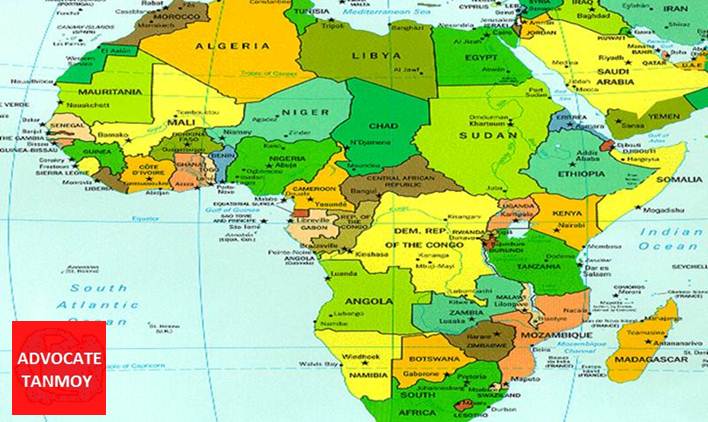
Islam reached Africa through two gateways, from the east and the north. From both directions the carriers of Islam navigated across vast empty spaces, the waters of the Indian Ocean, and the desert sands of the Sahara. Both ocean and desert, which so often are considered barriers, could be crossed with appropriate
means of transportation and navigational skills, and they were, in fact, excellent transmitters of religious and cultural influences. Densely populated lands, on the other hand, functioned as filters, their numerous layers slowing down the infiltration of religious and cultural influences.

From Egypt, Islamic influence extended in three directions, through the Red Sea to the eastern coastal areas, up the Nile valley to the Sudan, and across the western desert to the Maghrib. In the eleventh century, Arab nomads drove southward from Egypt to the Sudan and westward across North Africa. These nomads contributed to the Islamization and Arabization of the Sudan and North Africa. At the same time, Muslim seamen from Egypt and Arabia established commercial centers along the Red Sea and Africa’s east coast.

By the twelfth century, the last indigenous Christians disappeared from North Africa, and by the fifteenth century the Christian Coptic population of Egypt itself was reduced to a minority of some 15 percent. The Christian Nubians, who resisted Muslim expansion for almost six centuries, steadily lost ground between the twelfth and the fourteenth centuries (chapter 5). It was only in the Horn of Africa that the power struggle between Islam and Christianity remained undecided. Ethiopia endured as a Christian state even after the number of Muslims had grown considerably;

Muslims could not own land and were excluded from higher government offices.


Tags: Africa Islam

Post navigation

Previous: Final speech of Charles I (Execution Speech-30/01/1649)
Next: Uggarsain vs State of Haryana & Ors (03/07/2023)
Communism
Sarvarthapedia

Manifesto of the Communist Party 1848: History, Context, and Core Concepts

Arrest
Sarvarthapedia

Latin Maxims in Criminal Law: Meaning, Usage, and Courtroom Application

Abolition of Slave Trade Act 1807: Facts, Enforcement, and Historical Context

British Slavery and the Church of England: History, Theology, and the Codrington Estates

United States of America: History, Government, Economy, and Global Power

Biblical Basis for Slavery: Old and New Testament Laws, Narratives, and Interpretations

Rule of Law vs Rule by Law and Rule for Law: History, Meaning, and Global Evolution

IPS Cadre Strength 2025: State-wise Authorised Strength

Uric Acid: From 18th Century Discovery to Modern Medical Science

Christian Approaches to Interfaith Dialogue: Orthodox, Catholic, Protestant, and Pentecostal Views

Origin of Central Banking in India: From Hastings to RBI and the History of Preparatory Years (1773–1934)

Howrah District Environment Plan: Waste Management, Water Quality & Wetland Conservation

Bharatiya Nyaya Sanhita 2023: Sections (1-358), Punishments, and Legal Framework

Bengali Food Culture: History, Traditions, and Class Influences

  • Sarvarthapedia

  • Delhi Law Digest

  • Howrah Law Journal

  • Amit Arya vs Kamlesh Kumari: Doctrine of merger
  • David Vs. Kuruppampady: SLP against rejecting review by HC (2020)
  • Nazim & Ors. v. State of Uttarakhand (2025 INSC 1184)
  • Geeta v. Ajay: Expense for daughter`s marriage allowed in favour of the wife
  • Ram v. Sukhram: Tribal women’s right in ancestral property [2025] 8 SCR 272
  • Naresh vs Aarti: Cheque Bouncing Complaint Filed by POA (02/01/2025)
  • Bharatiya Nagarik Suraksha Sanhita 2023 (BNSS)
  • Bharatiya Sakshya Adhiniyam 2023 (BSA): Indian Rules for Evidence
  • Bharatiya Nyaya Sanhita (BNS) 2023
  • The Code of Civil Procedure (CPC)
  • Supreme Court Daily Digest
  • U.S. Supreme Court Orders
  • U.k. Supreme Court Orders
United Kingdom, UK

Abolition of Slave Trade Act 1807: Facts, Enforcement, and Historical Context

British Slavery and the Church of England: History, Theology, and the Codrington Estates

British Slavery and the Church of England: History, Theology, and the Codrington Estates

USA, America

United States of America: History, Government, Economy, and Global Power

Biblical Basis for Slavery, english slave trade

Biblical Basis for Slavery: Old and New Testament Laws, Narratives, and Interpretations

2026 © Advocatetanmoy Law Library

  • About
  • Global Index
  • Judicial Examinations
  • Indian Statutes
  • Glossary
  • Legal Eagle
  • Subject Guide
  • Journal
  • SCCN
  • Constitutions
  • Legal Brief (SC)
  • MCQs (Indian Laws)
  • Sarvarthapedia (Articles)
  • Contact Us
  • Privacy Policy
  • FAQs
  • Library Updates