Mere acceptance of rent for the subsequent months in which the lessee continued to occupy the lease premises cannot be said to be a conduct signifying ‘assent’ to the continuance of the lessee even after expiry of lease period
SHANTI PRASAD DEVI AND ANOTHER Vs. SHANKAR MAHTO AND OTHERS
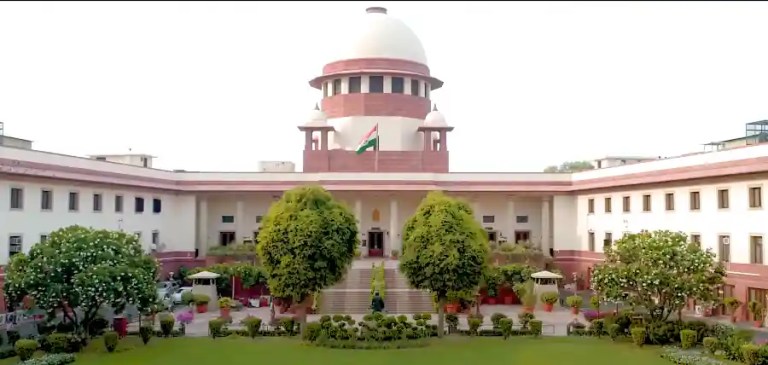
SUPREME COURT OF INDIA
DIVISION BENCH
( Before : D. M. Dharmadhikari, J; B. N. Srikrishna, J )
SHANTI PRASAD DEVI AND ANOTHER — Appellant
Vs.
SHANKAR MAHTO AND OTHERS — Respondent
Civil Appeal No’s. 2718-2719 of 2000
Decided on : 11-07-2005
Transfer of Property Act, 1882 – Section 106, Section 116
Transfer of Property Act, 1882 – Section 116 – Lease of suit premises for running a Petrol Pump – Effect of holding over – Clauses (7) and (9) of agreement required fulfillment of two conditions, (i) exercise of option of renewal by lessee before expiry of original period of lease, and (ii) fixation of terms, and conditions by mutual consent and in the absence thereof through initiation of local Mukhia or Panchas of the village – Lessor neither expressly or impliedly agreed for renewal of lease – On the face of specific clauses for renewal, there could be no implied renewal at ‘holding over’ on mere acceptance of rent offered by lessee.
Specific Relief Act, 1963 – Section 12 – Suit for specific performance of agreement of lease – Option for renewal exercised after expiry of lease period contrary to clause (9) of terms of lease agreement – Failure to send any reply to legal notice for renewal of lease there was no mutual consent for renewal – Suit dismissed – Cross suit filed by lessor for eviction decreed – Appellant granted two months time to vacate premises and to pay all arrears of rent and mesne profits at the agreed rate.
Cases Referred
- Bhawanji Lakhamshi and Others Vs. Himatlal Jamnadas Dani and Others, AIR 1972 SC 819 : (1972) 1 SCC 388 : (1972) 2 SCR 890
Counsel for Appearing Parties - S.B. Sanyal and Akhilesh Kumar Pandey, for the Appellant; Prabhash Kr. Yadav and Krishan Singh Chauhan, for the Respondent
JUDGMENT
D.M. Dharmadhikari, J.—The appellant obtained possession on lease of the suit premises for running a Petrol Pump under a registered lease deed dated 17.7.1962 for a period of fifteen years. It was an annual lease but the rent at agreed rate was payable in monthly instalments. The period of lease expired on 17.7.1977.
2. The registered sale deed contained Clauses Nos.(7) & (9) giving option of renewal for a further period which could be exercised before expiry of the initial period. After the period of lease expired on 19.7.1977 the lessee continued to remit the rent till August 19, 1977. On 23.8.1977 the lessee sent a lawyer’s notice exercising his option under Clause (7) and seeking renewal of the lease. The lessee thereafter remitted monthly rent of Rs.345/- each for three months from March to May 1978. The rent was accepted by the lessor.
3. Clause (7) of the lease providing option of renewal to the lessee contained two conditions firstly that the option has to be exercised before expiry of the lease and secondly the terms and conditions of renewal for further period shall be decided either by mutual consent of parties or in case of failure of mutual consent, through the intervention of local Mukhia or Panchas of the village.
4. To the legal notice given by the lessee seeking renewal of the lease, the lessor gave no positive response and instead filed Title Suit No.59/78 on 16.6.1978 seeking ejectment of the lessee from the suit premises on the ground that the term of lease had expired.
5. The lessee filed a counter suit No.13/80 seeking specific performance of the alleged agreement of renewal of lease on his alleged right of option of renewal.
6. The two cross suits were tried jointly and decided by common judgment.
7. The trial court by common judgment dated 16.3.1987 dismissed the suit for ejectment filed by the lessor by holding that after expiry of the initial period of fifteen years of lease, acceptance of rent by the lessor had resulted in renewal of lease and the lessee would be held to be ‘holding over’ within the meaning of Section 116 of the Transfer of Property Act. Based on the above finding that the lessee was ‘holding over’ as a result of the acceptance of rent by the lessor for the period subsequent to the expiry of lease, the trial court came to the conclusion that the suit for ejectment could not have been filed without terminating the lease by statutory notice u/s 106 of the Transfer of Property Act.
8. The trial court by the common judgment dismissed the counter suit seeking specific performance of renewal of lease by the lessee. It was held that in accordance with Clause (9) of the lease deed, the option of renewal was not exercised before expiry of original period. The specific performance of agreement of renewal claimed was also rejected on the ground that the terms and conditions of renewal were vague and incapable of enforcement. Thus, the trial court dismissed both the suits.
9. The dismissal of two suits by the trial court gave rise to two cross appeals one at the instance of lessor and the other at the instance of lessee. The first appellate court allowed the appeal of the lessor and decreed the suit of ejectment. It held that mere acceptance of rent by the lessor sent by the lessee after expiry of lease, in view of specific terms prescribing mode of renewal, did not result in deemed renewal of lease and the doctrine of ‘holding over’ u/s 116 of the Transfer of Property Act was not attracated. According to the first appellate court, the period of lease having expired there was no legal requirement of terminating the alleged renewed lease by issuing a statutory notice u/s 106 of the Transfer of Property Act.
10. The cross appeals filed by the lessee were dismissed and the dismissal of suit for specific performance of the alleged agreement of renewal was maintained.
11. The lessee filed two Second Appeals in the High Court. By the impugned common judgment the High Court upheld the common judgment of the first appellate court. The High Court agreed with the reasoning of the first appellate court that mere acceptance of rent by the lessor on expiry of original period of lease, for use and occupation of the leased premises by the lessee, did not signify ‘assent’ of the lessor to the continuance in possession of the lessee so as to infer deemed renewal of the lease u/s 116 of the Transfer of Property Act.
12. The High Court agreed with the concurrent findings of the trial court and the first appellate court that the option of renewal given to the lessee in the lease deed was not exercised before expiry of the original period of lease. The High Court also agreed that conditions stipulated for the renewed period of lease were vague and incapable of specific enforcement. Thus the dismissal of suit of the lessee for specific performance of contract of renewal of lease was also upheld.
13. Having thus lost her case in the courts below, the lessee has approached this Court in these two appeals.
14. Learned Senior Counsel Shri S. B. Sanyal reiterated the legal stand taken by the lessee in the courts below. It is contended that on expiry of original period of lease, acceptance of rent for the month of August and from March 1978 to May 1978 clearly showed an ‘assent’ on the part of the lessor to continue the lease. There was deemed renewal of the lease on the same terms and conditions of original lease as an effect of ‘holding over’ by the lessee u/s 116 of the Transfer of Property Act. It is argued that the courts below erred in holding that the lease, which stood renewed as an effect of ‘holding over’ u/s 116 of the Transfer of Property Act, was not required to be terminated by statutory notice u/s 106 of the Transfer of Property Act as a pre-condition for filing a suit for ejectment.
15. In respect of the cross suits of the lessee seeking specific performance of the contract of renewal of the lease, it is submitted that the relevant contract Clauses (7) & (9) of the lease deed should have been construed reading them with other clauses therein to hold that option for renewal could have been exercised within a reasonable period which in the present case was 35 days from the date of the expiry of the original lease. It is also argued that the suit for specific performance of the agreement of renewal could not have been rejected on the ground that clause of renewal was vague and incapable of specific performance. Reliance is placed on Bhawanji Lakhamshi and Others Vs. Himatlal Jamnadas Dani and Others, and AIR 1949 124 (Federal Court) .
16. In reply, we have heard learned counsel Shri Prabhash Kumar Yadav assisted by Dr. Krishan Singh Chauhan, advocate who supported the view taken by the High Court and the courts below in decreeing the suit for ejectment.
17. Section 116 of the Transfer of Property Act reads thus:-
“Effect of holding over. – If a lessee or under-lessee of property remains in possession thereof after the determination of the lease granted to the lessee, and the lessor of his legal representative accepts rent from the lessee or under lessee, or otherwise assents to his continuing in possession, the lease is, in the absence of an agreement to the contrary, renewed from year to year, or from month to month, according to the purpose for which the property is leased, as specified in Section 106.”
[Emphasis supplied]
18. We fully agree with the High Court and the first appellate court below that on expiry of period of lease, mere acceptance of rent for the subsequent months in which the lessee continued to occupy the lease premises cannot be said to be a conduct signifying ‘assent’ to the continuance of the lessee even after expiry of lease period. To the legal notice seeking renewal of lease, the lessor gave no reply. The agreement of renewal contained in Clause (7) read with Clause (9) required fulfillment of two conditions; first the exercise of option of renewal by the lessee before the expiry of original period of lease and second, fixation of terms and conditions for the renewed period of lease by mutual consent and in absence thereof through the mediation of local Mukhia or Panchas of the village. The aforesaid renewal Clauses (7) & (9) in the agreement of lease clearly fell within the expression ‘agreement to the contrary’ used in Section 116 of the Transfer of Property Act Under the aforesaid clauses option to seek renewal was to be exercised before expiry of the lease and on specified conditions.
19. The lessor in the present case had neither expressly nor impliedly agreed for renewal. The renewal as provided in the original contract was required to be obtained by following a specified procedure i.e. on mutually agreed terms or in the alternative through the mediation of Mukhias and Panchas. In the instant case, there is a renewal clause in the contract prescribing a particular period and mode of renewal which was ‘an agreement to the contrary’ within the meaning of Section 116 of the Transfer of Property Act. In the face of specific Clauses (7) & (9) for seeking renewal there could be no implied renewal by ‘holding over’ on mere acceptance of the rent offered by the lessee. In the instant case, option of renewal was exercised not in accordance with the terms of renewal clause that is before the expiry of lease. It was exercised after expiry of lease and the lessee continued to remain in use and occupation of the leased premises. The rent offered was accepted by the lessor for the period the lessee overstayed on the leased premises. The lessee, in the above circumstances, could not claim that he was ‘holding over’ as a lessee within the meaning of Section 116 of the Transfer of Property Act.
20. So far as the cross suit for specific performance of agreement of renewal of lease filed by the lessee is concerned, there are concurrent findings of all the courts that the option for renewal was exercised after the expiry of the lease period. The option for renewal exercised was, therefore, contrary to terms of Clause (9) of the lease agreement. The clauses of renewal requiring fixation of terms and conditions for renewed period of lease mutually or in the alternative through village Mukhia and Panchas are uncertain and incapable of specific performance. After legal notice of renewal, the lessor did not send any positive reply and instead filed a suit for ejectment, therefore, there was no mutual consent for renewal. The forum agreed to for deciding dispute was through local Mukhia and Panchas of the village. The renewal clauses of the agreement were vague and incapable of specific performance. The Mukhia and Panchas were not named in the agreement and the method of choosing either of the two forums was not specified.
21. The cross suit filed by the lessor for specific performance of the agreement of renewal was rightly dismissed throughout.
22. The original period of lease expired on 19.7.1977 and the suit for ejectment on the ground of expiry of the lease was filed on 16.6.1978 which was well within the period of limitation and rightly decreed.
23. For the additional reasons discussed by us above, the appeals have no force. As the leased premises were in use for running a petrol pump, we grant the appellant a reasonable period of two months from the date of this order to deliver possession of the leased premises after removing her installations and other movables.
24. The above grace period to vacate is granted to the appellant only on her filing an undertaking on affidavit to this Court, within a period of two months that she would pay all arrears of rent and mesne profits at the originally agreed rate for the total period of occupation of the property. The lessee shall also undertake to deliver vacant possession of the property in the same condition in which it was initially taken.
25. For the aforesaid reasons, we find no merits in these appeals preferred by the lessee, they are accordingly dismissed with costs.
Final Result : Dismissed
CITATION: (2005) 32 AIC 22 : (2005) AIR(SCW) 3359 : (2005) AIRJharR 2084 : (2005) AIR(SC) 2905 : (2005) 2 AllCJ 1572 : (2005) 5 ALLMR 848 : (2005) 3 AllWC 2537 : (2005) 60 ALR 744 : (2005) 4 AndhLD 116 : (2005) 3 APLJ 51 : (2005) 3 ARC 120 : (2005) 2 BLJR 1608 : (2005) 4 CalHCN 119 : (2005) 3 CivCC 389 : (2005) 3 CTC 550 : (2005) DNJ 509 : (2005) 3 ICC 806 : (2005) ILR(Karnataka) 3587 : (2005) 6 JT 6 : (2005) 2 LAR 159 : (2005) 2 LAR 427 : (2005) 3 LW 716 : (2005) 3 MLW 716 : (2005) 2 OriLawRev 431 : (2005) 2 OriLR 431 : (2005) 3 PLJR 199 : (2005) RajdhaniLR 325 : (2005) 3 RCR(Civil) 402 : (2005) 2 RCR(Rent) 112 : (2005) 5 SCALE 337 : (2005) 5 SCC 543 : (2005) Sup1 SCR 418 : (2005) 2 UJ(SC) 902 : (2005) 2 WLC 190