Skip to content

ADVOCATETANMOY LAW LIBRARY

Research & Library Database

Primary Menu
  • News
  • Opinion
  • Countries198
    • National Constitutions: History, Purpose, and Key Aspects
  • Judgment
  • Book
  • Legal Brief
    • Legal Eagal
  • LearnToday
  • HLJ
    • Supreme Court Case Notes
    • Daily Digest
  • Sarvarthapedia
    • Sarvarthapedia (Core Areas)
    • Systemic-and-systematic
    • Volume One
11/04/2026
  • Court Orders

Berk v. Choy (2026): Supreme Court Declines to Enforce Affidavit Requirement in Diversity Cases

Delaware's affidavit law does not apply in federal court. When a state-law claim is brought in federal court, a choice-of-law analysis is required. The Rules of Decision Act directs federal courts to apply state substantive law unless federal law provides otherwise. The Rules Enabling Act authorizes the Supreme Court to adopt uniform procedural rules. Therefore, when a valid Federal Rule of Civil Procedure addresses the disputed question, it displaces contrary state law, even if the state law would be substantive under Erie. The analysis is straightforward: if a Federal Rule answers the question, it governs, provided it does not exceed statutory authorization or Congress's rulemaking power.
advtanmoy 17/02/2026 4 minutes read

ยฉ Advocatetanmoy Law Library

  • Share on WhatsApp (Opens in new window) WhatsApp
  • Share on X (Opens in new window) X
  • Share on Facebook (Opens in new window) Facebook
  • Share on Telegram (Opens in new window) Telegram
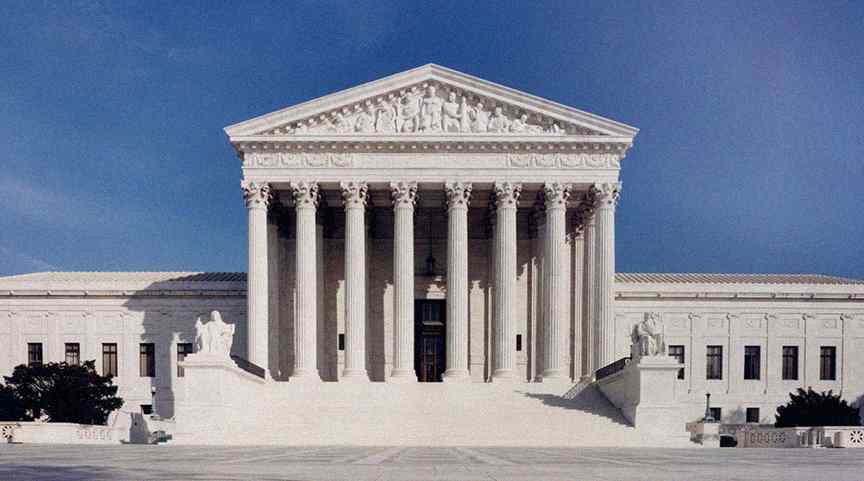
American Supreme Court

Home ยป Law Library Updates ยป Court Orders ยป Berk v. Choy (2026): Supreme Court Declines to Enforce Affidavit Requirement in Diversity Cases

American Supreme Court Strikes Down State Affidavit Requirement in Federal Diversity Actions

SUPREME COURT OF THE UNITED STATES
No. 24โ€“440
HAROLD R. BERK, PETITIONER v.
WILSON C. CHOY, ET AL.
ON WRIT OF CERTIORARI TO THE UNITED STATES COURT OF
APPEALS FOR THE THIRD CIRCUIT
[January 20, 2026]

In Berk v. Choy, 607 U.S. ____ (2026), the Supreme Court held that Delaware’s medical malpractice affidavit-of-merit requirement, which mandates that a complaint be accompanied by an expert affidavit attesting to the claim’s merit, is not enforceable in federal court sitting in diversity jurisdiction because it is displaced by the Federal Rules of Civil Procedure.

The petitioner, Harold Berk, filed a diversity action in federal court against Dr. Wilson Choy and Beebe Medical Center for medical malpractice arising from a fractured ankle injury. Delaware law provides that no healthcare negligence lawsuit may be filed unless the complaint is accompanied by an affidavit of merit signed by a medical professional, or a motion for an extension of time to file such an affidavit. Berk moved for and received an extension but failed to procure the affidavit within the allotted time. The District Court dismissed the lawsuit for noncompliance with the state affidavit requirement, and the Third Circuit affirmed, applying the Erie doctrine and concluding that the requirement was substantive and therefore applicable in federal court.

Read Next

  • Kuldeep Sing Senger Controversial Bail Judgment by Delhi High Court (23/12/2025)
  • ISKCON Epstein Case: Children of ISKCON vs. ISKCON
  • Panchanan Singha Roy v. Dwarka Nath Roy

The Supreme Court reversed, applying a straightforward two-step analysis for conflicts between state law and the Federal Rules. First, the Court asks whether a Federal Rule of Civil Procedure answers the disputed question. If it does, that Rule governs, provided it is valid under the Rules Enabling Act. The Court found that Rule 8(a)(2) answers the question at issue. Rule 8 requires only “a short and plain statement of the claim showing that the pleader is entitled to relief.” By mandating no more than a statement of the claim, Rule 8 implicitly establishes that evidence of the claim is not required at the pleading stage. Delaware’s affidavit law demands more: it requires evidentiary support in the form of an expert affidavit to accompany the complaint. Because the two rules give different answers to the same questionโ€”what a plaintiff must provide about the merits of a claim at the outset of litigationโ€”they conflict.

The Court rejected the argument that state “preconditions to proceeding” are categorically consistent with the Federal Rules, distinguishing Cohen v. Beneficial Industrial Loan Corp. on the grounds that the state law there addressed a matter unaddressed by the relevant Federal Rule. Here, the Court emphasized that Rule 8 addresses the precise issue of the information required about a claim’s merits. The Court also dismissed the argument that Rule 11’s proviso concerning affidavits incorporates state affidavit laws, noting that Rule 11 governs attorney conduct and certifications, not third-party affidavits.

Having found a conflict, the Court confirmed that Rule 8 is valid under the Rules Enabling Act because it “really regulates procedure.” It governs only the manner and means of enforcing rights, not the rights themselves. The Court reaffirmed that the substantive nature of displaced state law is irrelevant to the validity of a Federal Rule under the Act.

Justice Jackson concurred only in the judgment. She agreed that Delaware’s affidavit requirement cannot apply in federal court but found the conflict with Rules 3 and 12, rather than Rule 8. She argued that Rule 3, which provides that a civil action is commenced by filing a complaint, conflicts with Delaware’s requirement that additional documents must accompany the complaint for filing. She also found a conflict with Rule 12(d), which prohibits courts from considering matters outside the pleadings on a motion to dismiss, whereas Delaware law requires dismissal based on the absence of an affidavit, an extraneous document. She contended that the majority’s reliance on Rule 8 required contorting both the Rule and the state statute.

Read Next

  • Kuldeep Sing Senger Controversial Bail Judgment by Delhi High Court (23/12/2025)
  • ISKCON Epstein Case: Children of ISKCON vs. ISKCON
  • Panchanan Singha Roy v. Dwarka Nath Roy

“The judgment of the Court of Appeals is reversed, and the case is remanded for further proceedings consistent with this opinion”.


Tags: 2026 CE 20th January Health & Public Welfare MEDICAL NEGLIGENCE USA Supreme Court Orders

Post navigation

Previous: Klein v. Martin (2026): Supreme Court Reaffirms Strict AEDPA Deference in Brady Habeas Cases
Next: Ellingburg v. United States: Supreme Court Defines Restitution as Criminal Penalty
Communism
Sarvarthapedia

Manifesto of the Communist Party 1848: History, Context, and Core Concepts

Arrest
Sarvarthapedia

Latin Maxims in Criminal Law: Meaning, Usage, and Courtroom Application

Abolition of Slave Trade Act 1807: Facts, Enforcement, and Historical Context

British Slavery and the Church of England: History, Theology, and the Codrington Estates

United States of America: History, Government, Economy, and Global Power

Biblical Basis for Slavery: Old and New Testament Laws, Narratives, and Interpretations

Rule of Law vs Rule by Law and Rule for Law: History, Meaning, and Global Evolution

IPS Cadre Strength 2025: State-wise Authorised Strength

Uric Acid: From 18th Century Discovery to Modern Medical Science

Christian Approaches to Interfaith Dialogue: Orthodox, Catholic, Protestant, and Pentecostal Views

Origin of Central Banking in India: From Hastings to RBI and the History of Preparatory Years (1773โ€“1934)

Howrah District Environment Plan: Waste Management, Water Quality & Wetland Conservation

Bharatiya Nyaya Sanhita 2023: Sections (1-358), Punishments, and Legal Framework

Bengali Food Culture: History, Traditions, and Class Influences

  • Sarvarthapedia

  • Delhi Law Digest

  • Howrah Law Journal

  • Amit Aryaย vs Kamlesh Kumari:ย Doctrine of merger
  • David Vs. Kuruppampady: SLP against rejecting review by HC (2020)
  • Nazim & Ors. v. State of Uttarakhand (2025 INSC 1184)
  • Geeta v. Ajay: Expense for daughter`s marriage allowed in favour of the wife
  • Ram v. Sukhram: Tribal women’s right in ancestral property [2025] 8 SCR 272
  • Naresh vs Aarti: Cheque Bouncing Complaint Filed by POA (02/01/2025)
  • Bharatiya Nagarik Suraksha Sanhita 2023 (BNSS)
  • Bharatiya Sakshya Adhiniyam 2023 (BSA): Indian Rules for Evidence
  • Bharatiya Nyaya Sanhita (BNS) 2023
  • The Code of Civil Procedure (CPC)
  • Supreme Court Daily Digest
  • U.S. Supreme Court Orders
  • U.k. Supreme Court Orders
United Kingdom, UK

Abolition of Slave Trade Act 1807: Facts, Enforcement, and Historical Context

British Slavery and the Church of England: History, Theology, and the Codrington Estates

British Slavery and the Church of England: History, Theology, and the Codrington Estates

USA, America

United States of America: History, Government, Economy, and Global Power

Biblical Basis for Slavery, english slave trade

Biblical Basis for Slavery: Old and New Testament Laws, Narratives, and Interpretations

2026 ยฉ Advocatetanmoy Law Library

  • About
  • Global Index
  • Judicial Examinations
  • Indian Statutes
  • Glossary
  • Legal Eagle
  • Subject Guide
  • Journal
  • SCCN
  • Constitutions
  • Legal Brief (SC)
  • MCQs (Indian Laws)
  • Sarvarthapedia (Articles)
  • Contact Us
  • Privacy Policy
  • FAQs
  • Library Updates