Keywords: Summons- Public servant-summons.
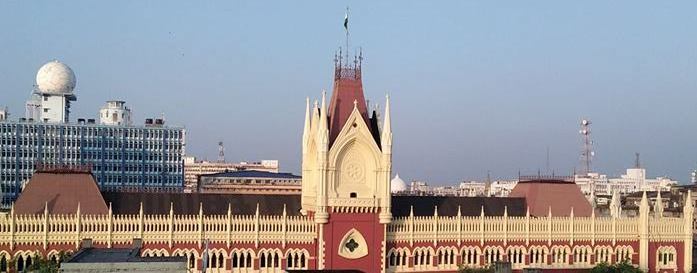
Calcutta High Court issued six directions in connection with attendance of public servants as witness in trial.
“It is matter of grave concern that public servants, although in service, cannot be traced out by the Investigating Agencies for service of witness summons for deposing in criminal trials”.
Date : 18.09.17
C. R. R. 2434 of 2017
The Calcutta High Court
BIBEKANANDA PRAMANIK VS STATE OF WEST BENGAL AND OTHERS
Pursuant to the earlier direction, Investigating Officer is personally present before this Court. His presence is noted.
Report is filed on behalf of the Investigating Agency placing on record the name and the present place of posting of the Autopsy Surgeon before this Court.
It is matter of grave concern that public servants, although in service, cannot be traced out by the Investigating Agencies for service of witness summons for deposing in criminal trials. It is the bounden duty of every citizen to assist the administration of criminal justice and to depose in criminal trials in order to unravel the truth and punish the offenders, more so, when such a citizen is a public servant. To depose in a criminal trial with regard to affairs relating to his official duty is a part of discharge of public duty of a public servant and any wilful failure or neglect in that regard tantamounts to dereliction of official duty entailing serious consequences.
I am surprised at the callous indolence of the Investigating Agency who was unable to trace out the public servant i.e. the Autopsy Surgeon in this case and inform the trial court his name and place of posting so that witness summons could be served upon the said medical personnel. Lack of synergy between government departments on the one hand and the investigating/prosecuting agencies on the other hand cause unnecessary roadblocks in the smooth and swift progress of trials. Trials are unduly and unnecessarily delayed due to communication gaps between the Investigating Officers and the respective departments where the public servant-witnesses are posted so that the latter’s place of posting and other relevant particulars (in case of superannuation) are not available to courts for prompt service of summons on such public servants and their examination as witnesses in trials. These systemic glitches are not insurmountable and may be avoided with some degree of sensitivity and co-operation between various departments of the government and the investigating authorities. Failure to address such issues, promptly and effectively display a pathetic apathy on the part of the State to uphold the fundamental right to speedy trial of all the stakeholders in the criminal justice system.
In order to achieve the aforesaid constitutional commitment of speedy and efficient trial in criminal cases, I direct as follows :-
(1) In all criminal cases where public servants are witnesses, their names, addresses, places of posting including their e-mail i.d./mobile nos. and Aadhaar card particulars shall be stated in the police report. Upon submission of police reports wherein public servants are cited as witnesses, investigating agencies shall intimate the heads of the offices where such public servants are posted that the latter has been cited as a witness in a criminal case and particulars of the case shall be entered against the name of the said public servant in a register which is to be maintained physically or electronically (as the case may be) in every office including a police station in ordinary course of business. After the public servant has deposed or the case has otherwise come to an end, the Investigating Agency shall promptly inform such fact to the head of the said office who shall thereafter delete the particulars of the said case from the said register;
(2) In the event of any transfer of a public servant-witness, intimation of transfer shall be send by the departmental head under whom the public servant is employed as well as the concerned public servant to the Officer-in-charge of the police station where any case in which the public servant is cited as witness is registered and the Officer-in-charge of the concerned police station, in turn, shall immediately intimate such transfer or change in the place of employment of the public servant/witness to the trial court so that summons to appear may be duly served upon the said public servant at his new place of posting. Immediately upon the public servant/witness joining his new place of posting, the witness register maintained in terms of direction no.(1) in his new place of posting shall be amended by incorporating therein the particulars of the case where he is to depose;
(3) If the public servant is unable to attend the trial proceeding at a far off court due to administrative inconvenience video conferencing facility shall be utilised for the deposition of such public servant so that the trial of cases are not delayed due to such administrative or logistic reasons;
(4) In the event of superannuation of a public servant-witness, prior to release of his retiral benefits the concerned department shall take an undertaking from the said public servant that he shall duly depose in the pending criminal cases wherein he is cited as a witness as and when summoned by the Court of law and shall furnish his address and other particulars including mobile number before the officer-in-charge of the police station where such cases are registered and if there is any subsequent change in the aforesaid particulars he shall promptly intimate the officer of such change and the said
officer shall immediately intimate the trial court of the said changes so that summons may be served upon him at such place of residence for examination during trial;
(5) Failure on the part of the departmental/office heads, offices in charge of police stations and/or investigating officers to comply with the aforesaid directions shall be deemed to be dereliction of official duties on their part attracting disciplinary proceeding against them;
(6) If a public servant wilfully fails and/or neglects to appear before a court of law and depose inspite of issuance of summons, such conduct shall be deemed to be in dereliction of his official duties attracting disciplinary action.
The above directions shall be duly complied with by the Government as well as the Investigating Agencies and the Courts in the matter of deposition of public servants in criminal trials.
Copy of this order be sent to the Chief Secretary, as well as the Home Secretary, Government of West Bengal and the Director General of Police, West Bengal for issuance of appropriate administrative orders for implementation of the aforesaid directions and compliance report be submitted by them on the next date of hearing.
Registrar General, High Court, Calcutta is directed to circulate copies of this order to all judicial officers for necessary compliance and submit report before this Court on the next date of hearing.
I further direct the Director General of Police, West Bengal to make due enquiry into the conduct of the Officer-in-charge, Raidighi Police Station and the Investigating Officer of this case by a superior officer and submit report before this Court on the next date of hearing.
Let this matter appear under the same heading on 23rd October, 2017.
Investigating Officer is directed to be personally present on the next occasion. Let photostat plain copy of the order duly countersigned by Assistant Registrar (Court) be handed over to the learned lawyers for the parties on usual undertaking.
(Joymalya Bagchi, J.)
Mr. Bibaswan Bhattacharya … … for the petitioner
Mr. Susil Kumar Mahata, Ms. Maitrayee Mahata … … for the respondent nos. 3, 4 & 6-17
Ms. Anasuya Sinha … … for the State