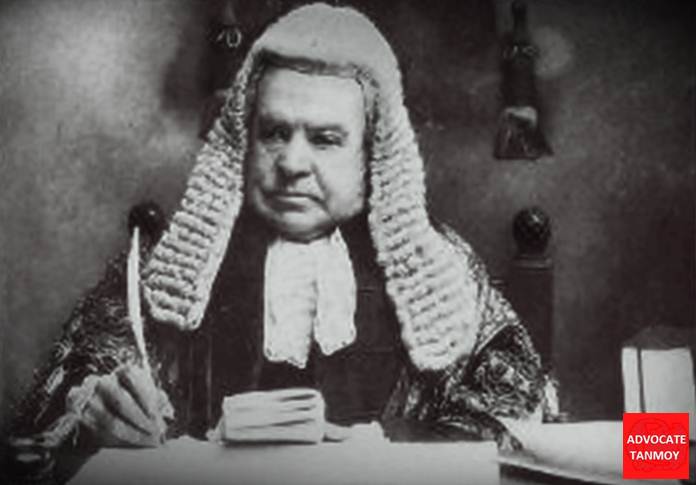
Hardinge Giffard, 1st Earl of Halsbury
Hardinge Giffard, 1st Earl of Halsbury (1823–1921) was a distinguished English lawyer, politician, and legal author whose influence on the common law tradition remains profound. Born on 3 September 1823 and educated at Merton College, Oxford, he developed a strong grounding in classics and law before being called to the Bar at Lincoln’s Inn in 1850. As a barrister, he built a formidable reputation in equity and commercial law, eventually rising to become one of the leading advocates of his time. His political career was equally significant; as a member of the Conservative Party, he served multiple terms as Lord Chancellor of Great Britain, where he played a central role in judicial administration and legal reform. However, his most enduring legacy lies in his role as the guiding force behind Halsbury’s Laws of England, a comprehensive and systematic statement of English law. This monumental work transformed legal research by organizing complex doctrines into an accessible, authoritative structure, and it continues to serve as a foundational reference for lawyers, judges, and scholars worldwide, shaping legal understanding across generations.
History and Evolution of Halsbury’s Laws of England (1907–2026)
Halsbury’s Laws of England (See Volume Index) is one of the most authoritative and comprehensive legal reference works in the common law world. It is widely recognised that Halsbury’s Laws of England provides the only complete narrative statement of the law in England and Wales, and it has often been observed that, in the absence of a written constitution in the United Kingdom, “we are it.” This statement reflects the profound constitutional importance of the work, which systematically consolidates and explains the entirety of English law in a structured and accessible manner. Unlike ordinary legal texts, it is not merely an encyclopaedia, a digest of cases, or a dictionary, but rather a series of integrated treatises, each written by experts and connected through cross-references to produce a unified and harmonious exposition of the law.
The origins of this monumental undertaking can be traced to the vision encapsulated in the statement: THE LAWS OF ENGLAND BEING A COMPLETE STATEMENT OF THE WHOLE LAW OF ENGLAND BY THE RIGHT HONOURABLE THE EARL OF HALSBURY, LORD HIGH CHANCELLOR OF GREAT BRITAIN, 1885–86, 1886–92, and 1895–1905, AND OTHER LAWYERS. Published in London by Butterworth & Co., the work was conceived as a systematic consolidation of English law. The Earl of Halsbury, a distinguished legal figure and member of the Judicial Committee of His Majesty’s Most Honourable Privy Council, led a team of eminent legal scholars and practitioners. Among them were George Albert Bonner, a Master of the Supreme Court, assisted by Henry Stephen, H. L. Ormsby, E. A. Cohen, and F. R. Bush, all barristers-at-law, as well as the Right Honourable Sir Gainsford Bruce, a former judge of the King’s Bench Division, and experts such as Charles Fuhr Jemmett and Edward Stanley Roscoe. Their collective expertise ensured that the work reflected both doctrinal precision and practical applicability.
In this work an attempt was made to supply a consolidation or complete statement of the law of England as it existed at the time. With this objective, the whole law was reviewed and arranged under comprehensive titles, chosen according to what users would most likely consult. Under each title, the whole living law relating to the subject was stated. The work was believed to be unique in aim and form. It was neither an encyclopaedia, a digest of cases, nor a dictionary; instead, it took the form of a series of treatises on every branch of the law by experts in each particular branch. By means of cross-references, each treatise was made to fit in with the others, thereby producing a complete and harmonious whole. This methodological innovation marked a significant advancement in legal scholarship, as it allowed for both depth and coherence across the entire legal system.
The first edition, published between 1907 and 1917, consisted of 31 volumes and represented the first systematic attempt to present English law in narrative form. Volume 1 (1907) covered foundational subjects including Action, Admiralty, Agency, Agriculture, Aliens, Allotments, Animals, Arbitration, Auction and Auctioneers, Bailment, and Bankers and Banking. Volume 2 (1908) addressed Bankruptcy and Insolvency, Barristers, Bastardy, and Bills of Exchange. Volume 3 included Bills of Sale, Bonds, Boundaries, Building Contracts, Building Societies, and Burial and Cremation. Volume 4 dealt with Carriers, Charities, Choses in Action, Clubs, and Commons. Volume 5 was devoted to Companies, while Volume 6 addressed Compulsory Purchase, Conflict of Laws, and Constitutional Law. Volume 7 continued Constitutional Law and included Contempt of Court and Contract. Volume 8 covered Copyholds, Copyright, Coroners, Corporations, and County Courts. Volume 9 examined Courts and Criminal Law and Procedure, and Volume 10 included Crown Practice, Custom, Damages, and Deeds. The remaining volumes extended across a vast range of subjects, including Equity, Evidence, Taxation, Family Law, Property Law, Tort, Trade, Trusts, Wills, and many others, ultimately culminating in Volume 28, which addressed Trusts and Trustees, Water Supply, Wills, and Work and Labour.
Following the first edition, subsequent editions were published to reflect legal developments. The second edition appeared between 1931 and 1942, followed by the third edition from 1952 to 1964, and the fourth edition beginning in 1973. Each edition incorporated legislative changes, judicial decisions, and evolving legal doctrines, ensuring that the work remained current and authoritative.
The current edition, known as the Fifth Edition, began publication in 2008 and represents the most extensive and up-to-date version of the work. It spans over 100 main volumes organised by subject. Volumes 1–3 include Agency, Agricultural Land, Animals, Arbitration, and Armed Forces. Volumes 4–8 cover Aviation, Bankruptcy, Building, Carriers, and Charities. Volumes 9–10 are dedicated to Children and family-related law. Volumes 11–12A focus on Civil Procedure. Volumes 14–17 provide extensive coverage of Companies and Partnership Insolvency. Volumes 20–22 include Constitutional and Administrative Law, Consumer Credit, and Contract Law. Volumes 25–28 address Criminal Law and Criminal Procedure. Volume 47A specifically covers European Union law, which has been re-evaluated in the context of Brexit. Volume 61 includes International Relations Law, Judicial Review, Juries, and Landfill Tax, while Volume 92 focuses on Sentencing and the Disposition of Offenders.
Halsbury’s Laws volumes
See Volume Index
The Fifth Edition includes an extensive list of volumes, such as 1 (2008), 2 (2008), 3 (2011), 4 (2011), 6 (2011), 7 (2008), 8 (2010), 9 (2012), 10 (2012), 11 (2009), 12 (2009), 13 (2009), 14 (2009), 15 (2009), 16 (2011), 17 (2011), 18 (2009), 19 (2011), 21 (2011), 22 (2012), 23 (2013), 24 (2010), 25 (2010), 26 (2010), 27 (2010), 28 (2010), 30 (2012), 31 (2012), 32 (2012), 34 (2011), 35 (2011), 36 (2011), 39 (2009), 40 (2009), 41 (2009), 42 (2011), 43 (2011), 44 (2011), 45 (2010), 46 (2010), 48 (2008), 49 (2008), 50 (2008), 52 (2009), 53 (2009), 54 (2008), 55 (2012), 56 (2011), 57 (2012), 60 (2011), 61 (2010), 62 (2012), 63 (2012), 64 (2012), 65 (2008), 66 (2009), 67 (2008), 68 (2008), 69 (2009), 70 (2012), 71 (2013), 72 (2009), 73 (2009), 74 (2011), 75 (2013), 76 (2013), 77 (2010), 78 (2010), 79 (2008), 80 (2013), 81 (2010), 82 (2010), 83 (2010), 84 (2013), 84A (2013), 85 (2012), 87 (2012), 88 (2012), 88A (2013), 89 (2011), 90 (2011), 91 (2012), 92 (2010), 93 (2008), 94 (2008), 96 (2012), 97 (2010), 99 (2012), 100 (2009), 101 (2009), 102 (2010), and 103 (2010).
As of early 2026, the Fifth Edition continues to evolve through regular reissues to reflect major legislative changes. Commercial law titles have undergone significant updates, including Contract (Volume 22) reissued in 2025, Consumer Credit and Protection (Volume 21) reissued in 2022, Competition (Volume 18) reissued in 2022, Company and Partnership Insolvency (Volumes 16–17) reissued in 2024, and Companies (Volumes 14–15A) comprehensively updated in 2023. Broadcasting (Volume 4A) was reissued in 2026. Property law titles have also been updated, including Conveyancing (Volume 23) in 2023, Compulsory Acquisition of Land (Volume 18) in 2022, Agricultural Land and Allotments (Volume 1) in 2022, Agricultural Production and Marketing (Volume 1A) in 2023, and Landfill Tax (Volume 61) updated as part of environmental law reforms. Other notable updates include Criminal Law (Volumes 25–26) in 2025, Armed Forces and Conflict (Volume 3) in 2025, Charities (Volume 8) in 2025, and Courts, Tribunals, and Burial (Volume 24A) in 2025.
Halsbury’s Laws of England, currently catalogued as KD310 .H34 2008, contains many elements of an American law dictionary, encyclopaedia, digest, and treatise combined. It is a complete narrative statement of the law of England, derived from ancient common law, case law, statutory law, subordinate legislation, and European legal instruments. The work is supplemented by monthly current services, annual supplements, new volumes, and an annual abridgment (KD296 .H34). Its arrangement under alphabetical title headings, combined with a comprehensive index, makes it highly accessible and practical for legal research.
In the modern era, the work is also available digitally through LexisLibrary. The online content comprises three principal sources: Halsbury’s Laws of England, which includes all titles with Noter-Up and Cumulative Supplement updates integrated into the text; Halsbury’s Laws Index, which allows users to navigate the entire series efficiently; and Halsbury’s Laws Annual Abridgment, which provides a comprehensive year-by-year survey of case law, statute law, and subordinate legislation. Updates are typically uploaded fortnightly, ensuring that the work remains current.
Halsbury’s Laws of England and India Connection
Halsbury’s Laws of England has had a profound influence on Indian law and judicial practice, particularly due to India’s historical foundation in the English common law system. As a comprehensive narrative statement of English law, it has long served as a persuasive secondary authority for Indian courts, especially in areas where Indian statutes are silent or ambiguous. The Supreme Court of India and various High Courts have frequently relied on Halsbury’s for clarity on principles relating to contract, tort, equity, administrative law, and procedural law, using it as an interpretative aid rather than a binding source. Its systematic exposition of legal doctrines helps Indian judges articulate reasoning grounded in established common law traditions, thereby ensuring consistency and coherence in judicial decisions. Even in the post-independence era, while Indian law has evolved through its own constitutional framework and legislation, Halsbury’s Laws continues to function as a valuable reference point, bridging historical legal continuity and modern judicial interpretation in India.
Core Concept: Halsbury’s Laws of England
Definition and Central Role
Halsbury’s Laws of England represents a complete narrative statement of the law of England and Wales, functioning as a structured synthesis of legal principles derived from common law, statutory law, and judicial decisions. It operates as a foundational reference point for understanding the architecture of English law.
See also
English Legal System
Common Law
Statutory Interpretation
Judicial Precedent
Legal Encyclopaedias
Cluster: Foundations of English Law
Common Law Tradition
The unwritten body of law developed through judicial decisions forms the backbone of Halsbury’s framework. It provides the historical continuity upon which legal principles evolve.
Statutory Law
Acts of Parliament and delegated legislation are systematically incorporated into Halsbury’s narrative, reflecting the dynamic nature of legislative authority.
Judicial Precedent
Case law is integrated to explain how legal rules are interpreted and applied, reinforcing the doctrine of stare decisis.
See also
Equity
Case Law
Legislation
Doctrine of Precedent
Cluster: Structural Organization of Halsbury’s Laws
Subject-Based Arrangement
The work is divided into titles such as Contract, Tort, Criminal Law, and Property Law, each forming a self-contained yet interconnected legal exposition.
Cross-Referencing System
Each title is linked to related areas, ensuring conceptual continuity across the legal system.
Alphabetical Indexing
Access is facilitated through comprehensive indexing, enabling efficient navigation across volumes.
See also
Legal Classification
Taxonomy of Law
Indexing Systems
Legal Research Methods
Cluster: Historical Development
First Edition (1907–1917)
The original compilation introduced the idea of a unified legal narrative covering all branches of English law.
Subsequent Editions
Later editions (Second, Third, Fourth) reflected evolving legal doctrines and statutory reforms.
Fifth Edition (2008–Present)
The current edition expands coverage and incorporates modern developments such as post-Brexit law and digital regulation.
See also
Legal History
Codification
Law Reform
Evolution of Legal Systems
Major Legal Domains
Constitutional and Administrative Law
Explores the structure of government, rule of law, and judicial review.
Contract Law
Defines obligations arising from agreements and their enforceability.
Criminal Law and Procedure
Addresses offences, punishments, and procedural safeguards.
Property Law
Covers land ownership, conveyancing, and landlord-tenant relations.
Company and Commercial Law
Regulates corporate entities, insolvency, and trade practices.
See also
Public Law
Private Law
Civil Law
Commercial Transactions
Cluster: Research and Reference Tools
Consolidated Index
Provides subject-based navigation across all volumes.
Table of Statutes
Lists legislative sources cited throughout the work.
Table of Cases
Indexes judicial decisions referenced in the text.
Annual Abridgment
Summarizes yearly developments in case law and legislation.
See also
Legal Databases
Citation Systems
Law Reporting
Legal Bibliography
Cluster: Digital Integration
Online Platforms
Halsbury’s Laws is accessible via digital legal research platforms, enabling real-time updates.
Noter-Up System
Tracks changes in law and updates relevant sections.
Cumulative Supplements
Ensures that the text reflects current legal developments.
See also
Legal Technology
Digital Libraries
Online Legal Research
Information Systems
Cluster: Authority and Usage
Secondary Legal Authority
While not primary law, Halsbury’s Laws is frequently cited for its authoritative explanations.
Starting Point for Research
It provides a structured entry into complex legal topics.
Academic and Professional Use
Widely used by lawyers, judges, and scholars.
See also
Primary Sources of Law
Legal Commentary
Doctrine
Legal Education
Interdisciplinary Connections
Economics and Law
Commercial and financial regulations intersect with economic policy.
Sociology of Law
Legal rules reflect and shape societal norms.
Political Theory
Constitutional principles are linked to governance and power structures.
See also
Law and Society
Public Policy
Governance
Regulatory Systems
Cluster: Contemporary Developments
Post-Brexit Legal Changes
Reconfiguration of European Union law within the UK legal framework.
Digital and Cyber Law
Emerging areas addressing technology and data regulation.
Environmental Law
Expansion of legal frameworks addressing sustainability and climate issues.
See also
International Law
European Union Law
Technology Law
Environmental Regulation
Conceptual Integration
Harmonisation of Legal Knowledge
Halsbury’s Laws integrates diverse legal principles into a coherent system.
Narrative Legal Method
Presents law as an interconnected body rather than isolated rules.
Systemic Coherence
Ensures that legal doctrines align across different fields.
See also
Legal Theory
System Theory
Knowledge Organization
Comparative Law