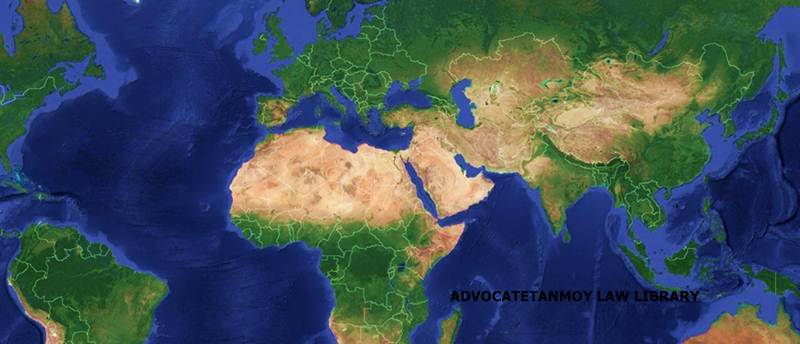
Global Nations Directory 2025: UN Member States, Capitals, and Historical Evolution
The modern international system of states is most comprehensively embodied in the framework of the United Nations, an institution formally established on 24 October 1945 in San Francisco, United States, following the ratification of the United Nations Charter by the founding members after the devastation of the Second World War. The organization emerged from earlier internationalist efforts such as the League of Nations (1919–1946), and was designed to promote collective security, international law, economic development, and human rights. Over the decades, the membership of the United Nations expanded from its original 51 members to 194 recognized sovereign member states by 2025, reflecting the profound processes of decolonization, state formation, constitutional evolution, and geopolitical transformation across the globe.
Members
Each member state represents a distinct historical trajectory shaped by colonial encounters, indigenous civilizations, revolutions, and constitutional developments. The listing of these states alongside their capitals—such as Afghanistan (Kabul), Albania (Tirana), Algeria (Algiers), Andorra (Andorra la Vella), Angola (Luanda), Antigua and Barbuda (Saint John’s), Argentina (Buenos Aires), Armenia (Yerevan), Australia (Canberra), Austria (Vienna), Azerbaijan (Baku), Bahamas (Nassau), Bahrain (Manama), Bangladesh (Dhaka), Barbados (Bridgetown), Belarus (Minsk), Belgium (Brussels), Belize (Belmopan), Benin (Porto-Novo), Bhutan (Thimphu), Bolivia (Sucre), Bosnia and Herzegovina (Sarajevo), Botswana (Gaborone), Brazil (Brasília), Brunei (Bandar Seri Begawan), Bulgaria (Sofia), Burkina Faso (Ouagadougou), Burundi (Gitega), Cabo Verde (Praia), Cambodia (Phnom Penh), Cameroon (Yaoundé), Canada (Ottawa), Central African Republic (Bangui), Chad (N’Djamena), Chile (Santiago), China (Beijing), Colombia (Bogotá), Comoros (Moroni), Congo, Republic of the (Brazzaville), Congo, Democratic Republic of the (Kinshasa), Costa Rica (San José), Côte d’Ivoire (Yamoussoukro), Croatia (Zagreb), Cuba (Havana), Cyprus (Nicosia), Czech Republic (Prague),
Denmark (Copenhagen), Djibouti (Djibouti), Dominica (Roseau), Dominican Republic (Santo Domingo), Ecuador (Quito), Egypt (Cairo), El Salvador (San Salvador), Equatorial Guinea (Malabo), Eritrea (Asmara), Estonia (Tallinn), Eswatini (Mbabane), Ethiopia (Addis Ababa), Fiji (Suva), Finland (Helsinki), France (Paris), Gabon (Libreville), Gambia (Banjul), Georgia (Tbilisi), Germany (Berlin), Ghana (Accra), Greece (Athens), Grenada (St. George’s), Guatemala (Guatemala City), Guinea (Conakry), Guinea-Bissau (Bissau), Guyana (Georgetown), Haiti (Port-au-Prince), Honduras (Tegucigalpa), Hungary (Budapest), Iceland (Reykjavík), India (Bharat) (New Delhi), Indonesia (Jakarta), Iran (Tehran), Iraq (Baghdad), Ireland (Dublin), Israel (Jerusalem), Italy (Rome), Jamaica (Kingston), Japan (Tokyo), Jordan (Amman), Kazakhstan (Nur-Sultan / Astana), Kenya (Nairobi), Kiribati (Tarawa), Korea, North (Pyongyang), Korea, South (Seoul), Kuwait (Kuwait City), Kyrgyzstan (Bishkek),
Laos (Vientiane), Latvia (Riga), Lebanon (Beirut), Lesotho (Maseru), Liberia (Monrovia), Libya (Tripoli), Liechtenstein (Vaduz), Lithuania (Vilnius), Luxembourg (Luxembourg), Madagascar (Antananarivo), Malawi (Lilongwe), Malaysia (Kuala Lumpur), Maldives (Malé), Mali (Bamako), Malta (Valletta), Marshall Islands (Majuro), Mauritania (Nouakchott), Mauritius (Port Louis), Mexico (Mexico City), Micronesia (Palikir), Moldova (Chișinău), Monaco (Monaco), Mongolia (Ulaanbaatar), Montenegro (Podgorica), Morocco (Rabat), Mozambique (Maputo), Myanmar (Naypyidaw), Namibia (Windhoek), Nauru (Yaren District), Nepal (Kathmandu), Netherlands (Amsterdam), New Zealand (Wellington), Nicaragua (Managua), Niger (Niamey), Nigeria (Abuja), North Macedonia (Skopje), Norway (Oslo), Oman (Muscat), Pakistan (Islamabad), Palau (Ngerulmud), Panama (Panama City), Papua New Guinea (Port Moresby), Paraguay (Asunción), Peru (Lima), Philippines (Manila), Poland (Warsaw), Portugal (Lisbon), Qatar (Doha), Romania (Bucharest), Russia (Moscow), Rwanda (Kigali), Saint Kitts and Nevis (Basseterre), Saint Lucia (Castries), Saint Vincent and the Grenadines (Kingstown), Samoa (Apia), San Marino (San Marino), São Tomé and Príncipe (São Tomé), Saudi Arabia (Riyadh), Senegal (Dakar), Serbia (Belgrade), Seychelles (Victoria), Sierra Leone (Freetown), Singapore (Singapore), Slovakia (Bratislava), Slovenia (Ljubljana), Solomon Islands (Honiara), Somalia (Mogadishu), South Africa (Pretoria / Bloemfontein / Cape Town), South Sudan (Juba), Spain (Madrid), Sri Lanka (Sri Jayewardenepura Kotte), Sudan (Khartoum), Suriname (Paramaribo), Sweden (Stockholm), Switzerland (Bern), Syria (Damascus),
Tajikistan (Dushanbe), Tanzania (Dodoma), Thailand (Bangkok), Timor-Leste (Dili), Togo (Lomé), Tonga (Nukuʻalofa), Trinidad and Tobago (Port of Spain), Tunisia (Tunis), Turkey (Ankara), Turkmenistan (Ashgabat), Tuvalu (Funafuti), Uganda (Kampala), Ukraine (Kyiv), United Arab Emirates (Abu Dhabi), United Kingdom (London), United States (Washington, D.C.), Uruguay (Montevideo), Uzbekistan (Tashkent), Vanuatu (Port Vila), Vatican City (Holy See), Venezuela (Caracas), Vietnam (Hanoi), Yemen (Sana’a), Zambia (Lusaka), Zimbabwe (Harare)—serves not merely as a geographical catalog but as a reflection of centuries of evolving political identities and governance structures.
The historical emergence of these states is closely tied to the dismantling of European colonial empires between 1945 and the 1970s, when territories across Africa, Asia, and the Caribbean achieved independence. For instance, India gained independence in 1947, adopting its Constitution on 26 January 1950, establishing a sovereign democratic republic with a federal parliamentary system. Similarly, Ghana became the first sub-Saharan African country to gain independence in 1957, marking the beginning of widespread African decolonization. In contrast, European states such as France, Germany, and Italy underwent reconstruction and constitutional reform after the war, embedding democratic norms within their political systems.
The concept of national constitutions is central to the identity of UN member states. These foundational legal documents define the structure of government, distribution of powers, fundamental rights, and national sovereignty. For example, the United States Constitution (1787), one of the oldest written constitutions still in operation, established a system of checks and balances among the executive, legislative, and judicial branches. Meanwhile, newer states such as South Sudan (independence in 2011) have adopted transitional constitutions reflecting ongoing state-building processes.
Economically, the member states display vast diversity, ranging from highly industrialized economies like Japan, Germany, and the United States, to developing and least-developed countries such as Niger, Malawi, and Haiti. The global economic system has been shaped by institutions like the International Monetary Fund (IMF) and the World Bank, established alongside the United Nations in the mid-20th century, promoting international trade, financial stability, and development assistance. The rise of emerging economies, particularly China and India in the late 20th and early 21st centuries, has significantly altered global economic dynamics.
Culturally and historically, these states encompass some of the world’s oldest civilizations. Egypt, with its ancient heritage dating back to c. 3000 BCE along the Nile River, contrasts with relatively young states like Timor-Leste, which gained independence in 2002 after a prolonged struggle against Indonesian occupation. Similarly, European microstates such as San Marino (founded traditionally in 301 CE) and Liechtenstein (established in 1719) represent unique forms of sovereignty within the international system.
The United Nations also recognizes entities with special status, such as the Holy See (Vatican City), which functions as a sovereign entity with observer status, rooted in centuries of religious and diplomatic tradition. Additionally, territories like Akrotiri and Dhekelia, administered by the United Kingdom as sovereign base areas in Cyprus since 1960, illustrate the persistence of strategic jurisdictions beyond standard statehood.
The post-Cold War period, particularly after 1991 with the dissolution of the Soviet Union, saw the emergence of numerous new states, including Ukraine, Kazakhstan, Uzbekistan, and the Baltic nations, each adopting new constitutions and redefining their political and economic systems. Similarly, the breakup of Yugoslavia during the 1990s led to the formation of states such as Croatia, Slovenia, Bosnia and Herzegovina, Serbia, and North Macedonia, often following complex and sometimes violent transitions.
Heritage and identity remain deeply intertwined with statehood. Nations such as Greece and Italy draw upon classical antiquity, while China’s continuous civilization spanning millennia informs its contemporary governance model. Indigenous cultures also play a crucial role, particularly in countries like Bolivia and New Zealand, where constitutional frameworks increasingly recognize indigenous rights and traditions.
Core Concept: United Nations System and Global Sovereignty
The foundation of the Sarvarthapedia network is the idea of global sovereignty structured through the United Nations (established 24 October 1945, San Francisco), linking independent states through shared norms of international law, diplomacy, and cooperation. This core concept connects all member states, observer entities, and jurisdictions through legal recognition, territorial integrity, and political legitimacy.
See also
International Law
State Sovereignty
Global Governance
Diplomatic Recognition
League of Nations (1919–1946)
Cluster: State Formation and Decolonization (18th–20th Century)
This cluster explores the emergence of modern states through independence movements, revolutions, and decolonization, particularly after World War II (1939–1945). It includes transitions from colonial rule to sovereignty across Asia, Africa, and the Americas.
Key Nodes
India (Independence 15 August 1947; Constitution 26 January 1950)
Ghana (Independence 6 March 1957)
Indonesia (Proclamation 17 August 1945; recognized 1949)
Algeria (Independence 5 July 1962)
Bangladesh (Independence 1971; Constitution 1972)
See also
Colonial Empires
Self-Determination
Cold War Geopolitics
Non-Aligned Movement (1961, Belgrade)
Constitutional Systems and Governance Models
This cluster connects the legal frameworks and political institutions of states, including constitutions, governance systems, and separation of powers.
Key Nodes
United States Constitution (1787, Philadelphia Convention)
French Fifth Republic Constitution (1958, Paris, Charles de Gaulle)
Indian Constitution (1950, New Delhi, B. R. Ambedkar)
South African Constitution (1996, post-apartheid settlement)
Japanese Constitution (1947, post-war reforms)
See also
Rule of Law
Federalism
Parliamentary Democracy
Presidential Systems
Human Rights Charters
Cluster: Capitals and Political Geography
This cluster organizes states through their administrative and political centers, reflecting historical shifts in governance and territorial control.
Key Nodes
Washington, D.C. (United States, established 1790)
New Delhi (India, inaugurated 1931 under British administration)
Brasília (Brazil, founded 1960 as planned capital)
Canberra (Australia, established 1913 compromise capital)
Abuja (Nigeria, designated 1991 replacing Lagos)
See also
Urban Planning
Administrative Divisions
Geopolitical Boundaries
Territorial Capitals vs Economic Capitals
Cluster: Economic Systems and Development Patterns
This cluster links member states through economic structures, development levels, and global trade integration.
Key Nodes
Industrial Economies (United States, Germany, Japan)
Emerging Economies (China, India, Brazil)
Resource-Based Economies (Saudi Arabia, Nigeria, Venezuela)
Least Developed Countries (Niger, Malawi, Haiti)
See also
International Monetary Fund (1944, Bretton Woods)
World Bank (1944)
Globalization
Trade Agreements
Sustainable Development Goals (2015, UN Agenda)
Cultural Heritage and Civilizational Identity
This cluster explores how historical civilizations, languages, religions, and traditions shape national identity within UN member states.
Key Nodes
Egypt (Ancient Nile Civilization, c. 3000 BCE)
China (Continuous civilization, dynastic history)
Greece (Classical antiquity, Athens democracy c. 5th century BCE)
Italy (Roman Empire legacy)
Peru (Inca civilization, pre-Columbian heritage)
See also
UNESCO World Heritage Sites (established 1972)
Cultural Diplomacy
Indigenous Rights
Linguistic Diversity
Cluster: Post-Cold War State Emergence (1991–Present)
This cluster focuses on new states formed after the collapse of major political unions, especially the Soviet Union and Yugoslavia.
Key Nodes
Ukraine (Independence 24 August 1991)
Kazakhstan (Independence 16 December 1991)
Slovenia (Independence 25 June 1991)
Croatia (Independence 1991)
South Sudan (Independence 9 July 2011)
See also
Dissolution of the Soviet Union (1991)
Yugoslav Wars (1991–2001)
Nation-Building
Transitional Constitutions
Special Entities and Jurisdictions
This cluster includes non-standard sovereign entities, observer states, and special territories within the global system.
Key Nodes
Holy See (Vatican City; observer status, Lateran Treaty 1929)
Palestine (Observer State status granted 2012)
Akrotiri and Dhekelia (UK Sovereign Base Areas, established 1960 in Cyprus)
See also
Observer Status in the United Nations
International Recognition Disputes
Dependent Territories
Strategic Military Jurisdictions
Cluster: International Conflict and Cooperation
This cluster connects states through wars, alliances, treaties, and peacekeeping mechanisms.
Key Nodes
United Nations Security Council (established 1945)
NATO (1949, Washington Treaty)
Warsaw Pact (1955–1991)
UN Peacekeeping Missions (since 1948)
See also
Collective Security
Peace Treaties
Humanitarian Intervention
International Courts (ICJ, ICC)
Environmental and Global Challenges
This cluster links states through shared global issues requiring multilateral cooperation.
Key Nodes
Paris Agreement (2015, climate change treaty)
Kyoto Protocol (1997)
UN Climate Conferences (COP series)
Global Biodiversity Framework
See also
Climate Change Governance
Sustainable Development
Environmental Law
Global Commons
Cluster Interconnections
The Sarvarthapedia network is inherently interlinked across clusters:
State Formation connects to Constitutional Systems through nation-building processes.
Economic Systems intersect with Environmental Challenges via sustainability policies.
Cultural Heritage informs Political Geography and identity-based governance.
Post-Cold War States connect to Conflict and Cooperation through transitional instability.
See also
Interdisciplinary Knowledge Systems
Comparative Politics
Global History Networks