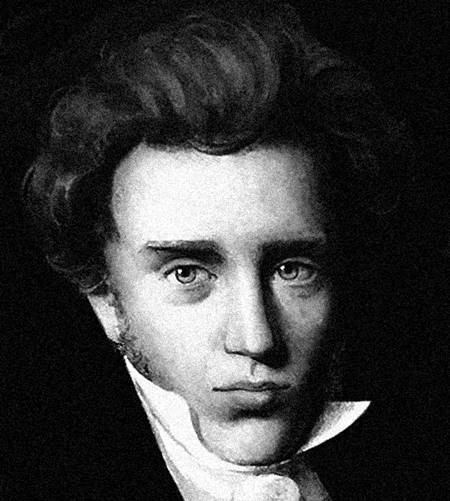
And to honor every individual human being, unconditionally every human being, that is the truth and fear...
WesternPhilosophy
Classical Western: Ancient, Medieval, and Modern : Epistemology and Metaphysics
Pre-Socratic Philosophers: Thales, Anaxagoras, Anaximenies, Ionians, Pythagoras, Parmenides, Heraclitus and Democritus,
The Sophists and Socrates
Plato and Aristotle:
· Plato – Theory of knowledge, knowledge and opinion, theory of Ideas, the method of dialectic, soul and God.
· Aristotle – Classification of the sciences, the theoretical, the practical and the
productive, logic as an organon, critique of Plato’s theory of Ideas, theory of causation, form and matter, potentiality and actuality, soul and God.
Medieval Philosophy:
· Augustine: Problem of Evil.
· Anselm: Ontological argument.
· Thomas Aquinas: Faith and Reason, Essence and Existence, the Existence of God.Modern Western Philosophy:
· Descartes : Conception of method , Criteria of truth, doubt and methodological
scepticism, cogito ergo sum, innate ideas, Cartesian dualism: mind and matter, proofs for the existence of God, interactionism.
· Spinoza : Substance, Attribute and Mode, the concept of ‘God or Nature’, Intellectual love of God, parallelism, pantheism, three orders of knowing.
· Leibnitz : Monadology, truths of reason and fact, innateness of ideas, proofs for the existence of God, principles of non – contradiction, sufficient reason and identity of indiscernibles, the doctrine of pre -established harmony, problem of freedom.
· Locke : Ideas and their classification, refutation of innate ideas, theory of substance,distinction between primary and secondary qualities, theory of knowledge, three grades of knowledge.
· Berkeley : Rejection of the distinction between primary and secondary qualities,immaterialism, critique of abstract ideas, esse est percipi, the problem of solipcism; God and self.
· Hume : Impressions and ideas, knowledge concerning relations of ideas and knowledge concerning matters of fact, induction and causality, the external world and the self, personal identity, rejection of metaphysics, scepticism, reason and the passions.
· Kant : The critical philosophy, classification of judgements, possibility of synthetic a priori judgements, the Copernican revolution, forms of sensibility, categories of understanding, the metaphysical and the transcendental deduction of the categories, phenomenon and noumenon, the Ideas of Reason – soul, God and world as a whole, rejection of speculative metaphysics.
· Hegel : The conception of Geist (spirit), the dialectical method, concepts of being, non – being and becoming, absolute idealism, Freedom.
Recent Western Philosophy
Analytic and Continental Philosophy:
Frege: Sense and Reference
Logical Positivism: Verification theory of meaning, Elimination of metaphysics, concept of
Philosophy
Moore: Distinction between Sense and Reference, Refutation of Idealism, Defense of commonsense, Proof of an External World.
Russell: Logical Atomism, Definite Descriptions, Refutation of Idealism
Wittgenstein: Language and Reality, Facts and objects, names and propositions, the picture
theory, critique of private language, meaning and use, forms of life, notion of philosophy,
Wittgensteinian Fideism, On Certainty.
Gilbert Ryle: Systematically misleading expressions, category mistake, concept of mind, critique of Cartesian dualism
A. J. Ayer: The Problem of Knowledge
W.V.O. Quine: Two Dogmas of Empiricism
H.P. Grice and P.F. Strawson: In Defense of a dogma
Phenomenology and Existentialism:
Husserl: Phenomenological Method, Philosophy as a rigorous science, Intentionality,
Phenomenological Reduction, Inter-subjectivity
Heidegger: The concept of Being (Dasein), Man as being in the world, critique of technological civilization
Kierkegaard: Subjectivity as Truth, Leap of faith
Sartre: Concept of Freedom, Bad-faith, Humanism
Morleau-Ponty: Perception, Embodied Consciousness
Pragmatism:
William James: Pragmatic Theories of Meaning and Truth, Varieties of Religious experience
John Dewey: Concept of Truth, Common-faith, education
Post-Modernism:
Nietzsche: Critique of Enlightenment, Will to Power, Genealogy of Moral
Richard Rorty: Critique of representationalism, Against Epistemological method, Edifying Philosophy
Immanuel Levinas: Ethics as a first philosophy, Philosophy of ‘other’