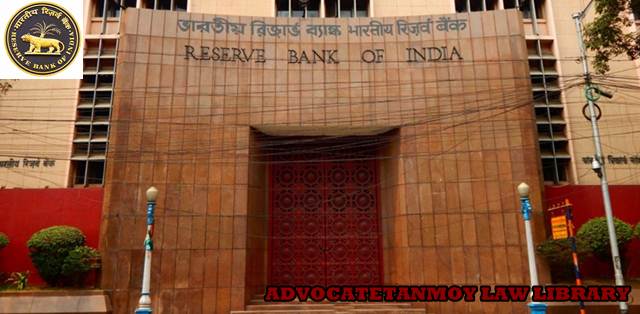
The Imperial Bank, the Hilton Young Commission, and the Birth of India’s Central Bank
The origin of central banking in India is a story of protracted intellectual evolution, political negotiation, and the gradual assimilation of global financial principles into a uniquely Indian context. It is a narrative that stretches over a century and a half, from the earliest colonial experiments in the 1770s to the eventual legislative success of 1934. This long preparatory phase was characterised not by a single, linear movement towards a predetermined goal, but by a series of fits and starts, marked by competing visions for the ideal institution, a persistent tension between state control and private independence, and the slow realisation that a modern economy required a specialised institution distinct from commercial banking. The journey began with rudimentary efforts to solve immediate fiscal problems, such as revenue collection and remittance, and culminated in the sophisticated, if contested, architecture of the Reserve Bank of India.
The earliest traceable attempt to create an institution with central banking characteristics can be found in the 1773 “Plan” of Warren Hastings, the Governor of Bengal, for a “General Bank in Bengal and Bahar.” This was not a central bank in the modern sense, but a pragmatic response to the exigencies of colonial administration in Calcutta. The primary motivations were fiscal: the bank was intended to act as a Treasury for revenue collections, minimising the risky and expensive overland transport of treasure from outlying districts to the capital. It was also expected to bring some order to the chaotic monetary landscape, where numerous varieties of the rupee circulated at fluctuating discounts, known as batta, which were often exploited by local shroffs. By fixing the batta at prescribed rates for its bills, the bank was to help stabilise inland exchange and reinforce the Sicca rupee as a standard coin.
Furthermore, the plan sought to remedy the seasonal contraction of currency that occurred when revenue was collected and locked in government treasuries. The bank was thus conceived as a palliative mechanism, intended to secure the revenue without “injuring the circulation.” Notably, the decision was made to establish it as a private corporation under the patronage of the East India Company, avoiding direct government ownership due to concerns over administrative complexity and excessive official emoluments. Though the bank, managed by distinguished indigenous financiers, was short-lived and closed in 1775 amidst political infighting within the Company’s administration, it was not a failure on economic grounds. It had demonstrably achieved its objectives, providing relief from exorbitant exchange rates and proving valuable to both government and private merchants before its untimely abolition.
Following this early experiment, nearly four decades passed before another significant proposal emerged. In 1807–1808, Robert Rickards, a member of the Bombay Government, submitted a scheme for a “General Bank” driven by a different imperative: the management of public debt. Rickards envisioned a bank that would convert a substantial portion of existing government debt into bank stock, thereby reducing the burden and complexity of borrowing. This bank was to be jointly owned by the public and government, with management vested in a Board of Directors that included elected stockholders and a government official, aiming for a balance between independence and public oversight. It was to enjoy the right of note issue, manage government treasuries, and engage in discounting and exchange business.
However, the Governor-General in Council dismissed the scheme as “mere speculation” with cumbersome machinery, and it was rejected by the Court of Directors in London. A later proposal in 1836, for a “Great Banking Establishment for British India,” submitted by English merchants, similarly sought to create a powerful institution modelled on the Bank of England, but was abandoned when the existing Bank of Bengal offered to expand its own functions. These early schemes, though unsuccessful, reveal a recurring theme: the search for a powerful banking institution capable of serving as a partner and agent of the state in managing both public finance and the broader economy.
The constitutional changes following the Revolt of 1857 marked a turning point. With India coming directly under the British Crown, financial administration was reorganised, and the office of the Financial Member of the Viceroy’s Council was created. This allowed for a more focused and expert approach to fiscal policy. In 1860, James Wilson, the first Financial Member, spoke of proposals for a “national banking establishment” on the model of the Bank of England. His successor, Samuel Laing, also supported such an institution for its utility to both the state and commerce. However, during this period, attention shifted to the three Presidency Banks—the Bank of Bengal, Bank of Bombay, and Bank of Madras.
These institutions, established in the early 19th century, were semi-government banks with partial state ownership and privileges. They originally possessed the right of note issuance, which was withdrawn and centralised under the Government of India through the Paper Currency Act of 1862. Following the financial collapse of the original Bank of Bombay in the 1860s, the idea of amalgamating the Presidency Banks gained momentum. In 1867, G. Dickson of the Bank of Bengal proposed a well-developed scheme for amalgamation, arguing that a unified institution could control monetary crises and provide uniform management of public debt.
This proposal, however, faced opposition from Viceroy Sir John Lawrence, who feared that such a powerful institution might become difficult to regulate and doubted the availability of capable management. He preferred maintaining a distributed system, where government balances were spread across multiple institutions. As a result, the amalgamation plan was shelved. Throughout the late 19th century, the idea of a State Bank continued to be discussed, often drawing inspiration from European models such as the Bank of France and the Netherlands Bank, both of which represented hybrid systems combining private ownership with state control.
In 1871, the Government of India expressed scepticism about the feasibility of establishing a central bank, citing the difficulty of attracting competent personnel. By 1884, another proposal for a central bank was dismissed on the grounds that India already possessed a “sound banking and currency system.” These responses reflected a conservative administrative mindset, wary of institutional innovation. Nevertheless, intellectual currents continued to evolve, particularly under the influence of European experiences.
A renewed impetus emerged towards the end of the century. The Indian Currency Committee of 1898, also known as the Fowler Committee, heard testimony from prominent financial experts who advocated for a stronger banking institution. Influential figures emphasised the need for a system capable of regulating currency in alignment with trade requirements. The Government of India, now more receptive, proposed in 1899 the creation of a unified institution by absorbing the Presidency Banks into a single “strong establishment” based on sterling standards.
However, opposition from the Bombay Chamber of Commerce and regional authorities highlighted concerns about monopoly power, lack of local knowledge, and the geographical vastness of India. By 1901, the proposal was abandoned, though the government acknowledged that the establishment of a central bank remained desirable. This episode illustrates the persistent tension between centralisation and decentralisation, as well as between efficiency and representation.
The next major phase began with the appointment of the Royal Commission on Indian Finance and Currency in 1913, commonly known as the Chamberlain Commission. Although central banking was not explicitly within its mandate, the Commission recognised its importance and commissioned detailed studies. Among the contributors was John Maynard Keynes, whose proposals were particularly influential. Keynes advocated for the creation of a State Bank, to be called the Imperial Bank of India, formed through the amalgamation of the Presidency Banks.
He argued that such a bank should be independent yet accountable, operating outside the routine machinery of government while fulfilling public responsibilities. The proposed institution would manage currency, public debt, and government transactions, while also engaging in commercial banking activities. The Commission, however, refrained from making a definitive recommendation, partly due to the outbreak of the First World War in 1914, which delayed further action.
The war experience proved transformative. The Presidency Banks collaborated closely with the government, demonstrating the advantages of coordination. In 1919, they proposed voluntary amalgamation, which the government welcomed. This led to the establishment of the Imperial Bank of India in 1921, headquartered in Calcutta. The new institution combined the operations of the three Presidency Banks and performed several central banking functions, including acting as banker to the government, managing public debt, and providing clearing facilities.
However, the Imperial Bank was not a true central bank. The control of currency and exchange remained with the government, resulting in a system of “central banking diarchy.” This division of responsibilities led to inefficiencies and conflicts, particularly in the management of exchange rates and monetary policy. The limitations of this arrangement became increasingly apparent during the interwar period.
The global movement towards central banking gained momentum after the Brussels Conference of 1920 and the Genoa Conference of 1922, both of which emphasised the importance of central banks for economic stability. In this context, the Government of India appointed the Hilton Young Commission in 1925 to examine the currency and financial system. In its 1926 report, the Commission made a decisive recommendation: the establishment of a separate central bank, to be known as the Reserve Bank of India.
The Commission argued that central banking functions should be clearly separated from commercial banking to avoid conflicts of interest. It emphasised the need for an institution capable of managing monetary policy, regulating credit, and maintaining exchange stability. Influential international figures supported this view, reflecting a growing consensus that central banking required institutional autonomy and technical expertise.
Despite broad agreement on the need for a central bank, the process of legislation proved contentious. The first Reserve Bank Bill of 1927 sparked intense debate over issues of ownership, governance, and political influence. While the government favoured a shareholders’ bank, many Indian leaders advocated for state ownership and greater representation of elected bodies. The disagreements proved irreconcilable, and the bill was withdrawn.
A second attempt in 1928 also failed due to procedural disputes and continued disagreement over constitutional principles. These setbacks reflected the broader political context, marked by growing demands for self-governance and concerns about the concentration of financial power. The central bank question became intertwined with debates about the future of colonial administration.
The breakthrough came in the early 1930s, amid constitutional reforms and the prospect of increased Indian participation in governance. It was widely recognised that a system of responsible government required an independent authority to manage currency and credit. This view was endorsed by the Round Table Conferences in London, as well as by the Indian Central Banking Enquiry Committee of 1931.
A series of expert committees refined the legislative framework, ultimately favouring a privately owned but publicly controlled institution. The final Reserve Bank of India Bill was introduced in 1933 and passed after relatively smooth deliberation. The Reserve Bank of India Act received assent on March 6, 1934, marking the culmination of more than a century of institutional evolution.
The establishment of the Reserve Bank represented the triumph of the idea that monetary stability required a specialised, independent institution. It embodied the lessons of earlier experiments, the influence of international models, and the practical needs of a complex and evolving economy. The long journey from the tentative proposals of the 18th century to the legislative success of 1934 illustrates the intricate interplay of ideas, institutions, and politics in shaping the foundations of modern financial governance in India.
Core Concept: Central Banking in India
Definition and Scope
Central Banking in India refers to the evolution of a monetary authority responsible for currency regulation, credit control, financial stability, and state banking functions, culminating in the establishment of the Reserve Bank of India (1934).
Cluster 1: Early Colonial Financial Experiments (1770s–1830s)
Key Ideas
- Fiscal centralisation
- Revenue security
- Monetary stabilisation
Linked Concepts
- East India Company Administration → see also: Colonial Governance Structures
- Revenue Collection Systems → see also: Land Revenue Settlements
- Sicca Rupee Standardisation → see also: Indian Monetary History
- Batta (Exchange Discount Mechanism) → see also: Indigenous Banking Practices
Internal Links
- Warren Hastings’ Banking Plan ↔ Treasury Functions
- Indigenous Shroff System ↔ Currency Instability
Cluster 2: Early Banking Proposals and Intellectual Foundations (1800–1857)
Key Ideas
- Public debt management
- Hybrid ownership models
- Proto-central banking thought
Linked Concepts
- Public Debt Conversion Schemes → see also: Colonial Fiscal Policy
- Board Governance Structures → see also: Corporate Governance in Banking
- Note Issue Authority → see also: Paper Currency Systems
Internal Links
- Rickards’ Proposal ↔ Debt Rationalisation
- Bank of England Model ↔ Institutional Emulation
Cluster 3: Presidency Banking System (1806–1921)
Key Ideas
- Semi-government banking
- Regional financial administration
- Early institutional consolidation
Linked Concepts
- Bank of Bengal, Bombay, Madras → see also: Presidency System
- Paper Currency Act 1862 → see also: Currency Centralisation
- Government Banking Functions → see also: Public Finance Administration
Internal Links
- Presidency Banks ↔ Note Issue Withdrawal
- Amalgamation Debates ↔ Centralisation vs Decentralisation
Cluster 4: Post-1857 Financial Reforms
Key Ideas
- Crown control over finance
- Professionalisation of fiscal policy
- Emergence of financial expertise
Linked Concepts
- Financial Member of Viceroy’s Council → see also: Colonial Executive Structure
- Imperial Fiscal Policy → see also: British Indian Administration
- National Banking Proposals → see also: Institutional Development
Internal Links
- James Wilson’s Ideas ↔ National Banking Vision
- Samuel Laing’s Advocacy ↔ Commercial Utility
Cluster 5: European Influences and Comparative Models
Key Ideas
- State vs private control
- Hybrid institutional frameworks
- Central bank autonomy
Linked Concepts
- Bank of England Model → see also: Central Banking Origins
- Bank of France Model → see also: State-Regulated Banking
- Netherlands Bank Model → see also: Mixed Governance Systems
Internal Links
- European Models ↔ Indian Institutional Debate
- State Supervision ↔ Monetary Authority
Cluster 6: Currency Committees and Pre-Modern Central Banking Thought (1898–1913)
Key Ideas
- Gold standard alignment
- Trade-linked currency regulation
- Institutional necessity
Linked Concepts
- Fowler Committee (1898) → see also: Gold Exchange Standard
- Sterling Exchange Mechanism → see also: Colonial Trade Finance
- Monetary Policy Evolution → see also: Exchange Rate Systems
Internal Links
- Currency Stability ↔ Trade Expansion
- Banking Strength ↔ Monetary Regulation
Cluster 7: Keynesian Intervention and Chamberlain Commission (1913)
Key Ideas
- State Bank concept
- Central-commercial banking hybrid
- Institutional independence
Linked Concepts
- Imperial Bank Proposal → see also: Banking Consolidation
- Proportional Reserve System → see also: Monetary Theory
- Government Accountability Mechanisms → see also: Fiscal Responsibility
Internal Links
- Keynes’ Vision ↔ Institutional Autonomy
- Chamberlain Commission ↔ Policy Framework
Cluster 8: Imperial Bank Phase (1921–1935)
Key Ideas
- Transitional central banking
- Banking consolidation
- Institutional duality
Linked Concepts
- Imperial Bank of India → see also: Banking Amalgamation
- Central Banking Diarchy → see also: Administrative Dualism
- Clearing House Mechanisms → see also: Interbank Settlement
Internal Links
- Imperial Bank ↔ Government Banker Role
- Currency Control ↔ Government Retention
Cluster 9: Global Central Banking Movement (1920s)
Key Ideas
- International monetary cooperation
- Institutional standardisation
- Post-war financial reconstruction
Linked Concepts
- Brussels Conference 1920 → see also: International Finance
- Genoa Conference 1922 → see also: Gold Exchange Standard Revival
- Central Bank Independence → see also: Monetary Governance
Internal Links
- Global Trends ↔ Indian Reforms
- Monetary Stability ↔ Institutional Design
Cluster 10: Hilton Young Commission (1925–1926)
Key Ideas
- Separation of functions
- Pure central banking model
- Institutional clarity
Linked Concepts
- Reserve Bank Proposal → see also: Central Bank Formation
- Conflict of Interest in Banking → see also: Financial Regulation
- Credit Control Mechanisms → see also: Monetary Instruments
Internal Links
- Commission Recommendations ↔ Structural Reform
- Separation Principle ↔ Institutional Efficiency
Cluster 11: Legislative Struggles (1927–1933)
Key Ideas
- Ownership debate
- Political representation
- Institutional independence
Linked Concepts
- Reserve Bank Bill 1927 → see also: Legislative Processes
- Shareholders vs State Ownership → see also: Public vs Private Models
- Legislative Representation in Banking → see also: Democratic Oversight
Internal Links
- Political Debate ↔ Institutional Design
- Bill Failure ↔ Constitutional Conflict
Cluster 12: Constitutional Reforms and Final Establishment (1930–1934)
Key Ideas
- Responsible government
- Financial safeguards
- Institutional autonomy
Linked Concepts
- Round Table Conferences → see also: Constitutional Reform in India
- Indian Central Banking Enquiry Committee (1931) → see also: Financial Committees
- Reserve Bank of India Act 1934 → see also: Legal Foundations of Banking
Internal Links
- Constitutional Reform ↔ Central Bank Necessity
- Financial Stability ↔ Political Transition
Cluster 13: Core Thematic Interconnections
State vs Market
- Links: Ownership Debate ↔ European Models ↔ Legislative Struggles
Centralisation vs Decentralisation
- Links: Presidency Banks ↔ Amalgamation Debate ↔ Imperial Bank
Independence vs Accountability
- Links: Keynesian Thought ↔ Hilton Young Commission ↔ RBI Act
Currency vs Credit Control
- Links: Currency Committees ↔ Imperial Bank Diarchy ↔ RBI Formation
Cluster 14: Terminal Node
Reserve Bank of India (1934)
Converging Ideas
- Monetary authority
- Institutional independence
- Integrated financial governance
Linked Concepts
- Currency management
- Credit regulation
- Banker to government
- Lender of last resort
Network Position
Acts as the central node integrating:
- Colonial fiscal evolution
- European institutional models
- Indian political negotiations
- Global financial principles
Cross-Cluster Navigation Paths
Path 1: Fiscal Need to Institutional Design
Revenue Collection → Currency Instability → Banking Proposals → Central Bank Formation
Path 2: Global Influence to Local Adaptation
European Models → Currency Committees → Hilton Young Commission → RBI Act
Path 3: Political Evolution to Financial Autonomy
Colonial Administration → Legislative Conflict → Constitutional Reform → Central Bank Independence