Skip to content

ADVOCATETANMOY LAW LIBRARY

Research & Library Database

Primary Menu
  • News
  • Opinion
  • Countries198
    • National Constitutions: History, Purpose, and Key Aspects
  • Judgment
  • Book
  • Legal Brief
    • Legal Eagal
  • LearnToday
  • HLJ
    • Supreme Court Case Notes
    • Daily Digest
  • Sarvarthapedia
    • Sarvarthapedia (Core Areas)
    • Systemic-and-systematic
    • Volume One
01/04/2026
  • Law

Mere possibility of abuse of a provision of law does not per se invalidate a Legislation.

The possibility of abuse of a statute otherwise valid does not impart to it any element of invalidity
advtanmoy 13/08/2018 3 minutes read

© Advocatetanmoy Law Library

  • Share on WhatsApp (Opens in new window) WhatsApp
  • Share on X (Opens in new window) X
  • Share on Facebook (Opens in new window) Facebook
  • Share on Telegram (Opens in new window) Telegram
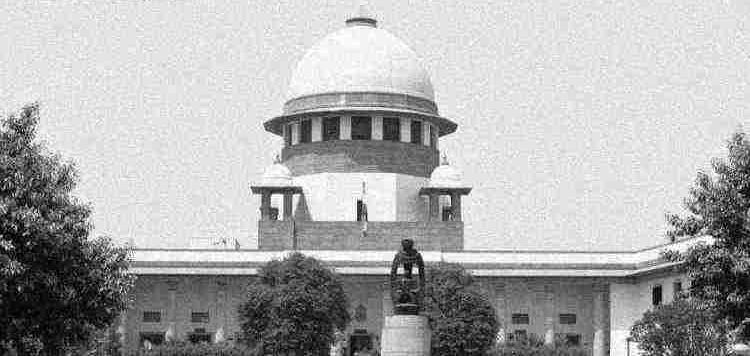
Supreme court of india

Home » Law Library Updates » Sarvarthapedia » Law » Mere possibility of abuse of a provision of law does not per se invalidate a Legislation.

It is well settled that mere possibility of abuse of a provision of law does not per se invalidate a legislation. It must be presumed, unless contrary is proved, that administration and application of a particular law would be done “not with an evil eye and unequal hand” ((see : A. Thangal Kunju Musaliar vs. M. Venkatachalam Potti, Authorised Official and Income-Tax Officer and another) AIR 1956 SC 246).

 In Budhan Choudhry and others vs. State of Bihar (AIR 1955 SC 191) a contention was raised that a provision of law may not be discriminatory but it may land itself to abuse bringing about discrimination between the persons similarly situated. This court repelled the contention holding that on the possibility of abuse of a provision by the authority, the legislation may not be held arbitrary or discriminatory and violative of Article 14 of the Constitution.

From the decided cases in India as well as in United States of America, the principle appears to be well settled that if a statutory provision is otherwise intra-vires, constitutional and valid, mere possibility of abuse of power in a given case would not make it objectionable, ultra-vires or unconstitutional. In such cases, “action” and not the “section” may be vulnerable. If it is so, the court by upholding the provision of law, may still set aside the action order or decision and grant appropriate relief to the person aggrieved.

Read Next

  • Disclosure of Personal Information under the Right to Information Act, 2005
  •  Judicial office is essentially a public trust: Supreme Court
  • Supreme Court Daily Digest (26th Jan 2026)

In Mafatlal Industries Ltd. and Ors. vs. Union of India and Ors. (1997) 5 SCC 536, a Bench of 9 Judges observed that mere possibility of abuse of a provision by those in charge of administering it cannot be a ground for holding a provision procedurally or substantively unreasonable. In Collector of Customs vs. Nathella Sampathu Chetty (1962) 3 SCR 786 this Court observed :

“The possibility of abuse of a statute otherwise valid does not impart to it any element of invalidity.” It was said in State of Rajasthan vs. Union of India (1977) 3 SCC 592 “it must be remembered that merely because power may sometimes be abused, it is no ground for denying the existence of power. The wisdom of man has not yet been able to conceive of a Government with power sufficient to answer all its legitimate needs and at the same time incapable of mischief.” (Also see: Commissioner, H.R.E. vs. Sri Lakshmindra Thirtha Swamiar of Sri Shirur Meth (1954) SCR 1005.

As observed in Maulavi Hussien Haji Abraham Umarji vs. State of Gujarat (2004) 6 SCC 672. Unique Butle Tube Industries (P) Ltd. vs. U.P. Financial Corporation and Ors. (2003) 2 SCC 455 and Padma Sundara Rago (dead) and Ors. vs. State of T.N. and Ors. (2002) 3 SCC 533, while interpreting a provision, the Court only interprets the law and cannot legislate it. If a provision of law is misused and subjected to the abuse of the process of law, it is for the legislature to amend, modify or repeal it, if deemed necessary.

Read Next

  • Disclosure of Personal Information under the Right to Information Act, 2005
  •  Judicial office is essentially a public trust: Supreme Court
  • Supreme Court Daily Digest (26th Jan 2026)
Tags: Challenging a legislation legislation

Post navigation

Previous: Indian Advocate shall not personally engage in any business or employment
Next: Somnath Chatterjee is no more
Sarvarthapedia
Sarvarthapedia

Research Methodology and Investigation: Concepts, Frameworks, and Emerging Trends

Surupa Guha Murder Case
Sarvarthapedia

Surupa Guha Murder Case 1976 : w/o Indranath Guha (ex-Principal of South Point School & Friend of Aparna Sen)

Howrah District Environment Plan: Waste Management, Water Quality & Wetland Conservation

Bharatiya Nyaya Sanhita 2023: Sections (1-358), Punishments, and Legal Framework

Bengali Food Culture: History, Traditions, and Class Influences

West Bengal Court-Fees Act, 1970: Fees, Schedules, and Procedures

WB Land Reforms Tribunal Act 1997: History, Features, Provisions, Structure, Powers and Functions

Civil Procedure Law of the Democratic People’s Republic of Korea (1976)

Knowledge Management in the Modern Era: From History to Digital Transformation

Vedic Interpretation Methodical Style: History, Principles, and Evolution  From Yaska to Aurobindo

Research on English Law: Courts, Legislation, and Case Reporting System

Vedic Etymology of Krishna Yajurveda: Nirvacana, Yajña Concepts, and Word Origins

Nagaland History and People: History, Religion, Demography, and Tribal Life

Knowledge Ecosystem Architecture: Content, People, Processes, and Culture

  • Sarvarthapedia

  • Delhi Law Digest

  • Howrah Law Journal

  • Amit Arya vs Kamlesh Kumari: Doctrine of merger20/12/2025
  • David Vs. Kuruppampady: SLP against rejecting review by HC (2020)28/10/2025
  • Nazim & Ors. v. State of Uttarakhand (2025 INSC 1184)06/10/2025
  • Geeta v. Ajay: Expense for daughter`s marriage allowed in favour of the wife05/10/2025
  • Bharatiya Nagarik Suraksha Sanhita 2023 (BNSS)
  • Bharatiya Sakshya Adhiniyam 2023 (BSA): Indian Rules for Evidence
  • Bharatiya Nyaya Sanhita (BNS) 2023
  • The Code of Civil Procedure (CPC)
  • Supreme Court Daily Digest
  • U.S. Supreme Court Orders
  • U.k. Supreme Court Orders
  • Howrah District Environment Plan: Waste Management, Water Quality & Wetland Conservation
  • Bharatiya Nyaya Sanhita 2023: Sections (1-358), Punishments, and Legal Framework
  • Bengali Food Culture: History, Traditions, and Class Influences
  • West Bengal Court-Fees Act, 1970: Fees, Schedules, and Procedures

2026 © Advocatetanmoy Law Library

  • About
  • Global Index
  • Judicial Examinations
  • Indian Statutes
  • Glossary
  • Legal Eagle
  • Subject Guide
  • Journal
  • SCCN
  • Constitutions
  • Legal Brief (SC)
  • MCQs (Indian Laws)
  • Sarvarthapedia (Articles)
  • Contact Us
  • Privacy Policy
  • FAQs
  • Library Updates