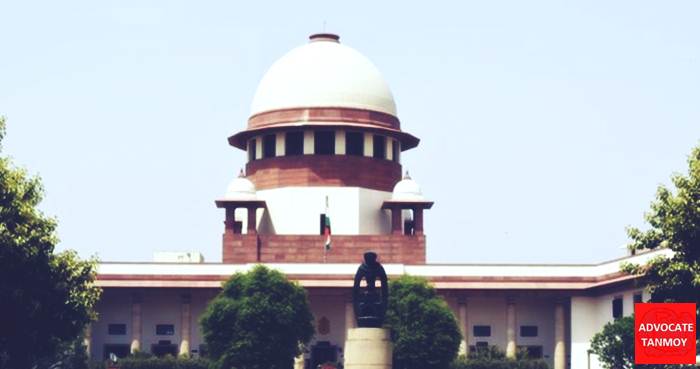
Supreme Court of India
Hinsa Virodhak Sangh vs Mirzapur Moti Kuresh Jamat & Ors
Appeal (civil) 5469 of 2005
Bench: H. K. Sema, Markandey Katju
Author: M Katju
Date: 14 March, 2008
Cittion: A.I.R. 2008 S.C. 1892, (2008) 5 SCC 33
47. The architect of modern India was the great Mughal Emperor Akbar who gave equal respect to people of all communities and appointed them to the highest offices on their merits irrespective of their religion, caste, etc.
48. The Emperor Akbar held discussions with scholars of all religions and gave respect not only to Muslim scholars, but also to Hindus, Christians, Parsis, Sikhs, etc. Those who came to his court were given respect and the Emperor heard their views, sometimes alone, and sometimes in the Ibadatkhana (Hall of Worship), where people of all religions assembled and discussed their views in a tolerant spirit. The Emperor declared his policy of Suleh-e-Kul, which means universal tolerance of all religions and communities. He abolished Jeziya in 1564 and the pilgrim tax in 1563 on Hindus and permitted his Hindu wife to continue to practise her own religion even after their marriage. This is evident from the Jodha Bai Palace in Fatehpur Sikri which is built on Hindu architectural pattern.
49. In 1578, the Parsi theologian Dastur Mahyarji Rana was invited to the Emperor’s court and he had detailed discussions with Emperor Akbar and acquainted him about the Parsi religion. Similarly, the Jesuit Priests Father Antonio Monserrate, Father Rodolfo Acquaviva and Father Francisco Enriques etc. also came to the Emperor`s court on his request and acquainted him about the Christian religion. The Emperor also became acquainted with Sikhism and came into contact with Guru Amar Das and Guru Ram Das (see `The Mughal Empire by R.C. Majumdar).
50. Thus, as stated in the Cambridge History of India (Vol.IV – The Mughal Period) Emperor Akbar conceived the idea of becoming the father of all his subjects, rather than the leader of only the Muslims, and he was far ahead of his times. As mentioned by Pt. Jawahar Lal Nehru in The Discovery of India, Akbar`s success is astonishing, for he created a sense of oneness among the diverse elements of India.
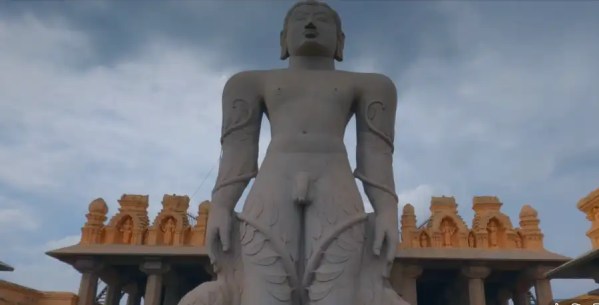
51. In 1582, the Emperor invited and received a Jain delegation consisting of Hiravijaya Suri, Bhanuchandra Upadhyaya and Vijayasena Suri. Jainism, with its doctrine of non-violence, made a profound impression on him and influenced his personal life. He curtailed his food and drink and ultimately abstained from flesh diet altogether for several months in the year. He renounced hunting which was his favourite pastime, restricted the practice of fishing and released prisoners and caged birds. Slaughter of animals was prohibited on certain days and ultimately in 1587 for about half the days in the year.
52. Akbars contact with Jains began as early as 1568, when Padma Sunder who belonged to the Nagpuri Tapagaccha was honoured by him.
53. As mentioned in Dr. Ishwari Prasad`s `The Mughal Empire, the Jains had a great influence on the Emperor. A disputation was held in Akbar`s court between the Jain monks Buddhisagar of Tapgaccha and Suddha Kirti of Khartargaccha on the subject of Jain religious ceremony called Pansadha in which the winner was given the title Jagatguru by Akbar. Having heard of the virtues and learning of Hir Vijaya Suri in 1582 the Emperor sent an invitation to him through the Mughal Viceroy at Ahmedabad. He accepted it in the interests of his religion. He was offered money by the Viceroy to defray the expenses of the journey but he refused. The delegation consisting of Hir Vijaya Suri, Bhanu Chandra Upadhyaya and Vijaya Sen Suri started on their journey and walked on foot to Fatehpur Sikri and were received with great honour befitting imperial guests. Hir Vijaya Suri had discussion with Abul Fazl. He propounded the doctrine of Karma and an impersonal God. When he was introduced to the Emperor he defended true religion and told him that the foundation of faith should be daya (compassion) and that God is one though he is differently named by different faiths.
54. The Emperor received instruction in Dharma from Suri who explained the Jain doctrines to him. He discussed the existence of God and the qualities of a true Guru and recommended non-killing (Ahinsa). The Emperor was persuaded to forbid the slaughter of animals for six months in Gujarat and to abolish the confiscation of the property of deceased persons, the Sujija Tax (Jeziya) and a Sulka (possibly a tax on pilgrims) and to free caged birds and prisoners. He stayed for four years at Akbars court and left for Gujarat in 1586. He imparted a knowledge of Jainism to Akbar and obtained various concessions to his religion. The Emperor is said to have taken a vow to refrain from hunting and expressed a desire to leave off meat- eating for ever as it had become repulsive. The Emperor presented to him Padma Sundar scriptures which were preserved in his palace. He offered them to Suri as a gift and he was pressed by the Emperor to accept them. The killing of animals was forbidden for certain days.
55. If the Emperor Akbar could forbid meat eating for six months in a year in Gujarat, is it unreasonable to abstain from meat for nine days in a year in Ahmedabad today?
56. Emperor Akbar was a propagator of Suleh-i-Kul (universal toleration) at a time when Europeans were indulging in religious massacres e.g. the St. Bartholomew Day massacre in 1572 of Protestants, (called Huguenots) in France by the Catholics, the burning at the stake of Protestants by Queen Mary of England, the massacre by the Duke of Alva of millions of people for their resistance to Rome and the burning at the stake of Jews during the Spanish Inquisition. We may also mention the subsequent massacre of the Catholics in Ireland by Cromwell, and the mutual massacre of Catholics and Protestants in Germany during the thirty year war from 1618 to 1648 in which the population of Germany was reduced from 18 million to 12 million. Thus, Emperor Akbar was far ahead of even the Europeans of his times.
57. Emperor Akbar himself abstained from eating meat on Fridays and Sundays and on some other days, as has been mentioned in the Ain-I-Akbari by Abul Fazl.
58. It was because of the wise policy of toleration of the Great Emperor Akbar that the Mughal empire lasted for so long, and hence the same wise policy of toleration alone can keep our country together despite so much diversity.
59. We may give another historical illustration of tolerance in our country. In the reign of Nawab Wajid Ali Shah of Avadh, in a certain year Holi and Muharrum coincidentally fell on the same day. Holi is a festival of joy, whereas Muharrum is an occasion for mourning. The Hindus of Lucknow decided that they would not celebrate Holi that year out of respect for the sentiments for their Muslim brethren. On that day, the Nawab joined the Muharrum procession and after burial of the Tazia at Karbala he enquired why Holi is not being celebrated. He was told that it was not being celebrated because the Hindus out of respect for the sentiments of their Muslim brethren had decided not to play Holi that year because it was a day of mourning for the Muslims. On hearing this, Nawab Wajid Ali Shah declared that since Hindus have respected the sentiments of their Muslim brothers, it is also the duty of the Muslims to respect the sentiments of their Hindu brethren. Hence, he announced that Holi would be celebrated the same day and he himself was the first who started playing Holi on that day and thereafter everyone in Lucknow, including the Muslims, played Holi, although it was Muharrum day also. It is this kind of sentiment of tolerance which alone can keep our country united.
60. We are making these comments because what we are noticing now-a- days is a growing tendency of intolerance in our country.
Note
Hinsa Virodhak Sangh v. Mirzapur Moti Kuresh Jamat, (2008) 5 SCC 33,
Emperor Akbar :The Real Father of the Indian Nation [Wednesday, 10 June 2015]-[https://justicekatju.blogspot.com/2015/06/emperor-akbar-real-father-of-indian_10.html]- Justice Katju wrote, “The tragedy is that the 90% fools and idiots living in India today do not even know who is the real Father of their Nation !”…”It is high time that Indians realize the truth and know who is the real Father of our Nation.”