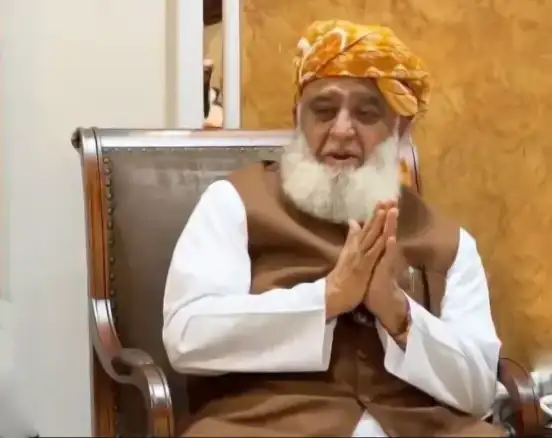
Maulana Fazlur Rehman Criticizes Pakistan's Establishment and Military
Encyclopedia of Contemporary World History
Maulana Fazlur Rehman on Pakistan’s Governance, Military, and Constitutional Boundaries
Maulana Fazlur Rehman made these remarks during a Jamiat Ulema-e-Islam (JUI-F) public rally held on 12 July 2026 in Kasur, Punjab. In his address, he focused extensively on Pakistan’s deteriorating security environment, particularly the rise of terrorism and the weakening of state authority in Khyber Pakhtunkhwa and Balochistan. Arguing that the state’s primary responsibility was to ensure public safety, he criticized what he described as governance failures and questioned calls for civilians to organize armed resistance. In this context, he referred to the frequent invocation of soldiers’ martyrdom, stating that military personnel were salaried to defend the country and fulfill their constitutional duty, and that the burden of combating militant groups should not be shifted onto ordinary citizens.
Jamiat Ulama-e-Islam Pakistan X handle Post
“I want to say to the Muqtadara (establishment) that you are not outsiders either. You too are our Pakistanis; you too are our Kalma-go (those who profess the Islamic declaration of faith) brothers. But if one has to live within the country, then there are limits for me as well; I should not go beyond my own da’irah (constitutional sphere/limit). Parliament also has its own da’irah (sphere of authority). Every department has its own da’irah-e-ikhtiyar (jurisdiction). Likewise, the military also has its own da’irah-e-ikhtiyar (jurisdiction). The military also has its own responsibility—focus on fulfilling your own responsibility.
The country is being ruined. Today, there is effectively no government in Khyber Pakhtunkhwa. After the sun sets in the west until the sun rises in the morning, the police do not come out of their police stations. And when the police do not come out of their stations, the roads are left in the hands of armed groups, and the highways and routes remain at the mercy of bandits.
I know your hakimiyat (authority/control) in my province. You have no real government there. You only sit inside your grand bungalows in the capitals, with one leg crossed over the other, believing that you are the rulers. But at least in my province, you have no government.
And listen to this—listen with the ears of your heart wide open. These are facts. I am not displaying oratory from a stage.
In Balochistan, there were insurgencies in the Baloch areas, and the entire Baloch region had gone out of Pakistan’s control. Even today, the Government of Pakistan has no real rit (writ/authority of the state) there. But we were mourning only the Baloch region; now the Pashtun region too is drenched in blood. Within just two or three days, we have received more than fifty dead bodies in the Pashtun areas. We went to the markets for only one purpose—to buy kafan (burial shrouds) for our loved ones. We did only one thing—to offer the janazah (funeral prayers) of our loved ones.
Is this the destiny of the people of Pakistan—that we must spend our lives shedding blood? Neither can my child leave home to go to school, nor can the poor man of my province leave home to earn his daily livelihood. And if he does leave home, he does not feel safe.
Then they say, ‘Our young men are being shaheed (martyred).’ Oh brother! Your soldiers put on the uniform precisely for that purpose, and they receive their salaries for that purpose—to fight for the security of the country. Why do you act as though you are doing me a favor with your blood? You receive your salary from the taxes paid through my blood and sweat for exactly this purpose. Yet you tell us to raise lashkars (tribal militias), to take up arms, and to fight the armed groups ourselves.
I have taken no salary, and I will not form any lashkar (tribal militia). You will leave, but you are pushing my homeland into personal vendettas for generations to come. You are pushing it permanently toward killing and bloodshed. Explain this politics to someone else—do not try to explain it to us.
If you want to do politics, then take off the wardi (military uniform) and come. Contest the elections, and then you will find out what kind of votes a man in uniform receives. It has become your authority that you can give power to whomever you wish, and take power away from whomever you wish.”
— Amir (Chief/President) of JUI (Jamiat Ulema-e-Islam), Maulana Fazlur Rehman, addressing a public gathering in Punjab. (Date: 12 Jul 2026)
Sarvarthapedia Cross-Referenced Conceptual Network
Conceptual Cluster: Civil-Military Relations, Constitutional Authority, and Internal Security in Pakistan
This speech by Maulana Fazlur Rehman represents a conceptual intersection of constitutional governance, civil-military relations, state legitimacy, counterinsurgency, democratic accountability, and Islamic political discourse. Rather than functioning merely as a political speech, it presents a structured critique of the relationship between military institutions, civilian government, and state authority within Pakistan.
Core Concept
Constitutional Distribution of State Authority
Central Proposition
Every institution of the state possesses a constitutionally defined sphere of authority (Da’irah-e-Ikhtiyar). Political instability emerges when one institution exceeds or neglects its legitimate constitutional function.
Connected Concepts
- Constitutionalism
- Rule of Law
- Separation of Powers
- Democratic Accountability
- Institutional Responsibility
- Civilian Supremacy
- State Legitimacy
See also
- Constitution of Pakistan
- Parliamentary Sovereignty
- Executive Authority
- Administrative Law
- Political Legitimacy
Cluster I: Da’irah (Constitutional Sphere of Authority)
The repeated use of Da’irah establishes a theory of constitutional boundaries.
Connected Concepts
- Institutional Competence
- Jurisdiction
- Constitutional Restraint
- Legal Authority
- Division of Government Powers
Related Articles
- Constitutional Governance
- Institutional Checks and Balances
- Military Jurisdiction
- Executive Accountability
- Constitutional Crisis
Cluster II: Muqtadara (The Establishment)
The speech distinguishes between
- Pakistani society
- Civilian political institutions
- Military establishment
without questioning shared national identity.
Connected Concepts
- Deep State
- Security Establishment
- Permanent State
- Bureaucratic Power
- Elite Governance
Cross References
- Civil-Military Relations
- Security State
- Strategic Decision Making
- Intelligence Institutions
- National Security Bureaucracy
Cluster III: Civil-Military Relations in Pakistan
The speech argues that
Military institutions exist to provide security rather than political governance.
Connected Concepts
- Professional Military
- Civilian Control of Armed Forces
- Democratic Oversight
- Political Neutrality
- National Defence
Related Articles
- Military Professionalism
- Constitutional Militaries
- Coups and Military Intervention
- National Defence Policy
- Security Governance
Cluster IV: Rule of Law and State Capacity
The absence of police presence is presented as evidence of declining governmental authority.
Indicators
- Police withdrawal
- Armed groups
- Criminal control of roads
- Fear among civilians
Connected Concepts
- State Capacity
- Law Enforcement
- Monopoly over Violence
- Internal Security
- Public Administration
Related Articles
- Failed Governance
- Security Sector Reform
- Criminal Networks
- Territorial Control
Cluster V: Writ of the State
The speech repeatedly questions whether the state possesses effective territorial authority.
Components
- Territorial Control
- Administrative Presence
- Judicial Enforcement
- Security Enforcement
- Political Sovereignty
Connected Concepts
- Sovereignty
- Governance
- Internal Conflict
- Political Geography
- Federal Administration
Cross References
- State Failure
- Fragile States
- Counterinsurgency
- Territorial Administration
Cluster VI: Internal Armed Conflict
The speech links two conflict theatres
- Balochistan
- Khyber Pakhtunkhwa
as examples of declining state authority.
Connected Concepts
- Insurgency
- Counterinsurgency
- Ethnic Conflict
- Separatism
- Terrorism
Related Articles
- Baloch Insurgency
- Pashtun Security Issues
- Tribal Areas
- Hybrid Conflict
- Armed Non-State Actors
Cluster VII: Human Security
The speech shifts the discussion from territorial security toward individual security.
Dimensions
- Child safety
- Education
- Livelihood
- Freedom of movement
- Civilian protection
Connected Concepts
- Human Security
- Social Stability
- Public Safety
- Everyday Governance
- Development
Related Articles
- Human Development
- Internal Displacement
- Social Order
- Civilian Protection
Cluster VIII: Military Duty and Public Taxation
The speech advances a civic argument.
Citizens finance national defence through taxation.
Therefore
Military service is a constitutional duty rather than a voluntary sacrifice demanding political deference.
Connected Concepts
- Public Finance
- Civilian Taxation
- Defence Budget
- Public Accountability
- Social Contract
Cross References
- Fiscal Sociology
- Taxation and Citizenship
- Defence Economics
- Public Administration
Cluster IX: Rejection of Civilian Militias
The speech rejects proposals for citizens to organize armed groups.
Argument
Security remains an exclusive responsibility of the state.
Connected Concepts
- Monopoly of Violence
- Vigilantism
- Militias
- Civil Defence
- State Responsibility
Related Articles
- Weberian State
- Armed Militias
- Informal Security Networks
- Community Defence
Cluster X: Monopoly of Legitimate Violence
Underlying Principle
Only the state possesses legitimate authority to employ organized force.
Connected Concepts
- Max Weber
- Sovereignty
- Law Enforcement
- National Defence
- Constitutional Authority
Related Articles
- Political Sociology
- Modern State Formation
- Security Institutions
Cluster XI: Democracy versus Military Politics
The speech distinguishes between
- Military Service
- Electoral Politics
Its argument
Political legitimacy should emerge through elections rather than institutional power.
Connected Concepts
- Electoral Democracy
- Representative Government
- Civilian Leadership
- Political Competition
- Democratic Legitimacy
Related Articles
- Elections
- Political Parties
- Constitutional Democracy
- Democratic Transition
Cluster XII: Institutional Accountability
Every institution should remain accountable within its assigned constitutional function.
Institutions Mentioned
- Parliament
- Police
- Military
- Civil Administration
- Provincial Government
Connected Concepts
- Public Administration
- Institutional Performance
- Administrative Responsibility
- Constitutional Ethics
Cluster XIII: Political Theology
Religious vocabulary serves primarily as a language of shared national identity.
Examples
- Kalma-go
- Shaheed
- Janazah
Connected Concepts
- Islamic Political Thought
- Religious Legitimacy
- Political Identity
- Islamic Constitutionalism
Related Articles
- Political Islam
- Religious Nationalism
- Islamic Jurisprudence
- Muslim Identity
Cluster XIV: Governance versus Symbolic Power
The speech contrasts
Symbolic authority
with
Effective governance.
Indicators
- Large official residences
- Administrative absence
- Territorial insecurity
- Public fear
Connected Concepts
- Governance Indicators
- Administrative Effectiveness
- Political Performance
- Institutional Legitimacy
Cluster XV: Social Contract
The speech invokes an implicit social contract.
Citizens
- Pay taxes
- Obey laws
- Participate in elections
The State
- Provides security
- Maintains law and order
- Protects territorial integrity
- Safeguards civilian life
Connected Concepts
- Hobbes
- Locke
- Rousseau
- Modern Constitutional State
- Citizenship
Meta-Civilizational Cluster
The State as an Institutional Ecosystem
The speech conceptualizes the state not as a single organization but as an interconnected institutional ecosystem whose stability depends upon every institution performing its constitutionally assigned role.
Interconnected Components
- Constitution
- Parliament
- Executive Government
- Judiciary
- Police
- Military
- Taxpayers
- Citizens
- Electoral System
- Provincial Governments
Failure of one institutional component generates cascading failures across governance, security, economic activity, and public confidence, illustrating the characteristics of a Complex Adaptive Political System.
Sarvarthapedia Knowledge Web
Constitutional Governance
→ Separation of Powers
→ Constitutionalism
→ Rule of Law
→ Democratic Accountability
→ Institutional Legitimacy
Security Studies
→ Civil-Military Relations
→ Internal Security
→ Counterinsurgency
→ State Capacity
→ National Defence
→ Intelligence Studies
Political Science
→ State Formation
→ Sovereignty
→ Public Administration
→ Electoral Democracy
→ Political Institutions
Sociology
→ Social Contract
→ Citizenship
→ Human Security
→ Collective Violence
→ Civil Society
Economics
→ Taxation
→ Defence Economics
→ Public Finance
→ Fiscal Accountability
Conflict Studies
→ Terrorism
→ Insurgency
→ Armed Non-State Actors
→ Political Violence
→ Peacebuilding
Islamic Political Thought
→ Political Theology
→ Islamic Constitutionalism
→ Religious Authority
→ Muslim Identity
→ Governance Ethics
Ultimate Cross-Reference Network
Da’irah-e-Ikhtiyar → Constitutional Governance → Separation of Powers → Civilian Supremacy → Democratic Accountability
Muqtadara → Security Establishment → Civil-Military Relations → Deep State → National Security Governance
Hakimiyat → Sovereignty → State Capacity → Rule of Law → Writ of the State
Writ of the State → Internal Security → Police Administration → Counterinsurgency → Territorial Control
Human Security → Education → Livelihood → Freedom of Movement → Public Safety → Human Development
Military Duty → Defence Economics → Public Taxation → Social Contract → Constitutional Responsibility
Lashkar → Militias → Monopoly of Legitimate Violence → State Authority → Security Governance
Electoral Legitimacy → Representative Democracy → Civilian Government → Constitutional Order → Political Accountability
Political Theology → Islamic Political Thought → National Identity → Religious Legitimacy → Constitutional Discourse
Institutional Ecosystem → Complex Adaptive Political System → Governance Networks → State Resilience → Civilizational Stability
Urdu–English Vocabulary (Extracted from Rahaman’s Speech)
| Urdu | Transliteration | English Meaning |
|---|---|---|
| جمعیت علماء اسلام | Jamiat Ulama-e-Islam | Assembly of Islamic Scholars |
| پاکستان | Pakistan | Pakistan |
| مقتدرہ | Muqtadara | Establishment; state establishment |
| غیر | Ghair | Outsider; stranger |
| پاکستانی | Pakistani | Pakistani |
| کلمہ گو | Kalma-go | One who professes the Islamic declaration of faith |
| بھائی | Bhai | Brother |
| ملک | Mulk | Country; state |
| دائرہ | Da’irah | Sphere; limit; boundary |
| پارلیمنٹ | Parliament | Parliament |
| محکمہ | Mahkama | Department |
| دائرۂ اختیار | Da’irah-e-Ikhtiyar | Jurisdiction; sphere of authority |
| فوج | Fauj | Army; military |
| ذمہ داری | Zimmedari | Responsibility; duty |
| اجڑ رہا ہے | Ujar raha hai | Is being ruined; is falling apart |
| خیبر پختونخوا | Khyber Pakhtunkhwa | Khyber Pakhtunkhwa (province) |
| حکومت | Hukumat | Government |
| مغرب | Maghrib | West; sunset |
| غروب | Ghuroob | Sunset |
| طلوع | Tulu | Sunrise |
| پولیس | Police | Police |
| تھانہ | Thana | Police station |
| سڑک | Sarak | Road |
| مسلح | Musallah | Armed |
| گروہ | Giroh | Group |
| سپرد | Supurd | Entrusted; handed over |
| ڈاکو | Daku | Bandit; robber |
| رحم و کرم | Rahm-o-Karam | Mercy; at the mercy of |
| حاکمیت | Hakimiyat | Authority; sovereignty |
| صوبہ | Subah | Province |
| دارالحکومت | Dar-ul-Hukumat | Capital city |
| بنگلہ | Bangla | Bungalow |
| حکمران | Hukmaran | Ruler |
| حقائق | Haqaiq | Facts; realities |
| خطابت | Khitabat | Oratory; public speaking |
| بلوچستان | Balochistan | Balochistan |
| بلوچ | Baloch | Baloch |
| بغاوت | Baghawat | Rebellion; insurgency |
| اختیار | Ikhtiyar | Authority; control |
| رٹ | Rit | Writ; effective authority of the state |
| پشتون | Pashtun | Pashtun |
| خون | Khoon | Blood |
| لاش | Lash | Dead body; corpse |
| بازار | Bazaar | Market |
| پیارے | Pyare | Loved ones |
| کفن | Kafan | Burial shroud |
| جنازہ | Janazah | Funeral; funeral prayer |
| عوام | Awam | People; public |
| قسمت | Qismat | Fate; destiny |
| اسکول | School | School |
| روزی | Rozi | Livelihood |
| مزدوری | Mazdoori | Wage labour |
| محفوظ | Mehfooz | Safe; secure |
| جوان | Jawan | Soldier; young man |
| شہید | Shaheed | Martyr |
| پٹی باندھنا | Patti Bandhna | To put on the military headband/uniform (figuratively, to join military service) |
| تنخواہ | Tankhwah | Salary |
| سلامتی | Salamati | Security; safety |
| خون پسینہ | Khoon Paseena | Blood and sweat; hard-earned labour |
| ٹیکس | Tax | Tax |
| لشکر | Lashkar | Militia; armed force |
| اسلحہ | Aslaha | Weapons; arms |
| سرزمین | Sarzameen | Homeland |
| نسل | Nasl | Generation |
| ذاتی دشمنی | Zati Dushmani | Personal enmity |
| قتل و غارت گری | Qatl-o-Gharatgari | Killing and bloodshed; massacre |
| سیاست | Siyasat | Politics |
| وردی | Wardi | Uniform |
| الیکشن | Election | Election |
| ووٹ | Vote | Vote |
| اختیار | Ikhtiyar | Authority; power |
| حکومت دینا | Hukumat Dena | To install a government |
| حکومت چھین لینا | Hukumat Chheen Lena | To remove a government from power |
| امیر | Amir | Chief; President; Leader |
| مولانا | Maulana | Islamic scholar (honorific) |
| فضل الرحمان | Fazlur Rehman | Fazlur Rehman |
| قصور | Kasur | Kasur (city in Punjab) |
| پنجاب | Punjab | Punjab |
| جلسہ | Jalsa | Public rally; gathering |
| خطاب | Khitab | Address; speech |