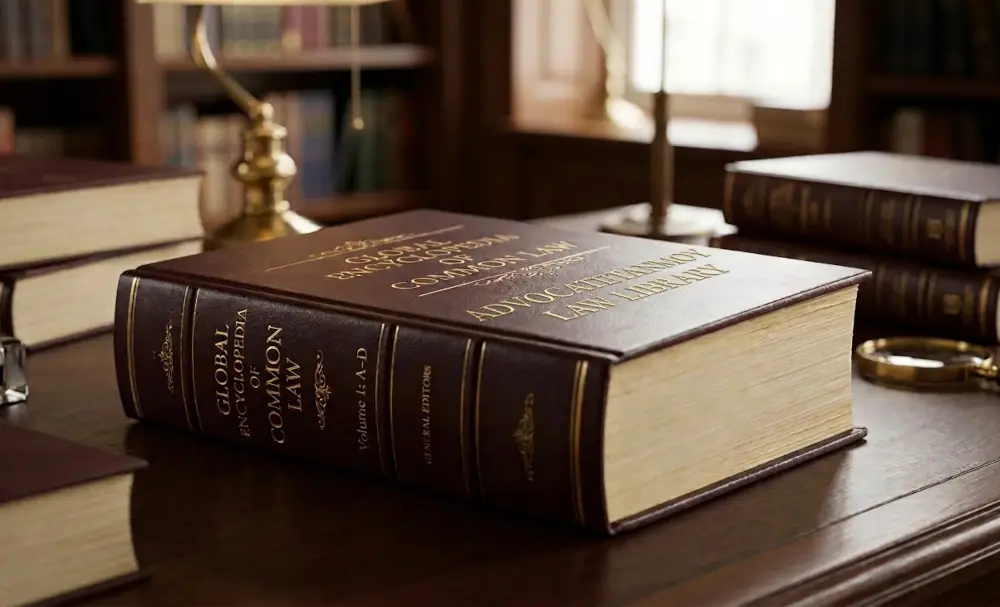
GLOBAL ENCYCLOPEDIA OF COMMON LAW
Volume I — Origins and Historical Formation of Common Law
The Birth of a Judicial Civilization: From Anglo-Saxon Custom to the Mature English Common-Law System
Volume I · 120 Chapters
12 Parts · 10 Chapters Each
Civilizational period: Anglo-Saxon England to the early modern transformation of English Common Law.
Foundational jurisdiction: England, with comparative historical references where necessary.
Central subject: The historical emergence of Common Law as a system of royal justice, judicial institutions, territorial jurisdiction, legal procedures, professional knowledge and institutional continuity.
I. Intellectual foundation of Volume I (GECL)
The first volume explains how Common Law came into existence. It must not begins with modern legal doctrines or treat Common Law as a ready-made collection of judicial precedents. It reconstructs the historical process through which a particular form of law, initially associated with English royal authority and local custom, gradually developed into an organized judicial civilization.
The emergence of Common Law involved several interconnected historical transformations:
- The movement from kinship-based customary justice towards territorial and institutional justice.
- The consolidation of royal authority over competing local jurisdictions.
- The Norman transformation of English government and judicial administration.
- The establishment of royal courts and the development of centralized justice.
- The creation and expansion of the writ system.
- The development of jury institutions, litigation procedures and forms of action.
- The relationship between Magna Carta, royal authority and the administration of justice.
- The emergence of Parliament, the legal profession, the Inns of Court and professional legal learning.
- The historical relationship between Common Law and the Court of Chancery.
- The gradual formation of a mature legal system based on institutional continuity, judicial records and authoritative decisions.
The volume -1 of GECL will therefore examine not simply when Common Law began, but how English society developed a durable system in which royal institutions, courts, legal professionals and accumulated judicial decisions became the principal machinery of legal governance.
PART I — PRE-COMMON-LAW ENGLAND: CUSTOM, SOCIETY AND EARLY LEGAL ORDER
Chapters 001–010: The foundations before the emergence of a unified royal Common Law
This part investigates the social, political and legal environment from which English Common Law eventually emerged. It examines the relationship between custom, kinship, local authority, kingship, community responsibility and early systems of dispute resolution.
| Chapter | Chapter title |
|---|---|
| 001 | Law in Pre-Common-Law England: Historical Origins and Institutional Foundations |
| 002 | Anglo-Saxon England: Society, Political Organization and Legal Order |
| 003 | Germanic Legal Traditions and Their Influence on Early English Law |
| 004 | Custom as a Source of Law: Oral Tradition, Community Practice and Legal Obligation |
| 005 | Kinship, Family and the Structure of Early Legal Responsibility |
| 006 | The Wergild System: Compensation, Injury and the Settlement of Blood Feuds |
| 007 | Feud, Vengeance and the Historical Transition towards Institutional Justice |
| 008 | Hundred Courts, Shire Courts and Local Administration of Justice |
| 009 | Folk Assemblies, Community Judgment and Early Participatory Justice |
| 010 | Kingship, Custom and the Gradual Formation of Royal Legal Authority |
PART II — ANGLO-SAXON KINGDOMS AND THE DEVELOPMENT OF ENGLISH LAW
Chapters 011–020: The formation of legal institutions under Anglo-Saxon kingship
This part examines the development of written law, royal legislation, administrative institutions and the gradual integration of local legal systems. It pays particular attention to the legal contributions of major Anglo-Saxon rulers and the changing relationship between royal power and customary law.
| Chapter | Chapter title |
|---|---|
| 011 | The Kingdoms of Anglo-Saxon England: Political Fragmentation and Legal Diversity |
| 012 | Æthelberht of Kent and the Earliest Surviving English Law Code |
| 013 | The Laws of Hlothhere and Eadric: Kentish Legal Development |
| 014 | Ine of Wessex: Royal Legislation, Social Order and Legal Administration |
| 015 | Alfred the Great: Legal Reform, Royal Authority and the Written Law |
| 016 | The Laws of Alfred: Christian Morality, Custom and Royal Legislation |
| 017 | Edward the Elder, Æthelstan and the Expansion of Royal Legal Authority |
| 018 | Edmund, Edgar and the Institutional Development of Anglo-Saxon Justice |
| 019 | Æthelred the Unready: Law, Political Crisis and Royal Governance |
| 020 | Cnut’s Laws: Royal Administration and the Continuity of English Legal Traditions |
PART III — NORMAN CONQUEST AND THE RECONSTRUCTION OF ENGLISH GOVERNMENT
Chapters 021–030 · 1066 and the transformation of English political and legal institutions
The Norman Conquest represents a decisive institutional turning point, but not the complete replacement of English law. This part investigates the interaction between inherited Anglo-Saxon customs and Norman political, administrative and feudal structures. It examines how the new monarchy strengthened central authority while preserving and reorganizing important elements of existing English institutions.
| Chapter | Chapter title |
|---|---|
| 021 | The Norman Conquest of 1066: Political Transformation and Legal Continuity |
| 022 | William I and the Reconstruction of Royal Government |
| 023 | The Preservation of English Custom under Norman Rule |
| 024 | Norman Feudalism: Landholding, Tenure and Political Obligation |
| 025 | The King as Supreme Source of Justice: The Expansion of Royal Jurisdiction |
| 026 | The Royal Household, Curia Regis and the Origins of Central Government |
| 027 | The Domesday Survey of 1086: Land, Taxation, Administration and Royal Knowledge |
| 028 | Sheriffs, Counties and the Territorial Organization of Royal Authority |
| 029 | Ecclesiastical Jurisdiction and the Separation of Secular and Church Courts |
| 030 | Norman Law, English Custom and the Foundations of a Distinct Royal Legal Order |
PART IV — THE PLANTAGENET MONARCHY AND THE RISE OF ROYAL JUSTICE
Chapters 031–040 · The institutional consolidation of royal justice during the twelfth century
This part studies the emergence of a more systematic royal judicial administration. The reign of Henry II is particularly important because of the expansion of royal justice, the development of judicial procedures and the establishment of mechanisms through which royal authority increasingly reached local communities.
| Chapter | Chapter title |
|---|---|
| 031 | Henry I and the Early Development of Royal Administrative Justice |
| 032 | The Anarchy of Stephen’s Reign: Political Disorder and the Fragmentation of Justice |
| 033 | Henry II and the Reconstruction of Royal Judicial Authority |
| 034 | The Constitutions of Clarendon, 1164: Royal Authority and Ecclesiastical Jurisdiction |
| 035 | The Royal Justiciar: Office, Authority and Judicial Administration |
| 036 | The Curia Regis: From Royal Council to Specialized Judicial Institutions |
| 037 | The Exchequer and the Financial Foundations of Royal Government |
| 038 | The Development of the King’s Court and the Central Administration of Justice |
| 039 | Royal Itinerant Justices: The Extension of Central Justice into the Counties |
| 040 | The Assizes of Henry II and the Institutional Foundations of English Common Law |
PART V — THE EMERGENCE OF THE ROYAL COURTS
Chapters 041–050 · The formation of specialized royal judicial institutions
Common Law acquired its institutional character through the development of courts capable of administering royal justice with increasing regularity. This part examines the differentiation of judicial functions, the emergence of permanent institutions and the relationship between royal government and judicial administration.
| Chapter | Chapter title |
|---|---|
| 041 | The Court of King’s Bench: Origins, Jurisdiction and Historical Development |
| 042 | The Court of Common Pleas: The Institutionalization of Civil Justice |
| 043 | The Court of Exchequer: Revenue, Fiscal Claims and Judicial Administration |
| 044 | The Relationship between King’s Bench, Common Pleas and Exchequer |
| 045 | The Development of Central Courts and the Decline of Exclusive Local Justice |
| 046 | The Chief Justiciar and the Organization of Royal Judicial Administration |
| 047 | Judicial Circuits, Assizes and the Territorial Reach of the Royal Courts |
| 048 | The Organization of Judicial Personnel: Justices, Clerks and Administrative Officers |
| 049 | The Royal Courts and the Development of Uniform Legal Administration |
| 050 | The Emergence of a Centralized English Judicial System |
PART VI — THE WRIT SYSTEM AND THE ORGANIZATION OF LEGAL ACTION
Chapters 051–060 · The procedural architecture through which royal justice became accessible
The writ system was one of the decisive institutional mechanisms in the formation of Common Law. It connected royal authority with the initiation and supervision of legal proceedings. This part examines the historical development of writs, their administrative functions, their relationship with jurisdiction and the consequences of procedural formalization.
| Chapter | Chapter title |
|---|---|
| 051 | The Origins of the Royal Writ: Administrative Command and Judicial Authority |
| 052 | The Writ as an Instrument of Royal Justice and Legal Administration |
| 053 | The Chancellor and the Issuance of Royal Writs |
| 054 | The Development of Original Writs and the Commencement of Litigation |
| 055 | The Writ of Right and the Historical Protection of Land Claims |
| 056 | The Writ of Novel Disseisin and the Protection against Recent Dispossession |
| 057 | The Writ of Mort d’Ancestor and the Development of Inheritance Litigation |
| 058 | The Writ of Debt, Detinue and the Early Organization of Personal Claims |
| 059 | The Register of Writs: Recording, Classification and Institutional Memory |
| 060 | The Writ System as the Procedural Foundation of Common-Law Jurisdiction |
PART VII — THE GREAT ASSIZES, JURY AND THE DEVELOPMENT OF FACT-FINDING
Chapters 061–070 · From communal knowledge and sworn accusation to organized judicial fact-finding
The development of the jury was neither a single invention nor an instantaneous transition from popular judgment to modern trial by jury. It emerged through several administrative and judicial practices, including sworn local recognition, presentment, accusation and the eventual development of trial juries. This part reconstructs those different stages.
| Chapter | Chapter title |
|---|---|
| 061 | The Historical Origins of the English Jury System |
| 062 | Frankpledge, Tithings and Collective Responsibility in Anglo-Saxon and Norman England |
| 063 | The Assize of Clarendon, 1166: Presentment and the Royal Investigation of Crime |
| 064 | The Assize of Northampton, 1176: Expansion of Royal Criminal Justice |
| 065 | The Grand Assize: Royal Justice and the Determination of Land Disputes |
| 066 | Recognition Juries and the Development of Sworn Local Knowledge |
| 067 | Presentment, Accusation and the Origins of the Grand Jury |
| 068 | The Development of the Trial Jury and the Transformation of Judicial Fact-Finding |
| 069 | Ordeal, Compurgation and the Decline of Older Modes of Proof |
| 070 | The Fourth Lateran Council of 1215 and the Transformation of English Criminal Proof |
PART VIII — MAGNA CARTA, ROYAL POWER AND THE LEGAL LIMITATION OF AUTHORITY
Chapters 071–080 · The constitutional and judicial consequences of the Magna Carta settlement
Magna Carta must be examined within its historical setting: the political conflict between King John and the baronial community, the struggle over royal taxation and arbitrary government, and the demands for more regular administration of justice. Its significance lies not in treating it as a modern democratic constitution, but in tracing how it became a lasting legal and constitutional reference point.
| Chapter | Chapter title |
|---|---|
| 071 | King John and the Crisis of Royal Government, 1199–1216 |
| 072 | The Barons’ Rebellion and the Political Origins of Magna Carta |
| 073 | Runnymede, 15 June 1215: The Making of Magna Carta |
| 074 | Magna Carta 1215: Structure, Provisions and Historical Significance |
| 075 | Clause 39: Judgment of Peers, Lawful Judgment and the Protection of Liberty |
| 076 | Clause 40: Justice Not to Be Sold, Denied or Delayed |
| 077 | Magna Carta and the Development of the Principle of Lawful Royal Authority |
| 078 | The Reissues of Magna Carta: 1216, 1217 and 1225 |
| 079 | Magna Carta and the Evolution of Parliamentary and Judicial Constitutionalism |
| 080 | Magna Carta in the Historical Memory of English and Global Constitutional Law |
PART IX — MEDIEVAL PROCEDURE, FORMS OF ACTION AND THE YEAR BOOKS
Chapters 081–090 · The development of procedural forms and the documentary preservation of judicial practice
The growth of Common Law depended on the regularization of litigation. Legal claims increasingly had to be expressed through recognized procedural forms, while the preservation of judicial discussions and decisions contributed to the accumulation of institutional knowledge. This part examines the relationship between procedural development and the historical emergence of an identifiable legal tradition.
| Chapter | Chapter title |
|---|---|
| 081 | The Historical Development of Pleading in Medieval English Courts |
| 082 | Forms of Action: The Organization of Legal Claims through Procedural Categories |
| 083 | Real Actions and the Historical Law of Land Recovery |
| 084 | Personal Actions and the Development of Civil Litigation |
| 085 | Trespass and the Historical Expansion of Royal Civil Jurisdiction |
| 086 | Trespass on the Case and the Growth of Common-Law Remedies |
| 087 | The Development of Pleading, Allegation and Formal Legal Argument |
| 088 | Medieval Judicial Records: Rolls, Plea Rolls and the Documentary Administration of Justice |
| 089 | The Year Books: Origins, Structure and Historical Importance |
| 090 | Judicial Discussions and the Formation of a Professional Common-Law Tradition |
PART X — PARLIAMENT, STATUTE AND THE HISTORICAL DEVELOPMENT OF ENGLISH LEGAL AUTHORITY
Chapters 091–100 · The relationship between royal government, Parliament and the development of legislation
Common Law did not develop independently of legislation. Royal proclamations, ordinances, parliamentary statutes and institutional reforms progressively influenced the operation of the courts. This part investigates the historical growth of Parliament and the evolving relationship between judicial institutions and legislative authority.
| Chapter | Chapter title |
|---|---|
| 091 | The Origins of the English Parliament and Its Relationship with Royal Government |
| 092 | Simon de Montfort’s Parliament of 1265 and the Development of Representative Institutions |
| 093 | Edward I and the Legislative Consolidation of Royal Government |
| 094 | The Statute of Westminster I, 1275: Legal Administration and Legislative Reform |
| 095 | The Statute of Westminster II, 1285: Judicial Procedure and the Development of Legal Remedies |
| 096 | The Statute of Gloucester, 1278: Royal Jurisdiction and Local Legal Administration |
| 097 | Quo Warranto Proceedings and the Historical Control of Jurisdictional Privileges |
| 098 | Parliamentary Statutes and the Development of English Common Law |
| 099 | The Relationship between Common Law, Royal Prerogative and Parliamentary Authority |
| 100 | Medieval English Legislation and the Institutional Development of the Common-Law State |
PART XI — THE LEGAL PROFESSION, INNS OF COURT AND THE TRANSMISSION OF LEGAL KNOWLEDGE
Chapters 101–110 · The emergence of a professional community capable of preserving and developing Common Law
A legal system cannot survive through courts and rules alone. It requires trained practitioners, professional institutions, documentary resources, methods of instruction, and a continuing community of legal knowledge. This part examines the historical formation of the English legal profession and its role in maintaining the continuity of Common Law.
| Chapter | Chapter title |
|---|---|
| 101 | The Emergence of the English Legal Profession: Historical Origins and Social Structure |
| 102 | Serjeants-at-Law: Origins, Professional Status and Judicial Importance |
| 103 | The Emergence of the Common-Law Bar and the Professional Advocate |
| 104 | The Inns of Court: Historical Origins and Institutional Development |
| 105 | The Inner Temple and Middle Temple: Professional Legal Education and Tradition |
| 106 | Lincoln’s Inn and Gray’s Inn: The Institutional Organization of Legal Learning |
| 107 | Apprentices of the Law, Readers and the Medieval System of Legal Instruction |
| 108 | Legal Manuscripts, Year Books and the Preservation of Professional Knowledge |
| 109 | Judges, Serjeants and Barristers: The Formation of a Distinct Legal Community |
| 110 | The Legal Profession as the Custodian of Common-Law Institutional Memory |
PART XII — THE MATURATION OF COMMON LAW: LATE MEDIEVAL AND EARLY MODERN TRANSFORMATIONS
Chapters 111–120 · The transition from medieval royal justice to a mature legal tradition
The final part brings together the institutional developments examined throughout the volume. It studies the later medieval and early modern consolidation of the royal courts, the changing position of the monarchy, the relationship between Common Law and Chancery, the influence of legal scholarship and the historical conditions that prepared English Common Law for its later global expansion.
| Chapter | Chapter title |
|---|---|
| 111 | Edward III and the Expansion of English Common-Law Institutions |
| 112 | Richard II, Henry IV and the Relationship between Monarchy and Legal Authority |
| 113 | The Wars of the Roses and the Continuity of English Judicial Institutions |
| 114 | Henry VII and the Reorganization of Royal Justice at the Beginning of the Tudor Era |
| 115 | The Tudor Monarchy and the Changing Institutional Environment of Common Law |
| 116 | The Court of Chancery: Historical Origins and Its Relationship with the Common-Law Courts |
| 117 | Common Law and Equity before the Modern Doctrine of Judicial Supremacy |
| 118 | Sir Edward Coke and the Historical Defence of Common-Law Legal Authority |
| 119 | William Blackstone and the Systematic Historical Presentation of English Common Law |
| 120 | The Formation of Mature English Common Law: Institutions, Continuity and the Foundations of Global Expansion |
II. Historical and editorial standards
To maintain the intellectual integrity of the Global Encyclopedia of Common Law (GECL), the following distinctions govern the preparation of all 120 chapters:
- Common Law did not originate in 1066 alone. Anglo-Saxon legal customs and institutions predated the Norman Conquest.
- Henry II’s reforms were foundational, but they should be understood as a process of institutional consolidation rather than the invention of an entirely new legal system.
- Magna Carta was not a modern constitution. Its historical provisions, immediate political objectives, and later constitutional significance must be examined separately.
- The jury evolved gradually. Presentment juries, recognition juries and trial juries must not be treated as identical institutions.
- Common Law and Equity developed through distinct institutional histories. Their relationship belongs here historically, while their doctrines and remedies receive detailed treatment in Volume VII.
- Parliamentary legislation and judicial development were interconnected. Neither should be presented as operating independently of the other.
III. Position of Volume I within the complete encyclopedia
| Volume | Subject | Relationship |
|---|---|---|
| I | Origins and Historical Formation | Historical foundations |
| II | Sources, Precedent and Reasoning | Intellectual architecture |
| III | Persons and Property | Legal personality and ownership |
| IV | Contract and Commerce | Voluntary obligations |
| V | Tort and Civil Wrongs | Civil responsibility |
| VI | Criminal Law | Criminal responsibility |
| VII | Equity and Trusts | Equitable jurisdiction |
| VIII | Constitutional and Administrative Law | State authority |
| IX | Procedure, Evidence and Remedies | Judicial machinery |
| X | Global Common Law | Worldwide transformation |
This Volume I has a definite purpose: to reconstruct the historical birth of Common Law as an institutional civilization, rather than merely narrate the history of English kings and courts.
SARVARTHAPEDIA — CONCEPTUAL KNOWLEDGE NETWORK
Global Encyclopedia of Common Law
Volume I — Origins and Historical Formation of Common Law
12 Parts | 120 Chapters | Historical, Institutional and Jurisprudential Knowledge Architecture
1. Central Knowledge Node: Common Law as a Historical Legal Civilization
Common Law is the central node connecting all twelve parts of Volume I. It represents the historical transformation of customary social rules into an organized system of royal justice, judicial institutions, procedural mechanisms, professional legal knowledge and institutional continuity.
The emergence of Common Law cannot be understood through a single king, statute, court or judicial decision. It resulted from the interaction of political authority, social organization, territorial administration, customary obligations, judicial procedures and the accumulation of legal knowledge.
The central conceptual relationship is:
Custom → Community Justice → Royal Authority → Centralized Courts → Writ Jurisdiction → Judicial Procedure → Legal Profession → Institutional Continuity → Mature Common Law
This sequence represents a historical process, not a rigid chronological succession. Several institutions developed simultaneously and influenced one another.
Primary Knowledge Node
COMMON LAW: ORIGINS AND HISTORICAL FORMATION
Connected foundational concepts:
- Customary Law
- Anglo-Saxon Legal Order
- Norman Conquest
- Royal Justice
- Feudal Administration
- Henry II’s Judicial Reforms
- Royal Courts
- Writ System
- Jury Institutions
- Magna Carta
- Medieval Legal Procedure
- Forms of Action
- Judicial Records
- Year Books
- Parliament and Statute
- Inns of Court
- Common-Law Profession
- Equity and Chancery
- Judicial Authority
- Institutional Continuity
2. Twelve Principal Knowledge Clusters
Cluster I — Customary Law and Pre-Common-Law Society
Primary chapters: 001–010
Central node: Customary Legal Order
This cluster explains the social foundations of English law before the consolidation of centralized royal justice.
Core concepts
- Anglo-Saxon social organization
- Germanic customary traditions
- Kinship and legal responsibility
- Wergild and compensation
- Feud and vengeance
- Hundred courts
- Shire courts
- Folk assemblies
- Community judgment
- Early royal authority
Internal conceptual relationships
Custom ↔ Community Practice
Custom acquired legal significance through repeated social observance and collective recognition.
Kinship ↔ Legal Responsibility
Family and kinship relationships determined compensation, obligation and responsibility in early legal society.
Wergild ↔ Compensation ↔ Criminal Justice
The wergild system connected injury, social status, compensation and the regulation of violence.
Feud ↔ Institutional Justice
The gradual substitution of institutional mechanisms for private vengeance formed an important foundation for public justice.
Local Courts ↔ Territorial Administration
Hundred and shire courts connected local dispute resolution with emerging territorial governance.
Node connections
- Customary Law → Anglo-Saxon Legal Codes
- Wergild → Compensation Law
- Feud → Criminal Justice
- Folk Assemblies → Jury History
- Shire Courts → Royal Administration
- Early Kingship → Royal Jurisdiction
See also
- Anglo-Saxon Legal History
- Legal Anthropology
- Customary Law
- Historical Sociology of Law
- Origins of Criminal Responsibility
- Territorial Administration
- Comparative Legal History
Cluster II — Anglo-Saxon Kingship and Written Law
Primary chapters: 011–020
Central node: Royal Legislation and Anglo-Saxon Legal Institutions
This cluster examines the movement from diverse local customary systems towards written royal legal instruments.
Core concepts
- Æthelberht’s law code
- Laws of Hlothhere and Eadric
- Laws of Ine
- Alfred the Great
- Alfred’s legal reforms
- Æthelstan
- Edmund
- Edgar
- Æthelred
- Cnut
- Royal legislation
- Christian legal morality
Internal conceptual relationships
Kingship ↔ Lawmaking
The king increasingly became an important source of written legal authority.
Custom ↔ Written Law
Written codes recorded, regulated and sometimes modified existing customary practices.
Christianity ↔ Royal Legislation
Christian moral principles influenced the language, purposes and institutional development of Anglo-Saxon law.
Royal Authority ↔ Local Justice
Royal legislation gradually connected local judicial institutions with wider political authority.
Node connections
- Æthelberht → Earliest Surviving English Law Code
- Alfred → Written Legal Tradition
- Æthelstan → Royal Justice
- Cnut → Anglo-Scandinavian Legal Continuity
- Royal Legislation → Norman Legal Inheritance
See also
- History of English Legislation
- Anglo-Saxon Political Institutions
- Medieval Kingship
- Christian Legal History
- Codification of Law
- Origins of English Legal Administration
Cluster III — Norman Conquest and Feudal Legal Reconstruction
Primary chapters: 021–030
Central node: Norman Transformation of English Legal Government
The Norman Conquest introduced a new political and administrative framework while preserving important elements of the earlier English legal order.
Core concepts
- Norman Conquest, 1066
- William I
- Feudalism
- Landholding and tenure
- Curia Regis
- Domesday Book
- Sheriffs
- Counties
- Royal jurisdiction
- Ecclesiastical courts
- Legal continuity
Internal conceptual relationships
Conquest ↔ Legal Continuity
Political conquest did not automatically eliminate the pre-existing legal system.
Feudalism ↔ Landholding ↔ Royal Authority
Landholding arrangements connected property, political allegiance, military obligation and royal power.
Domesday Survey ↔ Administrative Knowledge
The Domesday Survey represented the use of systematic information gathering for taxation, land administration and royal governance.
Sheriffs ↔ Territorial Justice
Sheriffs served as important intermediaries between central government and local administration.
Ecclesiastical Jurisdiction ↔ Secular Jurisdiction
The development of distinct church and royal jurisdictions shaped the institutional boundaries of medieval English law.
Node connections
- Norman Conquest → Feudal Administration
- William I → Royal Government
- Domesday Book → Administrative State
- Curia Regis → Royal Courts
- Sheriffs → County Administration
- Ecclesiastical Jurisdiction → Church-State Relations
See also
- Norman England
- Feudal Legal Systems
- Medieval Land Tenure
- History of the English State
- Church and State
- Administrative History
- Comparative European Legal History
Cluster IV — Henry II and the Institutional Birth of Common Law
Primary chapters: 031–040
Central node: Henry II’s Judicial Reforms
This cluster represents one of the most important intellectual and institutional centers of the entire encyclopedia.
Henry II’s reign witnessed the strengthening and extension of royal justice, the expansion of itinerant judicial administration and the development of procedures that contributed to the formation of a more uniform English legal system.
Core concepts
- Henry I
- The Anarchy
- Henry II
- Constitutions of Clarendon
- Royal Justiciar
- Curia Regis
- Exchequer
- King’s Court
- Itinerant justices
- Assizes
- Royal judicial administration
Internal conceptual relationships
Henry II ↔ Royal Centralization
Royal justice expanded beyond the immediate surroundings of the monarchy.
Itinerant Justices ↔ Territorial Uniformity
Judges travelling through the counties extended royal legal procedures into local communities.
Assizes ↔ Judicial Innovation
The assizes provided important mechanisms for determining disputes and organizing royal justice.
Exchequer ↔ Royal Administration
Financial administration and judicial authority developed within the wider framework of royal government.
Royal Justiciar ↔ Institutional Differentiation
The administration of justice became increasingly specialized within the machinery of government.
Node connections
- Henry II → Royal Judicial Reforms
- Constitutions of Clarendon → Ecclesiastical Jurisdiction
- Assizes → Jury Development
- Itinerant Justices → Central Courts
- Exchequer → Court of Exchequer
- Royal Administration → Institutional Common Law
See also
- Angevin Empire
- Henry II
- Medieval Judicial Reform
- Royal Prerogative
- History of the Judiciary
- Assize System
- Institutional Origins of Common Law
Cluster V — Royal Courts and Judicial Institutionalization
Primary chapters: 041–050
Central node: Centralized Royal Judiciary
This cluster examines how royal justice developed into a system of identifiable and increasingly specialized courts.
Core concepts
- King’s Bench
- Common Pleas
- Court of Exchequer
- Curia Regis
- Chief Justiciar
- Judicial personnel
- Judicial circuits
- Royal jurisdiction
- Central courts
- Uniform legal administration
Internal conceptual relationships
Curia Regis ↔ Specialized Royal Courts
The royal council and its judicial functions gradually differentiated into more specialized institutional structures.
King’s Bench ↔ Royal Authority
The King’s Bench developed a close association with the king’s judicial authority and matters concerning the Crown.
Common Pleas ↔ Civil Justice
The Common Pleas became a central institution for litigation between subjects.
Exchequer ↔ Fiscal Jurisdiction
Financial claims and royal revenue administration formed an important component of the court’s historical jurisdiction.
Central Courts ↔ Uniformity
The growth of centralized judicial institutions strengthened the possibility of consistent legal administration.
Node connections
- Curia Regis → King’s Bench
- Curia Regis → Common Pleas
- Curia Regis → Exchequer
- Royal Justices → Judicial Profession
- Judicial Circuits → Territorial Jurisdiction
- Central Courts → Judicial Precedent
See also
- History of English Courts
- Court of King’s Bench
- Court of Common Pleas
- Court of Exchequer
- Judicial Administration
- Separation of Judicial Functions
- Institutional History of the Judiciary
Cluster VI — Writs, Jurisdiction and the Procedural Architecture of Common Law
Primary chapters: 051–060
Central node: The Royal Writ System
The writ system was one of the fundamental mechanisms through which the royal courts exercised jurisdiction and administered justice.
Core concepts
- Royal writ
- Original writ
- Chancery
- Chancellor
- Writ of Right
- Novel Disseisin
- Mort d’Ancestor
- Debt
- Detinue
- Register of Writs
- Procedural jurisdiction
Internal conceptual relationships
Royal Writ ↔ Access to Justice
The writ provided a recognized procedural means of initiating proceedings in the royal courts.
Writ ↔ Jurisdiction
The availability and form of a writ influenced which claims could be brought before particular courts.
Chancellor ↔ Administrative Justice
The Chancery developed as an important administrative institution responsible for issuing royal writs.
Register of Writs ↔ Institutional Memory
Recorded writs preserved established procedural forms and facilitated their continued use.
Writ System ↔ Forms of Action
The classification of claims through recognized writs contributed to the later development of procedural categories.
Node connections
- Royal Writ → Chancery
- Chancery → Chancellor
- Writ of Right → Land Law
- Novel Disseisin → Possession
- Mort d’Ancestor → Inheritance
- Writ of Debt → Contract and Obligations
- Writ System → Forms of Action
- Procedural Jurisdiction → Volume II and Volume IX
See also
- History of the English Writ System
- Chancery
- Original Writs
- Medieval Civil Procedure
- Forms of Action
- Jurisdiction
- Legal Remedies
- Historical Development of Property Law
Cluster VII — Jury, Evidence and Judicial Fact-Finding
Primary chapters: 061–070
Central node: Development of the English Jury
The jury developed through different institutional practices. Its history connects community knowledge, royal investigation, sworn recognition, accusation and trial.
Core concepts
- Frankpledge
- Tithings
- Assize of Clarendon
- Assize of Northampton
- Grand Assize
- Recognition jury
- Presentment jury
- Grand jury
- Trial jury
- Ordeal
- Compurgation
- Fourth Lateran Council, 1215
Internal conceptual relationships
Community Knowledge ↔ Jury
Local knowledge became increasingly important in royal judicial investigations.
Assize of Clarendon ↔ Criminal Investigation
Royal authority organized procedures for identifying suspected offenders through local presentment.
Grand Assize ↔ Land Disputes
The Grand Assize provided an alternative procedure for determining certain disputes over land rights.
Ordeal ↔ Trial by Jury
The decline of ordeals created important conditions for the development of alternative procedures of proof.
Jury ↔ Evidence
The jury became central to the historical development of institutional fact-finding.
Node connections
- Frankpledge → Collective Responsibility
- Assize of Clarendon → Criminal Procedure
- Assize of Northampton → Royal Criminal Justice
- Grand Assize → Land Law
- Presentment → Grand Jury
- Recognition → Jury Development
- Fourth Lateran Council → Decline of Ordeal
- Trial Jury → Evidence Law
See also
- History of Trial by Jury
- History of Criminal Procedure
- Medieval Evidence
- Assize of Clarendon
- Grand Jury
- Ordeal and Compurgation
- Comparative History of Fact-Finding
Cluster VIII — Magna Carta and Constitutional Limitations on Royal Power
Primary chapters: 071–080
Central node: Magna Carta and Lawful Government
Magna Carta occupies a central position in the historical relationship between political authority and legal limitation.
Its immediate historical purpose and its subsequent constitutional legacy must be studied as connected but distinct subjects.
Core concepts
- King John
- Barons’ Rebellion
- Runnymede
- Magna Carta 1215
- Clause 39
- Clause 40
- Lawful judgment
- Due process
- Royal taxation
- Reissues of Magna Carta
- Constitutional memory
Internal conceptual relationships
Royal Power ↔ Legal Limitation
Magna Carta represented an important historical assertion that royal authority was subject to legal commitments.
Clause 39 ↔ Lawful Judgment
The clause became central to later interpretations of liberty and lawful judgment.
Clause 40 ↔ Administration of Justice
The prohibition against selling, denying or delaying justice acquired lasting importance in legal constitutional thought.
Magna Carta ↔ Parliamentary Development
Its historical legacy contributed to wider debates about consent, taxation, representation and lawful government.
Magna Carta ↔ Modern Constitutionalism
Later generations transformed the charter into a powerful constitutional symbol.
Node connections
- King John → Barons’ Rebellion
- Barons’ Rebellion → Magna Carta
- Magna Carta → Rule of Law
- Clause 39 → Lawful Judgment
- Clause 40 → Access to Justice
- Magna Carta → Parliamentary Constitutionalism
- Magna Carta → Due Process
- Magna Carta → Global Constitutional History
See also
- Magna Carta
- Rule of Law
- Constitutional History of England
- Due Process of Law
- Judicial Independence
- Royal Prerogative
- Parliamentary Government
- Constitutional Limitations on Executive Authority
Cluster IX — Medieval Procedure, Forms of Action and Judicial Records
Primary chapters: 081–090
Central node: Procedural Formation of Common Law
This cluster explains how procedural rules, recognized forms of action and judicial documentation contributed to the development of a distinctive legal tradition.
Core concepts
- Medieval pleading
- Forms of action
- Real actions
- Personal actions
- Trespass
- Trespass on the Case
- Allegation
- Plea Rolls
- Judicial records
- Year Books
Internal conceptual relationships
Pleading ↔ Legal Reasoning
The development of formal pleading shaped how legal claims and disputes were presented and contested.
Forms of Action ↔ Remedies
The procedural form of an action influenced the remedy available to a claimant.
Trespass ↔ Civil Liability
The development of trespass contributed to the historical expansion of royal civil jurisdiction.
Year Books ↔ Judicial Knowledge
The Year Books preserved discussions of legal questions and judicial practice.
Judicial Records ↔ Institutional Memory
Documentary preservation made it possible to transmit legal knowledge beyond individual judges and particular disputes.
Node connections
- Pleading → Legal Argument
- Forms of Action → Remedies
- Real Actions → Property Law
- Personal Actions → Obligations
- Trespass → Tort Law
- Trespass on the Case → Modern Tort Doctrine
- Plea Rolls → Judicial Archives
- Year Books → Legal Scholarship
- Judicial Records → Precedent
See also
- Medieval English Procedure
- Forms of Action
- History of Tort Law
- History of Civil Litigation
- Pleading and Practice
- Legal Archives
- Year Books
- Judicial Precedent
Cluster X — Parliament, Statute and the Legislative Transformation of Common Law
Primary chapters: 091–100
Central node: Parliamentary and Legislative Authority
This cluster connects the historical development of Parliament with the growth of statutory law and its interaction with judicial institutions.
Core concepts
- Early English Parliament
- Simon de Montfort
- Edward I
- Statute of Westminster I
- Statute of Westminster II
- Statute of Gloucester
- Quo Warranto
- Royal prerogative
- Parliamentary authority
- Statutory reform
Internal conceptual relationships
Royal Government ↔ Parliament
Parliament emerged from institutions associated with royal counsel, taxation and political consultation.
Parliament ↔ Representation
The development of representative institutions transformed the political foundations of lawmaking.
Statute ↔ Common Law
Legislation increasingly modified, supplemented and regulated existing Common-Law rules and procedures.
Quo Warranto ↔ Royal Jurisdiction
The proceedings investigated the legal basis of claimed franchises and jurisdictional privileges.
Statutory Reform ↔ Judicial Administration
Medieval statutes shaped the procedures and jurisdiction of the courts.
Node connections
- Simon de Montfort → Representative Parliament
- Edward I → Legislative Consolidation
- Westminster I → Statutory Administration
- Westminster II → Judicial Procedure
- Statute of Gloucester → Royal Jurisdiction
- Quo Warranto → Legal Authority
- Parliament → Constitutional Law
- Statute → Sources of Law
See also
- History of the English Parliament
- Parliamentary Sovereignty
- Statutory Interpretation
- Legislative History
- Royal Prerogative
- Constitutional Development
- Common Law and Legislation
- Westminster Statutes
Cluster XI — Legal Profession, Inns of Court and Institutional Memory
Primary chapters: 101–110
Central node: Professionalization of Common Law
The development of Common Law required a professional community capable of interpreting legal rules, representing litigants, preserving procedural knowledge and transmitting legal traditions.
Core concepts
- Serjeants-at-Law
- Common-Law Bar
- Barristers
- Inns of Court
- Inner Temple
- Middle Temple
- Lincoln’s Inn
- Gray’s Inn
- Readers
- Legal manuscripts
- Professional legal education
Internal conceptual relationships
Judges ↔ Legal Profession
The judiciary and the legal profession developed within an interconnected institutional environment.
Serjeants ↔ Professional Legal Authority
The Serjeants-at-Law occupied a particularly important position in the development of the medieval legal profession.
Inns of Court ↔ Legal Education
The Inns provided institutional environments for legal learning, professional association and the transmission of legal practice.
Legal Manuscripts ↔ Professional Knowledge
Written legal materials preserved knowledge and facilitated professional instruction.
Legal Profession ↔ Institutional Continuity
The legal profession transmitted legal methods and traditions across generations.
Node connections
- Serjeants-at-Law → Common-Law Bar
- Inns of Court → Legal Education
- Inner Temple → Professional Organization
- Middle Temple → Professional Organization
- Lincoln’s Inn → Legal Education
- Gray’s Inn → Legal Education
- Year Books → Legal Training
- Legal Profession → Judicial Precedent
- Professional Memory → Common-Law Continuity
See also
- History of the English Bar
- Inns of Court
- Legal Education
- History of the Judiciary
- Legal Profession
- Judicial Independence
- History of Legal Scholarship
- Legal Manuscript Tradition
Cluster XII — Mature Common Law, Equity and Early Modern Transformation
Primary chapters: 111–120
Central node: Institutional Maturity of English Common Law
The final cluster connects the medieval foundations with the mature legal system that developed through the Tudor period and the early modern era.
Core concepts
- Edward III
- Richard II
- Henry IV
- Wars of the Roses
- Henry VII
- Tudor monarchy
- Court of Chancery
- Equity
- Sir Edward Coke
- William Blackstone
- Legal systematization
- Global expansion
Internal conceptual relationships
Monarchical Continuity ↔ Judicial Continuity
Political changes did not eliminate the continuity of the English judicial institutions.
Common Law ↔ Equity
The development of Chancery jurisdiction created a parallel system of equitable intervention in matters where Common-Law procedures and remedies were inadequate.
Coke ↔ Common-Law Authority
Sir Edward Coke became an important figure in the historical development of arguments concerning the authority and independence of Common Law.
Blackstone ↔ Legal Systematization
Blackstone’s Commentaries on the Laws of England organized English legal knowledge into a systematic and influential intellectual framework.
Mature Common Law ↔ Global Reception
The accumulated institutions, doctrines and professional practices of English law subsequently influenced legal systems across several continents.
Node connections
- Edward III → Judicial Development
- Tudor Monarchy → Institutional Transformation
- Chancery → Equity
- Equity → Trusts
- Coke → Judicial Authority
- Blackstone → Legal Systematization
- Mature Common Law → Colonial Legal Reception
- English Common Law → Global Legal Systems
See also
- History of Equity
- Court of Chancery
- Sir Edward Coke
- William Blackstone
- Commentaries on the Laws of England
- Common Law and Equity
- History of English Constitutionalism
- Global Reception of Common Law
3. Cross-Cluster Knowledge Web
The twelve clusters should not remain isolated chapters of historical information. Their intellectual value emerges from connections across different periods, institutions and legal subjects.
The following relationships establish the principal cross-references.
| Primary concept | Connected concepts | Related clusters |
|---|---|---|
| Customary Law | Anglo-Saxon Codes, Royal Legislation | I ↔ II |
| Kinship Responsibility | Wergild, Criminal Liability | I ↔ VII |
| Royal Kingship | Norman Government, Royal Justice | II ↔ III |
| Feudalism | Land Tenure, Royal Jurisdiction | III ↔ V |
| Domesday Survey | Taxation, Administrative State | III ↔ X |
| Henry II | Royal Courts, Assizes, Jury | IV ↔ V ↔ VII |
| Itinerant Justices | Territorial Justice, Central Courts | IV ↔ V |
| Curia Regis | King’s Bench, Common Pleas, Exchequer | III ↔ IV ↔ V |
| Royal Writs | Jurisdiction, Forms of Action | VI ↔ IX |
| Writ of Right | Landholding, Property Rights | VI ↔ IX |
| Novel Disseisin | Possession, Civil Remedies | VI ↔ IX |
| Assize of Clarendon | Presentment, Criminal Justice | IV ↔ VII |
| Grand Assize | Land Disputes, Jury Development | VI ↔ VII |
| Ordeal | Trial Jury, Evidence | VII ↔ IX |
| Magna Carta | Rule of Law, Due Process | VIII ↔ X |
| Clause 40 | Judicial Administration, Access to Justice | VIII ↔ IX |
| Judicial Records | Year Books, Precedent | IX ↔ XI |
| Forms of Action | Writs, Remedies, Pleading | VI ↔ IX |
| Parliament | Statutes, Constitutional Authority | VIII ↔ X |
| Inns of Court | Legal Profession, Judicial Knowledge | XI ↔ XII |
| Chancery | Writs, Equity, Trusts | VI ↔ XII |
| Coke | Common-Law Authority, Constitutionalism | X ↔ XII |
| Blackstone | Legal Systematization, Legal Education | XI ↔ XII |
| Mature Common Law | Global Legal Reception | XII ↔ Volume X |
4. Thematic Knowledge Clusters Across the Entire Volume
In addition to the twelve chronological clusters, Sarvarthapedia should establish broader thematic clusters that connect chapters across the entire volume.
4.1 The State and Legal Authority Cluster
Central node: Formation of the English Legal State
Connected chapters:
- Chapter 010 — Kingship and Royal Legal Authority
- Chapter 015 — Alfred the Great
- Chapter 022 — William I
- Chapter 025 — The King as Supreme Source of Justice
- Chapter 033 — Henry II
- Chapter 035 — Royal Justiciar
- Chapter 041 — King’s Bench
- Chapter 071 — King John
- Chapter 091 — English Parliament
- Chapter 099 — Common Law, Royal Prerogative and Parliamentary Authority
Conceptual relationship:
Kingship → Central Government → Royal Jurisdiction → Judicial Institutions → Parliamentary Limitations → Constitutional Government
4.2 The Judicial Institutions Cluster
Central node: Historical Evolution of the English Judiciary
Connected chapters:
- Chapter 008 — Hundred and Shire Courts
- Chapter 026 — Curia Regis
- Chapter 039 — Itinerant Justices
- Chapter 041 — King’s Bench
- Chapter 042 — Common Pleas
- Chapter 043 — Exchequer
- Chapter 047 — Judicial Circuits
- Chapter 048 — Judicial Personnel
- Chapter 050 — Centralized Judicial System
Conceptual relationship:
Local Courts → Royal Administration → Central Courts → Specialized Jurisdiction → Professional Judiciary
4.3 The Access to Justice Cluster
Central node: Legal Access and Judicial Remedies
Connected chapters:
- Chapter 051 — Royal Writ
- Chapter 054 — Original Writs
- Chapter 055 — Writ of Right
- Chapter 056 — Novel Disseisin
- Chapter 058 — Debt and Detinue
- Chapter 076 — Clause 40
- Chapter 081 — Medieval Pleading
- Chapter 082 — Forms of Action
- Chapter 087 — Legal Argument
Conceptual relationship:
Legal Right → Recognized Claim → Procedural Writ → Court Jurisdiction → Judicial Determination → Remedy
This cluster provides an important foundation for Volume IX.
4.4 The Evidence and Judicial Knowledge Cluster
Central node: Institutional Production of Legal Knowledge
Connected chapters:
- Chapter 063 — Assize of Clarendon
- Chapter 064 — Assize of Northampton
- Chapter 066 — Recognition Juries
- Chapter 067 — Presentment
- Chapter 068 — Trial Jury
- Chapter 069 — Ordeal
- Chapter 088 — Judicial Records
- Chapter 089 — Year Books
Conceptual relationship:
Community Knowledge → Sworn Recognition → Investigation → Evidence → Judicial Fact-Finding → Recorded Legal Knowledge
4.5 The Property and Possession Cluster
Central node: Historical Development of Property Rights
Connected chapters:
- Chapter 024 — Norman Feudalism
- Chapter 027 — Domesday Survey
- Chapter 055 — Writ of Right
- Chapter 056 — Novel Disseisin
- Chapter 057 — Mort d’Ancestor
- Chapter 065 — Grand Assize
- Chapter 083 — Real Actions
Conceptual relationship:
Landholding → Tenure → Possession → Inheritance → Recovery of Land → Judicial Protection
This cluster connects directly with Volume III.
4.6 The Constitutionalism and Rule of Law Cluster
Central node: Limitation and Organization of Political Authority
Connected chapters:
- Chapter 025 — Royal Authority
- Chapter 034 — Constitutions of Clarendon
- Chapter 071 — King John
- Chapter 073 — Magna Carta
- Chapter 075 — Clause 39
- Chapter 076 — Clause 40
- Chapter 079 — Constitutionalism
- Chapter 091 — Parliament
- Chapter 099 — Royal Prerogative and Parliamentary Authority
- Chapter 118 — Sir Edward Coke
Conceptual relationship:
Royal Authority → Legal Restraint → Lawful Judgment → Parliamentary Development → Constitutional Government
This cluster connects directly with Volume VIII.
4.7 The Professional Legal Knowledge Cluster
Central node: Institutional Transmission of Legal Knowledge
Connected chapters:
- Chapter 088 — Judicial Records
- Chapter 089 — Year Books
- Chapter 101 — Legal Profession
- Chapter 102 — Serjeants-at-Law
- Chapter 104 — Inns of Court
- Chapter 107 — Legal Instruction
- Chapter 108 — Legal Manuscripts
- Chapter 118 — Sir Edward Coke
- Chapter 119 — William Blackstone
Conceptual relationship:
Judicial Experience → Documentation → Professional Education → Legal Interpretation → Systematization → Institutional Memory
5. Important Historical Personalities as Knowledge Nodes
The encyclopedia should provide biographical links for the major historical figures associated with the development of Common Law.
| Personality | Principal contribution | Connected knowledge nodes |
|---|---|---|
| Æthelberht of Kent | Early written English law | Anglo-Saxon legal codes |
| Alfred the Great | Legal compilation and reform | Royal legislation |
| Cnut | Anglo-Saxon legal continuity | Medieval kingship |
| William I | Norman government | Feudal administration |
| Henry I | Royal administrative development | Royal justice |
| Henry II | Judicial reforms | Assizes and royal courts |
| King John | Political crisis of 1215 | Magna Carta |
| Henry III | Reissues of Magna Carta | Constitutional history |
| Edward I | Legislative consolidation | Medieval Parliament |
| Simon de Montfort | Parliamentary development | Representative institutions |
| Edward III | Judicial and political development | Medieval Common Law |
| Henry VII | Tudor institutional transformation | Early modern government |
| Sir Edward Coke | Common-Law authority | Constitutional jurisprudence |
| William Blackstone | Systematic exposition of English law | Legal scholarship |
6. Historical Documents and Legal Instruments: Documentary Knowledge Network
A historical encyclopedia must connect its arguments to original legal instruments and documentary sources.
Anglo-Saxon legal documents
- Laws of Æthelberht
- Laws of Hlothhere and Eadric
- Laws of Ine
- Laws of Alfred
- Laws of Æthelstan
- Laws of Edgar
- Laws of Cnut
Norman and Plantagenet documents
- Domesday Book, 1086
- Constitutions of Clarendon, 1164
- Assize of Clarendon, 1166
- Assize of Northampton, 1176
- Magna Carta, 1215
- Magna Carta, 1216
- Magna Carta, 1217
- Magna Carta, 1225
Medieval legislative instruments
- Statute of Westminster I, 1275
- Statute of Gloucester, 1278
- Statute of Westminster II, 1285
- Statute of Quo Warranto, 1290
Historical legal literature
- Medieval Year Books
- Register of Writs
- Bracton’s De Legibus et Consuetudinibus Angliae
- Fortescue’s De Laudibus Legum Angliae
- Coke’s Institutes of the Lawes of England
- Blackstone’s Commentaries on the Laws of England
These documents should function as independent documentary nodes linked to their corresponding chapters, personalities, institutions and legal concepts.
7. Inter-Volume Knowledge Connections
Volume I provides the historical foundation for the other nine volumes. The following connections should be maintained throughout the encyclopedia.
| Volume I knowledge node | Destination volume | Intellectual relationship |
|---|---|---|
| Customary Law | Volume II | Sources of law |
| Royal Courts | Volume II | Judicial authority |
| Year Books | Volume II | Judicial reasoning and precedent |
| Royal Writs | Volume IX | Procedure and jurisdiction |
| Forms of Action | Volume IX | Litigation and remedies |
| Wergild | Volume VI | Historical criminal responsibility |
| Assizes | Volume VI | Criminal justice |
| Writ of Right | Volume III | Property and ownership |
| Novel Disseisin | Volume III | Possession |
| Mort d’Ancestor | Volume III | Inheritance |
| Debt and Detinue | Volume IV | Contractual obligations |
| Trespass | Volume V | Tort and civil wrongs |
| Chancery | Volume VII | Equitable jurisdiction |
| Equity | Volume VII | Equitable principles |
| Magna Carta | Volume VIII | Constitutional law |
| Royal Prerogative | Volume VIII | Executive authority |
| Inns of Court | Volume II | Legal interpretation |
| Global Reception | Volume X | Comparative Common Law |
8. The Master See Also Knowledge Web
This is the consolidated conceptual navigation structure for Sarvarthapedia. Each node should link to its own encyclopedic article and to all relevant related concepts.
Historical Foundations
- Common Law → Anglo-Saxon Law
- Anglo-Saxon Law → Germanic Custom
- Germanic Custom → Wergild
- Wergild → Compensation
- Compensation → Early Civil Liability
- Feud → Institutional Justice
- Hundred Courts → Shire Courts
- Shire Courts → Royal Administration
Royal Government and Legal Centralization
- Anglo-Saxon Kingship → Norman Monarchy
- Norman Monarchy → Feudal Administration
- Feudal Administration → Land Tenure
- Domesday Book → Royal Administration
- Royal Administration → Curia Regis
- Curia Regis → Royal Courts
- Royal Courts → Centralized Judiciary
- Centralized Judiciary → Common Law
The Judicial Architecture
- Henry II → Assizes
- Assizes → Itinerant Justices
- Itinerant Justices → Territorial Justice
- Territorial Justice → Royal Courts
- King’s Bench → Royal Jurisdiction
- Common Pleas → Civil Justice
- Exchequer → Fiscal Jurisdiction
- Royal Courts → Judicial Precedent
Procedural Foundations
- Royal Writ → Original Writ
- Original Writ → Chancery
- Chancery → Register of Writs
- Writ of Right → Land Law
- Novel Disseisin → Possession
- Mort d’Ancestor → Inheritance
- Writ of Debt → Obligations
- Forms of Action → Pleading
- Pleading → Remedies
Jury and Evidence
- Assize of Clarendon → Presentment
- Presentment → Grand Jury
- Recognition Jury → Fact-Finding
- Grand Assize → Land Disputes
- Ordeal → Historical Proof
- Trial Jury → Evidence Law
- Evidence Law → Criminal Procedure
Constitutional Foundations
- King John → Barons’ Rebellion
- Barons’ Rebellion → Magna Carta
- Magna Carta → Rule of Law
- Clause 39 → Lawful Judgment
- Clause 40 → Administration of Justice
- Magna Carta → Constitutionalism
- Constitutionalism → Parliament
- Parliament → Statutory Law
- Statutory Law → Constitutional Authority
Professional and Intellectual Development
- Judicial Records → Year Books
- Year Books → Legal Reasoning
- Legal Reasoning → Precedent
- Serjeants-at-Law → Common-Law Bar
- Common-Law Bar → Inns of Court
- Inns of Court → Legal Education
- Legal Education → Professional Continuity
- Sir Edward Coke → Common-Law Authority
- William Blackstone → Legal Systematization
Global Transformation
- Mature Common Law → English Legal Tradition
- English Legal Tradition → Colonial Legal Reception
- Colonial Legal Reception → Indian Common Law
- Colonial Legal Reception → American Common Law
- Colonial Legal Reception → Canadian Common Law
- Colonial Legal Reception → Australian Common Law
- Global Common Law → Comparative Legal Systems
9. Sarvarthapedia’s Recommended Node Classification
For consistent cross-linking across the ten volumes, every conceptual node should belong to a defined knowledge category.
| Node classification | Examples |
|---|---|
| Historical Node | Norman Conquest, Magna Carta |
| Personality Node | Henry II, Edward Coke |
| Institutional Node | King’s Bench, Inns of Court |
| Legal Doctrine Node | Royal Prerogative, Due Process |
| Documentary Node | Domesday Book, Year Books |
| Procedural Node | Royal Writ, Forms of Action |
| Jurisdictional Node | Common Pleas, Chancery |
| Constitutional Node | Rule of Law, Parliamentary Authority |
| Professional Node | Serjeants-at-Law, Barristers |
| Comparative Node | English and Indian Common Law |
| Civilizational Node | Common Law as an Institutional Civilization |
10. Ultimate Civilizational Knowledge Model
The entire first volume can finally be understood through six interconnected dimensions.
A. Social Dimension
Custom, kinship, community, compensation, property and collective responsibility.
B. Political Dimension
Kingship, conquest, feudalism, monarchy, royal prerogative and Parliament.
C. Institutional Dimension
Local courts, Curia Regis, King’s Bench, Common Pleas, Exchequer, Chancery and Inns of Court.
D. Procedural Dimension
Writs, pleadings, forms of action, juries, evidence, litigation and remedies.
E. Intellectual Dimension
Judicial reasoning, legal records, Year Books, professional education, Coke and Blackstone.
F. Constitutional and Civilizational Dimension
Magna Carta, lawful government, institutional continuity, constitutional development and global legal reception.
11. Final Sarvarthapedia Knowledge Architecture
The central proposition of Volume I is that Common Law emerged through the historical interaction of society, political power, judicial institutions, procedural mechanisms and accumulated legal knowledge.
Its development was neither a single legislative event nor the achievement of one monarch. It was a long institutional process in which customary practices were absorbed into royal administration, judicial authority became increasingly organized, procedural mechanisms expanded, professional legal knowledge accumulated and constitutional restraints gradually acquired wider significance.
The twelve parts therefore form one connected historical system:
Custom → Kingship → Royal Administration → Judicial Centralization → Writ Jurisdiction → Jury and Evidence → Magna Carta → Procedure → Parliamentary Legislation → Legal Profession → Equity and Judicial Authority → Mature Common Law.
This network establishes the historical foundation for the complete Global Encyclopedia of Common Law (GECL).
More Stories
Renewal of Bar Licences 2026–27: Varanasi District Excise Office
28 September 2026 Sarvarthapedia Global Historical Record
Dhumkuriya (धुमकुड़िया): Dharma Kutiya of Indian Tribes, Dharma-Karma, and Knowledge