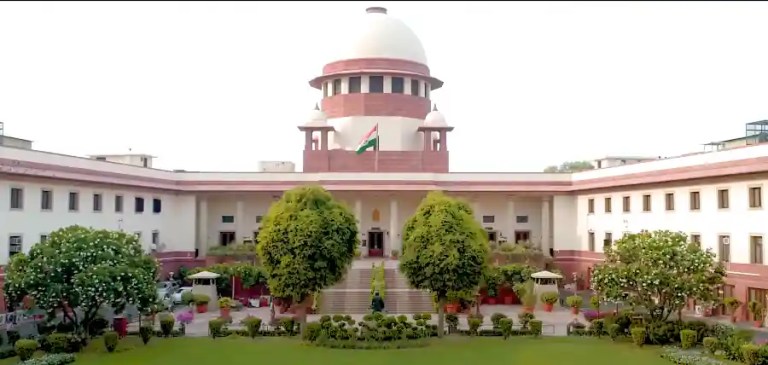
Supreme Court of India
Howrah Law Journal (April 2026)
Supreme Court Grants Bail to Former Jharkhand Minister in Disproportionate Assets Case
Ex-Jharkhand Minister Gets Bail from Supreme Court in Tribal Land Scam Case
Supreme Court Of India
[2026] 4 S.C.R. 593 : 2026 INSC 357
Anosh Ekka v. State Through Central Bureau of Investigation
(Criminal Appeal No. 1922 of 2026)
13 April 2026
[Vikram Nath and Sandeep Mehta, JJ.]
Order
1.Heard.
2.Leave granted.
3.The appellant herein, a former Minister in the State of Jharkhand has preferred the instant appeal against order dated 18th December, 2025 passed by the High Court of Jharkhand at Ranchi1 in I.A. No. 13857 of 2025 arising out of Criminal Appeal (SJ) No. 850 of 2025, whereby the High Court rejected the appellant’s application for suspension of sentence and grant of bail during pendency of the appeal.
4.The case of the prosecution, in a nutshell, is that an FIR being Vigilance Bureau P.S. Case No. 26 of 2008 came to be registered on the basis of a complaint filed by one Kumar Binod alleging that the appellant and another Minister, namely, Hari Narain Rai, had acquired assets disproportionate to their known sources of income. Pursuant to order dated 4th August, 2010 passed by the High Court in WP (PIL) Nos. 4700 of 2008 and 2222 of 2009, the investigation was assigned to Central Bureau of Investigation.
5.It is alleged that as against a pre-check asset of Rs. 10,48,827/-, the appellant amassed assets worth approximately Rs. 57.01 crores. These assets include land in and around Ranchi and a palatial bungalow. It is further alleged that after becoming a Minister, the appellant floated construction companies and got them registered with the Rural Works Department in order to legalise his illegally acquired wealth.
6.It is also alleged that the appellant misused his position to illegally acquire large tracts of tribal lands in violation of the provisions of the Chota Nagpur Tenancy Act, 19082. The transactions were made in the name of his wife, Mrs. Menon Ekka, by furnishing false residential addresses and submitting false affidavits. The investigation further revealed that such illegal transactions were orchestrated in connivance with public officials including the Land Reforms Deputy Collector and Circle Office staff, who facilitated illegal transfers of tribal lands despite statutory prohibitions.
7.It is further alleged that the appellant floated firms such as M/s Mahamaya Construction and M/s Ekka Construction Pvt. Ltd., in which his wife was the major shareholder, and later got these firms registered as Class-I contractors despite not fulfilling the eligibility criteria. These firms were awarded lucrative government contracts by departments which were under the direct control of the appellant, thereby conferring undue pecuniary advantage.
8.Upon completion of investigation, the CBI submitted a chargesheet dated 11th December, 2012 against the appellant and other accused persons for offences punishable under Sections 120B, 193 and 420 of the Indian Penal Code, 18603 and Sections 13(2) read with
13(1)(d) of the Prevention of Corruption Act, 19884, on the basis of which the appellant was put to trial in R.C. Case No. 04(A)/2010-AHD-R(B) The appellant was ultimately held guilty for offences punishable under Section 120B read with Section 13(1)(d) of the PC Act, 1988, Section 13(2) read with Section 13(1)(d) of the PC Act, 1988 and Section 120B read with Section 193 IPC.
9.Be that as it may, the appeal against the said conviction is still pending consideration before the High Court of Jharkhand. The sentence awarded to the appellant in the said case was suspended by this Court and he was granted bail vide order dated 28th April, 2023 passed in SLP (Crl.) No. 5004 of 2023.
10.The CBI thereafter submitted a separate charge-sheet leading to the institution of R.C. Case No. 04(A)/2010-AHD-R(C), out of which the present proceedings arise. In the said case, the appellant was tried and convicted by the learned trial Court vide judgment dated 29th August, 2025 for offences punishable under Section 120B read with Section 13(1)(d) of the PC Act, 1988, Section 13(2) read with Section 13(1)(d) of the PC Act, 1988 and Section 120B read with Section 193 IPC, and vide order dated 30th August, 2025, he was sentenced to undergo rigorous imprisonment of seven years each for the offences under the PC Act, 1988 along with fine of Rs.1,00,000/- each, and rigorous imprisonment of two years with fine of Rs. 10,000/- for the offence under Section 120B read with Section 193 IPC, with all sentences directed to run concurrently.
11.Aggrieved thereby, the appellant preferred Criminal Appeal (SJ) No. 850 of 2025, which is pending consideration before the High Court. The application for suspension of sentence filed therein came to be rejected by order dated 18th December, 2025, and being aggrieved of such rejection, the appellant has approached this Court by way of the present appeal by special leave.
12.Shri Siddharth Dave, learned senior counsel appearing for the appellant, contended that the land in question has already been seized by the Enforcement Directorate. Furthermore, properties/assets of the appellant valuing approximately Rs. 18 crores stand attached and seized under orders passed by the adjudicating authority in proceedings initiated by the Enforcement Directorate.
13.He submitted that two separate chargesheets have been filed by splitting the original Vigilance P.S. Case No. 26 of 2008, though the allegations pertain to the same check period, same set of transactions and alleged acquisition of disproportionate assets by indulging in criminal misconduct during the self-same period. It was pointed out that even in the earlier trial, the appellant was alleged to have acquired properties worth approximately Rs. 57.01 crores in the name of his wife, Mrs. Menon Ekka, including properties at serial nos. 1 to 15, and that the very same properties, as reflected in paragraphs 3 and 4 of the trial Court judgment, have again been made the subject matter of prosecution in the split chargesheet. The same sets of properties have been referred to in both R.C. Case No. 04(A)/2010-AHD-R(B) and the present case, i.e., R.C. Case No. 04(A)/2010-AHD-R(C), thereby indicating that both prosecutions arise out of overlapping set of identical allegations.
14.It was further urged that the appellant has already undergone imprisonment for a period of nearly four years in the earlier case. In the present case also, he has been sentenced to undergo rigorous imprisonment of seven years each under Sections 120-B read with 13(1)(d) and Section 13(2) read with 13(1)(d) of the PC Act, 1988 along with two years’ rigorous imprisonment under Section 120-B read with Section 193 IPC, which, according to the appellant, tantamounts to a dual punishment for the same set of allegations thereby being in the teeth of right against double jeopardy as guaranteed under Article 20(3) of the Constitution of India.
15.Shri Dave also pointed out that the tribal lands involved in the case have already been ordered to be confiscated by the Special Court under the PMLA vide judgment dated 21st March, 2020. The appellant and his family members undertake to extend full cooperation in restoring the land to its original status. It was contended that there is no likelihood of the appeal being heard in the near future and, considering that the maximum sentence awarded is seven years, the appellant deserves to be enlarged on bail during the pendency of the appeal.
16.Per contra, Shri Davinder Pal Singh, learned Additional Solicitor General appearing for the respondent-CBI, vehemently opposed the submissions advanced on behalf of the appellant. He submitted that the appellant, while holding the responsible public office of a Minister in the State of Jharkhand, misused his official position and indulged in extended acts of criminal misconduct thereby amassing assets grossly disproportionate to his known sources of income. He contended that the allegations against the appellant are grave in nature and, therefore, he does not deserve the indulgence of bail.
17.However, referring to the reply to additional queries made by this Court, Shri Singh conceded that substantial assets of the appellant valuing nearly Rs.18 crores have already been attached, and such attachment stands confirmed by the adjudicating authority. He also submitted that the tribal land in question has been confiscated. It was, however, pointed out that till date, no steps have been taken by the State Government for cancellation of the sale deeds and reversion of the tribal land in terms of the provisions of the CNT Act.
18.We have given our thoughtful consideration to the submissions advanced at Bar and have gone through the impugned judgment.
19.A perusal of the material available on record would indicate that two split charge-sheets were filed against the appellant arising from Vigilance P.S. Case No. 26 of 2008, leading to the institution of R.C. Case No. 04(A)/2010-AHD-R(B) and R.C. Case No. 04(A)/2010-AHD-R(C). Many of the allegations in the present case and the earlier case appear to be overlapping. In the previous case, the appellant had remained in custody for more than 4 years, whereafter, this Court suspended the sentences awarded to the appellant and released him on bail.
20.A fervent contention has been raised on behalf of the appellant that two separate prosecutions were impermissible because the allegations in both the cases are overlapping. This aspect of the case would have to be gone into by the High Court while deciding the pending appeals. However, the fact remains that the appellant has undergone custodial incarceration of more than 10 months in the present case as well. The sentence awarded to the appellant in the other case involving allegations of acquisition of disproportionate assets, having been suspended by this Court, we are inclined to grant bail to the appellant in the present case also.
21.Accordingly, we direct that the appellant shall be released on bail by suspending the substantive sentence of imprisonment awarded by the trial Court, subject to the condition that the appellant files an undertaking before the trial Court within 7 days of his release, stating that he shall assist in the process of restoration of the tribal land to its original status as and when required. The release of the appellant on bail shall further be subject to such other terms and conditions as the trial Court may deem fit to impose and upon furnishing bail bonds and sureties to the satisfaction of the trial Court.
22.The impugned order is accordingly set aside.
23.The appeal is allowed in these terms.
24.Pending application(s), if any, shall stand disposed of.
Result of the case: Appeal allowed.
- Hereinafter referred as “High Court”
- Hereinafter referred as “CNT Act”
- For short, “IPC”
- Hereinafter referred as “PC Act, 1988”
Supreme Court Bail Order in Jharkhand Disproportionate Assets and Tribal Land Case
Core Legal Concept
This Supreme Court order concerns suspension of sentence and grant of bail pending appeal in a corruption and disproportionate assets prosecution involving a former Jharkhand Minister. The case examines overlapping prosecutions, alleged illegal acquisition of tribal land, disproportionate assets, criminal conspiracy, and constitutional protection against double jeopardy.
Primary Legal Clusters
Suspension of Sentence Pending Appeal
The Supreme Court considered whether the sentence imposed by the trial court should remain operative during the pendency of the criminal appeal before the High Court.
Connected Concepts
- Bail during appeal
- Appellate criminal jurisdiction
- Custodial incarceration
- Judicial discretion in bail
- Concurrent sentences
- Post-conviction liberty
- High Court refusal of suspension of sentence
- Supreme Court intervention under special leave jurisdiction
See Also
- Criminal Appeal (SJ) No. 850 of 2025
- Suspension of sentence under criminal procedure
- Special Leave Petition in criminal matters
- Bail jurisprudence in corruption cases
Disproportionate Assets Case
The prosecution alleged that the appellant amassed assets vastly disproportionate to his known sources of income while serving as a Minister in Jharkhand.
Connected Concepts
- Corruption by public servants
- Illicit enrichment
- Known sources of income
- Benami property allegations
- Abuse of official position
- Pecuniary advantage
- Asset attachment proceedings
Related Statutes
- Prevention of Corruption Act, 1988
- Section 13(1)(d) PC Act
- Section 13(2) PC Act
See Also
- Public corruption investigations
- Wealth accumulation by public officials
- Financial misconduct in public office
- Enforcement Directorate attachment proceedings
Constitutional Law Cluster
Double Jeopardy and Article 20
A major issue raised before the Court was whether filing split charge-sheets arising from the same vigilance case amounted to impermissible dual prosecution.
Connected Constitutional Principles
- Article 20 protection
- Double jeopardy
- Multiple prosecutions
- Same offence doctrine
- Overlapping allegations
- Criminal fairness protections
- Abuse of prosecutorial process
Related Questions
- Can two charge-sheets arise from the same transaction?
- Whether overlapping evidence creates constitutional infirmity
- Limits on repeated prosecution for identical allegations
See Also
- Article 20 of the Constitution of India
- Criminal procedural safeguards
- Constitutional protections in criminal law
- Parallel criminal prosecutions
Tribal Land and CNT Act Cluster
Illegal Transfer of Tribal Land
The order discusses allegations involving illegal acquisition of tribal land contrary to statutory protections under the Chota Nagpur Tenancy Act.
Connected Concepts
- Tribal land protection
- Scheduled area land rights
- Fraudulent land transfer
- False affidavits
- Illegal mutation proceedings
- Restoration of tribal land
- Statutory prohibition on transfer
Related Authorities
- Land Reforms Deputy Collector
- Circle Office officials
- State Government land administration
See Also
- Chota Nagpur Tenancy Act, 1908
- Tribal land restoration
- Land alienation laws
- Scheduled Tribe property protections
- Illegal land acquisition in Jharkhand
Enforcement Directorate and PMLA Cluster
Attachment and Confiscation of Assets
The Court noted that substantial assets had already been attached by the Enforcement Directorate and tribal lands had been confiscated under anti-money laundering proceedings.
Connected Concepts
- Proceeds of crime
- Asset seizure
- Property attachment
- Adjudicating authority confirmation
- Confiscation proceedings
- Money laundering investigations
Related Statutes
- Prevention of Money Laundering Act
- PMLA confiscation orders
- Financial crime enforcement
See Also
- Enforcement Directorate proceedings
- Anti-money laundering jurisprudence
- Criminal attachment of property
- Confiscation of illegally acquired assets
Criminal Conspiracy and IPC Offences Cluster
Charges under the Indian Penal Code
The appellant faced charges involving conspiracy and fabrication-related offences alongside corruption charges.
Connected IPC Provisions
- Section 120B IPC
- Section 193 IPC
- Section 420 IPC
Related Criminal Concepts
- Criminal conspiracy
- False evidence
- Fraudulent documentation
- Fabrication of records
- Coordinated corruption schemes
See Also
- Criminal conspiracy jurisprudence
- White-collar criminal offences
- Documentary fraud in public administration
- False affidavit offences
CBI Investigation Cluster
Central Bureau of Investigation Probe
The case originated from a vigilance FIR and was later transferred to the CBI pursuant to High Court orders in public interest litigation proceedings.
Connected Concepts
- Vigilance investigations
- CBI jurisdiction
- Court-monitored investigation
- Public interest litigation
- Chargesheet bifurcation
- Corruption prosecution framework
Institutional Connections
- Central Bureau of Investigation
- Jharkhand Vigilance Bureau
- High Court of Jharkhand
- Trial Court under PC Act
See Also
- Court-directed CBI investigations
- Anti-corruption prosecorial mechanisms
- Vigilance Bureau FIRs
- Split charge-sheet litigation
Judicial Reasoning Cluster
Grounds for Grant of Bail
The Supreme Court relied on multiple factors while granting relief to the appellant.
Factors Considered
- Prior incarceration exceeding four years
- Ten months’ custody in present case
- Pendency of appeal
- Overlapping allegations
- Existing attachment of assets
- Confiscation of tribal land
- Uncertainty regarding early disposal of appeal
Judicial Balancing
- Gravity of allegations versus liberty
- Public interest versus individual rights
- Continuing detention pending appeal
- Conditional bail safeguards
See Also
- Bail principles in economic offences
- Liberty pending appeal
- Sentence suspension standards
- Judicial proportionality in bail decisions
Institutional and Procedural Network
Courts and Authorities Involved
Supreme Court of India
- Granted suspension of sentence
- Allowed appeal
- Set aside High Court order
High Court of Jharkhand
- Rejected suspension of sentence
- Hearing pending criminal appeals
Trial Court
- Convicted appellant
- Imposed seven-year rigorous imprisonment
Enforcement Directorate
- Attached assets
- Conducted confiscation proceedings
Central Bureau of Investigation
- Conducted corruption investigation
- Filed split charge-sheets
Related Legal Themes
Public Office and Abuse of Power
This case connects to broader jurisprudence involving misuse of ministerial office for private gain.
Related Areas
- Conflict of interest
- Government contract manipulation
- Abuse of discretionary powers
- Public accountability
- Corruption in infrastructure contracts
Bail in Corruption Cases
The judgment contributes to developing jurisprudence concerning post-conviction bail in corruption prosecutions.
Related Questions
- Whether economic offences deserve stricter bail standards
- Role of sentence duration in suspension applications
- Impact of prolonged appeal pendency
Knowledge Web Connections
Closely Connected Topics
- Prevention of Corruption Act jurisprudence
- Criminal appeals in corruption convictions
- Constitutional safeguards in criminal prosecution
- Illegal tribal land transfer cases
- Economic offences and bail
- Court-monitored corruption investigations
- Asset confiscation under PMLA
- Split charge-sheet legality
- Appellate suspension of sentence
- Abuse of ministerial office
Result of the Case
Appeal Allowed
The Supreme Court suspended the substantive sentence imposed upon the appellant and granted bail subject to conditions, including cooperation in restoration of tribal land and furnishing of bail bonds before the trial court.