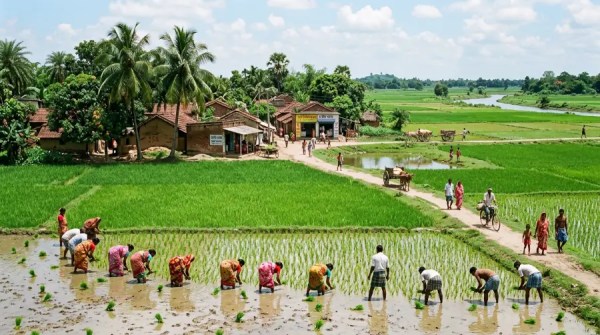
Humanity, the collective identity of the species Homo sapiens, represents a vast and intricate narrative that spans hundreds of thousands of years, encompassing biological evolution, cultural transformation, technological innovation, and social complexity. Emerging in Africa approximately 300,000 years ago, early modern humans are evidenced by fossil discoveries such as those at Jebel Irhoud in present-day Morocco. These early populations exhibited anatomical features recognizable as modern, including a rounded skull and reduced brow ridges, marking a decisive stage in hominin evolution following earlier species such as Homo erectus and Homo habilis.
The evolutionary roots of humanity extend further back into the lineage of primates, particularly the divergence from a common ancestor shared with chimpanzees around 6–7 million years ago. Fossil specimens such as Australopithecus afarensis, exemplified by the famous skeleton known as “Lucy,” discovered in Ethiopia in 1974, reveal the early development of bipedalism, a defining characteristic of human locomotion. This adaptation freed the hands for tool use, eventually leading to increasingly complex behaviors.
By approximately 2.6 million years ago, the archaeological record shows the emergence of the Oldowan tool culture, with simple stone implements used for cutting and processing food. These tools, found across East Africa, mark the beginning of humanity’s long relationship with technology. Later, around 1.76 million years ago, the Acheulean industry, associated with Homo erectus, introduced more sophisticated hand axes and symmetrical tools, indicating advanced cognitive abilities.
One of the most significant developments in human history was the control of fire, which likely occurred around 1 million years ago, with evidence from sites such as Wonderwerk Cave. Fire provided warmth, protection, and the ability to cook food, fundamentally altering human diets and social structures. The expansion of humans beyond Africa, often referred to as the “Out of Africa” migration, occurred in waves, with a major dispersal around 70,000–60,000 years ago, leading to the colonization of Asia, Europe, and eventually Australia and the Americas.
During this period, humans encountered and interbred with other hominin species such as Neanderthals and Denisovans. Genetic evidence shows that modern non-African populations retain a small percentage of Neanderthal DNA, highlighting the interconnectedness of human evolution. The extinction of these other hominins, around 40,000 years ago, left Homo sapiens as the sole surviving human species.
The period known as the Upper Paleolithic (approximately 50,000–10,000 BCE) witnessed a remarkable flowering of human creativity and symbolic thought. Cave art sites such as Lascaux Cave, dated to around 17,000 BCE, and Chauvet Cave, dated to around 30,000 BCE, contain intricate depictions of animals and abstract symbols, suggesting the emergence of art, religion, and language. Portable artifacts, including carved figurines like the Venus of Willendorf (circa 28,000 BCE), further demonstrate early symbolic expression.
The transition from hunter-gatherer societies to agricultural communities, known as the Neolithic Revolution, began around 10,000 BCE in regions such as the Fertile Crescent. The domestication of plants like wheat and barley, and animals such as sheep and goats, led to permanent settlements and population growth. Early villages such as Jericho and Çatalhöyük provide archaeological evidence of these changes.
By 3500 BCE, the development of urban civilization was evident in Mesopotamia, often called the “cradle of civilization.” The Sumerians established city-states such as Uruk, where innovations like writing (cuneiform), law codes, and organized religion emerged. Similarly, the Indus Valley Civilization (circa 2600–1900 BCE) in present-day India and Pakistan developed advanced urban planning, drainage systems, and trade networks.
In Ancient Egypt, beginning around 3100 BCE, centralized authority under pharaohs led to monumental architecture such as the pyramids of Giza, and the development of hieroglyphic writing. The Nile River was central to Egyptian life, providing fertile land and transportation. Meanwhile, in China, the Shang Dynasty (circa 1600–1046 BCE) established early forms of writing and state organization.
The classical era (approximately 800 BCE–500 CE) saw the rise of influential civilizations and intellectual traditions. In Ancient Greece, philosophers such as Socrates, Plato, and Aristotle laid the foundations of Western philosophy, while political innovations like democracy emerged in Athens. The expansion of the Roman Empire (27 BCE–476 CE) unified much of Europe, North Africa, and the Near East, spreading law, engineering, and infrastructure.
In South Asia, the teachings of Gautama Buddha (circa 5th century BCE) gave rise to Buddhism, while in China, Confucius (551–479 BCE) emphasized ethics and social harmony. These intellectual movements profoundly influenced human societies and continue to shape cultural and philosophical thought.
The Middle Ages (circa 500–1500 CE) were characterized by the spread of major religions, including Christianity and Islam. The founding of Islam by Muhammad in 610 CE in Mecca led to the rapid expansion of the Islamic Caliphates, which became centers of learning, preserving and expanding knowledge in fields such as mathematics, astronomy, and medicine.
The Renaissance (14th–17th centuries), originating in Florence, marked a revival of classical learning and artistic achievement. Figures such as Leonardo da Vinci and Michelangelo exemplified the era’s emphasis on human potential and creativity. The invention of the printing press by Johannes Gutenberg around 1440 revolutionized the dissemination of knowledge.
The Age of Exploration (15th–17th centuries) expanded human horizons, with explorers like Christopher Columbus reaching the Americas in 1492, and Vasco da Gama establishing a sea route to India in 1498. These voyages initiated global trade networks but also led to colonization, cultural exchange, and conflict.
The Scientific Revolution (16th–18th centuries) transformed humanity’s understanding of the natural world. Thinkers such as Isaac Newton and Galileo Galilei advanced knowledge in physics and astronomy, challenging traditional views and laying the groundwork for modern science.
The Industrial Revolution, beginning in United Kingdom in the late 18th century, introduced mechanized production, urbanization, and technological innovation. The development of the steam engine by James Watt and subsequent industrial advancements reshaped economies and societies worldwide.
The 19th and 20th centuries witnessed unprecedented change, including the rise of nation-states, global conflicts such as World War I (1914–1918) and World War II (1939–1945), and ideological struggles. Figures like Mahatma Gandhi and Martin Luther King Jr. championed nonviolent resistance and civil rights.
The latter half of the 20th century and the early 21st century have been defined by rapid technological progress, globalization, and scientific discovery. The space age began with the launch of Sputnik in 1957, leading to the Apollo 11 Moon landing in 1969. The development of computers and the internet has revolutionized communication, knowledge, and daily life.
Sarvarthapedia Conceptual Network: Humanity
Humanity (Homo sapiens)
- See also: Evolution, Culture, Civilization, Society, Technology, Consciousness
- Connected to: Homo sapiens, Anthropology, History
- Core relations: Biological evolution, symbolic cognition, social organization
Evolutionary Cluster
Evolution
- See also: Natural Selection, Adaptation, Genetics, Speciation
- Connected to: Charles Darwin, On the Origin of Species
- Links to: Human Origins, Primates, Environment
Human Origins
- See also: Early Hominins, Migration, Fossil Record
- Connected to: Australopithecus afarensis, Homo erectus
- Links to: Africa, Paleontology
Out of Africa Migration
- See also: Dispersal, Genetic Diversity, Prehistory
- Connected to: Ethiopia, Neanderthals
- Links to: Adaptation, Environment
Prehistoric Culture Cluster
Paleolithic Era
- See also: Hunter-Gatherers, Stone Tools, Cave Art
- Connected to: Lascaux Cave, Chauvet Cave
- Links to: Symbolism, Survival
Neolithic Revolution
- See also: Agriculture, Domestication, Settlements
- Connected to: Fertile Crescent, Çatalhöyük
- Links to: Economy, Population Growth
Civilization Cluster
Civilization
- See also: Urbanization, Governance, Writing Systems
- Connected to: Mesopotamia, Ancient Egypt
- Links to: Culture, State Formation
Writing Systems
- See also: Communication, Record Keeping, Literacy
- Connected to: Cuneiform, Hieroglyphics
- Links to: Knowledge Transmission
Indus Valley Civilization
- See also: Urban Planning, Trade Networks
- Connected to: India, Pakistan
- Links to: Civilization, Archaeology
Philosophy and Thought Cluster
Philosophy
- See also: Ethics, Metaphysics, Logic
- Connected to: Socrates, Confucius
- Links to: Knowledge, Society
Religion
- See also: Belief Systems, Rituals, Spirituality
- Connected to: Gautama Buddha, Muhammad
- Links to: Culture, Ethics
Scientific and Technological Cluster
Scientific Revolution
- See also: Empiricism, Astronomy, Physics
- Connected to: Galileo Galilei, Isaac Newton
- Links to: Knowledge Systems
Industrial Revolution
- See also: Mechanization, Urbanization, Capitalism
- Connected to: United Kingdom, James Watt
- Links to: Economy, Society
Information Age
- See also: Internet, Digital Technology, Globalization
- Connected to: Computing, Communication
- Links to: Knowledge, Society
Political and Social Movements Cluster
Nation-State
- See also: Sovereignty, Governance, Identity
- Connected to: Political Systems, Borders
- Links to: War, Diplomacy
Civil Rights Movements
- See also: Equality, Justice, Nonviolence
- Connected to: Mahatma Gandhi, Martin Luther King Jr.
- Links to: Society, Ethics
Global Conflicts
- See also: Warfare, Alliances, Peace Treaties
- Connected to: World War I, World War II
- Links to: Technology, Politics
Modern Challenges Cluster
Climate Change
- See also: Sustainability, Environment, Global Policy
- Connected to: Ecology, Industrialization
- Links to: Future of Humanity
Artificial Intelligence
- See also: Automation, Ethics, Machine Learning
- Connected to: Technology, Society
- Links to: Future, Consciousness
Globalization
- See also: Trade, Cultural Exchange, Connectivity
- Connected to: Economy, Communication
- Links to: Modern Civilization
Meta-Connections
Culture
- Connects: Religion, Art, Language, Society
- Links to: Identity, Tradition
Technology
- Connects: Tools, Industry, Information Systems
- Links to: Innovation, Progress
Society
- Connects: Governance, Economy, Culture
- Links to: Human Interaction, Organization
Knowledge
- Connects: Knowledge, Knowledge Ecosystem, Science, Philosophy, Education
- Links to: Progress, Understanding