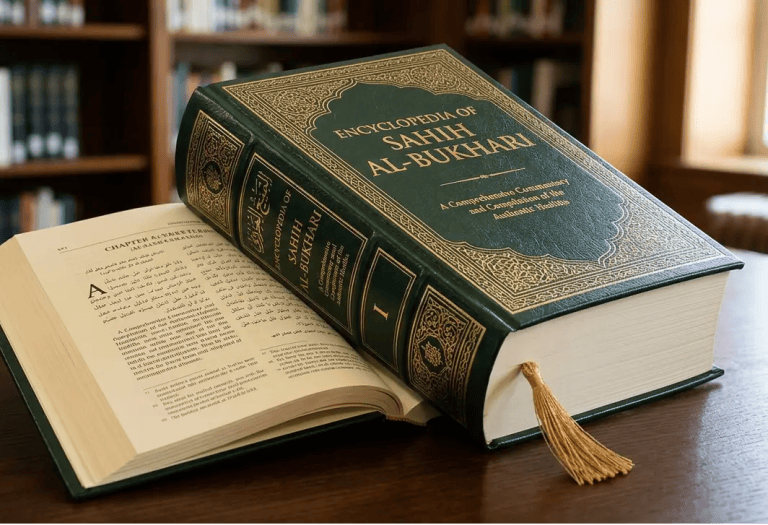
See: Volume 3
Volume 4 of the Encyclopedia of American Law.
VOLUME 4: FIRST AMENDMENT – SPEECH AND PRESS
The Boundaries of Expression
Introduction to Volume 4
The First Amendment reads: “Congress shall make no law… abridging the freedom of speech, or of the press.”
The words are absolute. “No law” means no law. But the Supreme Court has never read them literally. The First Amendment has never protected perjury, bribery, blackmail, or a man falsely shouting “Fire” in a crowded theater. The question has always been where to draw the lines.
This volume tracks those lines. The law of free speech is a law of exceptions: incitement, fighting words, obscenity, defamation, commercial speech, time‑place‑manner restrictions. The Court has built these exceptions over a century, often changing direction without admitting it.
The organization is doctrinal, not chronological. Part One covers the history and theories of the First Amendment: why we protect speech at all. Part Two examines content‑based restrictions—when the government targets speech because of its message. Part Three covers content‑neutral restrictions—time, place, and manner rules that apply regardless of message. Part Four treats the press cases: libel, privacy, newsgathering, and the special status (or lack thereof) of the institutional press.
The cases are the law. The First Amendment says what the Court says it says.
PART ONE: FOUNDATIONS
Chapter 1: The Text and History
Congress shall make no law… abridging the freedom of speech, or of the press.
The First Amendment applied only to the federal government from 1791 until 1925. States could censor freely. In Gitlow v. New York (1925) , the Court held that the Fourteenth Amendment’s Due Process Clause incorporates the Free Speech Clause against the states. The same year, in Near v. Minnesota (1931) , the Court incorporated the Free Press Clause.
The historical understanding of “freedom of speech” at the Founding is contested. The English common law punished seditious libel—criticism of the government. Blackstone wrote that freedom of the press meant only no prior restraint (no pre‑publication licensing). You could still be punished after publication for what you said.
Most scholars agree that the First Amendment was intended to prohibit seditious libel prosecutions. But the Court did not squarely hold that until New York Times Co. v. Sullivan (1964) , which said the First Amendment “was adopted against the widespread use of the common law of seditious libel to punish criticism of government.”
Chapter 2: Theories of Free Speech
Four main justifications for protecting speech recur in the cases.
The marketplace of ideas. Justice Holmes, dissenting in Abrams v. United States (1919), wrote: “The best test of truth is the power of the thought to get itself accepted in the competition of the market.” Truth will drive out falsehood if all speech is permitted. The metaphor is powerful but flawed. Markets concentrate wealth. The rich speak louder. And the metaphor does not explain why we protect false statements—which have no truth value to be discovered.
Self‑governance. Alexander Meiklejohn argued that the First Amendment protects speech that matters to democratic decision‑making. Political speech is at the core. Art, science, and gossip are further from the core. The theory explains why false political speech is still protected—voters need information, even if some of it is wrong. But it does not explain why we protect obscenity or commercial advertising.
Individual autonomy. Speech is part of what it means to be human. The state should not control what people think or say, even when the speech has no political value. This theory protects art, literature, and personal expression. It also protects the right not to speak (compelled speech is a form of compulsion).
Checking value. The press acts as a watchdog on government. Free speech keeps the powerful honest. This theory underlies the libel cases, which give critics of public officials wide latitude.
The Court has never adopted a single theory. Different theories dominate different areas.
Chapter 3: Prior Restraint and Subsequent Punishment
A prior restraint stops speech before it occurs. A subsequent punishment imposes liability after the fact. The First Amendment treats prior restraints with special hostility.
In Near v. Minnesota (1931) , a state law authorized courts to enjoin “malicious, scandalous, and defamatory” newspapers. The Court struck it down. Prior restraints are presumptively unconstitutional. The only exceptions: national security in wartime (troop movements, ship sailings), obscenity, and incitement to violence. Even those exceptions are narrow.
In New York Times Co. v. United States (1971) (the Pentagon Papers case), the Nixon administration sought to enjoin publication of a secret history of the Vietnam War. The Court rejected the injunction. The government had not met its “heavy burden” of justifying prior restraint. The opinion came in a brief, unsigned per curiam; each Justice wrote separately. Justice Black wrote that “every moment’s continuance of the injunctions… amounts to a flagrant, indefensible, and continuing violation of the First Amendment.”
Subsequent punishment is less suspicious but still limited. The government may impose civil or criminal liability for speech after the fact, but only within the boundaries of the First Amendment.
PART TWO: CONTENT‑BASED RESTRICTIONS
Chapter 4: The Distinction Between Content‑Based and Content‑Neutral
A content‑based restriction targets speech because of its message, its subject matter, or its viewpoint. The Court subjects these to strict scrutiny: the government must show that the restriction is narrowly tailored to serve a compelling interest.
A content‑neutral restriction regulates the time, place, or manner of speech without regard to its content. The Court applies intermediate scrutiny: the government must show that the restriction is narrowly tailored to serve a significant government interest and leaves open ample alternative channels of communication.
Police Department of Chicago v. Mosley (1972) set the principle. Chicago banned picketing within 150 feet of a school except for labor picketing. The Court struck it down. “Under the Equal Protection Clause, not to mention the First Amendment itself, government may not grant the use of a forum to people whose views it finds acceptable, but deny use to those wishing to express less favored or more controversial views.”
Reed v. Town of Gilbert (2015) held that a town’s sign code distinguishing between political signs, ideological signs, and directional signs was content‑based on its face. Strict scrutiny applied. The town lost.
Chapter 5: Incitement – From Schenck to Brandenburg
Schenck v. United States (1919) is the first major free speech case. Charles Schenck, a socialist, mailed pamphlets urging young men to resist the draft. The Court upheld his conviction. Justice Holmes wrote that the question “is whether the words used are used in such circumstances and are of such a nature as to create a clear and present danger that they will bring about the substantive evils that Congress has a right to prevent.” The wartime draft was a substantial evil.
Debs v. United States (1919) , decided the same day, upheld Eugene Debs’s conviction for a speech opposing the war. The speaker was a socialist running for president.
Abrams v. United States (1919) involved Russian immigrants who threw leaflets from a building in New York urging a general strike to stop American intervention in the Russian civil war. The Court upheld their convictions. Holmes dissented, articulating the marketplace theory: “The ultimate good desired is better reached by free trade in ideas—that the best test of truth is the power of the thought to get itself accepted in the competition of the market.”
Whitney v. California (1927) upheld a conviction under California’s Criminal Syndicalism Act. But Justice Brandeis concurred in a long opinion that became the template for modern incitement doctrine. He wrote that even “fear of serious injury cannot alone justify suppression.” The state must show a “reasonable ground to believe that the danger apprehended is imminent.”
Dennis v. United States (1951) upheld the convictions of Communist Party leaders under the Smith Act. The Court adopted a new test: “whether the gravity of the evil, discounted by its improbability, justifies such invasion of free speech as is necessary to avoid the danger.” The evil of overthrowing the government was great. The improbability of success did not matter.
Brandenburg v. Ohio (1969) is the modern standard. A Ku Klux Klan leader gave a speech at a rally, captured on film, saying “If our President, our Congress, our Supreme Court, continues to suppress the white, Caucasian race, it’s possible that there might have to be some revengence taken.” The Court reversed his conviction. The test: speech may be punished only if it is “directed to inciting or producing imminent lawless action” and is “likely to incite or produce such action.”
The Brandenburg test protects a lot. Advocacy of illegal action is protected unless the speaker intends to produce imminent action and the likelihood of that action is high. Abstract teaching, philosophical arguments, even passionate calls for revolution stay outside the reach of the criminal law.
Chapter 6: Fighting Words and Hostile Audiences
Chaplinsky v. New Hampshire (1942) created the “fighting words” exception. Chaplinsky, a Jehovah’s Witness, called a city marshal a “damned racketeer” and “damned Fascist.” The Court upheld his conviction. Fighting words are “those which by their very utterance inflict injury or tend to incite an immediate breach of the peace.”
Chaplinsky has never been overruled but has been sharply limited. The Court has not upheld a fighting words conviction since. In Cohen v. California (1971) , a man wore a jacket bearing the words “Fuck the Draft” in a courthouse. The Court reversed his conviction. The words were not directed at anyone in particular. The message was political. Offensiveness alone does not justify suppression.
Terminiello v. Chicago (1949) involved a priest who gave a racist, anti‑Semitic speech to a crowd of supporters. Outside, a mob protested. The police asked the priest to stop. He kept speaking. The Court reversed his conviction. The trial judge had instructed the jury that speech is unprotected if it “stirs the public to anger, invites dispute, or creates a disturbance.” That was too broad. Speech may not be suppressed just because it creates a hostile audience. The police must protect the speaker, not silence him.
Feiner v. New York (1951) reached the opposite result. A man spoke on a street corner, criticizing the President, the American Legion, and other local officials. The crowd grew restless. Some threatened violence. The police arrested the speaker. The Court upheld the conviction. The line between Feiner and Terminiello is fine. The difference may be that in Feiner the speaker refused to stop after being warned, while in Terminiello the police never ordered the speaker to stop.
The modern rule: The government may not silence a speaker because of anticipated hostile audience reaction. The police must control the audience. Only when violence is imminent and no other remedy is available may the government arrest the speaker.
Chapter 7: True Threats
A true threat is speech that a reasonable person would interpret as a serious expression of intent to commit violence. True threats are not protected.
Watts v. United States (1969) involved a 18‑year‑old at a anti‑war rally who said “If they ever make me carry a rifle, the first man I want to get in my sights is L.B.J.” The Court reversed his conviction. The statement was political hyperbole, not a true threat. The context (a rally, the speaker’s age, the audience’s laughter) mattered.
Virginia v. Black (2003) upheld a Virginia law banning cross‑burning with intent to intimidate. The Court held that cross‑burning is a particularly virulent form of intimidation. But the state could not presume that any cross‑burning is evidence of intent to intimidate. The jury must find intent.
Counterman v. Colorado (2023) held that for a true threat conviction, the state must prove the defendant acted with at least reckless disregard for the threatening nature of the statement. Negligence is not enough. The Court was divided over whether knowledge or recklessness is required, but a majority settled on recklessness.
Chapter 8: Obscenity and Indecency
Obscenity is not protected speech. But defining obscenity has proved impossible.
Roth v. United States (1957) held that obscenity is “utterly without redeeming social importance.” The test: “whether to the average person, applying contemporary community standards, the dominant theme of the material taken as a whole appeals to prurient interest.”
Memoirs v. Massachusetts (1966) added a third prong: the material must be “patently offensive” and “utterly without redeeming social value.”
Miller v. California (1973) is the current test. The Court struck down the “utterly without redeeming social value” standard. The new three‑prong test:
- Whether the average person, applying contemporary community standards, would find that the work, taken as a whole, appeals to the prurient interest.
- Whether the work depicts or describes, in a patently offensive way, sexual conduct specifically defined by state law.
- Whether the work, taken as a whole, lacks serious literary, artistic, political, or scientific value.
The third prong uses a national standard (what would a reasonable person find serious value?), not a local community standard. The first two prongs use the local community standard. This creates a split verdict: a work might appeal to prurient interest in rural Alabama but not in San Francisco, but if it has serious value by national standards, it is still protected.
Paris Adult Theatre I v. Slaton (1973) , decided the same day as Miller, held that states may ban the exhibition of obscene material even to consenting adults. There is no First Amendment right to possess obscenity in the privacy of one’s home, the Court held, distinguishing Stanley v. Georgia (1969), which protected private possession. Stanley was about the right to read what you want in your own home; Paris was about commercial distribution.
Child pornography is not protected. In New York v. Ferber (1982) , the Court held that states may ban the distribution of child pornography even if it is not obscene under Miller. The state’s interest in protecting children from sexual exploitation is compelling. The speech is intrinsically related to the underlying crime.
Indecency (speech that is offensive but not obscene) may be regulated broadcast media but not cable or the internet. In FCC v. Pacifica Foundation (1978) , the Court upheld the FCC’s regulation of George Carlin’s “Seven Dirty Words” monologue broadcast on the radio. Radio and television are pervasive and accessible to children. The Court has not extended Pacifica to cable or satellite.
The internet is the most protected medium. In Reno v. ACLU (1997) , the Court struck down the Communications Decency Act, which banned “indecent” speech online. The internet is not as intrusive as broadcast radio, the Court held. The risk of children encountering indecent material does not justify choking off adult access.
Chapter 9: Defamation – New York Times v. Sullivan and Its Progeny
Defamation (libel for writing, slander for speech) is a tort. The First Amendment limits defamation suits.
New York Times Co. v. Sullivan (1964) is the landmark. The Times published an advertisement criticizing law enforcement in Montgomery, Alabama. The ad contained minor factual inaccuracies (students sang the national anthem, not “My Country, ‘Tis of Thee”; Dr. King had been arrested four times, not seven). The Montgomery police commissioner sued for libel and won a $500,000 judgment under Alabama law.
The Court reversed. The First Amendment requires a new rule for public officials suing over criticism of their official conduct. A public official may recover only if the statement was made with “actual malice” —knowledge that it was false or reckless disregard of whether it was false or not.
The term “actual malice” is misleading. It does not mean ill will or spite. A newspaper can hate a politician and still avoid liability if it checks its facts. The standard is about knowledge of falsity, not about emotion.
Curtis Publishing Co. v. Butts (1967) extended the Sullivan rule to public figures—people who are not government officials but have assumed roles of prominence in society. The plaintiff was the athletic director of the University of Georgia, accused of fixing a football game. The Court applied the actual malice standard.
Gertz v. Robert Welch, Inc. (1974) drew the line. The plaintiff was a lawyer representing a family that had been killed by a police officer. The magazine accused him of being a “Leninist” and a “Communist‑fronter.” The Court held that private figures suing over matters of public concern may recover damages for false statements without proving actual malice. But they may not recover presumed or punitive damages without showing actual malice. States may set their own standards for liability, as long as they require at least negligence.
Philadelphia Newspapers, Inc. v. Hepps (1986) held that when a defamation suit involves a matter of public concern, the plaintiff bears the burden of proving falsity. The common law had presumed falsity; the defendant had to prove truth. The First Amendment flips the burden.
Hustler Magazine v. Falwell (1988) protected parody. Hustler ran a Campari ad parody depicting Jerry Falwell, a prominent evangelist, losing his virginity to his mother in an outhouse. Falwell sued for intentional infliction of emotional distress and won. The Court reversed. A public figure cannot recover for emotional distress caused by a parody that a reasonable person would not believe to be true. The First Amendment protects “political cartoons and satire,” even when they are “outrageous.”
Chapter 10: Commercial Speech
Commercial speech (advertising, marketing) was once outside the First Amendment entirely. Valentine v. Chrestensen (1942) held that “the Constitution imposes no such restraint on government as respects purely commercial advertising.”
Virginia State Board of Pharmacy v. Virginia Citizens Consumer Council (1976) reversed course. A state law forbade pharmacists from advertising prescription drug prices. The Court struck it down. Consumers have an interest in price information, and the free flow of commercial information serves the public good.
The current test comes from Central Hudson Gas & Electric Corp. v. Public Service Commission (1980) :
- Is the speech lawful and not misleading? If yes, it receives First Amendment protection.
- Does the government assert a substantial interest in restricting the speech?
- Does the regulation directly advance that interest?
- Is the regulation more extensive than necessary?
The fourth prong has been debated. In 44 Liquormart, Inc. v. Rhode Island (1996) , the Court struck down a state ban on advertising liquor prices. The state’s interest in promoting temperance was substantial, but the ban was not “narrowly tailored”—the state could have used other methods (higher taxes, restrictions on sales) that did not restrict speech.
Sorrell v. IMS Health Inc. (2011) applied strict scrutiny to a Vermont law restricting the sale of pharmacy prescribing data to drug companies for marketing purposes. The law was content‑based and speaker‑based (it allowed data sales for some purposes but not others). It failed.
National Institute of Family and Life Advocates v. Becerra (2018) struck down a California law requiring crisis pregnancy centers to provide notices about free or low‑cost abortion services. The law was a content‑based regulation of speech, subject to strict scrutiny, and California could not show it was narrowly tailored.
Chapter 11: Expressive Conduct
Speech is not only words. Burning a flag, wearing an armband, kneeling during the national anthem—all are expressive conduct protected by the First Amendment.
United States v. O’Brien (1968) set the test for conduct that combines speech and non‑speech elements. David O’Brien burned his draft card on the steps of the South Boston courthouse. A federal law made it a crime to “knowingly destroy” a draft card. The Court upheld the conviction. The test:
- Is the regulation within the constitutional power of the government?
- Does it further an important or substantial government interest?
- Is the governmental interest unrelated to the suppression of free expression?
- Is the incidental restriction on First Amendment freedoms no greater than necessary?
The draft card law survived because the government’s interest in maintaining an efficient draft system was substantial and unrelated to suppressing anti‑war expression.
Texas v. Johnson (1989) is the counterpoint. Gregory Lee Johnson burned an American flag during the 1984 Republican National Convention in Dallas. Texas law prohibited desecration of a venerated object. The Court struck down the conviction. The state’s interest in preserving the flag as a symbol of national unity was related to the suppression of expression. The prosecution was “effected only for the content of the expression.” Flag burning is expressive conduct, and the expression is political.
Congress passed a federal Flag Protection Act in response. In United States v. Eichman (1990) , the Court struck that down too. The government cannot prohibit flag burning without targeting the message.
Spence v. Washington (1974) held that displaying a flag upside down with a peace symbol attached was protected expression. Hurley v. Irish‑American Gay, Lesbian and Bisexual Group of Boston (1995) held that the state could not require a St. Patrick’s Day parade to include a gay pride group. Parades are expressive. Forcing a group to include messages it does not wish to convey is forced speech.
Chapter 12: Symbolic Speech – The Special Cases
Tinker v. Des Moines Independent Community School District (1969) is the school speech case that set the standard. Students wore black armbands to protest the Vietnam War. The school suspended them. The Court held that students do not “shed their constitutional rights to freedom of speech or expression at the schoolhouse gate.” Schools may restrict speech only if it would “materially and substantially disrupt” school activities. The armbands caused no disruption.
West Virginia State Board of Education v. Barnette (1943) is the compelled speech case. The state required public school students to salute the flag and recite the pledge. Jehovah’s Witnesses refused on religious grounds. The Court struck down the requirement. The First Amendment protects “the right of the citizen to refrain from speaking.” The opinion, by Justice Jackson, contains the most quoted passage in First Amendment law: “If there is any fixed star in our constitutional constellation, it is that no official, high or petty, can prescribe what shall be orthodox in politics, nationalism, religion, or other matters of opinion or force citizens to confess by word or act their faith therein.”
Chapter 13: Compelled Speech
The First Amendment protects the right to speak. It also protects the right to remain silent.
Barnette (above) is the foundational case.
Wooley v. Maynard (1977) held that the state could not require drivers to display the state motto “Live Free or Die” on their license plates. The plaintiffs covered the motto with tape. The Court struck down the requirement. New Hampshire could not “require that its citizens use their private property as a ‘mobile billboard’ for the State’s ideological message.”
Janus v. American Federation of State, County, and Municipal Employees (2018) held that public sector unions may not require non‑members to pay agency fees. Agency fees were allowed for decades under Abood v. Detroit Board of Education (1977). Janus overruled Abood. The fees compelled speech in the form of union advocacy.
Rumsfeld v. Forum for Academic and Institutional Rights (FAIR) (2006) held that the Solomon Amendment, which required law schools to allow military recruiters on campus or lose federal funding, did not violate First Amendment rights. Law schools argued that the military’s “don’t ask, don’t tell” policy was discriminatory and that allowing recruiters made them complicit. The Court held that the schools remained free to speak against the military. The requirement was not a violation of their expressive rights.
PART THREE: CONTENT‑NEUTRAL RESTRICTIONS
Chapter 14: Time, Place, and Manner
Content‑neutral restrictions are evaluated under intermediate scrutiny from United States v. O’Brien (1968). The government must show that the regulation is narrowly tailored to serve a significant government interest and leaves open ample alternative channels of communication.
Cox v. New Hampshire (1941) upheld a parade permit requirement. The permit was not about content; it was about traffic control. The government’s interest in regulating competing uses of streets and sidewalks is significant.
Ward v. Rock Against Racism (1989) upheld New York City’s requirement that bands performing in Central Park use city‑provided sound equipment and a city‑employed sound engineer. The city had a significant interest in limiting noise. The regulation was narrowly tailored—it did not ban amplified music; it just limited volume.
Clark v. Community for Creative Non‑Violence (1984) upheld a National Park Service regulation prohibiting sleeping in Lafayette Park and the Mall. The CCNV wanted demonstrators to sleep in the park as part of a protest against homelessness. The regulation was content‑neutral (it banned all sleeping, not just protests). The government’s interest in preserving park properties was significant. The demonstrators could still demonstrate—they just could not sleep there.
Chapter 15: Public Forums and Government Property
The government owns streets, parks, public squares, and government buildings. The First Amendment limits the government’s power to restrict speech on its own property. The Court has created a forum analysis:
Traditional public forums – Streets, parks, sidewalks. The government may impose only content‑neutral time, place, and manner restrictions. Content‑based restrictions trigger strict scrutiny.
Designated public forums – Government property opened for expressive activity by the public (school auditoriums after hours, meeting rooms in public libraries). Same rules as traditional public forums.
Limited public forums – Government property opened for limited purposes (a school board meeting may be limited to education issues). The government may restrict speech to the designated purposes.
Non‑public forums – Government property not open for public expression (military bases, prisons, the mailboxes of public employees). The government may restrict speech as long as the restrictions are reasonable and not based on viewpoint.
Perry Education Association v. Perry Local Educators’ Association (1983) set the framework.
United States v. Grace (1983) held that the sidewalks outside the Supreme Court building are traditional public forums. The government may not bar leafleting there.
International Society for Krishna Consciousness v. Lee (1992) held that airport terminals are not public forums. The government may ban solicitation.
Minnesota Voters Alliance v. Mansky (2018) struck down a Minnesota law banning “political” apparel in polling places. The term “political” was too vague. It gave election officials too much discretion.
Chapter 16: Speech in Public Schools
Students have free speech rights, but the school context gives schools more latitude.
Tinker v. Des Moines (1969) (above) held that schools may restrict speech only when it would cause “material and substantial disruption.”
Bethel School District v. Fraser (1986) upheld a school’s suspension of a student who gave a speech nominating a classmate using “elaborate, graphic, and explicit sexual metaphor.” The school has an interest in teaching “the boundaries of socially appropriate behavior.”
Hazelwood School District v. Kuhlmeier (1988) held that schools may regulate school‑sponsored newspapers that are not public forums. The school has a pedagogical interest in controlling what is published under its name.
Morse v. Frederick (2007) (the “Bong Hits 4 Jesus” case) held that a school may prohibit speech that advocates illegal drug use. The banner was unfurled at a school‑supervised event off school grounds. The school’s interest in preventing drug use outweighed the student’s First Amendment rights.
Chapter 17: Campaign Finance
Money is not speech. But spending money to disseminate speech is speech. The Court has struggled to distinguish between the two.
Buckley v. Valeo (1976) is the foundational case. The Court struck down limits on campaign spending but upheld limits on campaign contributions. Spending limits are direct restrictions on the quantity of speech; the government had no compelling interest in reducing the amount of speech. Contribution limits only indirectly affect speech; they serve the government’s interest in preventing corruption or the appearance of corruption.
McConnell v. Federal Election Commission (2003) upheld the Bipartisan Campaign Reform Act (the McCain‑Feingold Act), which banned “soft money” contributions to national parties and restricted electioneering by corporations and unions.
Citizens United v. Federal Election Commission (2010) overruled the portion of McConnell that restricted independent expenditures by corporations and unions. The government may not ban political speech based on the speaker’s corporate identity. The First Amendment protects the speech of all associations, including corporations and unions. The government’s interest in preventing corruption is not advanced by banning independent expenditures that are not coordinated with candidates.
McCutcheon v. Federal Election Commission (2014) struck down aggregate contribution limits (the total amount an individual could give to all candidates). The government’s interest in preventing corruption is limited to quid pro quo corruption. Aggregate contributions do not present the same risks as direct contributions to a single candidate.
PART FOUR: THE PRESS
Chapter 18: No Special Status
The First Amendment protects “the press.” But the Court has never held that the press has rights that the public does not. In Branzburg v. Hayes (1972) , the Court rejected a reporter’s privilege to refuse to testify before a grand jury. The reporter argued that confidentiality was essential to newsgathering. The Court held that the public interest in criminal justice outweighed the reporter’s interest. No constitutional privilege exists.
Congress and most states have enacted shield laws that protect reporters from compelled disclosure in certain circumstances. But these are statutory, not constitutional.
Austin v. Michigan Chamber of Commerce (1990) held that press corporations may be treated differently from other corporations for campaign finance purposes. The distinction is narrow.
Chapter 19: Libel and Privacy (Press Edition)
The Sullivan rules apply equally to the press and to individual speakers. But the press has raised special defenses.
Time, Inc. v. Hill (1967) extended the Sullivan actual malice standard to false light privacy claims. A Life magazine article described a play based on a hostage incident. The family that had been held hostage sued. The Court held that the family could not recover without showing actual malice.
Florida Star v. B.J.F. (1989) held that a newspaper could not be held liable for publishing the name of a rape victim that appeared in a police report. The information was lawfully obtained from a public record. The government could punish the police department for releasing the name, but not the newspaper for publishing it.
Bartnicki v. Vopper (2001) extended the same principle to illegally intercepted cell phone calls. A radio commentator played a recording of a union negotiation that had been illegally intercepted. The Court held that the commentator could not be held liable because he was not the interceptor. The First Amendment protects the publication of truthful information on a matter of public concern, even when the information was obtained illegally by a third party.
Rosenbloom v. Metromedia, Inc. (1971) attempted to extend the Sullivan actual malice standard to all defamation cases involving matters of public interest, regardless of the plaintiff’s status as public official or public figure. Gertz (1974) declined to go that far, limiting the actual malice standard to public officials and public figures.
Chapter 20: Newsgathering
The press has no special right of access to government information beyond that of the general public. But the Court has recognized some access rights.
Richmond Newspapers, Inc. v. Virginia (1980) held that the public and the press have a First Amendment right to attend criminal trials. The right is not absolute, but the government must show a compelling interest in closing the court.
Press‑Enterprise Co. v. Superior Court (1984) extended the right of access to voir dire (jury selection).
Branzburg v. Hayes (1972) , the reporter’s privilege case, also held that the press has no right to wander through government offices in search of news. If the government does not allow the public in, the press is not allowed in.
Wilson v. Layne (1999) held that the press may not accompany police on home searches without the homeowner’s consent. The “ride‑along” violated the Fourth Amendment.
APPENDIX 1: GLOSSARY
Actual malice – The standard for defamation of public officials and public figures. The plaintiff must show the defendant knew the statement was false or acted with reckless disregard for its truth or falsity.
Brandenburg test – Speech may be punished only if it is directed to inciting or producing imminent lawless action and is likely to incite or produce such action.
Central Hudson test – The four‑part test for regulation of commercial speech.
Clear and present danger – The standard from Schenck (1919), largely superseded by Brandenburg.
Commercial speech – Speech that proposes a commercial transaction. Protected but subject to intermediate scrutiny.
Content‑based restriction – A regulation that targets speech because of its message, subject matter, or viewpoint. Subject to strict scrutiny.
Content‑neutral restriction – A regulation that applies regardless of the content of the speech. Subject to intermediate scrutiny.
Fighting words – Speech that inflicts injury or tends to incite an immediate breach of the peace. Not protected.
Forum analysis – The framework for determining the government’s power to restrict speech on its own property.
Incitement – Speech that advocates illegal action. Protected unless it meets the Brandenburg test.
Intermediate scrutiny – The standard for content‑neutral regulations. The government must show the regulation is narrowly tailored to serve a significant government interest and leaves open ample alternative channels.
Marketplace of ideas – The theory that truth will emerge from competition among ideas.
Miller test – The three‑prong test for obscenity.
Prior restraint – Government action that stops speech before it occurs. Presumptively unconstitutional.
Public figure – A person who has assumed a role of prominence in society. Must prove actual malice in defamation suits.
Public official – Government employees with substantial responsibility. Must prove actual malice in defamation suits.
Strict scrutiny – The standard for content‑based restrictions. The government must show the restriction is narrowly tailored to serve a compelling government interest.
True threat – A statement that a reasonable person would interpret as a serious expression of intent to commit violence. Not protected.
APPENDIX 2: SELECT BIBLIOGRAPHY
Baker, C. Edwin. Human Liberty and Freedom of Speech. Oxford University Press, 1989.
Bollinger, Lee C. The Tolerant Society: Freedom of Speech and Extremist Speech in America. Oxford University Press, 1986.
Chemerinsky, Erwin. Constitutional Law: Principles and Policies. 7th ed. Wolters Kluwer, 2023 (Chapter 8 – First Amendment).
Choper, Jesse H. “The First Amendment and the Commercial Speech Doctrine.” University of Illinois Law Review 2002 (2002): 357.
Dworkin, Ronald. “The Coming Battles over Free Speech.” New York Review of Books (June 29, 1992).
Emerson, Thomas I. The System of Freedom of Expression. Random House, 1970.
Fiss, Owen M. The Irony of Free Speech. Harvard University Press, 1996.
Heffernan, William C. “The Nature of the First Amendment: A Critical Examination of the Marketplace of Ideas.” Boston College Law Review 42 (2001): 789.
Kalven, Harry, Jr. A Worthy Tradition: Freedom of Speech in America. Harper & Row, 1988.
Lewis, Anthony. Make No Law: The Sullivan Case and the First Amendment. Random House, 1991.
Meiklejohn, Alexander. Political Freedom: The Constitutional Powers of the People. Oxford University Press, 1948.
Nimmer, Melville B. “The Right to Speak from Times to Time: First Amendment Theory Applied to Libel and Misapplied to Privacy.” California Law Review 56 (1968): 935.
Post, Robert C. Constitutional Domains: Democracy, Community, Management. Harvard University Press, 1995.
Schauer, Frederick. Free Speech: A Philosophical Enquiry. Cambridge University Press, 1982.
Stone, Geoffrey R. Perilous Times: Free Speech in Wartime from the Sedition Act of 1798 to the War on Terrorism. W.W. Norton, 2004.
Sunstein, Cass R. Democracy and the Problem of Free Speech. Free Press, 1993.
Tushnet, Mark V. “Truth, Justice, and the American Way: An Interpretation of the First Amendment.” Texas Law Review 57 (1979): 1261.
Volokh, Eugene. The First Amendment and Related Statutes. 7th ed. Foundation Press, 2022.
Volume 4 is complete. It covers the full sweep of free speech and press doctrine: incitement, fighting words, true threats, obscenity, defamation, commercial speech, expressive conduct, compelled speech, time‑place‑manner restrictions, public forums, school speech, campaign finance, and press rights.
SARVARTHAPEDIA CONCEPTUAL NETWORK: FIRST AMENDMENT – SPEECH AND PRESS
Cross-Referenced Conceptual Web
FOUNDATIONAL CORE
Freedom of Speech
See also: Free Press; Incorporation Doctrine; Marketplace of Ideas; Self-Governance; Prior Restraint; Content-Based Restrictions; Content-Neutral Restrictions
Role
Central constitutional guarantee governing expression. Functions as the hub linking all doctrinal clusters.
Interlinks
- Connects to Incorporation Doctrine via Gitlow v. New York
- Grounds Defamation Law limits through New York Times v. Sullivan
- Balanced against Government Regulation through Scrutiny Frameworks
- Interacts with Expressive Conduct (speech beyond words)
Incorporation Doctrine
See also: Fourteenth Amendment; Due Process; Federalism; Selective Incorporation
Role
Transforms First Amendment from federal limitation into nationwide constraint.
Interlinks
- Enables State Regulation of Speech analysis
- Connects to Public Forum Doctrine (state property regulation)
- Preconditions all modern Speech Exceptions
Marketplace of Ideas
See also: Holmes Dissent; Truth Theory; Democratic Legitimacy; False Speech
Role
Epistemic justification for protecting speech.
Interlinks
- Tension with Defamation (false statements still protected)
- Contrasts with Self-Governance Theory (political prioritization)
- Undermined by Commercial Speech Regulation (market distortion)
Self-Governance Theory
See also: Political Speech; Democratic Deliberation; Campaign Finance
Role
Positions political speech at doctrinal core.
Interlinks
- Anchors Strict Scrutiny for political content
- Shapes Campaign Finance Doctrine
- Supports Protection of False Political Speech
Individual Autonomy
See also: Compelled Speech; Artistic Expression; Privacy
Role
Protects expression as intrinsic human liberty.
Interlinks
- Grounds Compelled Speech Doctrine (Barnette, Wooley)
- Supports Obscenity Debates (non-political expression)
- Connects to Symbolic Speech
Checking Value
See also: Press Freedom; Government Accountability; Watchdog Function
Role
Justifies robust protection of criticism of government.
Interlinks
- Core to Defamation – Actual Malice Standard
- Supports Pentagon Papers Case
- Links to Press Rights vs No Special Status Doctrine
STRUCTURAL DOCTRINE
Prior Restraint
See also: Subsequent Punishment; Pentagon Papers; National Security
Role
Strong presumption against pre-publication censorship.
Interlinks
- Distinguished from Defamation Liability (post-publication)
- Limited exceptions overlap with Obscenity and Incitement
- Reinforces Press Autonomy
Content-Based Restrictions
See also: Strict Scrutiny; Viewpoint Discrimination; Reed v. Gilbert
Role
Regulations targeting message or subject matter.
Interlinks
- Governs Incitement, Obscenity, Defamation
- Contrasted with Content-Neutral Restrictions
- Central in Compelled Speech Cases
Content-Neutral Restrictions
See also: Time-Place-Manner; Intermediate Scrutiny; O’Brien Test
Role
Regulates expression without regard to message.
Interlinks
- Governs Public Forum Doctrine
- Applies to Parade Permits, Noise Control
- Overlaps with Expressive Conduct Regulation
Strict Scrutiny
See also: Compelling Interest; Narrow Tailoring
Role
Highest level of judicial review.
Interlinks
- Applied in Content-Based Restrictions
- Used in Political Speech and Campaign Finance
- Contrasts with Intermediate Scrutiny
Intermediate Scrutiny
See also: O’Brien Test; Central Hudson Test
Role
Moderate level of review for content-neutral laws.
Interlinks
- Governs Time-Place-Manner Restrictions
- Applied in Commercial Speech Doctrine
- Connects to Expressive Conduct Cases
EXCEPTION CLUSTERS
Incitement
See also: Brandenburg Test; Clear and Present Danger; Political Advocacy
Role
Defines when advocacy of illegality loses protection.
Interlinks
- Evolves from Schenck Standard to Brandenburg Standard
- Interacts with True Threats (intent vs likelihood distinction)
- Distinguished from Abstract Advocacy
Fighting Words
See also: Hostile Audience; Breach of Peace; Offensive Speech
Role
Narrow category of unprotected direct insults.
Interlinks
- Limited by Cohen v. California (offensiveness protected)
- Overlaps with True Threats but requires immediacy
- Interacts with Public Order Doctrine
True Threats
See also: Intent Requirement; Intimidation; Virginia v. Black
Role
Unprotected serious threats of violence.
Interlinks
- Distinguished from Political Hyperbole (Watts)
- Requires mental state (recklessness or higher)
- Connects to Criminal Law Principles
Obscenity
See also: Miller Test; Indecency; Community Standards
Role
Unprotected sexually explicit expression lacking value.
Interlinks
- Distinguished from Indecency (partially protected)
- Interacts with Child Protection Doctrine (Ferber)
- Conflicts with Autonomy Theory
Defamation
See also: Actual Malice; Public Figure Doctrine; False Statements
Role
Balances reputation with free speech.
Interlinks
- Anchored in Checking Value Theory
- Modified by Burden of Proof Rules (Hepps)
- Connected to Privacy Law (false light claims)
Commercial Speech
See also: Central Hudson Test; Advertising; Consumer Protection
Role
Partially protected speech proposing transactions.
Interlinks
- Bridges Economic Regulation and Speech Doctrine
- Subject to Intermediate Scrutiny Variant
- Interacts with Content-Based Analysis (Sorrell)
EXPRESSION BEYOND WORDS
Expressive Conduct
See also: Symbolic Speech; O’Brien Test; Flag Burning
Role
Nonverbal actions conveying messages.
Interlinks
- Protected when regulation targets expression (Texas v. Johnson)
- Regulated when targeting conduct (O’Brien)
- Connects to Autonomy and Political Speech
Symbolic Speech
See also: Tinker; Barnette; Political Protest
Role
Subset of expressive conduct with strong protection.
Interlinks
- Central in School Speech Doctrine
- Connects to Compelled Speech (forced symbols)
- Reinforces Political Expression Priority
Compelled Speech
See also: Barnette; Wooley; Janus
Role
Prohibits forced expression or endorsement.
Interlinks
- Rooted in Autonomy Theory
- Interacts with Association Rights
- Contrasts with Government Speech Doctrine
GOVERNMENT PROPERTY & CONTEXT
Time, Place, and Manner
See also: Intermediate Scrutiny; Alternative Channels
Role
Framework for regulating logistics of speech.
Interlinks
- Operates within Public Forum Doctrine
- Applies to Protests, Parades, Demonstrations
- Must avoid Content Discrimination
Public Forum Doctrine
See also: Traditional Forums; Limited Forums; Nonpublic Forums
Role
Determines speech rights on government property.
Interlinks
- Dictates level of scrutiny applied
- Connects to Viewpoint Neutrality Principle
- Influences Election Speech Cases
School Speech Doctrine
See also: Tinker; Fraser; Hazelwood; Morse
Role
Specialized speech rules in educational settings.
Interlinks
- Balances Student Rights with Institutional Authority
- Interacts with Symbolic Speech
- Limits Political Expression under disruption test
Campaign Finance
See also: Political Speech; Corruption; Buckley; Citizens United
Role
Regulates money in politics as speech.
Interlinks
- Central to Self-Governance Theory
- Distinguishes Expenditures vs Contributions
- Interacts with Corporate Speech Rights
PRESS CLUSTER
Freedom of the Press
See also: No Special Status Doctrine; Newsgathering; Libel
Role
Protects dissemination of information.
Interlinks
- Shares protections with Individual Speakers
- Central to Checking Value Theory
- Limited by Defamation and Privacy Law
No Special Status Doctrine
See also: Branzburg; Shield Laws
Role
Press has no greater constitutional rights than others.
Interlinks
- Contrasts with Functional Importance of Press
- Leads to reliance on Statutory Protections
- Connects to Equality Principle in Speech Law
Newsgathering Rights
See also: Access to Courts; Richmond Newspapers; Press-Enterprise
Role
Limited right to access information.
Interlinks
- Distinct from Publication Rights
- Constrained by Property and Privacy Law
- Connects to Transparency in Government
Privacy vs Press
See also: False Light; Public Concern; Bartnicki
Role
Balancing truthful reporting with personal privacy.
Interlinks
- Limited by Truthful Publication Doctrine
- Interacts with Defamation Standards
- Anchored in Public Concern Requirement
META-CONNECTIONS
Speech vs Harm Principle
See also: Incitement; True Threats; Defamation
Role
Determines when speech crosses into legally cognizable harm.
Speech vs Equality
See also: Content Discrimination; Viewpoint Neutrality
Role
Tension between free expression and equal treatment.
Speech vs Order
See also: Fighting Words; Hostile Audience; Time-Place-Manner
Role
Balancing liberty with public peace.
Speech vs Democracy
See also: Self-Governance; Campaign Finance; Political Speech
Role
Central paradox: protecting speech while preserving fair political processes.
NETWORK SUMMARY
Core Axes of the System
- Liberty Axis: Autonomy, Marketplace, Compelled Speech
- Democracy Axis: Self-Governance, Campaign Finance, Political Speech
- Order Axis: Incitement, Fighting Words, Time-Place-Manner
- Truth Axis: Defamation, Marketplace, False Speech
- Institutional Axis: Press, Public Forums, Government Property
- liberty: autonomy; compelled speech; expressive conduct
- democracy: political speech; campaign finance; self-governance
- order: incitement; fighting words; time place manner
- truth: defamation; marketplace of ideas
- institutions: press; public forums; government regulation
This network forms a dense, interlinked doctrinal web where no concept operates in isolation. Each doctrine is defined not only by its rule but by its position relative to competing principles: liberty versus order, truth versus falsity, democracy versus distortion, and speech versus harm.