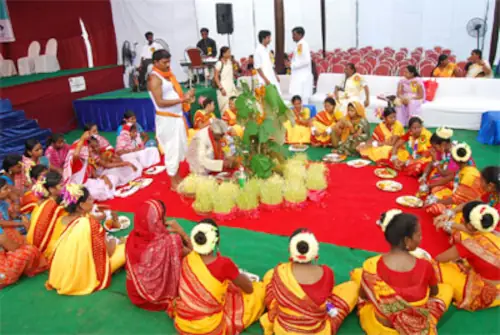
Dhumkuriya (धुमकुड़िया) is an indigenous Oraon (Kurukh) institution of youth formation, oral knowledge transmission, and communal life...
Culture, Value & Civilisation
Culture, value, and civilisation are central concepts in understanding human history and social organisation. Culture encompasses language, religion, art, literature, customs, and daily practices, documented in early centres such as Sumer in Mesopotamia (c. 3000 BCE), the Vedic Civilisation (c. 5500–500 BCE), and ancient Egypt along the Nile. Values refer to moral and ethical principles that guide societies, articulated by thinkers such as Confucius in China (551–479 BCE), Socrates and Aristotle in Greece (5th–4th century BCE), and later by religious texts such as the Vedas (India, c. 5500 BCE) and the Bible (400-450 CE). Civilisation denotes organised urban societies with governance, law, economy, and writing systems, evident in the Babylonian-Persian Empire, Roman Empire (27 BCE–476 CE), the Mauryan Empire under Ashoka (3rd century BCE), and the Islamic Golden Age centred in Baghdad (8th–13th century CE). See: Sarvarthapedia
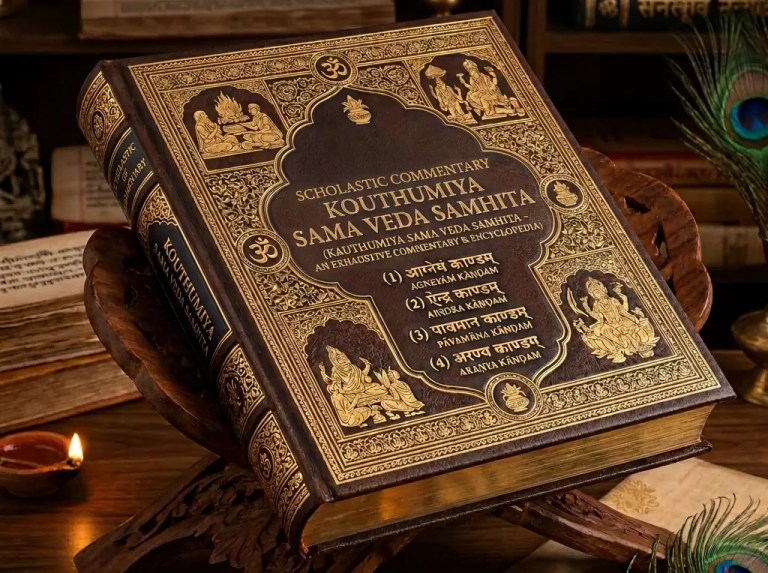
The Kauthumiya Sāmaveda Saṁhitā Agni mantra appears to preserve a layer of Agni theology that may be...
The Kouthumiya Sama Veda Samhita is a significant text structured into various sections. It includes the Purvarchika,...

The ancient Vedic lexeme is not necessarily identical with the later noun, and the later proper name...
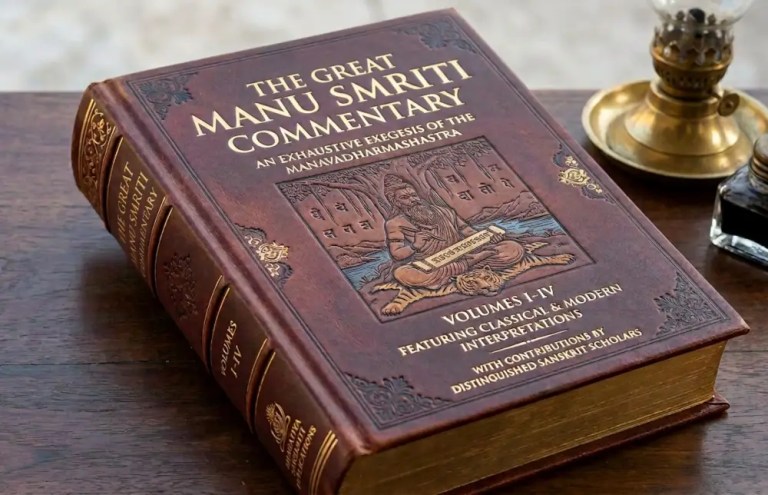
The central theme of Manusmṛti 1.1–1.30 is the construction of a comprehensive theory of cosmic order (ṛta),...

The encyclopedia of RSS encompasses the history, ideology, and organizational structure of the RSS from ancient Indian...

The evolution of Hindu civilizational consciousness, emphasizing the roles of Krishna Chaitanya and Bankim Chandra Chattopadhyay. Chaitanya's...

The concept of the Vedic Nation encompasses a civilizational identity rooted in Rāṣṭra and Dharma, integrating historical...

The Regulations on Religious Affairs, effective March 1, 2005, aim to ensure citizens' freedom of religious belief,...

In 2026, the Communist Party of China's (CPC) religious policy emphasizes that religion is a historically conditioned...
The development of European Orientalism and Indology significantly shaped the understanding of ancient India from the late...
A significant limitation of Vincent Smith's treatment of the sources of Indian history is his failure to...
The history of pre-modern Bengali literature (1000-1485 CE) outlines the evolution of the Bengali language and its...
Sree Krishna Chaitanya Mahaprabhu emerged not as a new religious leader but as a reviver of ancient...