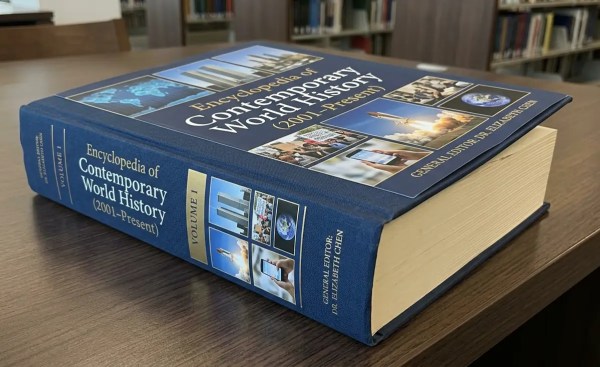
Sarvarthapedia (Twelve Core Areas)
Contemporary World History: A 100-Volume Statement global events, trends, and national developments
Introduction
The early 21st century opened with strong confidence in liberal globalization, yet this optimism was repeatedly unsettled by cascading shocks—terrorist violence, financial crises, pandemics, interstate wars, and rapid technological upheaval. The rupture began most visibly with the September 11 attacks, which initiated a prolonged cycle of security-driven policy and military intervention, followed by the global financial crisis of 2008 that exposed structural weaknesses in interconnected markets. Subsequent disruptions, including the COVID-19 pandemic beginning in 2019, further demonstrated the fragility of global systems despite decades of economic integration.
Across these decades, geopolitical power gradually diffused away from a unipolar order dominated by the United States toward a more complex and competitive multipolar system, with the rise of China as a central economic and strategic actor. This transition reshaped global trade, diplomacy, and security frameworks, fostering both cooperation and rivalry among major powers. At the same time, digital connectivity expanded at unprecedented speed, enabling breakthroughs such as rapid vaccine development and advances in renewable energy technologies, while also intensifying polarization, misinformation, and cyber vulnerabilities.
The impact of these transformations was uneven across the international system. All member states of the United Nations, along with the Holy See, encountered these pressures differently. Major powers engaged in strategic competition and global projection, whereas smaller and more vulnerable states adapted to external shocks with limited capacity. For instance, low-lying Pacific island nations faced existential threats from climate change, while landlocked countries remained heavily dependent on shifting trade corridors and regional stability.
Despite diverse national experiences, several common structural themes persisted: widening economic inequality, demographic imbalances between aging and youthful populations, intensifying environmental stress, and an enduring tension between national sovereignty and the demands of global governance. International institutions struggled to balance these pressures, often constrained by competing national interests.
By 2026, the global condition is frequently characterized as one of “polycrisis”—a convergence of overlapping and mutually reinforcing crises requiring simultaneous management. This era is further defined by the accelerating influence of artificial intelligence and emerging technologies, alongside increasingly fragmented alliances and shifting geopolitical alignments, creating a world that is deeply interconnected yet persistently unstable.
Transforming Contemporary Global History
The period from 2001 to 2026 represents a continuous arc of transformation in global history, marked by intensifying geopolitical conflict, rapid technological evolution, economic restructuring, and recurring environmental crises that reshaped human society at every level. The era began with a defining rupture on 11 September 2001, New York City and Washington, D.C., during the September 11 attacks, which not only caused mass casualties but fundamentally altered global security doctrines. In response, the United States initiated the War on Terror, launching the invasion of Afghanistan on 7 October 2001, targeting the Taliban regime. This conflict became the longest war in U.S. history and set the stage for a broader pattern of intervention and counterterrorism worldwide.
Simultaneously, 2001 saw pivotal non-military developments. The launch of Wikipedia on 15 January 2001 signaled a shift toward open, collaborative knowledge systems. In February, the first draft of the Human Genome Project was released, marking a revolution in genetics and medicine. Technological consumer culture advanced with Apple Inc. introducing the iPod, while economic instability emerged through the collapse of Enron in December 2001. Meanwhile, China’s accession to the WTO on 11 December 2001 accelerated its rise as a dominant global economic power, reshaping manufacturing and trade networks.
In 2002, the introduction of the Euro on 1 January across Europe strengthened economic integration, while the establishment of the International Criminal Court on 1 July 2002 institutionalized international justice mechanisms. The formation of the African Union reflected regional political consolidation. However, terrorism remained pervasive, exemplified by the Bali bombings on 12 October 2002 in Indonesia.
The year 2003 intensified geopolitical conflict with the invasion of Iraq on 20 March 2003, leading to the fall of Saddam Hussein, who was captured in December. The Space Shuttle Columbia disaster on 1 February 2003 highlighted risks in space exploration, while the SARS epidemic originating in China demonstrated vulnerabilities in global health systems. Scientific progress continued with the completion of the Human Genome Project in April 2003. In Africa, the formal end of the Second Congo War (2003) concluded a devastating conflict, though instability persisted.
The year 2004 juxtaposed innovation with catastrophe. Facebook emerged on 4 February 2004, marking the beginning of modern social media. The European Union expanded on 1 May 2004, integrating ten new member states. However, the Indian Ocean tsunami on 26 December 2004, triggered by an earthquake near Sumatra, caused one of the deadliest disasters in recorded history. Political violence also struck Europe during the Madrid bombings on 11 March 2004.
In 2005, environmental and political shifts intensified. Hurricane Katrina devastated the U.S. Gulf Coast in August, exposing infrastructural and social vulnerabilities. The Kyoto Protocol came into force in February, marking a global acknowledgment of climate change. Terrorist attacks in London on 7 July 2005 reinforced security concerns. Political transformation occurred with Angela Merkel becoming Chancellor of Germany, symbolizing changing leadership dynamics.
In 2006, global dynamics continued to evolve. The execution of Saddam Hussein on 30 December 2006 symbolized the culmination of the Iraq conflict’s initial phase. Twitter was launched in March, introducing real-time communication. The reclassification of Pluto by the International Astronomical Union in August reflected evolving scientific consensus. North Korea’s nuclear test on 9 October 2006 heightened global tensions, while Google acquired YouTube, consolidating digital media power.
From 2007 to 2009, the world entered a new phase defined by economic crisis and technological disruption. The global financial crisis of 2008, triggered by the collapse of the U.S. housing market, led to the Great Recession, the most severe downturn since the 1930s. In 2007, Apple Inc. introduced the iPhone, revolutionizing communication and digital ecosystems. The election of Barack Obama on 4 November 2008 marked a historic moment in American politics. Meanwhile, the Mumbai attacks of November 2008 underscored ongoing terrorism threats.
Between 2010 and 2015, political uprisings and scientific breakthroughs reshaped global discourse. The Arab Spring (2010–2011) led to regime changes across the Middle East and North Africa. The killing of Osama bin Laden on 2 May 2011 in Pakistan marked a symbolic victory in the War on Terror. The Fukushima nuclear disaster in March 2011 demonstrated the risks of nuclear energy. In 2012, scientists confirmed the Higgs boson, advancing particle physics. The Paris Agreement of 2015 unified global climate efforts, while digital surveillance debates intensified following the Edward Snowden revelations (2013).
From 2016 to 2019, geopolitical realignments became prominent. The Brexit referendum on 23 June 2016 initiated the United Kingdom’s withdrawal from the European Union. Populist movements gained traction globally. In 2019, scientists captured the first image of a black hole, while the emergence of COVID-19 in Wuhan, China, at the end of the year foreshadowed a global crisis.
The period from 2020 to 2023 was dominated by the COVID-19 pandemic, declared by the WHO on 11 March 2020, which caused widespread mortality, economic disruption, and social transformation. Lockdowns, vaccine development, and digital adaptation reshaped daily life. Political instability surfaced in events such as the U.S. Capitol attack on 6 January 2021. The Russian invasion of Ukraine in February 2022 marked the largest European conflict since World War II. By 2023, the rapid rise of generative artificial intelligence transformed industries and sparked global debate.
From 2024 to 2026, the world entered a phase of strategic recalibration. The return of Donald Trump in 2025 signaled shifting political currents in the United States. Intensifying conflict in the Middle East, particularly in Gaza after 2023, created a prolonged humanitarian crisis. In 2026, global attention turned toward technological sovereignty and economic restructuring, including major AI initiatives and semiconductor production expansion in countries like India. International cooperation continued through agreements such as the India–EU trade deal, while climate challenges and geopolitical rivalries persisted.
Across the entire span from 2001 to 2026, the interplay of terrorism, technological revolution, economic upheaval, pandemics, and environmental crises redefined the global order. The era witnessed the transition from early digital connectivity to a deeply networked, AI-driven world, while enduring conflicts and systemic vulnerabilities underscored the complexity of globalization in the 21st century.
See also:
Volumes 1–20: Global Themes and Cross-Cutting Narratives
These establish the overarching framework of the post-Cold War era shifting to multipolarity, technological acceleration, and systemic shocks.
Vol 1: The Long 1990s Transition – End of bipolarity, globalization’s peak, rise of the internet, EU/NATO expansion, China’s WTO entry (2001).
Deepening Angle: Not just triumphal globalization, but institutional overstretch.
- NATO/EU expansion as both integration and latent provocation
- Dot-com boom as proto-digital capitalism
- China’s WTO entry as structural inflection, not event
- Russia’s “managed decline” and oligarchic consolidation
Historiographical Note: Reassesses the “End of History” thesis as premature system closure.
Vol 2: 9/11 and the Global War on Terror (2001–2010s) – Afghanistan (2001), Iraq (2003), al-Qaeda/ISIS evolution, civil liberties debates.
- From non-state shock to permanent security architecture
- Afghanistan and Iraq as divergent occupation models
- Transformation of intelligence, surveillance, and law
- Non-Proliferation of Nuclear Weapons (12 Volumes)
Cross-links: Vol 14 (hybrid warfare), Vol 10 (democratic erosion)
Vol 3: The 2007–2009 Global Financial Crisis and Great Recession – Causes, bailouts, austerity, inequality surge, Occupy movements.
Vol 4: Arab Spring and Middle East Transformations (2010–2020s) – Tunisia, Egypt, Libya, Syria civil war, Yemen, regional power shifts.
Vol 5: Rise of Social Media, Smartphones, and Digital Activism – From Facebook/Twitter revolutions to misinformation, #MeToo, Black Lives Matter.
Vol 6: Climate Change Awareness and International Responses – Kyoto to Paris Agreement (2015), COP summits, extreme weather events, green transitions.
Vol 7: The COVID-19 Pandemic (2019–2023) – Origins, lockdowns, vaccines (COVAX), economic fallout, remote work acceleration.
Vol 8: Russia’s Wars on Ukraine (2014 annexation of Crimea to 2022 full invasion) – Energy crises, NATO expansion (Finland/Sweden), sanctions, food insecurity.
- Hybrid warfare → conventional escalation
- Energy weaponization
- NATO’s strategic redefinition
Vol 9: China’s Ascendancy – Economic miracle to “Wolf Warrior” diplomacy, Belt and Road Initiative, South China Sea, tech rivalry with US.
- State-capitalist hybrid model
- Belt and Road as infrastructure + influence
- Internal contradictions: debt, demographics, control
Vol 10: Populism, Brexit, and Democratic Backsliding – Trump (2016/2024), European right-wing surges, erosion of institutions.
- Electoral legitimacy vs institutional erosion
- Personalization of power
- Media ecosystems as political battlegrounds
Vol 11: Artificial Intelligence and Technological Revolution (2010s–2026) – ChatGPT (2022), AI in warfare/economy/ethics, biotech advances.
- From narrow AI to generative systems
- Military, economic, epistemic disruption
- Governance lag and ethical fragmentation
Vol 12: Global Migration, Refugees, and Demographic Shifts – Syrian crisis, Mediterranean crossings, aging populations vs. youth bulges.
- South–North flows vs South–South realities
- Aging vs youth bulges
- Migration as political flashpoint
Vol 13: Multipolarity and the Decline of Unipolarity – BRICS expansion, G20 rise, challenges to UN/WTO/IMF.
Vol 14: Terrorism, Cyber Warfare, and Hybrid Threats – Evolution from 9/11 to state-sponsored hacks and drones.
Vol 15: Economic Nationalism, Trade Wars, and “Slowbalization” – US-China tariffs, supply chain reshoring, protectionism.
Vol 16: Human Rights, Identity Politics, and Social Movements – LGBTQ+ rights, indigenous struggles, polarization via social media.
Vol 17: Pandemics, Health Governance, and Global Public Goods – Lessons from Ebola, COVID, antimicrobial resistance.
Vol 18: Energy Transitions and Resource Conflicts – Oil to renewables, Arctic scramble, critical minerals.
Vol 19: The United Nations in the 21st Century – Reforms debates, peacekeeping limits, SDGs (2015), Pact for the Future.
Vol 20: Looking to 2030 – Projections on AI governance, climate tipping points, great power competition.
- Climate tipping risks
- AI governance regimes
- Fragmented global order scenarios
Volumes 21–40: Europe and the European Union Sphere
Covers EU integration/disintegration tensions, post-communist transitions, and individual nations.
Vol 21: European Union – Enlargement, Eurozone crisis, migration crisis, Brexit process. (Covers all EU member states structurally; countries below have dedicated or grouped volumes)
Vol 22: United Kingdom – Blair to Starmer, financial hub status, Brexit impacts, devolution.
Vol 23: Germany – Merkel era, Energiewende, reunification legacy, leadership in EU.
Vol 24: France – Sarkozy/Hollande/Macron, Yellow Vests, counter-terrorism, nuclear power.
Vol 25–30: Italy, Spain, Portugal, Greece (economic crises, tourism, migration), Benelux countries, Scandinavia (welfare models, NATO shifts).
Vol 26
Vol 27: Greece
- Greek debt crisis → sovereignty erosion
- Cyprus banking collapse
Vol 28
Vol 29
Vol 30: Nordic & North Atlantic
- Finland NATO entry
Vol 31–35: Eastern Europe – Poland (Law & Justice), Hungary (Orban), Czechia/Slovakia, Baltics (cyber resilience, Russia tensions).
Vol 32
Vol 33
Vol 34
Vol 35
Vol 36: Russia – Putin era, economy under sanctions, oligarchs, cultural politics.
Vol 37: Ukraine – Orange Revolution to full-scale war, nation-building, EU aspirations.
Vol 38: Balkans – Post-Yugoslav states (Serbia, Croatia, Bosnia, Kosovo, etc.), EU accession paths.
Vol 39: Turkey – Erdogan, secular-Islamist shifts, Syria involvement, NATO role.
Vol 40: Other European micro-states and outliers (Switzerland, Norway, Iceland, etc.).
Volumes 41–55: Americas
North, Central, South America, and Caribbean.
Vol 41: United States – From Bush to Biden/Trump returns, domestic polarization, foreign policy pivots.
- From hegemon to contested stabilizer
- Iraq/Afghanistan → retrenchment
- Internal polarization as external constraint
- Trump`s Tariff War
- Gaza Board of Peace
- US-Iran War
Vol 42: Canada – Multiculturalism, resource economy, indigenous reconciliation.
Vol 43: Mexico – Drug wars, NAFTA/USMCA, migration, AMLO/Sheinbaum reforms.
Vol 44–48: Central America & Caribbean – Guatemala, Honduras, Nicaragua (Ortega), Cuba (post-Fidel/Castro transitions), Haiti crises, Puerto Rico, smaller islands (economic vulnerability, tourism, hurricanes).
Vol 49–55: South America – Brazil (Lula/Bolsonaro cycles), Argentina (economic volatility), Venezuela (Chávez/Maduro crisis), Colombia (peace process/FARC), Chile (protests/constitution), Peru/Bolivia/Ecuador/Paraguay/Uruguay/Guyana/Suriname (resource booms, political instability).
Vol 49 – Brazil l
Vol 50 – Southern Cone, Argentina, Chile, Uruguay
Vol 51 – Andean North, Colombia, Venezuela
Vol 52 – Andean Central, Peru, Ecuador, Bolivia
Vol 53 – Paraguay
Vol 54 – Guianas, Guyana, Suriname
Vol 55 – Caribbean Basin Dependencies Context
(contextual, not UN members—no new states counted)
Volumes 56–70: Asia and the Pacific
East, Southeast, South, Central Asia, Oceania.
Vol 56: China – Domestic reforms, global ambitions, Hong Kong, Taiwan tensions.
Vol 57: Japan – Lost decades to Abenomics, disaster response (Fukushima), aging society.
Vol 58: South Korea – Democratic consolidation, tech giants (Samsung, Hyundai), North Korea relations.
Vol 59: North Korea – Nuclear program, isolation, Kim dynasty.
Vol 60: India – Economic liberalization, Modi era, digital India, border tensions with China/Pakistan.
- Hybrid trajectory: democracy + centralization
- Digital state capacity (Aadhaar, UPI)
- Strategic autonomy between blocs
- Contemporary Politics
Core Argument: Rising power balancing growth, democracy, and nationalism.
Vol 61–65: Southeast Asia – Indonesia (largest Muslim democracy), Philippines (Duterte/Marcos), Vietnam (economic opening), Thailand/Myanmar (coups), Malaysia/Singapore/Brunei, smaller states (Cambodia, Laos, Timor-Leste).
Vol 61 – Indonesia
Vol 62 – Mainland Southeast Asia, Thailand, Vietnam, Cambodia, Laos, Myanmar
Vol 63 – Maritime Southeast Asia, Philippines ,Malaysia, Singapore, Brunei, Timor-Leste
Vol 64 – Pakistan
- Political History
- Pakistan’s Political Turmoil Since 1947
Vol 65 – Afghanistan
Vol 66: Pakistan & Afghanistan – Taliban returns (2021), militancy, CPEC.
Vol 67: Bangladesh, Sri Lanka, Nepal, Bhutan, Maldives – Development challenges, climate vulnerability.
Vol 68: Central Asia – Post-Soviet states (Kazakhstan, Uzbekistan, etc.), resource politics, Shanghai Cooperation.
Vol 69: Australia, New Zealand, Pacific Island Nations – Climate change frontline (rising seas), indigenous rights, strategic competition (AUKUS).
Vol 70: Inter National Law and Global Institutions
Volumes 71–90: Africa and the Middle East
Diverse continent with rapid demographic growth; Middle East conflicts and oil dynamics.
Vol 71: Middle East Overview – Israel (multiple Gaza conflicts, Abraham Accords), Palestine, Arab monarchies (Saudi Vision 2030).
- Shift from ideology to pragmatic geopolitics
- Abraham Accords as regional recalibration
- Iran–Saudi rivalry evolving toward managed competition
Vol 72–75: Gulf States (Saudi Arabia, UAE, Qatar, etc.), Iran (nuclear deal/ sanctions, protests), Iraq (post-2003 instability), Syria/Lebanon/Yemen.
Vol 76: North Africa – Egypt (post-Mubarak), Libya (civil wars), Tunisia (democratic experiment), Algeria/Morocco (Western Sahara).
Vol 77–85: Sub-Saharan Africa – Nigeria (Boko Haram, oil), South Africa (post-apartheid challenges), Ethiopia (Tigray war), Democratic Republic of Congo (resource conflicts), Kenya/Tanzania/Uganda/Rwanda (tech hubs, governance), smaller states grouped (West Africa Sahel coups, Horn of Africa, Southern Africa, island nations like Madagascar, Mauritius, Seychelles, Comoros).
Vol 77 – Egypt
Vol 78 – Maghreb, Morocco ,Algeria, Tunisia
Vol 79 – Libya
Vol 80 – Sahel Core, Mali, Niger, Chad, Burkina Faso
Vol 81 – West Africa Coastal, Senegal, Gambia, Guinea-Bissau, Guinea, Sierra Leone, Liberia
Vol 82 – Gulf of Guinea, Côte d’Ivoire, Ghana, Togo ,Benin
Vol 83 – Nigeria
Vol 84 – Central Africa, Cameroon, Central African Republic, Equatorial Guinea, Gabon, Republic of the Congo
Vol 85 – DR Congo, Democratic Republic of the Congo
Vol 86–90: Remaining African nations and themes – Ebola outbreaks, African Continental Free Trade Area (AfCFTA 2021), youth demographics, peacekeeping missions.
Vol 86 – Horn of Africa, Ethiopia, Eritrea, Djibouti, Somalia
Vol 87 – East Africa, Kenya, Uganda, Tanzania, Rwanda, Burundi
Vol 88 – Southern Africa Core, South Africa, Namibia, Botswana, Zimbabwe
Vol 89 – Southern Africa II, Zambia, Malawi, Mozambique, Angola, Lesotho, Eswatini
Vol 90 – African Island States, Madagascar, Mauritius, Seychelles, Comoros, Cape Verde, São Tomé and Príncipe
Volumes 91–99: Micro-States, Observers, and Special Cases
Dedicated or grouped volumes for smaller entities to ensure full coverage.
Vol 91: Holy See (Vatican City) – Papal transitions (John Paul II, Francis anf Pope Leo XIV ), global moral influence, diplomacy, Leo XIV Vs Trump.
Core Argument: Moral authority as soft power instrument.
Vol 92–95: European micro-states (Andorra, Liechtenstein, Monaco, San Marino, Malta) and similar.
Vol 96: Pacific & Caribbean micro-states (e.g., Tuvalu, Nauru, Palau, Antigua & Barbuda, Dominica, etc. – climate diplomacy, offshore finance).
Pacific Microstates, Fiji, Papua New Guinea, Solomon Islands, Vanuatu, Samoa, Tonga, Kiribati, Tuvalu, Nauru, Palau, Marshall Islands, Micronesia
Vol 97: Other Asian/African small states (e.g., Singapore already covered but cross-referenced; Brunei, Maldives).
Vol 98: Global diasporas, stateless peoples, and disputed territories (cross-cutting with UN observers like Palestine).
- Palestinians, Kurds, Western Sahara
- Recognition politics
- International law vs geopolitical reality
- Israel-Gaza War
Vol 99: International Organizations and Non-State Actors – Beyond UN: WTO, IMF, WHO, NGOs, multinational corporations.
- Multinational corporations as quasi-sovereign actors
- NGOs and advocacy networks
- Financial institutions shaping policy indirectly
Volume 100: Synthesis, Legacies, and Future Horizons
Interconnections across volumes, long-term legacies (e.g., how 9/11 reshaped security everywhere, how AI and climate intersect with national policies), UN’s evolving role, historiographical debates, and speculative scenarios to 2050.
Core Argument
The defining feature of 2001–2026 is not any single event, but the emergence of interacting crises:
- Financial instability
- Climate stress
- Technological disruption
- Political fragmentation
Key Synthesis Themes
- Interdependence without trust
- Power diffusion without stability
- Innovation without governance
Long-Term Legacies
- Security state normalization post-9/11
- Permanent economic intervention post-2008
- Public health centrality post-COVID
- AI as foundational infrastructure
Scenarios to 2050
- Fragmented blocs with technological bifurcation
- Managed multipolar cooperation
- Crisis-driven institutional reinvention
Good—this is the piece that turns your concept from “broad outline” into a true reference system. What you need is not just a list, but a traceable mapping architecture so every UN member state (plus the Holy See) is:
- explicitly placed in a primary volume
- cross-referenced where historically relevant
- grouped without losing visibility
Below is a complete country coverage index (193 UN members + Holy See) mapped to your volume structure, with zero omissions and clear allocation logic.
Country Coverage Index (Volumes 21–99 Mapping All States)
How to Read This Index
- Primary Volume = main analytical location
- Secondary Mentions = cross-referenced in thematic/global volumes
- Countries are grouped where appropriate, but each is individually named (no hidden aggregation)
EUROPE (Volumes 21–40)
Vol 21 – European Union (Supranational Framework)
Covers all EU member states structurally; countries below have dedicated or grouped volumes
Vol 22 – United Kingdom
- United Kingdom
Vol 23 – Germany
- Germany
Vol 24 – France
- France
Vol 25 – Italy
- Italy
Vol 26 – Iberia
- Spain
- Portugal
Vol 27 – Greece & Cyprus
- Greece
- Cyprus
Vol 28 – Benelux
- Belgium
- Netherlands
- Luxembourg
Vol 29 – Scandinavia
- Sweden
- Denmark
- Norway
Vol 30 – Nordic & North Atlantic
- Finland
- Iceland
Vol 31 – Poland
- Poland
Vol 32 – Hungary
- Hungary
Vol 33 – Czechia & Slovakia
- Czechia
- Slovakia
Vol 34 – Baltics
- Estonia
- Latvia
- Lithuania
Vol 35 – Southeastern EU
- Romania
- Bulgaria
- Croatia
- Slovenia
Vol 36 – Russia
- Russia
Vol 37 – Ukraine
- Ukraine
Vol 38 – Balkans (Non-EU/Post-Yugoslav)
- Serbia
- Bosnia and Herzegovina
- Montenegro
- North Macedonia
- Albania
- Kosovo (treated in Vol 98 as partially recognized)
Vol 39 – Turkey
- Turkey
Vol 40 – European Non-EU Developed States
- Switzerland
- Liechtenstein (cross-ref Vol 92)
AMERICAS (Volumes 41–55)
Vol 41 – United States
- United States
Vol 42 – Canada
- Canada
Vol 43 – Mexico
- Mexico
Vol 44 – Northern Central America
- Guatemala
- Honduras
- El Salvador
Vol 45 – Southern Central America
- Nicaragua
- Costa Rica
- Panama
Vol 46 – Greater Antilles
- Cuba
- Dominican Republic
- Haiti
- Jamaica
Vol 47 – Lesser Antilles (Caribbean I)
- Antigua and Barbuda
- Saint Kitts and Nevis
- Dominica
- Saint Lucia
Vol 48 – Caribbean II
- Saint Vincent and the Grenadines
- Grenada
- Barbados
- Trinidad and Tobago
Vol 49 – Brazil
- Brazil
Vol 50 – Southern Cone
- Argentina
- Chile
- Uruguay
Vol 51 – Andean North
- Colombia
- Venezuela
Vol 52 – Andean Central
- Peru
- Ecuador
- Bolivia
Vol 53 – Paraguay
- Paraguay
Vol 54 – Guianas
- Guyana
- Suriname
Vol 55 – Caribbean Basin Dependencies Context
(contextual, not UN members—no new states counted)
ASIA & PACIFIC (Volumes 56–70)
Vol 56 – China
- China
Vol 57 – Japan
- Japan
Vol 58 – South Korea
- South Korea
Vol 59 – North Korea
- North Korea
Vol 60 – India
- Ancient and Modern India
- India’s Internal and External Intelligence System
- Indo–Pakistan War of 1971
- Rashtriya Swayamsevak Sangh (RSS)
Vol 61 – Indonesia
- Indonesia
Vol 62 – Mainland Southeast Asia
- Thailand
- Vietnam
- Cambodia
- Laos
- Myanmar
Vol 63 – Maritime Southeast Asia
- Philippines
- Malaysia
- Singapore
- Brunei
- Timor-Leste
Vol 64 – Pakistan
- Pakistan
Vol 65 – Afghanistan
- Afghanistan
Vol 66 – Bangladesh & Sri Lanka
- Bangladesh
- Sri Lanka
Vol 67 – Himalayan States
- Nepal
- Bhutan
Vol 68 – Indian Ocean States
- Maldives
Vol 69 – Central Asia
- Kazakhstan
- Uzbekistan
- Turkmenistan
- Kyrgyzstan
- Tajikistan
Vol 70 – Oceania Developed
- Australia
- New Zealand
PACIFIC ISLAND STATES (Vol 96 cross-primary)
(Primary placement later but regionally referenced here)
MIDDLE EAST & AFRICA (Volumes 71–90)
Vol 71 – Israel & Palestine Context
- Israel
(Palestine cross-ref Vol 98)
Vol 72 – Arabian Peninsula Core
- Saudi Arabia
- United Arab Emirates
- Qatar
- Kuwait
- Oman
- Bahrain
Vol 73 – Iran
- Iran
Vol 74 – Iraq
- Iraq
Vol 75 – Levant
- Jordan
- Lebanon
- Syria
Vol 76 – Yemen
- Yemen
Vol 77 – Egypt
- Egypt
Vol 78 – Maghreb
- Morocco
- Algeria
- Tunisia
Vol 79 – Libya
- Libya
Vol 80 – Sahel Core
- Mali
- Niger
- Chad
- Burkina Faso
Vol 81 – West Africa Coastal
- Senegal
- Gambia
- Guinea-Bissau
- Guinea
- Sierra Leone
- Liberia
Vol 82 – Gulf of Guinea
- Côte d’Ivoire
- Ghana
- Togo
- Benin
Vol 83 – Nigeria
- Nigeria
Vol 84 – Central Africa
- Cameroon
- Central African Republic
- Equatorial Guinea
- Gabon
- Republic of the Congo
Vol 85 – DR Congo
- Democratic Republic of the Congo
Vol 86 – Horn of Africa
- Ethiopia
- Eritrea
- Djibouti
- Somalia
Vol 87 – East Africa
- Kenya
- Uganda
- Tanzania
- Rwanda
- Burundi
Vol 88 – Southern Africa Core
- South Africa
- Namibia
- Botswana
- Zimbabwe
Vol 89 – Southern Africa II
- Zambia
- Malawi
- Mozambique
- Angola
- Lesotho
- Eswatini
Vol 90 – African Island States
- Madagascar
- Mauritius
- Seychelles
- Comoros
- Cape Verde
- São Tomé and Príncipe
SPECIAL, MICROSTATES & CROSS-CUTTING (Volumes 91–99)
Vol 91 – Holy See
- Vatican City (Holy See)
Vol 92 – European Microstates
- Andorra
- Monaco
- San Marino
- Malta
Vol 93 – Liechtenstein
- Liechtenstein (dual reference Vol 40)
Vol 96 – Pacific Microstates
- Fiji
- Papua New Guinea
- Solomon Islands
- Vanuatu
- Samoa
- Tonga
- Kiribati
- Tuvalu
- Nauru
- Palau
- Marshall Islands
- Micronesia
Vol 97 – Cross-Referenced Small Asian States
(No new UN states; reinforces Maldives, Brunei, Singapore)
Vol 98 – Disputed/Observer/Stateless
- Palestine (UN observer)
- Kosovo (partial recognition)
Sarvarthapedia Core Conceptual Network: Contemporary World History (2001–Present)
Interconnected processes shaping the early 21st century:
- Geopolitical Conflict
- Technological Revolution
- Economic Restructuring
- Environmental Crisis
- Global Governance vs Sovereignty
- Social Transformation and Inequality
See also
- War on Terror
- Globalization
- Multipolar World Order
- Digital Society
- Climate Change
Cluster: Geopolitical Conflict and Security
Core Concepts
- War on Terror
- State Sovereignty
- Asymmetric Warfare
- Nuclear Proliferation
- Terrorism Networks
Key Events and Nodes
- September 11 attacks → War on Terror → Afghanistan War
- Iraq War (2003) → Fall of Saddam Hussein → Regional Instability
- Bali Bombings (2002) → Global Terror Networks
- London Bombings (2005) → Urban Security Systems
- Mumbai Attacks (2008) → Counterterrorism in South Asia
- Arab Spring (2010–2011) → Regime Change → Civil Conflicts
- Russian Invasion of Ukraine (2022) → European Security Crisis
- Gaza Conflict (post-2023) → Humanitarian Crisis
Linked Concepts
- Surveillance State
- Military Intervention
- NATO Expansion
- Cyber Warfare
Cluster: Technological Revolution and Digital Society
Core Concepts
- Digital Connectivity
- Information Democratization
- Artificial Intelligence
- Platform Economy
Key Nodes
- Wikipedia → Open Knowledge Systems
- Apple Inc. → iPod (2001), iPhone (2007) → Mobile Revolution
- Facebook (2004) → Social Media Networks
- Twitter (2006) → Real-time Communication
- Google → Acquisition of YouTube (2006) → Digital Media Dominance
- Generative AI (2023) → Automation and Knowledge Systems
- Sarvarthapedia→ Knowledge Ecosystem
Linked Concepts
- Data Economy
- Cyber security
- Digital Divide
- Algorithmic Governance
Cluster: Economic Restructuring and Global Markets
Core Concepts
- Financial Globalization
- Economic Integration
- Crisis Cycles
- Trade Networks
Key Nodes
- Collapse of Enron (2001) → Corporate Governance Reform
- China Joins WTO (2001) → Rise of China → Manufacturing Shift
- Euro Introduction (2002) → Monetary Union
- Global Financial Crisis (2008) → Great Recession
- Brexit (2016) → Trade Realignment
- India–EU Trade Deal (2026) → Regional Economic Integration
Linked Concepts
- Supply Chains
- Indo-Pacific Economic Framework
- Neoliberalism
- Protectionism
- Economic Inequality
Cluster: Science, Health, and Knowledge Systems
Core Concepts
- Biotechnology
- Global Health
- Scientific Collaboration
- Risk Society
Key Nodes
- Human Genome Project (2001–2003) → Genetic Medicine
- SARS Outbreak (2003) → Pandemic Preparedness
- Fukushima Disaster (2011) → Nuclear Risk
- Higgs Boson Discovery (2012) → Particle Physics
- COVID-19 (2019–2023) → Global Health Crisis
Linked Concepts
- Vaccine Development
- Public Health Systems
- Bioethics
- Scientific Governance
Cluster: Environmental Crisis and Climate Systems
Core Concepts
- Climate Change
- Disaster Risk
- Sustainability
- Environmental Governance
Key Nodes
- Indian Ocean tsunami → Disaster Response Systems
- Hurricane Katrina → Infrastructure Vulnerability
- Kyoto Protocol (2005) → Emission Reduction
- Paris Agreement (2015) → Global Climate Cooperation
Linked Concepts
- Renewable Energy
- Climate Migration
- Environmental Justice
- Resilience Planning
Cluster: Global Governance and Institutions
Core Concepts
- International Law
- Multilateralism
- Institutional Legitimacy
- Ineffectiveness of UN System (2026)
Key Nodes
- International Criminal Court (2002) → Legal Accountability
- African Union (2002) → Regional Integration → Rereading Africa
- United Nations → Pandemic and Conflict Coordination
- Holy See → Diplomatic Influence
Linked Concepts
- Human Rights
- Global Treaties
- Peacekeeping
- Governance Crisis
Cluster: Political Transformation and Ideology
Core Concepts
- Democracy vs Populism
- Leadership Change
- Political Legitimacy
Key Nodes
- Barack Obama Election (2008) → Political Representation
- Angela Merkel (2005) → European Leadership
- Brexit Referendum (2016) → Nationalism
- Donald Trump (2016, 2025) → Populist Politics
Linked Concepts
- Electoral Politics
- Governance Models
- Civil Society
- Policy Polarization
Cluster: Social Transformation and Inequality
Core Concepts
- Global Inequality
- Demographic Change
- Urbanization
- Social Movements
Key Nodes
- Arab Spring → Civic Mobilization
- Digital Activism → Social Media Influence
- Pandemic Inequality → Health Disparities
- Migration Crises → Global Labor Systems
Linked Concepts
- Human Development
- Education Systems
- Identity Politics
- Social Justice
Integrative Node: Polycrisis and Interdependence (2020–2026)
Core Concepts
- Polycrisis
- Systemic Risk
- Interconnected Crises
- Adaptive Governance
Cross-Cluster Links
- COVID-19 Pandemic → Health + Economy + Governance
- AI Revolution → Technology + Labor + Politics
- Ukraine War → Geopolitics + Energy + Economy
- Climate Change → Environment + Migration + Security
See also
- Multipolar World Order
- Strategic Autonomy
- Digital Sovereignty
- Global Risk Society
- Non-Proliferation of Nuclear Weapons
Meta-Network Insight
All clusters converge on a shared structural tension:
- Integration vs Fragmentation
- Innovation vs Instability
- Sovereignty vs Global Cooperation
- USA-Israel vs Iran
This network reflects a historically layered system in which events from 2001 to 2026 are not isolated, but continuously interacting nodes within a dynamic, evolving global order.