Skip to content

ADVOCATETANMOY LAW LIBRARY

Research & Library Database

Primary Menu
  • News
  • Opinion
  • Countries198
    • National Constitutions: History, Purpose, and Key Aspects
  • Judgment
  • Book
  • Legal Brief
    • Legal Eagal
  • LearnToday
  • HLJ
    • Supreme Court Case Notes
    • Daily Digest
  • Sarvarthapedia
    • Sarvarthapedia (Core Areas)
    • Systemic-and-systematic
    • Volume One
05/04/2026
  • POLITICAL DOCUMENTS

Assessing Saudi Government’s Role in Killing of Jamal Khashoggi – 2021

We have high confidence that the following individuals participated in, ordered, or were otherwise complicit in or responsible for the death of Jamal Khashoggi on behalf of Muhammad bin Salman. We do not know whether these individuals knew in advance that the operation would result in Khashoggi’s death.
advtanmoy 23/08/2021 4 minutes read

© Advocatetanmoy Law Library

  • Share on WhatsApp (Opens in new window) WhatsApp
  • Share on X (Opens in new window) X
  • Share on Facebook (Opens in new window) Facebook
  • Share on Telegram (Opens in new window) Telegram
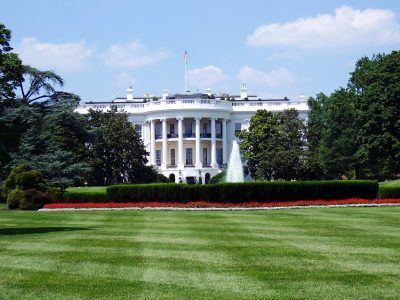
white house

Home » Law Library Updates » Sarvarthapedia » Geo-Political » POLITICAL DOCUMENTS » Assessing Saudi Government’s Role in Killing of Jamal Khashoggi – 2021

written for the Office of the Director of National Intelligence

February 11, 2021

OFFICE OF THE DIRECTOR OF NATIONAL INTELLIGENCE

Read Next

  • Constitution of the Communist Party of China (2017)
  • Netanyahu exposed Iran’s secret nuclear weapons program (2018)
  • Application of Palestine for admission to membership in UN (2011)

U) EXECUTIVE SUMMARY

(U) This report is provided by the ODNI. Questions should be directed to the NIO for Near East.

We assess that Saudi Arabia’s Crown Prince Muhammad bin Salman approved an operation in Istanbul, Turkey to capture or kill Saudi journalist Jamal Khashoggi.

We base this assessment on the Crown Prince’s control of decisionmaking in the Kingdom, the direct involvement of a key adviser and members of Muhammad bin Salman’s protective detail in the operation, and the Crown Prince’s support for using violent measures to silence dissidents abroad, including Khashoggi.

Read Next

  • Constitution of the Communist Party of China (2017)
  • Netanyahu exposed Iran’s secret nuclear weapons program (2018)
  • Application of Palestine for admission to membership in UN (2011)

Since 2017, the Crown Prince has had absolute control of the Kingdom’s security and intelligence organizations, making it highly unlikely that Saudi officials would have carried out an operation of this nature without the Crown Prince’s authorization.

Assessing the Saudi Government’s Role in the Killing of Jamal Khashoggi

We assess that Saudi Arabia’s Crown Prince Muhammad bin Salman approved an operation in Istanbul, Turkey to capture or kill Saudi journalist Jamal Khashoggi. We base this assessment on the Crown Prince’s control of decisionmaking in the Kingdom since 2017, the direct involvement of a key adviser and members of Muhammad bin Salman’s protective detail in the operation, and the Crown Prince’s support for using violent measures to silence dissidents abroad, including Khashoggi. Since 2017, the Crown Prince has had absolute control of the Kingdom’s security and intelligence organizations, making it highly unlikely that Saudi officials would have carried out an operation of this nature without the Crown Prince’s authorization.

Read Next

  • Constitution of the Communist Party of China (2017)
  • Netanyahu exposed Iran’s secret nuclear weapons program (2018)
  • Application of Palestine for admission to membership in UN (2011)

At the time of the Khashoggi murder, the Crown Prince probably fostered an environment in which aides were afraid that failure to complete assigned tasks might result in him firing or arresting them. This suggests that the aides were unlikely to question Muhammad bin Salman’s orders or undertake sensitive actions without his consent.
The 15-member Saudi team that arrived in Istanbul on 2 October 2018 included officials who worked for, or were associated with, the Saudi Center for Studies and Media Affairs (CSMARC) at the Royal Court. At the time of the operation, CSMARC was led by Saud al-Qahtani, a close adviser of Muhammad bin Salman, who claimed publicly in mid-2018 that he did not make decisions without the Crown Prince’s approval.

The team also included seven members of Muhammad bin Salman’s elite personal protective detail, known as the Rapid Intervention Force (RIF). The RIF—a subset of the Saudi Royal Guard—exists to defend the Crown Prince, answers only to him, and had directly participated in earlier dissident suppression operations in the Kingdom and abroad at the Crown Prince’s direction. We judge that members of the RIF would not have participated in the operation against Khashoggi without Muhammad bin Salman’s approval.

The Crown Prince viewed Khashoggi as a threat to the Kingdom and broadly supported using violent measures if necessary to silence him. Although Saudi officials had pre-planned an unspecified operation against Khashoggi we do not know how far in advance Saudi officials decided to harm him.

We have high confidence that the following individuals participated in, ordered, or were otherwise complicit in or responsible for the death of Jamal Khashoggi on behalf of Muhammad bin Salman. We do not know whether these individuals knew in advance that the operation would result in Khashoggi’s death.

(U ) Saud al-Qahtani
Maher Mutreb
Naif al-Arifi
Mohammed al-Zahrani
Mansour Abahussain
Badr al-Utaybah
Abdul Aziz Al Hawsawi
Waleed Abdullah Al Shihri
Khalid Al Utaybah
Tha’ar Al Harbi
Fahd Shiahb Al Balawi
Meshal al-Bustani
Turki Al Shihri
(U) Mustafa Al Madani
(U) Saif Saad Al
Ahmed Zayed Asiri
Abdulla Mohammed Alhoeriny
Yasir Khalid Alsalem
Ibrahim al-Salim
(U) Salah Al Tubaigy
(U) Mohammed Al Utaybah

Tags: ASSASSINATION Kingdom of Saudi Arabia USA

Post navigation

Previous: Jurisprudence by James Mill -1825
Next: Concordat of Worms by Calixtus II and Henry V
Arrest
Sarvarthapedia

Latin Maxims in Criminal Law: Meaning, Usage, and Courtroom Application

Sarvarthapedia
Sarvarthapedia

Research Methodology and Investigation: Concepts, Frameworks, and Emerging Trends

Rule of Law vs Rule by Law and Rule for Law: History, Meaning, and Global Evolution

IPS Cadre Strength 2025: State-wise Authorised Strength

Uric Acid: From 18th Century Discovery to Modern Medical Science

Christian Approaches to Interfaith Dialogue: Orthodox, Catholic, Protestant, and Pentecostal Views

Origin of Central Banking in India: From Hastings to RBI and the History of Preparatory Years (1773–1934)

Howrah District Environment Plan: Waste Management, Water Quality & Wetland Conservation

Bharatiya Nyaya Sanhita 2023: Sections (1-358), Punishments, and Legal Framework

Bengali Food Culture: History, Traditions, and Class Influences

West Bengal Court-Fees Act, 1970: Fees, Schedules, and Procedures

WB Land Reforms Tribunal Act 1997: History, Features, Provisions, Structure, Powers and Functions

Civil Procedure Law of the Democratic People’s Republic of Korea (1976)

Knowledge Management in the Modern Era: From History to Digital Transformation

  • Sarvarthapedia

  • Delhi Law Digest

  • Howrah Law Journal

  • Amit Arya vs Kamlesh Kumari: Doctrine of merger
  • David Vs. Kuruppampady: SLP against rejecting review by HC (2020)
  • Nazim & Ors. v. State of Uttarakhand (2025 INSC 1184)
  • Geeta v. Ajay: Expense for daughter`s marriage allowed in favour of the wife
  • Ram v. Sukhram: Tribal women’s right in ancestral property [2025] 8 SCR 272
  • Naresh vs Aarti: Cheque Bouncing Complaint Filed by POA (02/01/2025)
  • Bharatiya Nagarik Suraksha Sanhita 2023 (BNSS)
  • Bharatiya Sakshya Adhiniyam 2023 (BSA): Indian Rules for Evidence
  • Bharatiya Nyaya Sanhita (BNS) 2023
  • The Code of Civil Procedure (CPC)
  • Supreme Court Daily Digest
  • U.S. Supreme Court Orders
  • U.k. Supreme Court Orders
Sarvarthapedia, Law and Legal Materials

Rule of Law vs Rule by Law and Rule for Law: History, Meaning, and Global Evolution

Indian Government

IPS Cadre Strength 2025: State-wise Authorised Strength

Sarvarthapedia

Uric Acid: From 18th Century Discovery to Modern Medical Science

Christian Education

Christian Approaches to Interfaith Dialogue: Orthodox, Catholic, Protestant, and Pentecostal Views

2026 © Advocatetanmoy Law Library

  • About
  • Global Index
  • Judicial Examinations
  • Indian Statutes
  • Glossary
  • Legal Eagle
  • Subject Guide
  • Journal
  • SCCN
  • Constitutions
  • Legal Brief (SC)
  • MCQs (Indian Laws)
  • Sarvarthapedia (Articles)
  • Contact Us
  • Privacy Policy
  • FAQs
  • Library Updates