

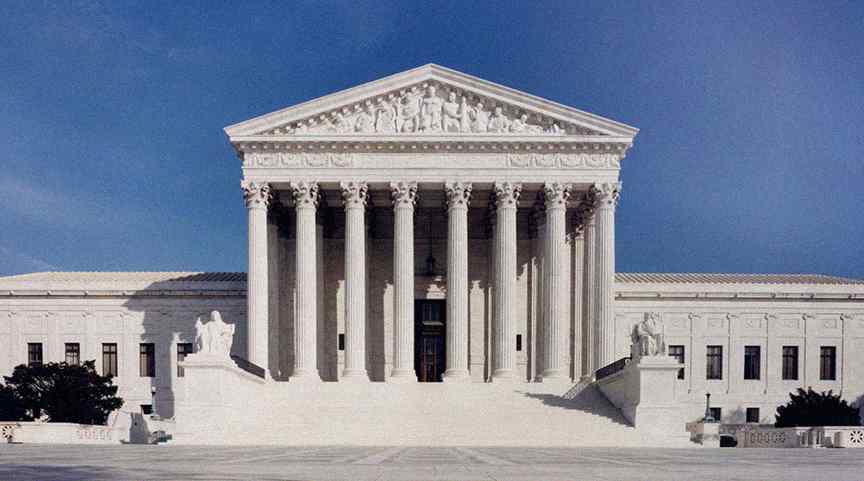
American Supreme Court Strikes Down State Affidavit Requirement in Federal Diversity Actions
SUPREME COURT OF THE UNITED STATES
No. 24–440
HAROLD R. BERK, PETITIONER v.
WILSON C. CHOY, ET AL.
ON WRIT OF CERTIORARI TO THE UNITED STATES COURT OF
APPEALS FOR THE THIRD CIRCUIT
[January 20, 2026]
In Berk v. Choy, 607 U.S. ____ (2026), the Supreme Court held that Delaware’s medical malpractice affidavit-of-merit requirement, which mandates that a complaint be accompanied by an expert affidavit attesting to the claim’s merit, is not enforceable in federal court sitting in diversity jurisdiction because it is displaced by the Federal Rules of Civil Procedure.
The petitioner, Harold Berk, filed a diversity action in federal court against Dr. Wilson Choy and Beebe Medical Center for medical malpractice arising from a fractured ankle injury. Delaware law provides that no healthcare negligence lawsuit may be filed unless the complaint is accompanied by an affidavit of merit signed by a medical professional, or a motion for an extension of time to file such an affidavit. Berk moved for and received an extension but failed to procure the affidavit within the allotted time. The District Court dismissed the lawsuit for noncompliance with the state affidavit requirement, and the Third Circuit affirmed, applying the Erie doctrine and concluding that the requirement was substantive and therefore applicable in federal court.
The Supreme Court reversed, applying a straightforward two-step analysis for conflicts between state law and the Federal Rules. First, the Court asks whether a Federal Rule of Civil Procedure answers the disputed question. If it does, that Rule governs, provided it is valid under the Rules Enabling Act. The Court found that Rule 8(a)(2) answers the question at issue. Rule 8 requires only “a short and plain statement of the claim showing that the pleader is entitled to relief.” By mandating no more than a statement of the claim, Rule 8 implicitly establishes that evidence of the claim is not required at the pleading stage. Delaware’s affidavit law demands more: it requires evidentiary support in the form of an expert affidavit to accompany the complaint. Because the two rules give different answers to the same question—what a plaintiff must provide about the merits of a claim at the outset of litigation—they conflict.
The Court rejected the argument that state “preconditions to proceeding” are categorically consistent with the Federal Rules, distinguishing Cohen v. Beneficial Industrial Loan Corp. on the grounds that the state law there addressed a matter unaddressed by the relevant Federal Rule. Here, the Court emphasized that Rule 8 addresses the precise issue of the information required about a claim’s merits. The Court also dismissed the argument that Rule 11’s proviso concerning affidavits incorporates state affidavit laws, noting that Rule 11 governs attorney conduct and certifications, not third-party affidavits.
Having found a conflict, the Court confirmed that Rule 8 is valid under the Rules Enabling Act because it “really regulates procedure.” It governs only the manner and means of enforcing rights, not the rights themselves. The Court reaffirmed that the substantive nature of displaced state law is irrelevant to the validity of a Federal Rule under the Act.
Justice Jackson concurred only in the judgment. She agreed that Delaware’s affidavit requirement cannot apply in federal court but found the conflict with Rules 3 and 12, rather than Rule 8. She argued that Rule 3, which provides that a civil action is commenced by filing a complaint, conflicts with Delaware’s requirement that additional documents must accompany the complaint for filing. She also found a conflict with Rule 12(d), which prohibits courts from considering matters outside the pleadings on a motion to dismiss, whereas Delaware law requires dismissal based on the absence of an affidavit, an extraneous document. She contended that the majority’s reliance on Rule 8 required contorting both the Rule and the state statute.
“The judgment of the Court of Appeals is reversed, and the case is remanded for further proceedings consistent with this opinion”.
More Stories
Kotak Mahindra Bank vs. Sher Singh: NCDRC Allowed Compensation for Illegal Vehicle Repossession (2024)
Ellingburg v. United States: Supreme Court Defines Restitution as Criminal Penalty
Klein v. Martin (2026): Supreme Court Reaffirms Strict AEDPA Deference in Brady Habeas Cases