Skip to content

ADVOCATETANMOY LAW LIBRARY

Research & Library Database

Primary Menu
  • News
  • Opinion
  • Countries198
    • National Constitutions: History, Purpose, and Key Aspects
  • Judgment
  • Book
  • Legal Brief
    • Legal Eagal
  • LearnToday
  • HLJ
    • Supreme Court Case Notes
    • Daily Digest
  • Sarvarthapedia
    • Sarvarthapedia (Core Areas)
    • Systemic-and-systematic
    • Volume One
04/04/2026
  • Law

What is the validity of a divorce decree in India obtained by the husband from a Court of USA ?

advtanmoy 23/07/2018 2 minutes read

© Advocatetanmoy Law Library

  • Share on WhatsApp (Opens in new window) WhatsApp
  • Share on X (Opens in new window) X
  • Share on Facebook (Opens in new window) Facebook
  • Share on Telegram (Opens in new window) Telegram
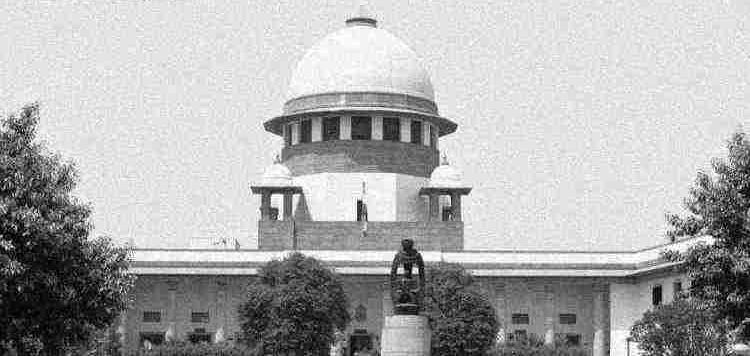
Supreme court of india

Home » Law Library Updates » Sarvarthapedia » Law » What is the validity of a divorce decree in India obtained by the husband from a Court of USA ?

Supreme Court in Smt. Satya v. Shri Teja Singh, (1975) 1 SCC 120. That was a case in which the validity of a decree for divorce obtained by the husband from a Court in the State of Naveda (USA) fell for examination. This Court held that the answer to the question depended upon the Rules of private International Law. Since no system of Private International Law existed that could claim universal recognition, the Indian Courts had to decide the issue regarding the validity of the decree in accordance with the Indian law. Rules of Private International Law followed by other countries could not be adopted mechanically, especially when principles underlying such rules varied greatly and were molded by the distinctive social, political and economic conditions obtaining in different countries. This Court also traced the development of law in America and England and concluded that while British Parliament had found a solution to the vexed questions of recognition of decrees granted by foreign courts by enacting “The recognition of Divorces and Legal Separations Act, 1971” our Parliament had yet to do so. In the facts and circumstances of that case the Court held that the husband was not domiciled in Naveda and that his brief stay in that State did not confer any jurisdiction upon the Naveda Court to grant a decree dissolving the marriage, he being no more than a bird of passage who had resorted to the proceedings there solely to find jurisdiction and obtain a decree for divorce by misrepresenting the facts as regards his domicile in that State. This Court while refusing to recognize the decree observed:

True that the concept of domicile is not uniform throughout the world and just as long residence does not by itself establish domicile, a brief residence may not negative it. But residence for a particular purpose falls to answer the qualitative test for, the purpose being accomplished the residence would cease. The residence must answer “a qualitative as well as a quantitative test”, that is, the two elements of factum et animus must concur. The Respondent went to Naveda forum-hunting, found a convenient jurisdiction which would easily purvey a divorce to him and left it even before the ink on his domiciliary assertion was dry. Thus the decree of the Naveda Court lacks jurisdiction. It can receive no recognition in our courts.

Read Next

  •  Judicial office is essentially a public trust: Supreme Court
  • Disclosure of Personal Information under the Right to Information Act, 2005
  • Supreme Court Daily Digest (26th Jan 2026)

Post navigation

Previous: People’s Republic of China Cyber ​​Security Laws,Regulations, Rules and policies
Next: What if a child was removed by father from USA contrary to custody orders of US Court directed the child be sent back to USA to mother?
Arrest
Sarvarthapedia

Latin Maxims in Criminal Law: Meaning, Usage, and Courtroom Application

Sarvarthapedia
Sarvarthapedia

Research Methodology and Investigation: Concepts, Frameworks, and Emerging Trends

IPS Cadre Strength 2025: State-wise Authorised Strength

Uric Acid: From 18th Century Discovery to Modern Medical Science

Christian Approaches to Interfaith Dialogue: Orthodox, Catholic, Protestant, and Pentecostal Views

Origin of Central Banking in India: From Hastings to RBI and the History of Preparatory Years (1773–1934)

Howrah District Environment Plan: Waste Management, Water Quality & Wetland Conservation

Bharatiya Nyaya Sanhita 2023: Sections (1-358), Punishments, and Legal Framework

Bengali Food Culture: History, Traditions, and Class Influences

West Bengal Court-Fees Act, 1970: Fees, Schedules, and Procedures

WB Land Reforms Tribunal Act 1997: History, Features, Provisions, Structure, Powers and Functions

Civil Procedure Law of the Democratic People’s Republic of Korea (1976)

Knowledge Management in the Modern Era: From History to Digital Transformation

Vedic Interpretation Methodical Style: History, Principles, and Evolution  From Yaska to Aurobindo

  • Sarvarthapedia

  • Delhi Law Digest

  • Howrah Law Journal

  • Amit Arya vs Kamlesh Kumari: Doctrine of merger
  • David Vs. Kuruppampady: SLP against rejecting review by HC (2020)
  • Nazim & Ors. v. State of Uttarakhand (2025 INSC 1184)
  • Geeta v. Ajay: Expense for daughter`s marriage allowed in favour of the wife
  • Ram v. Sukhram: Tribal women’s right in ancestral property [2025] 8 SCR 272
  • Naresh vs Aarti: Cheque Bouncing Complaint Filed by POA (02/01/2025)
  • Bharatiya Nagarik Suraksha Sanhita 2023 (BNSS)
  • Bharatiya Sakshya Adhiniyam 2023 (BSA): Indian Rules for Evidence
  • Bharatiya Nyaya Sanhita (BNS) 2023
  • The Code of Civil Procedure (CPC)
  • Supreme Court Daily Digest
  • U.S. Supreme Court Orders
  • U.k. Supreme Court Orders
Indian Government

IPS Cadre Strength 2025: State-wise Authorised Strength

Sarvarthapedia

Uric Acid: From 18th Century Discovery to Modern Medical Science

Christian Education

Christian Approaches to Interfaith Dialogue: Orthodox, Catholic, Protestant, and Pentecostal Views

Reserve Bank Of India

Origin of Central Banking in India: From Hastings to RBI and the History of Preparatory Years (1773–1934)

2026 © Advocatetanmoy Law Library

  • About
  • Global Index
  • Judicial Examinations
  • Indian Statutes
  • Glossary
  • Legal Eagle
  • Subject Guide
  • Journal
  • SCCN
  • Constitutions
  • Legal Brief (SC)
  • MCQs (Indian Laws)
  • Sarvarthapedia (Articles)
  • Contact Us
  • Privacy Policy
  • FAQs
  • Library Updates