India’s Dilemma: Why the Modi Government Looks Confused After the Iran Attack
How the US-Israel Strike on Iran Exposed New Delhi’s Policy Void
12th March 2026
Tanmoy Bhattacharyya
Highlights
- India’s response to the US–Israel attack on Iran exposed a deep geopolitical dilemma between strategic partnerships and traditional diplomatic principles.
- New Delhi adopted carefully ambiguous language, expressing concern but avoiding direct criticism of the attackers.
- The delayed condolence gesture toward Iran reflected hesitation and diplomatic damage control.
- Contradictory actions—such as silence over the sinking of an Iranian ship but humanitarian assistance to another—revealed policy inconsistency.
- India’s gradual drift away from Iran, particularly through reduced oil imports and the weakening of the Chabahar project, has narrowed its strategic options.
- Rising oil prices and disruptions around the Strait of Hormuz threaten India’s economic stability and energy security.
- Millions of Indians working in the Gulf add a human and humanitarian dimension to India’s cautious approach.
- Critics argue that India’s response demonstrates the limits of its strategic autonomy and its vulnerability as a middle power.
India Between Washington and Tehran: The Geopolitical Crisis After the Iran Attack
India’s response to the coordinated military strikes on Iran on February 28, 2026 by the United States and Israel has exposed a profound strategic uncertainty within New Delhi’s foreign policy establishment. The crisis placed India in a position where long-standing diplomatic traditions collided with newer geopolitical alignments. For a country that often speaks about strategic autonomy and global leadership, the reaction appeared cautious, hesitant, and at times contradictory. Rather than projecting decisive diplomatic clarity, India’s posture seemed shaped by the fear of alienating powerful partners while simultaneously trying to preserve historic ties with Iran.
The government of Prime Minister Narendra Modi attempted to walk a narrow rhetorical path. The first official statement released by the Ministry of External Affairs expressed “deep concern” and urged restraint from all sides. Such phrasing, although typical of diplomatic language, avoided identifying the actors responsible for the attack. In situations involving a dramatic escalation of violence, countries often signal their moral stance by naming the aggressor. India deliberately refrained from doing so. This omission was widely interpreted as a reflection of the country’s delicate strategic positioning between its Western partners and its historic connections with Iran.
The ambiguity did not stop at rhetoric. Subsequent remarks from External Affairs Minister Subrahmanyam Jaishankar continued to emphasize dialogue, de-escalation, and diplomacy without addressing the fundamental issue of sovereignty violation. India has historically advocated the principle that territorial integrity and sovereignty must be respected under international law. Yet in this instance the government avoided openly invoking those principles against the attacking powers. Critics argued that the language sounded morally balanced but politically evasive, reinforcing the perception that India was struggling to articulate a coherent stance.
One episode that captured this uncertainty involved the condolence books opened at Iranian diplomatic missions after the death of Iran’s Supreme Leader, Ali Khamenei. Reports suggested that Indian diplomats initially refrained from signing them, possibly to avoid irritating Israel and the United States. Days later, however, senior officials visited the Iranian embassy in New Delhi to record condolences. The gesture appeared belated and reactive. What might have been interpreted as a straightforward diplomatic courtesy instead became a symbol of India’s hesitation, illustrating how even small ceremonial acts were entangled in geopolitical calculations.
India’s handling of naval incidents during the crisis further illustrated the contradictions in its policy. When an Iranian naval vessel that had earlier participated in an Indian naval event was reportedly destroyed during the conflict near the Indian Ocean region, New Delhi’s response was muted and limited to factual acknowledgment. By contrast, when another Iranian ship later requested permission to dock at an Indian port for humanitarian reasons, India granted the request and extended assistance to its crew. The two decisions reflected different impulses—one driven by caution toward powerful allies, the other by humanitarian tradition and maritime diplomacy. Together they painted a picture of a government trying to reconcile incompatible pressures.
The roots of this confusion lie in a broader shift that has been unfolding in Indian foreign policy for more than a decade. Relations with Iran once held significant strategic value for India. The proposed development of the Chabahar port was meant to provide India access to Central Asia while bypassing Pakistan. At the same time, Iran served as an important supplier of crude oil. However, as American sanctions intensified and India’s partnership with Washington deepened, New Delhi gradually scaled back its engagement with Tehran. Oil imports from Iran were reduced dramatically, and progress on infrastructure cooperation slowed.
Meanwhile, India strengthened its ties with Israel, particularly in defense and technological collaboration. Israeli surveillance systems, missile technology, and agricultural innovations have become important components of India’s modernization efforts. This partnership has strategic value for India’s security establishment, especially in the context of regional threats and technological competition. However, the closer India moved toward Israel and the United States, the more difficult it became to maintain the balanced diplomacy that once characterized its relations with Iran.
The crisis also exposed India’s economic vulnerabilities. A major concern is the instability surrounding the Strait of Hormuz, a narrow maritime passage through which a substantial portion of global oil shipments travels. Any disruption to this route directly affects global energy markets. For India, which imports the majority of its crude oil, rising prices translate quickly into domestic inflation, fiscal pressure, and potential economic slowdown. The conflict therefore threatens not only diplomatic relations but also the everyday economic stability of the country.
Another layer of complexity arises from the millions of Indians working across the Gulf region. Countries such as Qatar and United Arab Emirates host large Indian communities whose remittances form an important part of India’s economy. Escalating conflict in West Asia raises the possibility of evacuations, disrupted employment, and humanitarian emergencies involving Indian nationals. These realities inevitably encourage a cautious diplomatic approach that prioritizes stability over ideological positioning.
Critics within India argue that the government’s response reveals the erosion of the country’s long-cherished strategic autonomy. Opposition leaders and foreign policy analysts have suggested that India now finds itself constrained by its growing dependence on major powers. In this view, New Delhi’s hesitation demonstrates that despite its ambitions to act as a global leader, it still operates within the structural limitations of a middle power navigating competing alliances.
Yet the situation also highlights the broader challenges faced by emerging powers in a polarized international environment. The global order is increasingly shaped by rival blocs, leaving limited space for countries that seek flexible engagement with all sides. India’s attempt to maintain relationships with Iran, Israel, and the United States simultaneously reflects this complex reality. Rather than a simple policy failure, the confusion may represent the unavoidable tension of balancing national interests across competing geopolitical spheres.
Ultimately, the Iran crisis has revealed both the strengths and limitations of India’s foreign policy strategy. It shows a nation striving to protect its economic interests, strategic partnerships, and diplomatic traditions all at once. However, it also exposes the difficulty of sustaining neutrality when geopolitical rivalries intensify. The challenge for India in the coming years will be to transform this cautious balancing act into a clearer and more coherent global role—one that aligns its principles with its strategic choices while preserving the autonomy it has long claimed as the cornerstone of its diplomacy.
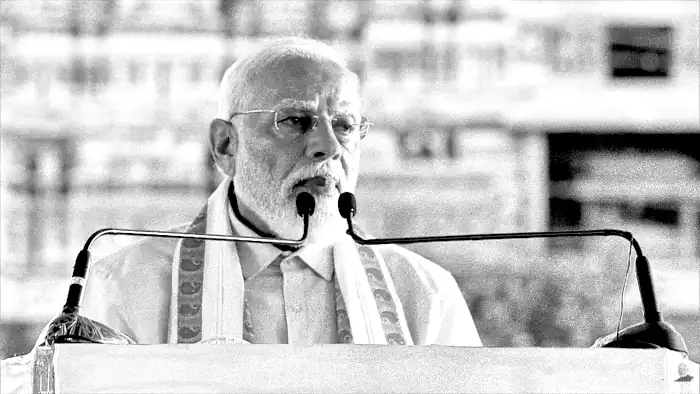
Post script: On March 11, 2026, Prime Minister Narendra Modi addressed a public gathering in Tiruchirappalli, where he briefly commented on the escalating conflict in West Asia following attacks on Iran by the United States and Israel, acknowledging that the crisis had disrupted global energy supply chains and created uncertainty in international markets while assuring the audience that India’s response would be guided by the principle of “India First.” He urged citizens to remain calm, avoid rumours, and rely only on verified information as the situation evolves, emphasizing that Indian institutions were closely monitoring developments to safeguard national interests and economic stability; however, his remarks remained largely general and political, offering reassurance rather than a clear explanation of India’s diplomatic stance or concrete policy measures regarding the Middle East crisis. As a result, the speech appeared primarily aimed at maintaining public calm and projecting confidence at home, with the “India First” slogan functioning more as political messaging than as a detailed articulation of how India would navigate the complex geopolitical consequences of the rapidly intensifying conflict.
Read More
- UN Condemns Iran’s Attacks on Gulf States; Russia’s Alternative Resolution Rejected
- The Rise and Death of the Islamic Revolution in Iran: Redefined Middle East Power Dynamics
- Benjamin Netanyahu Declares Joint Israel–US Strike on the Ayatollah Regime