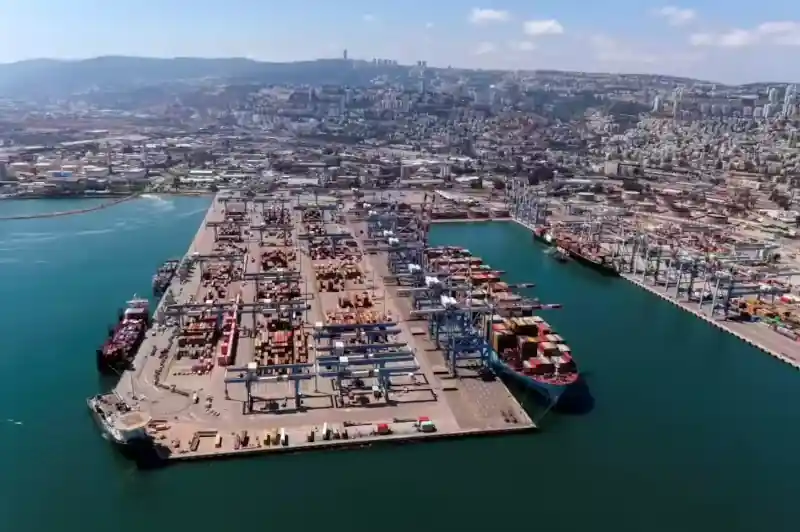
Chabahar Port is vital to India’s access to Afghanistan and Central Asia and its challenge to China’s Gwadar.
Editorial By Advocatetanmoy
Despite claiming Chabahar is “not an option to exit,” India’s handling of the Iranian port reveals strategic hesitation, financial risk, and shrinking autonomy under American sanctions pressure.
India’s entanglement at Iran’s Chabahar port exposes a troubling paradox at the heart of the Modi government’s foreign policy: a public insistence that withdrawal is “not an option,” paired with a pattern of hesitation, silence, and strategic shrinkage under sustained American pressure. Chabahar is not a peripheral infrastructure experiment that New Delhi can afford to treat as expendable. It is a linchpin of India’s continental and maritime ambition, conceived to secure access to Afghanistan and Central Asia, circumvent Pakistan’s chokehold on overland routes, and anchor India’s role in the International North–South Transport Corridor linking South Asia to Russia and Europe. To falter here is not merely to lose a port; it is to dilute India’s geopolitical grammar at a moment when New Delhi proclaims aspirations of a $10 trillion economy by 2030 and $15 trillion by 2034.
Officially, the government maintains that exiting Chabahar is unthinkable. The Ministry of External Affairs has reiterated that India remains engaged with Washington to operationalise a conditional sanctions waiver issued by the US Department of the Treasury on 28 October 2025, valid until 26 April 2026. This clarification followed reports that India might be compelled to step back from the project amid renewed American pressure, including threats under the Trump administration of an additional 25 per cent tariff on countries continuing business with Tehran. MEA spokesperson Randhir Jaiswal underscored that New Delhi is in continuous touch with the United States to implement the short-term waiver and sustain operations at the port. Yet the very need for repeated reassurances betrays the fragility of India’s position and the extent to which its strategic autonomy is hostage to Washington’s sanctions machinery, particularly the vigilant oversight of the Office of Foreign Assets Control, which has kept Chabahar under close scrutiny as part of its broader Iran policy.
The stakes are substantial and well documented. Chabahar’s evolution began with a memorandum of understanding in May 2015, followed by the trilateral Chabahar Agreement in May 2016 between India, Iran, and Afghanistan to establish a transport and transit corridor of continental significance. Operational responsibility was assumed on 24 December 2018, when India Ports Global Limited, through its wholly owned subsidiary India Ports Global Chabahar Free Zone, took over port operations. Despite sanctions headwinds and logistical hurdles, the port has functioned smoothly for over six years, handling more than 450 vessels since 2018, 1,34,082 TEUs of containerised cargo, and over 8.7 million tonnes of bulk and general cargo. In FY 2023–24 alone, Chabahar processed 60,088 TEUs and 1.9 million metric tonnes of bulk cargo, while also serving as a humanitarian lifeline for Afghanistan, facilitating shipments of 85,000 metric tonnes of wheat and 200 metric tonnes of pulses, alongside medicines and essential supplies.
India’s commitments have not been rhetorical. New Delhi enhanced its grant assistance for equipment supply to USD 120 million and pledged an additional USD 250 million line of credit for port development. Modern port infrastructure—including mobile harbour cranes, rubber-tyred gantry cranes, and rail-mounted quay cranes—has been procured, with equipment worth about USD 24 million already delivered and the remainder in the pipeline. The Shahid Beheshti terminal, the heart of the project, comprises a 640-metre container terminal with a 16-metre draft and a 600-metre multipurpose terminal with a 14-metre draft, designed to integrate seamlessly with regional logistics networks and lower transit times and costs for Indian exports bound for Central Asia, Russia, and Europe. In May 2024, India and Iran cemented this partnership through a ten-year bilateral contract between IPGL and Iran’s Ports and Maritime Organization, granting India long-term operational control and a stake in shaping regional trade flows.
Against this backdrop, any suggestion of a quiet withdrawal—or even a calibrated drawdown disguised as tactical prudence—would represent a profound strategic failure. Reports of a potential exit, accompanied by speculation of a USD 120 million payout to liquidate commitments, underscore how vulnerable India’s investments have become to external veto. The Modi government has attempted to frame such manoeuvring as strategic recalibration, but in substance it would amount to forfeiting a carefully constructed gateway that counters China’s Gwadar port in Pakistan and anchors India’s presence in the western Indian Ocean. The loss would not be merely financial; it would be reputational, signalling to partners across Eurasia that India’s long-term projects can be unsettled by third-party pressure.
Equally disquieting is the persistent silence at the apex of political and military leadership. Since Operation Sindoor, the Prime Minister and a heavily valorised military establishment have maintained a stoic quietude on sensitive diplomatic and strategic questions, leaving Parliament, allies, and the public to decipher policy through fragments and official clarifications. This opacity has become a governing reflex, keeping voters in a state of conjecture while critical decisions unfold behind closed doors. Parliamentary disclosures, such as the Rajya Sabha response on 28 November 2024 by External Affairs Minister S. Jaishankar, confirm the continuity and scale of India’s involvement at Chabahar, yet they also expose a widening gap between institutional commitments and political resolve.
Chabahar was envisioned as a demonstration of India’s capacity to think and act beyond its immediate neighbourhood, to bind maritime power with continental outreach, and to assert strategic autonomy in an era of sanctions and great-power rivalry. To allow American pressure to circumscribe this vision without a forthright political defence would mark a retreat inconsistent with India’s declared ambitions. The insistence that exiting Chabahar is “not an option” must therefore be tested not by diplomatic talking points but by sustained investment, transparent leadership, and a willingness to absorb geopolitical risk. Absent these, the episode will be remembered not as a deft balancing act, but as another instance where India’s interests at a critical crossroads were compromised, quietly and consequentially, under external duress.
18th January 2026
Read more
- India’s Space Ambitions in Crisis: PSLV Failures Expose Deep Fault Lines in ISRO and National Security
- Trump, Venezuela and Europe’s Dilemma: Sánchez Draws a Hard Line
- Trump’s Mismanagement Pushes America into Govt Chaos