Why Spain’s leader condemns both Maduro’s illegitimacy and U.S. intervention — and what it means for the “rules-based” order
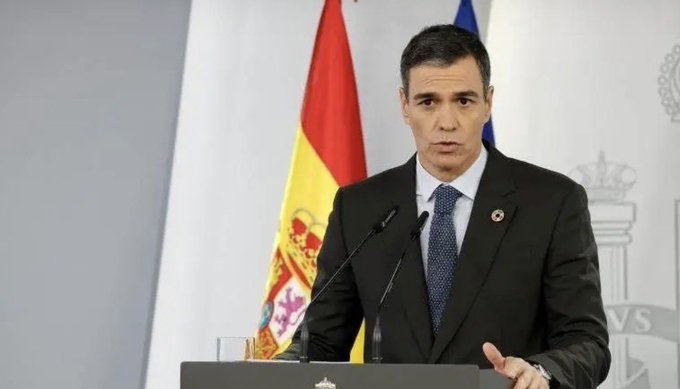
Hours after U.S. forces unleashed airstrikes on Venezuelan targets and seized Nicolás Maduro in a dramatic assault on Caracas on January 3, Spanish premier Pedro Sánchez took to X with a resolute message: Spain never recognised Maduro’s government, yet it cannot abide interventions that trample the UN Charter, urging instead a negotiated transition that centres the welfare of ordinary Venezuelans. Trump openly acknowledged the raid, framing it as a prelude to a temporary U.S. role in rehabilitating Venezuela’s oil infrastructure, while Caracas swiftly proclaimed Vice President Delcy Rodríguez as acting president, pledging fierce resistance. Sánchez’s calibrated reaction has won plaudits as an uncommon voice in a fractured European landscape.
Why do so many European leaders find it so bewildering to insist simultaneously that Maduro’s rule lacked legitimacy and that America’s brazen regime-change operation was a flagrant breach of international law? Is it really so opaque that glaring inconsistency damages our own strategic and moral standing? Where others in Brussels and beyond wring their hands over Trump’s antics, Sánchez has drawn a clear demarcation. With each passing hour, his stance looks less like naïveté and more like grounded realism. In a Union that prides itself on values, Spain’s prime minister now stands as perhaps the few with an intact moral compass.
Sánchez was the first European leader to issue a robust response after Trump’s press briefing, during which the U.S. president declared America would run Venezuela and take control of its oil. His prior criticisms of Trump had left him marginalised among some EU capitals; perhaps now they will heed him. Trump’s reckless incursion exudes imperial hubris, trampling longstanding norms and evoking the spectre of calamitous foreign adventures past. History is unlikely to view this power grab kindly. Meanwhile, much of Europe has little choice but to utter bland expressions of “support for democratic transition” and “grave concerns,” simmering in private while avoiding substantive challenge.
International law feels like a hollow jest when there is no mechanism to uphold it. What remains of it has often been propped up by American might. Rather than indulging in political point-scoring, European leaders could at least candidly explain to their citizens why one nation’s intervention is supposedly justified while another’s is condemned. Yet apparent strategic self-interest seems to have displaced any coherent legal argument. Interests, not rules, now define policy because rules are enforced only by those with the power and will to do so.
Sánchez’s moral consistency stands in stark contrast to many European peers who treat the “rules-based order” as a buffet of convenient principles. Was there ever a genuinely shared consensus on these rules, or was it always an artefact of Western dominance? Splintered electorates and divergent priorities make such consensus ever more elusive. Europe’s quandary on Venezuela is a microcosm of this larger malaise: if it endorses U.S. actions, it undermines the legal foundations it cites in opposing Russia’s war in Ukraine; if it denounces Washington, it risks fracturing the very transatlantic unity it depends on for collective security.
This tension exists only because international law has been applied unevenly for decades. Now Europe must choose between legal principle and strategic necessity — a choice that exposes whether the so-called rules-based order ever had substantive normative weight or was merely rhetoric to legitimise Western hegemony. Trump’s manoeuvres have even stirred talk of religious undercurrents in geopolitics, positioning U.S. evangelical influence against the predominantly Catholic societies of Latin America — a narrative that, while speculative in its grander claims, reflects deeper anxieties about cultural as well as strategic dominance.
In studying international relations, we came away with the sense that we often dress simple power dynamics in opaque jargon to justify bureaucratic budgets and salaries. Today that impression feels eerily accurate. The U.S. capture of Maduro is less about oil and more about signalling where the true boundaries of influence lie. Russia and China will have taken note, just as Canada once did: American power is undisturbed by dissent but reacts structurally to challenges to its primacy. If Beijing or Moscow shift from commerce to strategic footholds, the U.S. response will be swift and calculated.
What lesson should the EU draw? The rules-based order only exists where power chooses to enforce it. The United States can sanction, invade, reverse course, or re-engage with pragmatic justifications; the EU, by contrast, is bound by its own regulatory logic, hamstrung by the need for internal agreement and unable to pivot without institutional paralysis. Power bends rules; rule-bound systems cannot bend power.
This episode will be yet another demonstration of that reality. The EU will barely flinch, habituated to selective outrage and diplomatic doublespeak. Its propaganda apparatus will ensure the public’s gaze remains fixed elsewhere, bemoaning conflicts like Ukraine with the same fervour as before, while the elephant in the room goes unacknowledged.