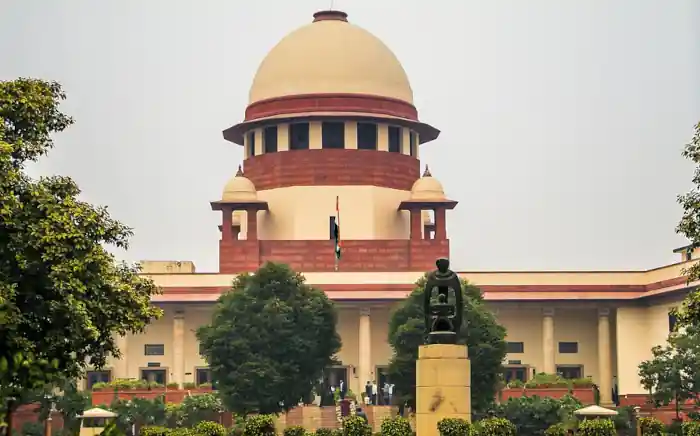
Daily Digest (Supreme Court of India)
Judgments
AIRPORT AUTHORITY OF INDIA vs. SHAM KRISHNA B
Civil Appeal No. 304 of 2026 · Diary No. 17161 of 2020 · 16 January 2026 (2026 INSC 69)
A candidate belonging to reserve category who has scored marks higher than the cut-off marks for
the General Category is to be treated as having qualified against an open or unreserved vacant post.
MD. FIROZ MANSURI vs. THE STATE OF BIHAR
Civil Appeal No. 295 of 2026 · Diary No. 21166 of 2025 · 16 January 2026 (2026 INSC 68)
It is for the employer to assess and determine the relevance and suitability of prescribed qualifications. Judicial review in recruitment matters is narrowly confined to examining issues of legislative competence, arbitrariness, or any violation of fundamental rights. Courts do not have the authority to rewrite service rules, decide on the equivalence of qualifications, or replace the employer’s assessment with their own. The scope of judicial scrutiny in public employment does not extend to questioning the State’s policy choices or wisdom in laying down minimum eligibility criteria for a post. Qualifications are framed with due regard to the functional requirements and legitimate interests of the institution, industry, or establishment concerned.
TULASAREDDI @ MUDAKAPPA vs. THE STATE OF KARNATAKA
Criminal Appeal Nos. 2120–2121 of 2024 · Diary No. 3671 of 2024 · 16 January 2026 (2026 INSC 67)
Where the evidence on record admits of two reasonable conclusions, the appellate court ought not to disturb an acquittal recorded by the trial court. If the view adopted by the trial court is a plausible one, the appellate court cannot reverse the acquittal merely because an alternative view is also possible. While considering an appeal against acquittal, the appellate court must be guided by well-settled principles, namely: whether the judgment of acquittal is vitiated by patent perversity; whether it is founded on a misreading of evidence or a failure to consider material evidence on record; and that interference is warranted only for “compelling and substantial reasons.” A finding that the order is clearly unreasonable itself constitutes such a compelling reason. The appellate court, even after reappreciating the evidence, must assess whether the view taken by the trial court was a possible view based on the evidence. If so, the acquittal cannot be set aside merely because another interpretation of the evidence could also be drawn. Interference is justified only where the appellate court concludes that the sole possible conclusion emerging from the evidence is that the guilt of the accused stands proved beyond reasonable doubt, and that no other conclusion is reasonably possible.
HT MEDIA LIMITED vs. PRINCIPAL COMMISSIONER, DELHI SOUTH GOODS AND SERVICE TAX
Civil Appeal Nos. 23525–23526 of 2017 · Diary No. 34384 of 2017 · 16 January 2026 (2026 INSC 66)
Applying the interpretative principles governing sales tax statutes to the clause imposing service tax, the contract in question cannot be regarded, in common parlance, as one of event management. The expressions “event management” and “event manager” are ordinarily understood to denote the engagement of a person or agency to plan, organise, and manage an event as a whole. Individual contracts limited to booking or supplying persons required to participate in an event are not, in common understanding, treated as “event management” contracts. It is a settled principle that taxing statutes, particularly charging provisions, must be construed strictly. In this context, reference may be made to the recent decision of the Supreme Court in Shiv Steels v. State of Assam, reported in 2025 SCC OnLine SC 2006.
X vs. OFFICE OF THE SPEAKER, HOUSE OF THE PEOPLE
Writ Petition (Civil) No. 1233 of 2025 · Diary No. 71319 of 2025 · 16 January 2026 (2026 INSC 65)
The extraordinary jurisdiction under Article 32 of the Constitution is meant to remedy violations of fundamental rights or instances of manifest and grave injustice. In the present case, the petitioner’s grievances are, at best, technical or procedural in nature, and no infringement of any fundamental right has been demonstrated. It is respectfully submitted that a statutory provision cannot be interpreted in isolation so as to nullify an express constitutional mandate. Here, the invocation of Article 91 was occasioned by the resignation of the Hon’ble Chairman from the office of Vice-President on 21 July 2025. From that point onward, by operation of law, the Deputy Chairman of the Rajya Sabha stood empowered to discharge all the functions and exercise all the powers of the Chairman, including the authority to admit or refuse motions, as contemplated under Section 3(1). The Deputy Chairman’s authority in this regard thus flows directly from the Constitution itself, and any contrary construction would render Article 91, in the context of the Act, unworkable, redundant, and otiose. It is a settled principle that no provision of the Constitution of India can be treated as meaningless or superfluous. Reference may be made to Welfare Assn., A.R.P. v. Ranjit P. Gohil, (2003) 9 SCC 358, para 28; Ashoka Kumar Thakur v. Union of India, (2008) 6 SCC 1, para 126; Chief Justice of A.P. v. L.V.A. Dixitulu, (1979) 2 SCC 34, para 74; Jindal Stainless Ltd. v. State of Haryana, (2017) 12 SCC 1, paras 13 and 15; Jayant Verma v. Union of India, (2018) 4 SCC 743, para 25; and Rajendra Diwan v. Pradeep Kumar Ranibala, (2019) 20 SCC 143, para 75.
RAJASTHAN PUBLIC SERVICE COMMISSION, AJMER vs. YATI JAIN
Civil Appeal No. 273 of 2026 · Diary No. 34571 of 2024 · 15 January 2026 (2026 INSC 64)
Even a candidate whose name appears in the select or merit list does not acquire an indefeasible right to appointment. Viewed from this perspective, it bears reiteration that a candidate placed on the waiting list cannot claim any right superior to that of candidates included in the select or merit list. Such a candidate can assert only those rights that the applicable recruitment rules expressly confer or permit, particularly where the validity of a waiting or reserve list is time-bound. The Supreme Court has observed that a significant number of service-related disputes pending across the country are exacerbated by prolonged and repetitive litigation, leaving many candidates in a state of enduring uncertainty. Courts, therefore, ought to remain mindful of these practical realities and construe service rules in a manner that advances the very purpose of a selection process—namely, the timely appointment of the most suitable candidates from among those found eligible.
AMIT KUMAR vs. UNION OF INDIA
Criminal Appeal No. 1425 of 2025 · Diary No. 40105 of 2024 · 15 January 2026 (2026 INSC 62)
The law relating to the mandatory registration of an FIR upon disclosure of a cognizable offence was reaffirmed, and, at the same time, the administration of every educational institution was reminded of its clear moral and legal duty to promptly lodge an FIR with the appropriate authorities in the event of a suicide occurring on campus. In order to address students’ mental health concerns and to prevent suicides in higher educational institutions, this Court constituted a National Task Force (hereinafter, “NTF”). The mandate of the NTF broadly encompassed: (a) identifying the predominant factors contributing to student suicides; (b) examining the existing legal and institutional frameworks and their adequacy or deficiencies; and (c) formulating recommendations to strengthen safeguards from preventive, remedial, and reformative perspectives, with an emphasis on inclusivity, accountability, and student well-being in higher educational institutions. It shall be incumbent upon statutory professional bodies and sectoral regulators—such as the University Grants Commission (UGC), the All India Council for Technical Education (AICTE), the Indian Council of Agricultural Research (ICAR), the Pharmacy Council of India (PCI), the Indian Nursing Council (INC), the Dental Council of India (DCI), the Central Council of Indian Medicine (CCIM), the Council of Architecture (COA), the National Council for Teacher Education (NCTE), the National Medical Commission (NMC), and the Bar Council of India (BCI), among others—to incorporate additional measures addressing issues specific to the higher educational institutions and technical institutes falling within their respective domains.
ELEGNA CO-OP HOUSING AND COMMERCIAL SOCIETY LTD. vs. EDELWEISS ASSET RECONSTRUCTION COMPANY LIMITED
Civil Appeal No. 10261 of 2025 · Diary No. 37766 of 2025 · 15 January 2026 (2026 INSC 58)
This appeal arises from a judgment of the National Company Law Appellate Tribunal, by which the NCLAT set aside the order dated 6 November 2024 passed by the Adjudicating Authority, National Company Law Tribunal, Ahmedabad Bench. A society is a distinct juristic entity, separate and independent from its members. Unless the society itself has advanced funds, executed allotment agreements, or received allotments, it cannot claim the status of a financial creditor. Homebuyers’ societies or welfare associations are ordinarily constituted for the maintenance and management of common facilities, and their office-bearers cannot, in the absence of express statutory recognition or valid legal authorisation, litigate on behalf of individual allottees or claim representative capacity before adjudicatory fora. The right to initiate or participate in insolvency proceedings is statutory in nature and not founded on equitable considerations. Consequently, a society or residents’ welfare association, not being a creditor in its own right and not recognised as an authorised representative of allottees under the Insolvency and Bankruptcy Code, lacks locus standi to intervene in proceedings arising out of a petition under Section 7 of the Code.
The matter also implicates settled principles governing the interplay between the Real Estate (Regulation and Development) Act, the Consumer Protection Act, and the Insolvency and Bankruptcy Code. In a recent decision, this Court reaffirmed the primacy of sector-specific remedies in real estate disputes and issued consequential directions, recognising the right to shelter as an integral component of the right to life under Article 21 of the Constitution. The following observations are apposite and warrant reproduction:
“15.2. In this context, it is necessary to reiterate certain settled principles:
• RERA continues to be the primary forum for redressal of homebuyers’ grievances;
• The IBC is a forum of last resort, intended to facilitate the revival and completion of viable projects, and not a mechanism for debt recovery; and
• Consumer fora should restrict themselves to adjudicating individual service deficiencies, so as to avoid conflicting or overlapping orders across multiple fora.”
THE AUTHORITY FOR ADVANCE RULINGS (INCOME TAX) vs. TIGER GLOBAL INTERNATIONAL II HOLDINGS
Civil Appeal No. 262 of 2026 · Diary No. 1251 of 2025 · 15 January 2026 (2026 INSC 60)
When entering into international tax treaties, India must adopt robust safeguards to protect its fiscal sovereignty, ensure equity, and prevent abuse of treaty benefits. These safeguards should be embedded through carefully crafted legal, structural, and strategic measures, including the incorporation of limitation of benefits clauses to curb treaty shopping, express recognition of the overriding application of general anti-avoidance rules in cases of artificial or tax-driven arrangements, and provisions preserving India’s right to tax the digital economy based on significant economic presence rather than mere physical presence. Treaties must safeguard source-based taxation rights over income arising in India, prefer tax credit mechanisms over exemption to avoid double non-taxation, and include clear exit or renegotiation clauses to address misuse or changing economic priorities, while avoiding most-favoured-nation obligations that restrict future policy flexibility. Precise definitions of permanent establishment, alignment with domestic law and constitutional principles, prior cost–benefit analysis, periodic treaty review mechanisms, and structured stakeholder consultation are equally essential to ensure that treaty commitments advance national interest rather than undermine India’s revenue base or regulatory autonomy.
SANJAY PALIWAL vs. BHARAT HEAVY ELECTRICALS LTD., EXECUTIVE DIRECTOR
Civil Appeal No. 6075 of 2016 · Diary No. 32381 of 2012 · 15 January 2026 (2026 INSC 61)
In contrast, in the present case, as noted in paragraph 12 above, there is a serious and substantial dispute not only with respect to title and possession but also regarding the very identity of the land in question, namely the suit schedule property. The principles laid down in Anathula Sudhakar govern situations involving disputed title and competing claims to possession, whereas the decisions in Sant Lal Jain and Joseph Severance are confined to cases where the defendant is merely a terminated licensee or permissive occupant, without any independent or rival right in the property. In the latter category of cases, there is no cloud over title or possession, and where occupation arises solely from a licence or permissive arrangement, a suit for mandatory injunction constitutes the appropriate and efficacious remedy.
VAYYAETI SRINIVASARAO vs. GAINEEDI JAGAJYOTHI
Civil Appeal Nos. 260–261 of 2026 · Diary No. 36675 of 2023 · 15 January 2026 (2026 INSC 59)
Where, pursuant to an agreement to sell, possession of the property is delivered to the vendee, the protection under Section 53A of the TP Act would become available, and the vendee’s possession would stand protected, subject to the fulfilment of the conditions stipulated in the said provision, including the requirement of registration of the instrument and payment of the requisite stamp duty.
THE STATE OF HIMACHAL PRADESH vs. CHAMAN LAL
Criminal Appeal No. 430 of 2018 · Diary No. 7284 of 2015 · 15 January 2026 (2026 INSC 57)
In any event, the prosecution is not required to establish motive with mathematical precision, and the failure to conclusively prove motive does not detract from an otherwise credible and cogent prosecution case. Upon an overall appreciation of the evidence on record, we are satisfied that the dying declaration of the deceased, Saro Devi, is voluntary, truthful, and reliable. The declaration was recorded by a competent authority at a time when the deceased was conscious, oriented, and fully capable of making a statement. The minor discrepancies noted by the High Court do not undermine the credibility of the dying declaration. It is also well settled that a dying declaration does not invariably require corroboration and cannot be discarded solely on the ground that independent corroborative evidence is absent.
THE STATE OF HARYANA vs. KRISHAN KUMAR
Civil Appeal Nos. 1725–1731 of 2023 · Diary No. 39988 of 2022 · 13 January 2026 (2026 INSC 63)
Section 213 of the Motor Vehicles Act, 1988 governs the appointment and functioning of Assistant Motor Vehicle Inspectors. Sub-section (iv) empowers the Central Government to prescribe the minimum qualifications required for appointment to such posts or any class thereof, which includes holding a diploma in Mechanical Engineering. This prescription is limited to setting baseline eligibility criteria.
At the same time, Section 213(iii) confers authority on the State Government to frame rules regulating the discharge of functions by officers of the Motor Vehicles Department. Without prejudice to the generality of this power, the State Government may prescribe matters such as the uniform to be worn, the authorities to whom such officers shall be subordinate, the duties to be performed, the powers to be exercised (including powers akin to those of police officers under the Act), and the conditions governing the exercise of such powers.
Thus, while the Central Government determines the minimum qualifications for appointment, the State Government is entrusted with regulating the operational aspects of the post and ensuring the effective discharge of duties through appropriate rules.
CENTRE FOR PUBLIC INTEREST LITIGATION vs. UNION OF INDIA
Writ Petition (Civil) No. 1373 of 2018 · Diary No. 40618 of 2018 · 13 January 2026 (2026 INSC 55)
The petitioner has challenged the constitutional validity of Section 17A of the Prevention of Corruption Act, 1988. The Court concluded that Section 17A of the Act is unconstitutional and liable to be struck down for multiple reasons. First, it violates Article 14 of the Constitution by creating an impermissible classification: it affords protection through a requirement of prior approval only to a select class of senior public servants involved in decision-making, while denying similar protection to other public servants. Such classification, based on the nature and level of duties, is arbitrary and contrary to the equality principle, as held in Vineet Narain and Subramanian Swamy.
Secondly, Section 17A is an indirect attempt to resurrect the “Single Directive” and Section 6A of the DSPE Act, which have already been declared unconstitutional by binding decisions of this Court. Thirdly, the provision operates arbitrarily by completely barring even a preliminary inquiry or investigation without prior approval, thereby risking the shielding of corrupt officials and undermining the object of the anti-corruption law and the rule of law.
The justification of protecting honest officers was rejected, as a prior-approval regime at the investigation stage fundamentally conflicts with the purpose of the Act. The Court also held that substituting the approving authority with bodies like the Lokpal or Lokayukta would not cure the constitutional defect. Finally, systemic issues such as policy bias, departmental pressure, lack of neutrality, and conflicts of interest further vitiate the approval mechanism. The writ petition was accordingly allowed.
SUJATA BORA vs. COAL INDIA LIMITED
Civil Appeal No. 120 of 2026 · Diary No. 38094 of 2024 · 13 January 2026 (2026 INSC 54)
The rights of persons with disabilities must be viewed through the prism of Corporate Social Responsibility in order to effectively protect and advance such rights. True equality in the workplace can be achieved only when disability rights are accorded due prominence as an integral facet of Corporate Social Responsibility. Disability inclusion constitutes a critical component of the “Social” pillar of the Environmental, Social and Governance (ESG) framework. In its 2024 guide titled “Putting the ‘I’ in ESG: Inclusion of Persons with Disabilities as a Strategic Advantage of Sustainability Practices for Corporates and Investors”, the ILO Global Business and Disability Network has urged companies and investors to perceive disability inclusion not merely as a matter of statutory compliance, but as a strategic advantage that enhances business performance, organisational resilience, and overall societal impact.
In the present case, the appellant had qualified for the interview pursuant to the 2019 selection process and was denied employment through no fault of her own. Her disability exceeded the benchmark disability threshold; however, owing solely to the fact that the recruitment notification did not provide for the category of “multiple disabilities”, and the appellant had applied as a visually impaired candidate, she was unjustly denied appointment.
Keeping the aforesaid principles in mind, the Apex court directed that a supernumerary post be created to accommodate the appellant.
KANCHANA RAI vs. GEETA SHARMA
Civil Appeal Nos. 245–246 of 2026 · Diary No. 55630 of 2025 · 13 January 2026 (2026 INSC 54)
Article 21 of the Constitution guarantees the right to life with dignity, which has been judicially interpreted to encompass the right to livelihood and basic sustenance. The law governing adoption and maintenance among Hindus has been codified under the Hindu Adoptions and Maintenance Act, 1956. The said enactment provides a comprehensive framework for both adoption and maintenance. While matters relating to adoption are addressed in Chapter II of the Act, Chapter III, comprising Sections 18 to 28, deals with the grant of maintenance to the dependants of a Hindu. In particular, Section 23 of the Act stipulates the manner and enumerates the relevant factors to be taken into consideration while determining the quantum of maintenance payable to a dependant.
ALKA SHRIRANG CHAVAN vs. HEMCHANDRA RAJARAM BHONSALE
Civil Appeal No. 316 of 2026 · Diary No. 44153 of 2025 · 12 January 2026 (2026 INSC 52)
Article 129 of the Limitation Act prescribes a limitation period of thirty days for filing an application seeking possession after the removal of resistance or obstruction to the delivery of possession of immovable property decreed or sold in execution of a decree. The said period of thirty days is to be reckoned from the date on which such resistance or obstruction occurs. Similarly, under Article 134, the limitation period for delivery of possession to a purchaser of immovable property sold in execution of a decree is one year, which period commences from the date on which the sale attains finality and becomes absolute.
ANSAL CROWN HEIGHTS FLAT BUYERS ASSOCIATION (REGD.) vs. M/S ANSAL CROWN INFRABUILD PVT. LTD.
Civil Appeal Nos. 8465–8466 of 2024 · Diary No. 30127 of 2024 · 12 January 2026 (2026 INSC 51)
It is a settled principle that a decree cannot, in the course of execution, be utilised to shift or enlarge liability so as to fasten responsibility upon persons who were neither parties to the decree nor otherwise legally liable thereunder. Where the judgment debtor is a company, the liability of its shareholders or joint venture partners remains confined to the extent of their shareholding or to such guarantees or undertakings, if any, as may have been expressly furnished by them.
Once a moratorium is declared in respect of the judgment debtor company, namely ACIPL, the modes of execution contemplated under Section 71 of the Consumer Protection Act, 2019, including attachment and sale of movable or immovable property, attachment of bank accounts, or withdrawal of decretal amounts from the accounts of the judgment debtor, stand interdicted. Execution proceedings, therefore, cannot be permitted to continue indirectly against respondents 2 to 9, who are neither judgment debtors nor guarantors, and against whom no independent liability has been established under the order allowing the complaints.
STATE OF UTTAR PRADESH vs. DINESH KUMAR
Civil Appeal No. 196 of 2026 · Diary No. 40253 of 2025 · 12 January 2026 (2026 INSC 49)
We are of the considered view that none of the aforesaid factors justify overlooking the material fact that, at the relevant point in time, the respondent had deliberately suppressed the requisite information. The well-established legal maxim “dura lex sed lex”—the law may be harsh, but it is the law—squarely applies. The fact that he answered “no” to the existence of pending proceedings against him, not once but on two occasions, clearly demonstrates conscious and deliberate intent, in direct violation of the declarations and disclaimers contained in the prescribed forms. Subsequent acquittal, or the belated attempt to disclose the suppressed facts, cannot inure to his benefit.
It is equally well settled that sympathy cannot override or supplant the mandate of law. While the loss of a government appointment is undoubtedly a serious and difficult consequence, awareness of and accountability for the legal consequences of one’s actions remain an essential component of lawful conduct.
KISHORILAL (DECEASED) THROUGH LEGAL REPRESENTATIVES vs. GOPAL
Civil Appeal No. 172 of 2026 · Diary No. 40404 of 2017 · 12 January 2026 (2026 INSC 48)
There exists a clear distinction between the non-substitution of the legal representatives or legal heirs of a deceased party in entirety and the non-substitution of only one of the heirs of such deceased party. In the latter situation, where the interest of the deceased party is adequately and sufficiently represented by the remaining heirs or legal representatives already on record, no abatement would ensue, as held in Mahabir Prasad (supra) and Bhurey Khan (supra). Consequently, in our considered view, the decision in Dwarka Prasad is distinguishable on facts.
THE STATE OF UTTAR PRADESH vs. ANURUDH
Criminal Appeal No. 163 of 2026 · Diary No. 54693 of 2024 · 9 January 2026
Considering the fact that repeated judicial notice has been taken of the misuse of these laws, a copy of this judgment be circulated to the Secretary, Department of Legal Affairs, Government of India, to examine and consider the initiation of such steps as may be permissible in law to curb this growing menace. Such measures may, inter alia, include the introduction of a “Romeo–Juliet” clause to exempt genuine adolescent and consensual relationships from the rigour of the statute, as well as the enactment of an appropriate mechanism to enable the prosecution of persons who invoke these laws mala fide as a tool for settling personal scores or wreaking vendetta.
M/S JINDAL EQUIPMENT LEASING CONSULTANCY SERVICES LTD. vs. COMMISSIONER OF INCOME TAX
Civil Appeal No. 152 of 2026 · Diary No. 25974 of 2020 · 9 January 2026 (2026 INSC 47)
SHRIKRISHNA vs. THE STATE OF MADHYA PRADESH
Criminal Appeal No. 1533 of 2011 · Diary No. 70886 of 2009 · 9 January 2026 (2026 INSC 45) (Non-reportable)
Principle — Where an offence resulting in death occurs in the course of a sudden quarrel, group clash, or free fight, without prior planning or premeditation, and in the heat of the moment, the intention to cause death cannot ordinarily be inferred. However, having regard to the nature of the weapon used and the injury inflicted corresponding thereto, the requisite knowledge of likely consequences may be attributable to the accused in law. The absence of premeditation, the occurrence of the incident amidst commotion, and the fact that the accused also sustained serious injuries in the same transaction are relevant factors in determining the nature of culpability and the applicability of exceptions to Section 300 IPC.
X vs. THE STATE OF UTTAR PRADESH
Criminal Appeal No. 164 of 2026 · Diary No. 26489 of 2025 · 9 January 2026 (2026 INSC 44)
Protection of Children from Sexual Offences Act, 2012 — In cases involving sexual offences against children, the possibility of tampering with evidence or influencing witnesses presents a serious and legitimate concern. The safety and well-being of the victim, along with the imperative to preserve the sanctity of the trial, assume paramount importance. While it is well settled that bail should not be denied as a matter of course, it is equally established that bail cannot be granted on extraneous considerations or by disregarding material evidence on record. Where an order granting bail is based on a misappreciation of facts, suffers from material omissions, or results in a miscarriage of justice, this Court is fully empowered to interfere. In the present case, the order of the High Court granting bail stands vitiated by material misdirection and failure to consider relevant factors, rendering it manifestly perverse.
Read also
- Supreme Court Daily Digest (21st Jan 2026)
- Supreme Court Daily Digest (26th Jan 2026)
- Supreme Court Daily Digest (28th Jan 2026)