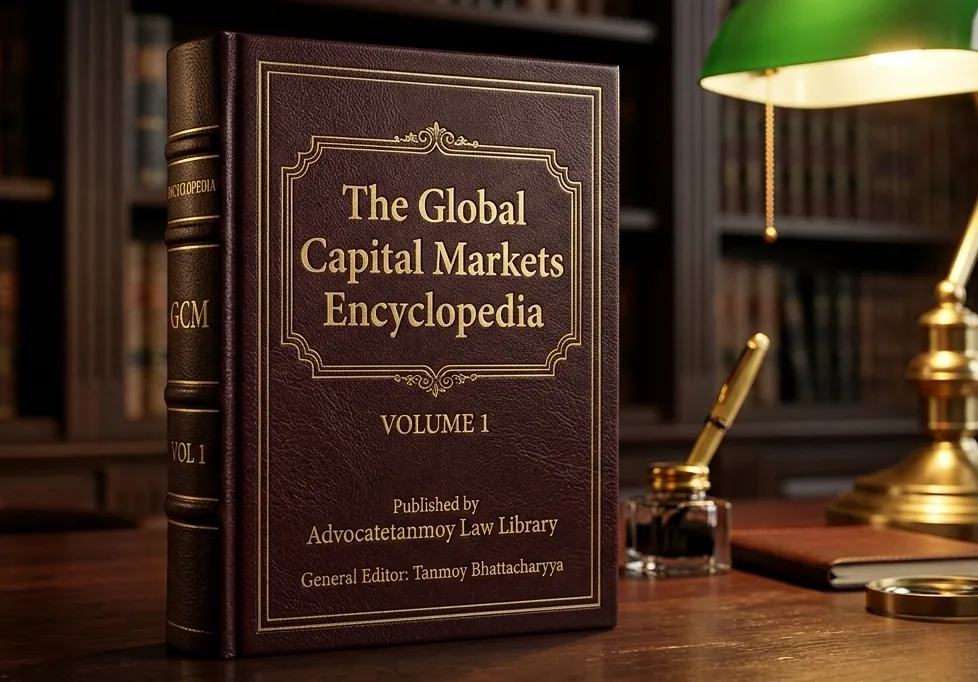
A Comprehensive Reference on Financial Systems, Securities Markets, Investment Structures, Institutions, Trading Mechanisms, and Global Capital Formation
The Foundation Series (GCME Volumes 1–15) establishes the conceptual, historical, institutional, legal, and technical framework.
These first fifteen volumes function as:
- The intellectual backbone of the encyclopedia.
- The standardized editorial framework.
- The foundational taxonomy for future expansion.
- The universal reference set for researchers, policymakers, investors, historians, economists, students, and institutions.
Editorial Objectives
The Foundation Series aims to:
- Explain how global capital markets evolved.
- Define all major financial instruments.
- Analyze market structures and participants.
- Examine legal and regulatory systems.
- Document global exchanges and institutions.
- Explain market psychology and systemic risk.
- Present comparative international market models.
- Create a permanent archival knowledge system.
- Establish a reference standard comparable to major global encyclopedic works.
The Global Capital Markets Encyclopedia (GCME): An Introduction
Organized into major series:
- Foundation Series (1–15)
- National & Regional Financial Systems (16–40)
- Asset-Class & Market Specialization (41–60)
- Institutional & Organizational Systems (61–75)
- Crisis & Historical Transformation (76–85)
- Intellectual & Quantitative Systems (86–95)
- Future & Civilizational Finance (96–100)
The Foundation (VOLUMES 1–15): Core Theoretical, Historical, Institutional, and Structural Framework
- Volume 1 — History of Global Capital Markets
- Volume 2 — Foundations of Financial Systems and Capital Formation
- Volume 3 — Global Stock Exchanges and Equity Markets
- Volume 4 — Bond Markets and Fixed Income Systems
- Volume 5 — Derivatives, Futures, Options, and Structured Products
- Volume 6 — Commodity, Energy, and Resource Markets
- Volume 7 — Foreign Exchange and Global Currency Systems
- Volume 8 — Investing, Investment Institutions and Asset Management
- Volume 9 — Banking, Investment Banking, and Financial Intermediation
- Volume 10 — Financial Law, Regulation, and Market Governance
- Volume 11 — Market Microstructure, Trading Systems, and Financial Technology
- Volume 12 — Risk, Crises, Speculation, and Financial Stability
- Volume 13 — Quantitative Finance, Valuation, and Financial Analytics
- Volume 14 — International Financial Centers, Geopolitics, and Globalization
- Volume 15 — Future of Global Capital Markets
Global National Market System (VOLUMES 16–40): Country and Regional Financial Architectures
Volume 16 — United States Capital Markets
Topics:
- Wall Street
- Federal Reserve system
- NYSE and NASDAQ
- Treasury markets
- Venture capital
- US regulatory systems
- Dollar hegemony
Volume 17 — United Kingdom and the City of London
Topics:
- London financial history
- Eurodollar markets
- Bank of England
- Lloyd’s finance
- Global forex systems
Volume 18 — European Union Financial Systems
Topics:
- ECB architecture
- Eurozone markets
- MiFID systems
- European banking union
- Continental exchanges
Volume 19 — German Financial Systems and Universal Banking
Topics:
- Deutsche Bank history
- Frankfurt finance
- Industrial banking
- Rhine capitalism
Volume 20 — French Financial Systems and State Capitalism
Topics:
- Paris financial evolution
- State-directed finance
- Euronext systems
- French banking structure
Volume 21 — Japanese Capital Markets and Keiretsu Finance
Topics:
- Tokyo Stock Exchange
- Bank-centered capitalism
- Bubble economy
- Japanese institutional finance
Volume 22 — China’s Financial Revolution
Topics:
- Shanghai and Shenzhen exchanges
- State banking
- RMB internationalization
- Shadow finance
- Digital yuan
Volume 23 — India’s Capital Markets and Financial Transformation
Topics:
- Bombay Stock Exchange
- NSE evolution
- RBI systems
- Digital payments revolution
- Indian banking reforms
Volume 24 — Hong Kong and Greater China Finance
Topics:
- Offshore RMB markets
- HKEX systems
- China-global capital interface
Volume 25 — Singapore as a Global Financial Hub
Topics:
- Wealth management
- Commodity trading
- Asian banking
- Sovereign finance
Volume 26 — Gulf Financial Systems and Islamic Capital Markets
Topics:
- Dubai finance
- Sovereign wealth funds
- Sukuk markets
- Petrodollar systems
Volume 27 — Swiss Banking and Global Wealth Systems
Topics:
- Private banking
- Banking secrecy
- Wealth preservation
- Commodity finance
Volume 28 — Russian and Eurasian Financial Systems
Topics:
- Energy finance
- Sanctions systems
- State banking
- Strategic capital flows
Volume 29 — Latin American Capital Markets
Topics:
- Brazilian finance
- Argentine debt crises
- Commodity finance
- Emerging-market volatility
Volume 30 — African Capital Markets and Development Finance
Topics:
- Johannesburg Stock Exchange
- African banking
- Infrastructure finance
- Mobile-money systems
Volume 31 — Southeast Asian Financial Systems
Topics:
- Singapore
- Thailand
- Indonesia
- Malaysia
- ASEAN finance
Volume 32 — Korean Financial Systems and Chaebol Finance
Topics:
- Seoul markets
- Industrial finance
- Export-driven banking
Volume 33 — Canadian Financial Systems and Resource Finance
Topics:
- Toronto markets
- Pension systems
- Mining finance
- Energy capital
Volume 34 — Australian and Pacific Financial Markets
Topics:
- Commodity finance
- Pension superfunds
- Asia-Pacific capital flows
Volume 35 — Nordic Financial Systems and Welfare Capitalism
Topics:
- Sovereign funds
- Sustainable finance
- Nordic banking models
Volume 36 — Offshore Financial Centers and Tax Havens
Topics:
- Cayman Islands
- Luxembourg
- Bermuda
- Jersey
- Global offshore systems
Volume 37 — Emerging Markets and Frontier Finance
Topics:
- Capital formation
- Financial modernization
- Currency instability
- Development finance
Volume 38 — Global Sovereign Wealth Funds
Topics:
- Norway fund
- Gulf sovereign funds
- China investment systems
- Strategic capital deployment
Volume 39 — International Development Finance Institutions
Topics:
- World Bank
- IMF
- AIIB
- Regional development banks
Volume 40 — Comparative Global Financial Systems
Topics:
- Comparative capitalism
- Banking models
- Market structures
- Regulatory systems
Asset-Class & Market Specialization ( Volumes 41–60)
- Volume 41 — Equity Securities and Shareholder Capitalism
- Volume 42 — Sovereign Debt and Government Bond Markets
- Volume 43 — Corporate Credit and Leveraged Finance
- Volume 44 — Municipal Finance and Public Infrastructure Bonds
- Volume 45 — Mortgage Finance and Housing Capital Systems
- Volume 46 — Structured Finance and Asset Securitization
- Volume 47 — Commodities and Resource Trading
- Volume 48 — Energy Markets and Petrodollar Systems
- Volume 49 — Precious Metals and Monetary Commodities
- Volume 50 — Foreign Exchange Markets and Currency Trading
- Volume 51 — Futures and Commodity Derivatives
- Volume 52 — Options, Volatility, and Advanced Derivatives
- Volume 53 — Credit Derivatives and Synthetic Finance
- Volume 54 — Exchange-Traded Funds and Passive Investing
- Volume 55 — Hedge Funds and Alternative Investment Systems
- Volume 56 — Private Equity, Venture Capital, and Startup Finance
- Volume 57 — Real Estate Finance and REIT Markets
- Volume 58 — Insurance Markets and Risk Transfer Systems
- Volume 59 — Carbon Markets and Climate Finance
- Volume 60 — Digital Assets, Cryptocurrencies, and Tokenized Securities
INSTITUTIONAL AND ORGANIZATIONAL (VOLUMES 61–75)
- Volume 61 — Central Banks and Monetary Authorities
- Volume 62 — Commercial Banking Institutions
- Volume 63 — Investment Banks and Global Deal-Making
- Volume 64 — Stock Exchanges and Trading Venues
- Volume 65 — Clearing Houses and Settlement Systems
- Volume 66 — Pension Funds and Retirement Capital
- Volume 67 — Sovereign Wealth Funds and Strategic Investment
- Volume 68 — Asset Management Companies and Mega-Funds
- Volume 69 — Credit Rating Agencies and Financial Information Firms
- Volume 70 — Insurance Institutions and Reinsurance Systems
- Volume 71 — Multilateral Financial Institutions
- Volume 72 — Financial Regulators and Supervisory Authorities
- Volume 73 — Fintech Companies and Digital Finance Platforms
- Volume 74 — Shadow Banking Institutions and Non-Bank Finance
- Volume 75 — Family Offices, Private Wealth, and Elite Capital Networks
CRISIS, HISTORY, AND TRANSFORMATION (VOLUMES 76–85)
- Volume 76 — Ancient and Medieval Financial Crises
- Volume 77 — Tulip Mania, South Sea Bubble, and Early Speculation
- Volume 78 — Industrial Capitalism and Nineteenth-Century Panics
- Volume 79 — The Great Depression and Global Financial Collapse
- Volume 80 — Bretton Woods, Dollar Hegemony, and Postwar Finance
- Volume 81 — The Oil Crises and Inflationary Finance of the 1970s
- Volume 82 — Asian Financial Crisis and Emerging-Market Contagion
- Volume 83 — Dot-Com Bubble and the Rise of Internet Capitalism
- Volume 84 — Global Financial Crisis of 2008
- Volume 85 — Pandemic Finance, Inflation Shocks, and Twenty-First Century Instability
INTELLECTUAL, QUANTITATIVE, AND PHILOSOPHICAL (VOLUMES 86–95)
- Volume 86 — History of Economic Thought and Financial Theory
- Volume 87 — Quantitative Finance and Financial Mathematics
- Volume 88 — Behavioral Finance and Investor Psychology
- Volume 89 — Financial Statistics, Econometrics, and Data Science
- Volume 90 — Algorithmic Trading and Artificial Intelligence Finance
- Volume 91 — Financial Ethics, Governance, and Moral Philosophy
- Volume 92 — Political Economy and Global Capitalism
- Volume 93 — Law, Property Rights, and Financial Civilization
- Volume 94 — Information Systems, Media, and Financial Communication
- Volume 95 — Future Theories of Capital, Markets, and Economic Systems
FUTURE, CIVILIZATIONAL, AND ARCHIVAL (GCME VOLUMES 96–100)
- Volume 96 — Climate Change, Sustainability, and the Future of Finance
- Volume 97 — Space Economy, Frontier Technology, and Interplanetary Capital
- Volume 98 — Artificial Intelligence, Autonomous Markets, and Post-Human Finance
- Volume 99 — Global Financial Civilization: Long-Term Historical Evolution
- Volume 100 — Atlas, Statistical Archive, Chronology, Glossary, and Master Index of Global Capital Markets
GCME Appendix
- Universal Financial Timeline
- Ancient Mesopotamia → AI-native finance
- Indian Economy
- Indian Economic Framework Inspired by Vedas & Arthashastra
- The American Economic System
Global Statistical Database
- GDP
- Market capitalization
- Bond issuance
- Capital flows
- Currency reserves
- Debt levels
- Trading volumes
Global Financial Maps
- Financial centers
- Capital corridors
- Offshore systems
- Crisis contagion maps
- Commodity trade routes
Sarvarthapedia Knowledge Network Framework
Encyclopedia of Global Capital Markets
Cross-Referenced Conceptual Architecture for a Civilizational Knowledge System
Core Meta-Concept
Global Capital Markets
The central organizing concept connecting all financial, institutional, legal, technological, geopolitical, and historical systems involved in capital formation, investment, credit creation, monetary circulation, and global economic coordination.
See also:
- Financial Systems
- Capital Formation
- Banking Systems
- Securities Markets
- Investment Systems
- Monetary Systems
- Financial Globalization
- Financial Civilization
- Economic History
- Financial Technology
Primary Knowledge Clusters
Financial Systems Cluster
Focus: The structural architecture through which savings, credit, investment, and monetary circulation are organized.
Connected Concepts:
- Capital Formation
- Financial Intermediation
- Commercial Banking
- Central Banking
- Credit Systems
- Monetary Policy
- Liquidity Systems
- Financial Stability
Related Volumes:
- Volume 2
- Volume 7
- Volume 9
- Volume 12
- Volume 61
See also:
- Banking Systems
- Sovereign Finance
- Monetary Regimes
- Financial Crises
- International Finance
Banking and Intermediation Cluster
Focus: Institutions and mechanisms that channel capital between savers and borrowers.
Connected Concepts:
- Commercial Banking
- Investment Banking
- Universal Banking
- Credit Creation
- Securitization
- Syndicated Lending
- Shadow Banking
- Basel Regulations
Related Volumes:
- Volume 9
- Volume 61
- Volume 62
- Volume 63
- Volume 74
See also:
- Capital Markets
- Financial Regulation
- Risk Management
- Derivatives Markets
- Financial Contagion
Securities Markets Cluster
Focus: Markets where ownership claims, debt instruments, and financial contracts are issued and traded.
Connected Concepts:
- Equity Markets
- Bond Markets
- Derivatives Markets
- Global Financial Instruments
- Exchanges
- IPO Systems
- Secondary Markets
- Trading Mechanisms
- Liquidity
Related Volumes:
- Volume 3
- Volume 4
- Volume 5
- Volume 41
- Volume 42
- Volume 51
- Volume 52
See also:
- Market Microstructure
- Investment Banking
- Market Regulation
- Institutional Investors
- Financial Analytics
Investment Systems Cluster
Focus: Mechanisms, institutions, and strategies for allocating capital across assets and economies.
Connected Concepts:
- Asset Management
- Mutual Funds
- ETFs
- Hedge Funds
- Pension Systems
- Sovereign Wealth Funds
- Venture Capital
- Private Equity
Related Volumes:
- Volume 8
- Volume 54
- Volume 55
- Volume 56
- Volume 66
- Volume 67
- Volume 68
See also:
- Portfolio Theory
- Quantitative Finance
- Behavioral Finance
- Capital Allocation
- Institutional Investing
Financial Regulation and Governance Cluster
Focus: Legal systems and institutional oversight structures governing financial markets.
Connected Concepts:
- Securities Law
- Banking Regulation
- Investor Protection
- Corporate Governance
- Compliance Systems
- AML Frameworks
- Global Regulatory Coordination
- American Law
- Indian Law
Related Volumes:
- Volume 10
- Volume 18
- Volume 72
- Volume 91
- Volume 93
See also:
- Financial Crime
- Regulatory Technology
- Financial Stability
- Market Integrity
- International Law
Market Technology and Infrastructure Cluster
Focus: Technological systems enabling modern financial markets.
Connected Concepts:
- Electronic Trading
- High-Frequency Trading
- Matching Engines
- Clearing Systems
- Settlement Infrastructure
- Financial APIs
- Blockchain
- AI Finance
Related Volumes:
- Volume 11
- Volume 60
- Volume 65
- Volume 73
- Volume 90
- Volume 98
See also:
- Algorithmic Trading
- Cybersecurity
- Digital Assets
- Tokenized Securities
- Autonomous Markets
Quantitative Finance and Analytics Cluster
Focus: Mathematical, statistical, and computational frameworks used in finance.
Connected Concepts:
- Portfolio Theory
- CAPM
- Financial Econometrics
- Derivatives Pricing
- Volatility Modeling
- Risk Metrics
- Machine Learning
- Predictive Analytics
Related Volumes:
- Volume 13
- Volume 87
- Volume 89
- Volume 90
See also:
- Algorithmic Trading
- Investment Systems
- Risk Management
- Financial Forecasting
- AI Finance
Financial Crisis and Systemic Risk Cluster
Focus:
The study of instability, speculation, contagion, and collapse within financial systems.
Connected Concepts:
- Banking Panics
- Asset Bubbles
- Liquidity Crises
- Contagion
- Sovereign Defaults
- Macroprudential Policy
- Systemic Risk
Related Volumes:
- Volume 12
- Volume 76
- Volume 77
- Volume 79
- Volume 84
- Volume 85
See also:
- Risk Management
- Central Banking
- Shadow Banking
- Globalization
- Monetary Instability
Globalization and Geopolitical Finance Cluster
Focus: The interaction between finance, geopolitics, state power, and international economic systems.
Connected Concepts:
- Dollar Hegemony
- Petrodollar Systems
- Sovereign Wealth Funds
- Sanctions
- Offshore Finance
- Global Capital Flows
- Financial Diplomacy
Related Volumes:
- Volume 14
- Volume 17
- Volume 22
- Volume 26
- Volume 38
- Volume 92
See also:
- International Monetary Systems
- Financial Centers
- Trade Systems
- Economic Warfare
- Development Finance
Digital and Future Finance Cluster
Focus: Emerging financial systems reshaping global capital markets.
Connected Concepts:
- Digital Assets
- Stablecoins
- Decentralized Finance
- CBDCs
- Tokenized Securities
- AI-Native Markets
- Autonomous Finance
Related Volumes:
- Volume 15
- Volume 60
- Volume 73
- Volume 90
- Volume 96
- Volume 98
See also:
- Blockchain Infrastructure
- Fintech
- Climate Finance
- Quantum Finance
- Future Monetary Systems
Cross-Disciplinary Concept Web
Capital Formation
Connected to:
- Banking Systems
- Investment Systems
- Equity Markets
- Sovereign Finance
- Economic Growth
- Venture Capital
Financial Intermediation
Connected to:
- Commercial Banking
- Investment Banking
- Shadow Banking
- Capital Allocation
- Credit Systems
Market Liquidity
Connected to:
- Trading Systems
- Central Banking
- Repo Markets
- Financial Stability
- Market Crashes
Monetary Systems
Connected to:
- Central Banks
- Forex Markets
- Inflation
- Sovereign Debt
- Digital Currency Systems
Financial Globalization
Connected to:
- Offshore Finance
- International Banking
- Cross-Border Capital Flows
- Geopolitics
- Emerging Markets
Systemic Risk
Connected to:
- Derivatives
- Banking Crises
- Leverage
- Contagion
- Financial Regulation
Financial Civilization
Connected to:
- Economic History
- Political Economy
- Legal Systems
- Trade Networks
- Technological Evolution
Chronological Knowledge Pathways
Ancient Finance
Links to:
- Merchant Banking
- Trade Systems
- Early Credit Structures
- Monetary Evolution
Industrial Capitalism
Links to:
- Railway Finance
- Joint-Stock Companies
- Central Banking
- Securities Exchanges
Bretton Woods Era
Links to:
- Dollar System
- IMF
- Postwar Finance
- International Banking
Financial Globalization Era
Links to:
- Eurodollar Markets
- Cross-Border Finance
- Derivatives Expansion
- Capital Mobility
AI and Digital Finance Era
Links to:
- Autonomous Markets
- Blockchain Systems
- Algorithmic Governance
- Digital Identity Finance
Institutional Knowledge Web
Central Banks
Connected to:
- Monetary Policy
- Banking Supervision
- Financial Stability
- Sovereign Debt Markets
Stock Exchanges
Connected to:
- Equity Markets
- IPO Systems
- Trading Infrastructure
- Market Liquidity
Investment Banks
Connected to:
- Securities Issuance
- Mergers and Acquisitions
- Structured Finance
- Global Capital Flows
Sovereign Wealth Funds
Connected to:
- Strategic Investment
- Geopolitics
- Commodity Finance
- Long-Term Capital Allocation
Hedge Funds
Connected to:
- Alternative Investments
- Leverage
- Derivatives
- Quantitative Trading
Future Expansion Network
Planned Expansion Areas
- Climate Finance
- Space Economy Capital
- Quantum Financial Systems
- Biometric Banking
- Autonomous AI Markets
- Synthetic Assets
- Planetary Financial Networks
See also:
- Future of Global Capital Markets
- AI Finance
- Climate Economics
- Financial Civilization
- Digital Sovereignty
Sarvarthapedia Integration Layer
Related Sarvarthapedia Domains
Law Library
Connected Topics:
- Financial Law
- Financial Law – SOAS University of London
- Securities Regulation
- Corporate Governance
- International Commercial Law
- The Cayman Islands
Business and Industry
Connected Topics:
- Corporate Finance
- Banking Systems
- Global Trade
- Industrial Capital
- Mutual Fund
- The Atlas of Self-Sabotage
Money and Banking
Connected Topics:
- Central Banking
- Credit Creation
- Monetary Systems
- Digital Currency
Economics
Connected Topics:
- Macroeconomics
- Political Economy
- Development Economics
- Financial Economics
Technology
Connected Topics:
- Fintech
- Blockchain
- AI Systems
- Cybersecurity
International Relations
Connected Topics:
- Financial Geopolitics
- Economic Sanctions
- Trade Diplomacy
- Globalization
Master Navigation Structure
Entry Point Topics
- Global Capital Markets
- Banking Systems
- Financial institutions definition by FATF
- Financial Regulation
- Investment Systems
- Financial Crises
- Monetary Systems
- Financial Technology
- International Finance
- Quantitative Finance
- Future Finance
- U.S. financial institution
- Global Financial Instruments
- The Atlas of Self-Sabotage
Read More
Meta-Civilizational Architecture → Human Technological Civilization → Contemporary World → Mathematical Philosophy
Master Conceptual Philosophy
Sarvarthapedia Financial Knowledge Model
The Encyclopedia of Global Capital Markets is structured not merely as a collection of financial articles, but as an interconnected civilizational knowledge network in which:
- institutions connect to markets,
- markets connect to states,
- states connect to monetary systems,
- monetary systems connect to geopolitics,
- geopolitics connects to technological evolution,
- and technological evolution reshapes the future of financial civilization.
The encyclopedia therefore functions simultaneously as:
- a historical archive,
- a financial systems atlas,
- an institutional reference architecture,
- a geopolitical framework,
- and a future-oriented knowledge civilization map.
More Stories
Home Loan in US: Mortgage Rates, Types, Eligibility, Costs and Laws
Reverse Onus: Sec 118 and 139 of the Negotiable Instruments Act (1881)
Encyclopedia of Begging (6-Volume): A Global History of Asking, Giving, and Resource Acquisition