Civilizational History of North America
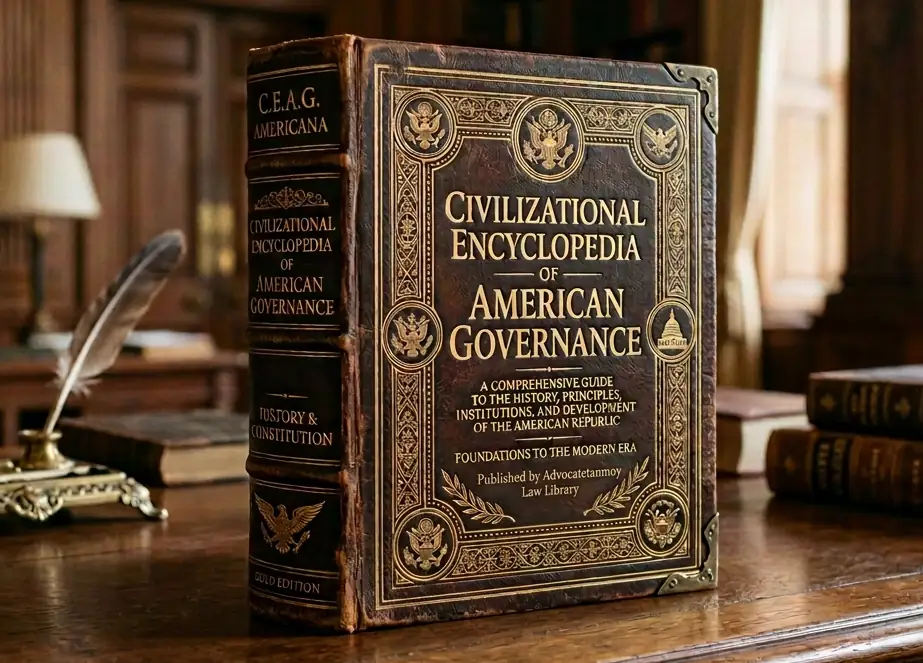
The Civilizational Encyclopedia of American Governance
The Governing of America: A Civilizational Study of the United States Government is conceived as a monumental 100-volume encyclopedic series examining the historical evolution, institutional architecture, constitutional philosophy, administrative systems, and global expansion of the American governing order from the early colonial era to the digital age. Structured as a long-form civilizational archive rather than a conventional political study, the project investigates how the United States transformed from scattered Atlantic colonies into one of the most complex governing systems in modern history.
The origins of American governance emerged from English colonial administration established after the founding of Jamestown, Virginia, in 1607, followed by the settlement of Plymouth Colony in 1620 and the institutional growth of representative assemblies such as the Virginia House of Burgesses (1619). These early provincial governments introduced traditions of self-rule, legislative participation, and localized political authority that gradually diverged from imperial administration directed from London. The imperial crisis following the French and Indian War (1754–1763) intensified disputes over taxation, sovereignty, and constitutional rights, particularly after the enactment of the Stamp Act (1765) and the Townshend Acts (1767).
The series devotes substantial attention to the revolutionary transformation initiated by the Declaration of Independence, adopted at Philadelphia on 4 July 1776, and to the creation of the federal constitutional order during the Constitutional Convention of 1787 at Independence Hall. The ratification of the Constitution in 1788 established the structural foundations of the republic through federalism, separation of powers, and checks and balances, while the inauguration of George Washington in New York City on 30 April 1789 marked the operational beginning of the federal government.
Across its 100 volumes, the encyclopedia traces the expansion of the American state through territorial growth, industrialization, civil conflict, administrative centralization, and global power projection. The Civil War (1861–1865) under Abraham Lincoln fundamentally altered the balance between federal and state authority, while the rise of industrial capitalism after 1877 generated regulatory institutions such as the Interstate Commerce Commission (1887). The twentieth century witnessed the emergence of the modern administrative state under Franklin D. Roosevelt and the New Deal, followed by the construction of the global security system centered on the Pentagon, the Central Intelligence Agency (1947), and the Cold War national security order headquartered in Washington, D.C.
Designed as a comprehensive civilizational record, the 100-volume series integrates constitutional law, public administration, military governance, economic regulation, diplomacy, electoral systems, intelligence institutions, technological governance, and the future of artificial intelligence within the American political system. Rather than presenting government as a static legal framework, the work interprets the United States as a dynamic governing civilization shaped by war, commerce, ideology, expansion, bureaucracy, and technological transformation across more than four centuries of institutional development.
See Also:
SECTION I — CIVILIZATIONAL FOUNDATIONS (Volumes 1–10)
Governing the American Government, Vol. 1
Origins of Western Constitutional Civilization
Governing the American Government, Vol. 2
Magna Carta to Enlightenment Governance
Governing the American Government, Vol. 3
British Imperial Governance
Governing the American Government, Vol. 4
Colonial America as a Governance Laboratory
Governing the American Government, Vol. 5
The American Revolution
Governing the American Government, Vol. 6
The Constitutional Convention
Governing the American Government, Vol. 7
Federalists vs Anti-Federalists
Governing the American Government, Vol. 8
Natural Rights and Republican Philosophy
Governing the American Government, Vol. 9
Slavery, Liberty, and Contradiction
Governing the American Government, Vol. 10
Civil War and Reconstruction of the Union
SECTION II — THE CONSTITUTIONAL REPUBLIC (Volumes 11–20)
Governing the American Government, Vol. 11
The U.S. Constitution
- Constitutional democracy
- The Concept of American “Civil Religion”
- The National Archives building in Washington, D.C
- Constitutional Faith by Sanford Levinson
- U.S. Supreme Court acts as a high priesthood
- Originalism vs. The Living Constitution
- Religious language in the Declaration of Independence
- Criticisms of Constitutional Worship
Governing the American Government, Vol. 12
Separation of Powers
- The Unitary Executive Theory
- Standard democratic accountability
- Political accountability of Supreme Court Decisions
Governing the American Government, Vol. 13
Federalism
Governing the American Government, Vol. 14
Checks and Balances
- The Legal Controller: The U.S. Constitution
- The Political Controller: The American People
- Changing the Rules: Constitutional Amendment
Governing the American Government, Vol. 15
Amendment Process
Governing the American Government, Vol. 16
Civil Rights and Liberties
- Global spread of democracy
- The Core Ideology: American Exceptionalism
- Copying the American System
- Human Rights and United States
Governing the American Government, Vol. 17
Constitutional Interpretation
Governing the American Government, Vol. 18
Constitutional Crises
Governing the American Government, Vol. 19
Emergency Powers
Governing the American Government, Vol. 20
The Evolution of Constitutional Order
SECTION III — THE PRESIDENCY (Volumes 21–30)
Governing the American Government, Vol. 21
Origins of the Presidency
Governing the American Government, Vol. 22
Washington to Lincoln
Governing the American Government, Vol. 23
Lincoln to FDR
Governing the American Government, Vol. 24
FDR and the Modern Executive
Governing the American Government, Vol. 25
Cold War Presidencies
Governing the American Government, Vol. 26
The Imperial Presidency
Governing the American Government, Vol. 27
White House Operations
Governing the American Government, Vol. 28
Executive Orders and Administrative Power
Governing the American Government, Vol. 29
War Powers and Crisis Leadership
Governing the American Government, Vol. 30
Psychology of American Presidents
SECTION IV — CONGRESS (Volumes 31–40)
Governing the American Government, Vol. 31
History of Congress
Governing the American Government, Vol. 32
The House of Representatives
Governing the American Government, Vol. 33
The Senate
Governing the American Government, Vol. 34
Legislative Procedure
Governing the American Government, Vol. 35
Committees and Investigations
Governing the American Government, Vol. 36
Budget and Appropriations
Governing the American Government, Vol. 37
Lobbying and Interest Groups
Governing the American Government, Vol. 38
Political Parties in Congress
Governing the American Government, Vol. 39
Congressional Decline and Polarization
Governing the American Government, Vol. 40
Congress in the Information Age
SECTION V — THE JUDICIARY (Volumes 41–50)
Vol. 41
Origins of American Law
Vol. 42
The Supreme Court
Vol. 43
Marshall Court to Civil War
Vol. 44
Industrial America and the Courts
Vol. 45
Civil Rights Era Jurisprudence
Vol. 46
Modern Constitutional Battles
Vol. 47
Federal Courts
Vol. 48
Judicial Philosophy
Vol. 49
Landmark Constitutional Cases
Vol. 50
Law and Social Transformation
SECTION VI — THE ADMINISTRATIVE STATE (Volumes 51–60)
Vol. 51
Birth of the Federal Bureaucracy
Vol. 52
Public Administration Theory
Vol. 53
Civil Service Systems
Vol. 54
Federal Departments
Vol. 55
Independent Agencies
Vol. 56
Regulation and Rulemaking
Vol. 57
Administrative Law
Vol. 58
Data, Statistics, and Governance
Vol. 59
The Deep State Debate
Vol. 60
Technocracy and Administrative Legitimacy
SECTION VII — DEMOCRACY, ELECTIONS, AND PUBLIC OPINION (Volumes 61–70)
Vol. 61
Evolution of Elections
Vol. 62
Political Parties
Vol. 63
Campaign Systems
Vol. 64
Voting Law and Electoral Systems
Vol. 65
Political Communication
Vol. 66
Media and Democracy
Vol. 67
Polling and Public Opinion
Vol. 68
Propaganda and Information Warfare
Vol. 69
Polarization and Populism
Vol. 70
Digital Democracy and Social Media Governance
SECTION VIII — ECONOMIC GOVERNANCE (Volumes 71–80)
Vol. 71
Taxation and Revenue Systems
Vol. 72
The Treasury and Fiscal State
Vol. 73
The Federal Reserve System
Vol. 74
Industrial Policy
Vol. 75
Capitalism and Corporate Governance
Vol. 76
Labor and Welfare Administration
Vol. 77
Infrastructure Governance
Vol. 78
Economic Crisis Management
Vol. 79
Globalization and Economic Power
Vol. 80
Digital Economy and Financial Technology
SECTION IX — SECURITY, EMPIRE, AND GLOBAL POWER (Volumes 81–90)
Vol. 81
American Diplomacy
Vol. 82
The State Department
Vol. 83
Military Governance
Vol. 84
The Pentagon System
Vol. 85
Intelligence Agencies
Vol. 86
National Security State
Vol. 87
Cold War Global Order
Vol. 88
American Hegemony
Vol. 89
Cybersecurity and Information Warfare
Vol. 90
Space Governance and Strategic Futures
SECTION X — FUTURE GOVERNANCE & CIVILIZATIONAL ANALYSIS (Volumes 91–100)
Governing the American Government, Vol. 91
Governance and Artificial Intelligence
Governing the American Government, Vol. 92
Climate Governance
Governing the American Government, Vol. 93
Biotechnology and Bioethics Governance
Governing the American Government, Vol. 94
Urban Governance and Megacities
Governing the American Government, Vol. 95
Migration and Demographic Transformation
Governing the American Government, Vol. 96
Comparative Empires and America
Governing the American Government, Vol. 97
The Philosophy of American Power
Governing the American Government, Vol. 98
Scenarios for the Future Republic
Governing the American Government, Vol. 99
The Crisis of Liberal Democracy
Governing the American Government, Vol. 100
The Future of Human Governance
Sarvarthapedia Knowledge Web
The Governing of America: A Civilizational Study of the United States Government
Core Civilizational Concepts
American State
Connected to:
- Constitutional Order
- Federal Government
- Administrative State
- National Security State
- Political Civilization
- Executive Power
- Congressional Authority
- Judicial Review
- Economic Governance
- Global Hegemony
- Technocracy
- Democratic Legitimacy
Related concepts:
- State Formation
- State Capacity
- Sovereignty
- Republic
- Empire
- Governance Systems
Constitutional Civilization
Connected to:
- Magna Carta
- Enlightenment Governance
- Natural Rights
- Republicanism
- Federalism
- Separation of Powers
- Checks and Balances
- Constitutional Interpretation
- Rule of Law
- Civil Liberties
Related concepts:
- British Constitutional Tradition
- Roman Republicanism
- Social Contract Theory
- Liberal Democracy
- Constitutional Crisis
Political Civilization
Connected to:
- American Identity
- Electoral Culture
- Political Parties
- Public Opinion
- Civil Religion
- National Mythology
- Frontier Expansion
- Democratic Participation
Related concepts:
- Political Legitimacy
- National Cohesion
- Civic Culture
- Populism
- Polarization
Historical Formation Network
Colonial Governance
Connected to:
- Jamestown (1607)
- Plymouth Colony (1620)
- Virginia House of Burgesses (1619)
- British Imperial Governance
- Mercantilism
- Colonial Assemblies
Related concepts:
- Atlantic World
- Provincial Administration
- Local Autonomy
- Imperial Taxation
American Revolution
Connected to:
- Stamp Act (1765)
- Townshend Acts (1767)
- Continental Congress
- Declaration of Independence (1776)
- Revolutionary Republicanism
Related concepts:
- Anti-Colonial Resistance
- Popular Sovereignty
- Revolutionary State Formation
- Constitutional Nationalism
Constitutional Convention
Connected to:
- Articles of Confederation
- Philadelphia Convention (1787)
- Ratification Debates
- Federalists
- Anti-Federalists
Related concepts:
- Centralized Authority
- Confederation
- Constitutional Architecture
- National Union
Civil War and Reconstruction
Connected to:
- Abraham Lincoln
- Union Preservation
- Reconstruction Amendments
- Federal Supremacy
- Citizenship Transformation
Related concepts:
- Slavery
- Secession
- National Integration
- Constitutional Reconstruction
Institutional Governance Network
Presidency
Connected to:
- George Washington
- Executive Branch
- Executive Orders
- Commander-in-Chief
- White House Operations
- Imperial Presidency
Related concepts:
- Crisis Leadership
- Administrative Expansion
- War Powers
- Executive Bureaucracy
Congress
Connected to:
- House of Representatives
- Senate
- Legislative Procedure
- Committees
- Budgetary Power
- Lobbying
Related concepts:
- Representation
- Legislative Gridlock
- Party Polarization
- Congressional Oversight
Judiciary
Connected to:
- Supreme Court
- Federal Courts
- Judicial Philosophy
- Constitutional Interpretation
- Judicial Review
Related concepts:
- Rule of Law
- Civil Rights
- Legal Precedent
- Constitutional Conflict
Administrative State
Connected to:
- Federal Bureaucracy
- Civil Service
- Independent Agencies
- Regulation
- Administrative Law
- Public Administration Theory
Related concepts:
- Technocracy
- Governance Capacity
- Deep State Debate
- Institutional Continuity
Democracy and Political Power Network
Elections
Connected to:
- Voting Systems
- Electoral Law
- Campaign Systems
- Political Communication
- Polling
Related concepts:
- Democratic Legitimacy
- Voter Participation
- Electoral Reform
- Political Mobilization
Political Parties
Connected to:
- Congress
- Elections
- Public Opinion
- Polarization
- Ideological Realignment
Related concepts:
- Two-Party System
- Coalition Politics
- Party Machines
- Electoral Strategy
Media and Information
Connected to:
- Journalism
- Political Communication
- Propaganda
- Information Warfare
- Social Media Governance
Related concepts:
- Public Narrative
- Mass Persuasion
- Digital Democracy
- Information Control
Economic Governance Network
Fiscal State
Connected to:
- Taxation
- Treasury Department
- Public Debt
- Budgetary Governance
- Economic Planning
Related concepts:
- Revenue Extraction
- State Finance
- Public Expenditure
- Economic Stability
Federal Reserve System
Connected to:
- Monetary Policy
- Financial Regulation
- Inflation Control
- Banking System
- Economic Crisis Management
Related concepts:
- Central Banking
- Capital Flows
- Financial Capitalism
- Economic Sovereignty
Corporate Governance
Connected to:
- Industrial Policy
- Regulation
- Labor Administration
- Infrastructure Governance
- Globalization
Related concepts:
- Capitalism
- Corporate Power
- Market Regulation
- Political Economy
Security and Empire Network
National Security State
Connected to:
- Pentagon System
- Intelligence Agencies
- Cybersecurity
- Cold War
- Military Governance
Related concepts:
- Surveillance
- Strategic Power
- Defense Infrastructure
- Emergency Governance
American Hegemony
Connected to:
- Global Order
- Diplomacy
- International Alliances
- Economic Influence
- Military Expansion
Related concepts:
- Empire
- Geopolitics
- Global Capitalism
- Strategic Dominance
Information Warfare
Connected to:
- Propaganda
- Cyber Operations
- Intelligence Networks
- Digital Platforms
- Media Systems
Related concepts:
- Narrative Warfare
- Psychological Operations
- Cyber Governance
- Strategic Communication
Future Governance Network
Governance and Artificial Intelligence
Connected to:
- Technocracy
- Algorithmic Governance
- Digital Surveillance
- Predictive Administration
- Data Governance
Related concepts:
- Machine Bureaucracy
- Automated Decision Systems
- AI Ethics
- Computational Statecraft
Climate Governance
Connected to:
- Environmental Regulation
- Infrastructure Resilience
- Energy Policy
- Disaster Administration
Related concepts:
- Ecological State
- Sustainability
- Resource Governance
- Climate Security
Biotechnology Governance
Connected to:
- Bioethics
- Public Health Administration
- Genetic Regulation
- Population Policy
Related concepts:
- Human Enhancement
- Medical Sovereignty
- Biopolitics
- Technological Ethics
Future of Human Governance
Connected to:
- Comparative Empires
- Democratic Crisis
- Civilizational Transformation
- Global Governance
- Post-Industrial State
Related concepts:
- Planetary Governance
- Post-Liberal Systems
- Transnational Administration
- Civilizational Futures
Comparative Civilization Network
Roman Republic and Empire
Connected to:
- Senate
- Imperial Expansion
- Republican Virtue
- Civil-Military Relations
Related concepts:
- Constitutional Decline
- Imperial Bureaucracy
- Civic Identity
British Empire
Connected to:
- Colonial Administration
- Parliamentary Tradition
- Common Law
- Atlantic Governance
Related concepts:
- Imperial Federalism
- Maritime Power
- Constitutional Monarchy
Soviet Union
Connected to:
- Central Planning
- Bureaucratic State
- Security Apparatus
- Ideological Governance
Related concepts:
- Administrative Centralization
- One-Party Governance
- State Surveillance
China
Connected to:
- Technocratic Governance
- Civil Service Tradition
- State Capitalism
- Digital Administration
Related concepts:
- Imperial Bureaucracy
- Confucian Governance
- Algorithmic Statecraft
Foundational Thinkers Network
James Madison
Connected to:
- Federalism
- Separation of Powers
- Constitutional Design
- Republican Theory
Alexander Hamilton
Connected to:
- Centralized Government
- Treasury System
- Fiscal State
- National Banking
George Washington
Connected to:
- Presidency
- National Unity
- Civil-Military Leadership
- Constitutional Precedent
Abraham Lincoln
Connected to:
- Civil War
- Union Preservation
- Executive Power
- Reconstruction
Franklin D. Roosevelt
Connected to:
- New Deal
- Administrative State
- Economic Governance
- Wartime Leadership
Meta-Structure of Sarvarthapedia
Historical Layer
Connected to:
- Origins
- Evolution
- Institutional Development
- Civilizational Transformation
Institutional Layer
Connected to:
- Governance Structures
- Bureaucratic Systems
- Constitutional Mechanics
- Administrative Operations
Philosophical Layer
Connected to:
- Legitimacy
- Rights
- Sovereignty
- Political Thought
Strategic Layer
Connected to:
- Power
- Incentives
- Geopolitics
- National Survival