Encyclopedia of Ecumenical Movements
Bishop’s College Kolkata: From East India Company Seminary at Shibpur to India’s Historic Theological College (1820–2026)
Bishop’s College, Calcutta, one of the oldest institutions of Christian theological education in India, was originally instituted at Shibpur, Howrah, on 15 December 1820, on the site which today forms part of the campus of Bengal Engineering College, presently known as the Indian Institute of Engineering Science and Technology. The original college stood near the present-day Botanical Garden, close to the area now identified with Danesh Shaikh Lane Bus Stand and Shalimar Railway Station. Long before railways, engineering colleges and modern municipal boundaries transformed the locality, this riverside tract was selected as the principal training centre for the Anglican establishment in British India. The institution was founded primarily for preparing cadres for the Christian Ministry in United Bengal and for training missionaries intended to work among the native population of Bengal during the 1820s and 1830s.
The earliest purpose of the institution was not merely theological education but the creation of a trained Anglican cadre for the expanding administration of the British East India Company. The first batch, numbering approximately ten students, consisted largely of candidates connected with chaplaincy service in the Company’s military establishments. These men were expected to learn Bengali, Hindustani, the King James Bible, and the Book of Common Prayer. Many candidates arriving from England possessed little formal education, and the College served partly as a finishing school where prospective chaplains acquired both religious instruction and linguistic competence before entering service in India.
Within the framework of Company administration, it was often said that two broad categories of young Englishmen came to India. One group consisted of rough and poorly educated youths recruited for policing and military functions in Bengal and Madras. Another consisted of partially educated young men destined for chaplaincy service, military religious establishments, and civil stations across the Presidencies. Bishop’s College became one of the institutions intended to transform such recruits into functioning clergy capable of serving the Company’s expanding dominions.
The driving force behind the establishment of the College was Thomas Fanshaw Middleton (28 January 1769 – 8 July 1822), remembered as the first Anglican Bishop of Calcutta and the founder of the institution. Middleton was hired by the British East India Company in 1814 to supervise chapels operating within Company territories. On 24 December 1815, he was ordained and consecrated in London as an Anglican Bishop before returning to India. Upon his arrival, he was entrusted with responsibility for all chapels under the jurisdiction of the Company. To administer the growing English Christian population, a diocese was established. The administrative apparatus of this early diocese functioned in close association with the colonial government headquartered at Writers’ Building, the seat of Company administration in Calcutta.
Middleton occupied a unique position. While spiritually subject to the Church of England, he was financially maintained by the East India Company and was expected to report on ecclesiastical affairs to Company authorities responsible for Indian administration. Middleton was, in practice, as much an administrator as a churchman. Former students frequently recalled descriptions of him as a figure who appeared more like a Company director than a conventional English bishop. Unlike bishops in England who might enjoy parliamentary influence through ecclesiastical office, Middleton was never a member of the House of Lords. His authority rested instead upon the unusual combination of Company appointment, episcopal office, and administrative necessity.
Prior to the establishment of the Shibpur campus, Middleton operated from St. John’s Church, one of the earliest Anglican churches in Calcutta. It is Maharaja Nabakrishna Deb Bahadur, founder of the Shobhabazar Raj Family and Nayib to the Nawabs of Murshidabad, who donated land associated with the construction of St. John’s Church in 1784. The church was erected in the heart of what had once been Govindapur Mouza, an area named after Sri Govinda Dev Jew. It is said that the deity’s original temple had been relocated from Fort William to the Dharmatala area during the reconfiguration of colonial Calcutta.
The landscape of eighteenth-century Govindapur differed dramatically from modern Kolkata. Present locations occupied by St. John’s Church, Raj Bhavan, Accountant General’s House, Delta House, and the Registrar of Assurance were all understood to be portions of the former Govindapur estate under Navakrishna`s Jamindari. Again, the Alipur originally lay outside Govindapur, while Kalikapur was later associated with the name Alipur. Such narratives survive in local memory and continue to influence interpretations of the city’s early history.
Before the construction of St. Paul’s Cathedral, St. John’s Church functioned as the effective centre of Anglican authority in Calcutta. Middleton maintained an office there, in a room remembered by later generations as occupying the same portion of the building associated in recent years with clergy connected to the Church of North India. This office served as the administrative base of Anglican activity until the establishment of Bishop’s College at Shibpur. When the College was inaugurated on 15 December 1820, Middleton shifted his principal residence and administrative focus to the new campus.
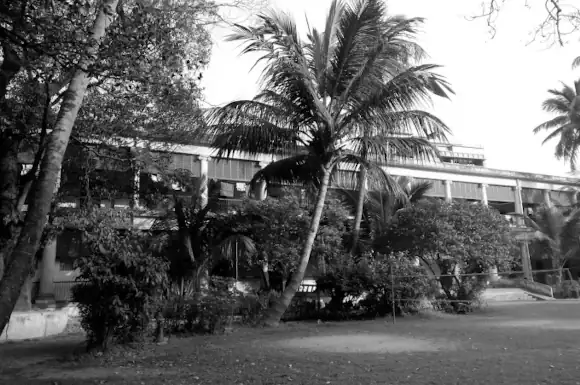
The Shibpur campus quickly became a self-contained educational settlement. In 1823, a chapel, library, and student barrack capable of housing approximately twenty students were constructed. These buildings were formally consecrated on 1 January 1824. The architectural arrangement reflected the original purpose of the institution. Students lived together under supervision, attended worship daily, and followed a disciplined academic routine. The library represented one of the earliest theological collections in eastern India, while the chapel served not only as a place of worship but also as the symbolic heart of the community.
The curriculum underwent significant revision during 1824–1825, influenced by educational developments associated with Fort William College (at old Govindapur). While the earliest syllabus emphasized the King James Bible, Common Prayer Book, English, Bengali and Hindustani, the revised curriculum incorporated elements of Arts, Natural Science, and Sanskrit. The inclusion of Sanskrit reflected recognition that missionaries and chaplains working in India required some familiarity with indigenous intellectual traditions. By the 1830s, Greek and Latin had been introduced into the curriculum, reflecting the classical foundations of Anglican theological education. (See Bachelor of Divinity (BD) Syllabus)
Middleton himself was a scholar of Greek. His book, The Doctrine of the Greek Article Applied to the Criticism and Illustration of the New Testament, became known within theological circles and remains associated with his intellectual legacy. Middleton approached questions of biblical language with unusual rigor and his studies occasionally led him to raise difficult questions concerning textual interpretation.
Middleton’s relations with other missionary groups were often strained. One of the most frequently repeated stories concerns William Carey (17 August 1761 – 9 June 1834), a cobbler turned Baptist missionary of Serampore. Carey repeatedly attempted to meet Middleton and sought access to Bishop’s College. Middleton, however, guarded Anglican jurisdiction carefully and refused to allow Baptist influence within the institution. Differences between Anglican and Baptist ecclesiastical traditions created tensions during the period. Whether every detail of the story can be documented is less important than the irony later generations observed: Bishop’s College would eventually become academically affiliated with the Senate of Serampore College, the very theological network.
The death of Middleton on 8 July 1822 did not diminish the importance of the College. His successors continued to develop the institution. Bishop Reginald Heber, the second Bishop of Calcutta, later established his residence at 5 Russell Street in October 1825. Over time, Anglican administration became increasingly centralized within the growing colonial capital.
The ecclesiastical geography of Calcutta changed dramatically during the mid-nineteenth century. St. Paul’s Cathedral, completed in 1847, became the principal Anglican cathedral of the city. The bishop’s ceremonial chair and authority gradually shifted from St. John’s Church to the new cathedral. In 1849, the Bishop’s House at 51 Chowringhee Road was constructed, further consolidating ecclesiastical administration in the southern section of colonial Calcutta. Nevertheless, the Shibpur campus of Bishop’s College remained the principal theological training centre.
The year 1857 marked another turning point. The establishment of the University of Calcutta coincided with the transfer of power from the East India Company to the British Crown. Properties, institutions, and administrative arrangements originally created under Company authority entered a new imperial framework. Students of Bishop’s College subsequently received recognition within the university system (See University Education), linking theological studies with the broader academic life of Bengal.
Throughout the nineteenth century, the College maintained a relatively small residential population. It was originally planned for around seventy students, a figure that remained remarkably constant in institutional planning for generations. No female students were admitted during most of the College’s history, and women entered theological education there only in the 1980s.
One Madhusudan Dutt, after his controversial ‘conversion’ to Christianity in St. Paul’s Cathedral, briefly enrolled at Bishop’s College and stayed on the campus for a few days. His stay ended abruptly because of irregular conduct and disciplinary concerns. He was later famous for his Bengali Meghnadh Badh, but was rejected by Christians in Kolkata, and a decent burial was rejected for him.
The introduction of the railway transformed the geography of Calcutta and eventually made the Shibpur site less suitable for the College’s purposes. After prolonged discussion, the transfer of the property to the Government for engineering education was formally signed on 25 September 1879. This decision paved the way for the expansion of Bengal Engineering College, while Bishop’s College prepared to relocate to Calcutta proper.
The institution occupied temporary premises at 26 Theatre Road before finally moving around 1883 to its present site at Beckbagan, on Lower Circular Road, now A.J.C. Bose Road. The new establishment was far more complex than the original seminary. It included a boarding school, a high school, a college department and an industrial section containing a printing press and a carpenter’s workshop. The secular college offered studies up to the B.A. standard, while theological education continued alongside general education.
By 1918, Bishop’s College had become exclusively theological. Over subsequent decades, it trained clergy for India, Burma and Ceylon. After the formation of the Church of North India in 1970, the College gradually evolved into one of the most ecumenical theological institutions in South Asia, attracting students from Anglican, Methodist, Presbyterian, Mar Thoma, Syrian Orthodox and many other traditions. Increasingly, it became known as a “Mini India” in Kolkata, with students arriving from every corner of the country, particularly the North-Eastern states.
Former students from 2005–2010 remember this period as one of remarkable openness. Reverend Timothy Hembrom, a distinguished Santhal Old Testament scholar, encouraged students to engage critically with scripture and society. Reverend K. P. Aleaz, known for his Vedantic interpretation of Christian theology, occasionally led students to nearby ISKCON centres and promoted interreligious dialogue. Reverend Hembrom permitted students to light Diwali candles in the old barracks and chapel, a gesture remembered as symbolic of the institution’s inclusive spirit.
Theology is not the knowing of the Christian God or discussing the Christian God, but rather it is taking care of God’s Creation.
At the same time, Bishop Samar Vairagi lived quietly on the campus after retirement. Many alumni recall him as a man of exceptional simplicity, possessing neither personal property nor significant wealth. In their memory, he represented an older generation of church leadership defined by service rather than administration. Together with figures such as Reverend Noel Sunil Sen, former Vicar of St. Paul’s Cathedral and Secretary of the Church of North India (See CNI Constitution), Bishop Vairagi came to symbolize what many alumni regarded as the finest qualities of Indian Anglican Christianity. Bishop Vairagi acquired a reputation for personal simplicity, absence of personal wealth and freedom from the corruption allegations that affected portions of the church (CNI) administration elsewhere.
According to the late Reverend Noel Sunil Sen (died in 2010, his body was cremeted at Keoratala Hindu Burning Ghat, and his asthi was kept in Lower Circular Road Cemetry), former Vicar of St. Paul’s Cathedral, Secretary of the Church of North India and Executive member of the Bishop’s College Governing Body, the institution was originally designed to produce English clergy for the expanding colonial establishment and only later accommodated a small number of Bengali converts.
The library remained one of the treasures of the College. Under librarians remembered affectionately as Amlan and Pamela Gomes, students encountered a rich collection of theology, philosophy, church history and social thought. The campus functioned as an open garden for learning in the midst of metropolitan Kolkata. In recent years, new construction projects have altered parts of the historic grounds under the supervision of later administrations, yet the memory of the old Shibpur barracks, the Beckbagan classrooms, the St. Thomas Chapel, and the library continues to shape the identity of generations of students.
In 1980, Joseph Amritanand, the then Bishop of Calcutta, leased out a major portion of the land, constituting nearly one-third of the entire property, to a private group. The property was never recovered, and it is alleged that a large amount of corrupt money changed hands in connection with the transaction.
The Church of North India Trust Association, established under the Indian Companies Act in 1976 and responsible for managing the Bishop’s College properties, never attempted to recover the land.
During the tenure of Bishop Samuel Raju (1999–2008), allegations of corruption were reportedly widespread, court cases were filed against him, and he took pre-arrest bail from the Calcutta High Court. In the matter concerning Bishop’s College, he was alleged to have been highly compromised.
In 2023, the Family Quarters Line and the front property were handed over by Bishop Paritosh Canning (Resident of Bishop’s House, 51, Chowringhee Road, Kolkata 700 071) to another private builder for the construction of a multi-storeyed corporate-style building. Under the terms of the development agreement, the private builder would share certain floors of the proposed building with Bishop’s College.
Bishop’s College was never intended to resemble a corporate establishment. Rather, it was conceived as a place reflecting the beauty and harmony of the Garden of Eden as described in the Hebrew Bible Tanakh—a setting created by Elohim Jehovah where humanity was meant to cultivate and preserve a character fashioned in the image of Elohim himself. The institution’s environment and purpose were envisioned to embody spiritual values, learning, contemplation, and stewardship, rather than commercial or corporate ideals.
Nonetheless, Bishop’s College at Kolkata is not merely the first Anglican seminary in India, it is an institution founded by the East India Company in 1820, transferred from historic Shibpur to Beckbagan (Central Kolkata) in the nineteenth century, transformed into a most importaint theological centre in the twentieth century, and remembered by its students as a place where empire, mission, language, scholarship, controversy, conversion, and ecumenism met within a single academic community.
Sarvarthapedia Knowledge Network: Bishop’s College Kolkata and the Making of Anglican Christianity in Bengal
Bishop’s College Kolkata
A nineteenth-century Anglican theological institution founded at Shibpur in 1820 under the patronage of the British East India Company, later relocated to Beckbagan and transformed into an ecumenical theological college of the Church of North India.
Connected Concepts
- Anglicanism in India
- Christian Missionary Education
- East India Company Administration
- Colonial Education in Bengal
- Church of North India
- Theology in South Asia
- Shibpur Heritage
- Religious History of Kolkata
- Serampore Christian Tradition
- University of Calcutta
Foundational Institution Cluster
British East India Company
The political and commercial authority that sponsored Anglican chaplaincy networks and financed the early episcopal structure in India.
Related Topics
- Military Chaplaincy in India
- Writers’ Building
- Fort William
- Colonial Governance
- Bengal Presidency
- East India Company Education Policy
Anglican Chaplaincy System
Religious structure created to serve Company officials, soldiers and settlers.
Related Topics
- Bishop’s College Kolkata
- Thomas Fanshaw Middleton
- Book of Common Prayer
- Military Christianity in British India
- Anglican Diocese of Calcutta
Founder and Leadership Cluster
Thomas Fanshaw Middleton
First Anglican Bishop of Calcutta and founder of Bishop’s College.
Related Topics
- Bishop’s College Kolkata
- Diocese of Calcutta
- Church of England
- Writers’ Building
- Greek Biblical Scholarship
- The Doctrine of the Greek Article
- Colonial Ecclesiastical Administration
- Dalit Christians and Their Theology
- Indian Military Civilization
Reginald Heber
The second Bishop of Calcutta, who continued the institutional development initiated by Middleton.
Related Topics
- Keoratala Hindu Burning Ghat
- Anglican Church in India
- Russell Street Kolkata
- Colonial Church Administration
Kolkata Religious Geography Cluster
St. John’s Church
Early administrative centre of Anglican Christianity in Calcutta before the rise of St. Paul’s Cathedral.
Related Topics
- Thomas Fanshaw Middleton
- Govindapur Mouza
- Nabakrishna Deb
- Anglican History in Kolkata
- Church of North India
St. Paul’s Cathedral
Principal Anglican cathedral completed in 1847 and later centre of episcopal authority.
Related Topics
- Madhusudan Dutt
- Noel Sunil Sen
- Diocese of Calcutta
- Colonial Religious Architecture
Bishop’s House, Chowringhee
Residence of Anglican bishops after 1849.
Related Topics
- St. Paul’s Cathedral
- Anglican Administration
- Colonial Kolkata
Historical Geography
Govindapur Mouza
One of the original settlements from which colonial Calcutta emerged.
Related Topics
- Nabakrishna Deb
- St. John’s Church
- Raj Bhavan
- Fort William
- Dharmatala
- Colonial Land Acquisition
Shibpur
Original location of Bishop’s College.
Related Topics
- Botanical Garden
- Bengal Engineering College
- Shalimar
- Howrah History
- East India Company Institutions
Beckbagan
Present location of Bishop’s College since the 1880s.
Related Topics
- A.J.C. Bose Road
- Church of North India
- Theological Education
- Kolkata Christian Heritage
Educational History
Fort William College
Influential educational institution whose academic developments affected the curriculum of Bishop’s College.
Related Topics
- Bengali Language Studies
- Sanskrit Education
- Colonial Linguistics
- Translation Movements
University of Calcutta
Established in 1857 and later recognized students of Bishop’s College.
Related Topics
- Colonial Higher Education
- Bengal Renaissance
- Missionary Education
Bengal Engineering College
Institution that inherited the former Shibpur campus in 1879.
Related Topics
- Bishop’s College Relocation
- Engineering Education in India
- IIEST Shibpur
Language and Curriculum Cluster
Bengali Language Education
A central component of missionary training at Bishop’s College.
Related Topics
- Christian Missions in Bengal
- Fort William College
- Translation of Christian Texts
- Native Ministry
Hindustani Language Studies
Practical language training for chaplains serving across northern India.
Related Topics
- Military Chaplaincy
- Colonial Administration
- Missionary Communication
Greek and Latin Studies
Classical foundations of Anglican theological education were introduced during the 1830s.
Related Topics
- Thomas Fanshaw Middleton
- Biblical Criticism
- Anglican Scholarship
Missionary and Denominational Cluster
William Carey
Baptist missionary associated with Serampore and often contrasted with Anglican missionary traditions.
Related Topics
- Thomas Fanshaw Middleton
- Baptist Missions
- Serampore College
- Christian Printing in Bengal
Senate of Serampore College
Theological university system with which Bishop’s College later became affiliated.
Related Topics
- William Carey
- Ecumenical Theology
- Theological Education in India
Literary and Cultural Cluster
Related Topics
- St. Paul’s Cathedral
- Bengali Renaissance
- Christian Converts in Bengal
- Meghnad Badh Kavya
Bengali Christian Intellectual Tradition
A tradition emerging from interactions among missionaries, converts and educational institutions.
Related Topics
- Bishop’s College Kolkata
- Serampore Mission
- University of Calcutta
- Bengal Renaissance
Church of North India Cluster
Church of North India
The united Protestant church formed in 1970 under whose framework Bishop’s College functions today.
Related Topics
- Bishop’s College Kolkata
- Ecumenism
- Indian Anglicanism
- Theological Education
Noel Sunil Sen
Former Vicar of St. Paul’s Cathedral and Governing Body member of Bishop’s College.
Related Topics
- Church of North India (Rule Book)
- Kolkata Anglican Heritage
- St. Paul’s Cathedral
Bishop Samar Vairagi
Remembered by alumni for personal simplicity and service-oriented leadership.
Related Topics
- Church Leadership
- Indian Anglicanism
- Bishop’s College Community
Timothy Hembrom
Santhal biblical scholar associated with Bishop’s College.
Related Topics
- Tribal Christianity in India
- Old Testament Studies
- Indigenous Theology
K. P. Aleaz
Theologian known for engaging Vedantic thought and interreligious dialogue.
Related Topics
- Comparative Theology
- Hindu-Christian Dialogue
- ISKCON
- Indian Christian Thought
Theology and Ideas Cluster
Theology as Care of Creation
An understanding present in the modern ethos of Bishop’s College that theology is not merely discussion about God but responsibility toward God’s creation.
Related Topics
- Ecological Theology
- Christian Ethics
- Social Responsibility
- Interfaith Engagement
- Timothy Hembrom
- K. P. Aleaz
Ecumenical Theology
Theological approach encouraging cooperation among Christian traditions.
Related Topics
- Church of North India
- Senate of Serampore College
- Mar Thoma Church
- Methodist Church
- Presbyterian Church
Mini India Concept
A description used for Bishop’s College after 1970 because of its diverse student body representing many regions, languages and denominations.
Related Topics
- North-East India
- Church of North India
- National Integration
- Theological Education
Related Sarvarthapedia Articles
- Colonial Christianity in Bengal
- Diocese of Calcutta
- Writers’ Building and Religious Administration
- Shibpur Before Bengal Engineering College
- Govindapur Mouza
- Nabakrishna Deb and Colonial Calcutta
- St. John’s Church, Kolkata
- St. Paul’s Cathedral Kolkata
- Church of North India
- Theological Education in India
- Michael Madhusudan Dutt and Christianity
- Christian Missions in Bengal
- Fort William College
- University of Calcutta
- Bengal Engineering College
- Bengali Christian Literature
- Ecumenism in South Asia
- Indigenous Theology in India
- History of Anglicanism in India
- Decline of Christianity in Kolkata
- Historical Critiques of Christianity and Christian Theology
- Encyclopedia of the British Parliamentary System