Intelligence, Espionage, and Counterintelligence
Making of North American Civilization: From Turtle Island to the Twenty-First Century
How did North America evolve from Indigenous civilizations into a global hegemonic civilization?
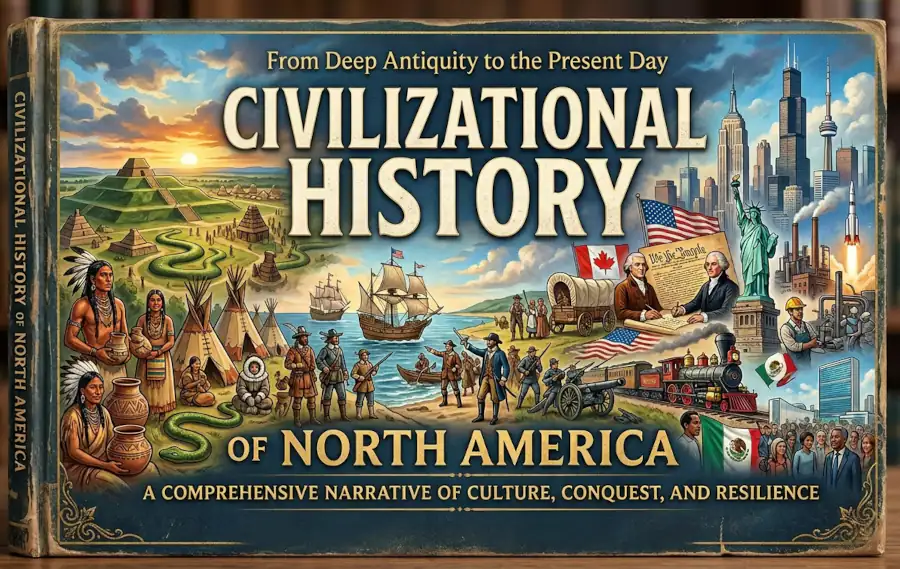
Civilizational History of North America: Turtle Island and the American Imperium is a projected 315-volume civilizational archive tracing the evolution of North America from the first human migrations across Beringia (c. 28,000–15,000 BCE) to the geopolitical and technological transformations of the twenty-first century. Beginning with the Indigenous worlds of Cahokia, Chaco Canyon, Tenochtitlan, the Haudenosaunee Confederacy, and the Arctic cultures of the Inuit, the series examines the continental transition initiated by Christopher Columbus in 1492, the rise of the Spanish, French, and British colonial systems, the formation of the United States Constitution at Philadelphia (1787), the expansion across the Mississippi Valley, the Civil War (1861–1865), industrial capitalism, world wars, the Cold War, globalization, digital networks, and artificial intelligence. Structured into seven principal eras and hundreds of thematic expansions, the work integrates political history, economic systems, religious transformations, warfare, technology, ecology, race relations, and mass culture into a single continental narrative. Central to the project is the unresolved historical question: Is America a republic, empire, network civilization, or an unprecedented synthesis of continental power, digital infrastructure, democratic ideology, and global cultural hegemony? The series treats North America not merely as a nation-state system, but as an evolving civilization whose foundations remain layered upon the older memory of Turtle Island.
Read More:
- Civilization
- Intelligence
- Meta-Civilizational Architecture
- Intelligence Civilization Studies
- Ontology of Technological Civilization
Structural Framework Rooted in Sarvarthapedia Knowledge Ecosystem
LEVEL 1 — Prologmena to the Civilizational History of North America (10-Volumes)
- Philosophy of history,
- Methodology,
- Terminology,
- Civilizational theory,
- Definitions of civilization
- Historiography
- Christian providential history
- Evangelicalism
- Slavery economics
- Military-industrial complex
LEVEL 2 — Main Narrative (7 major volumes)
LEVEL 3 — Expansion Library (315 sub-volumes)
Our concluding thesis: Is America a republic, empire, network civilization, or something entirely new?
THE PRIMARY SEVEN VOLUMES
VOLUME I: Turtle Island
From the First Peoples to the Arrival of Columbus
Chronology: c. 30,000 BCE – 1492 CE
Central Themes
- Peopling of the Americas
- Ice Age migrations
- Indigenous cosmologies
- Sacred geography
- Rise of agriculture
- Mound builders
- Trade networks
- Confederacies and empires
- Ecology and civilization
- Myth, astronomy, ritual, and oral traditions
Major Civilizations
- Clovis culture
- Hopewell
- Mississippian civilization
- Cahokia
- Ancestral Puebloans
- Haudenosaunee Confederacy
- Maya
- Aztec
- Inuit societies
- Pacific Northwest civilizations
Key Thesis: North America before Columbus was not “empty wilderness,” but a densely interconnected civilizational world.
EXPANSION OF VOLUME I → 5 VOLUMES
I-A. Origins of Turtle Island
Migration, Ice Age, genetics, archaeology
I-B. Sacred Worlds of Indigenous America
Religion, cosmology, oral memory, myth
I-C. Cities Before Columbus
Cahokia, Chaco Canyon, Tenochtitlan, Maya
I-D. Trade, War, and Confederacies
Political systems and interstate relations
I-E. The Eve of Contact
Disease ecology, Viking contact, Columbus approaching
VOLUME II: Conquest and Colonies
From Columbus to the American Constitution
Chronology: 1492–1789
Central Themes
- European conquest
- Disease collapse
- Spanish empire
- French America
- British colonies
- Slavery
- Christianity and missions
- Atlantic economy
- Enlightenment
- Revolution
- Constitutionalism
Narrative Arc: The collision between Indigenous America, Europe, and Africa creates a new Atlantic civilization.
Culmination: Writing of the Constitution and birth of the United States.
EXPANSION OF VOLUME II → 50 SUB-VOLUMES
SECTION A — Age of Discovery (5)
- Columbus and Iberian Expansion
- Conquistadors
- The Columbian Exchange
- Disease and Demographic Collapse
- Papacy, Christianity, and Empire
SECTION B — Indigenous Resistance (5)
- Aztec resistance
- Pueblo Revolt
- Powhatan wars
- King Philip’s War
- Tecumseh’s precursors
SECTION C — Colonial Worlds (10)
- New Spain
- New France
- British Atlantic colonies
- Dutch America
- Plantation South
- Puritan New England
- Frontier societies
- Fur trade worlds
- Caribbean influence
- Colonial cities
SECTION D — Slavery and Race (5)
- Atlantic slave trade
- Plantation economy
- Origins of race ideology
- Resistance and maroon societies
- Black Atlantic culture
SECTION E — Religion and Thought (5)
- Great Awakening
- Enlightenment in America
- Republican thought
- Native-Christian encounters
- Religious pluralism
SECTION F — Revolution (10)
- Seven Years’ War
- Taxation crisis
- Boston and rebellion
- Continental Congress
- George Washington
- War campaigns
- French alliance
- Articles of Confederation
- Constitutional Convention
- Ratification debates
SECTION G — Founding Documents and Institutions (10)
Volume 41–50 devoted to Constitution, Bill of Rights, Federalism, Judiciary, etc.
VOLUME III Republic and Expansion
From the Constitution to the Assassination of Lincoln
Chronology: 1789–1865
Central Themes
- Founding Republic
- Jeffersonian democracy
- Westward expansion
- Industrial beginnings
- Jacksonian America
- Native displacement
- Slavery crisis
- Civil War
Culmination: Lincoln’s assassination = symbolic death of the original republic and beginning of modern America.
EXPANSION OF VOLUME III → 50 SUB-VOLUMES
Macro divisions:
1–10: Founding Republic
11–20: Expansion and frontier
21–30: Slavery and sectional crisis
31–40: Civil War
41–50: Lincoln, emancipation, constitutional transformation
VOLUME IV: Industrial America
From Lincoln to World War I
Chronology: 1865–1914
Themes
- Reconstruction
- Railroads
- Immigration
- Industrial capitalism
- Labor movements
- Gilded Age
- Imperial expansion
- Progressive Era
Central Thesis: America transforms from republic into industrial continental power.
EXPANSION OF VOLUME IV → 50 SUB-VOLUMES
Industrial America
From Lincoln to World War I (1865–1914)
This expanded series should present the transformation of the United States from a war-torn republic into an industrial, continental, and emerging imperial power. The central civilizational theme is:
How railroads, machines, immigration, capital, and empire transformed America into the modern industrial civilization that would dominate the twentieth century.
The 50 sub-volumes are organized into 10 thematic divisions, each containing 5 books.
SECTION I — RECONSTRUCTION AND THE SECOND FOUNDING (Volumes 1–5)
1. The Ruins of the Union
America After the Civil War
- devastation of the South
- economic collapse
- freed slaves
- psychological aftermath of war
- Lincoln’s death and national mourning
2. Reconstruction
Rebuilding the Republic
- Radical Republicans
- military occupation of the South
- Reconstruction governments
- Black political participation
- constitutional transformation
3. The Thirteenth, Fourteenth, and Fifteenth Amendments
The Second American Constitution
- abolition of slavery
- citizenship
- equal protection
- voting rights
- constitutional revolution
4. Freedmen and Freedom
African American Life After Emancipation
- Freedmen’s Bureau
- Black churches
- schools and education
- land struggles
- sharecropping
- emergence of Black leadership
5. The Fall of Reconstruction
Terror, Compromise, and Segregation
- Ku Klux Klan
- white supremacist violence
- Compromise of 1877
- Jim Crow foundations
- betrayal of Reconstruction
SECTION II — THE WEST AND THE FRONTIER (Volumes 6–10)
6. The Great Plains
Conquest of the Interior
- buffalo ecology
- plains geography
- settler migration
- railroads westward
7. Wars Against the Nations of the Plains
Lakota, Cheyenne, Apache, and Resistance
- Red Cloud
- Crazy Horse
- Sitting Bull
- Geronimo
- Little Bighorn
8. The Reservation System
The Defeat of Indigenous Sovereignty
- forced relocation
- boarding schools
- Dawes Act
- destruction of tribal systems
9. Cowboys, Cattle, and Myth
The Creation of the American West
- cattle kingdoms
- ranch economy
- gunslingers
- frontier mythology
- Hollywood origins
10. The Closing of the Frontier
Frederick Jackson Turner and the End of Expansion
- 1890 Census
- Turner Thesis
- frontier psychology
- birth of continental America
SECTION III — RAILROADS AND INDUSTRIAL CAPITALISM (Volumes 11–15)
11. Iron Rails Across a Continent
The Railroad Revolution
- transcontinental railroad
- railroad barons
- labor systems
- time zones
- continental integration
12. Steel and Smoke
Rise of Heavy Industry
- steel mills
- Carnegie
- Pittsburgh
- industrial cities
- mechanized production
13. The Lords of Capital
Rockefeller, Morgan, Carnegie, Vanderbilt
- monopolies
- trusts
- Wall Street
- finance capitalism
- concentration of wealth
14. Factories and Machines
Industrial Labor in America
- factory systems
- mechanization
- women workers
- industrial discipline
- dangerous labor
15. The Gilded Age
Wealth, Corruption, and Power
- political machines
- Tammany Hall
- robber barons
- conspicuous wealth
- corruption culture
SECTION IV — IMMIGRATION AND THE NEW AMERICANS (Volumes 16–20)
16. The Great Migration from Europe
Arrival of the New Immigrants
- Italians
- Jews
- Slavs
- Ellis Island
- migration networks
17. Cities of Millions
Urban America Explodes
- New York
- Chicago
- tenements
- sanitation
- skyscrapers
18. Ethnic America
Identity, Language, and Assimilation
- ethnic enclaves
- religion
- language conflicts
- Americanization
19. Chinese Railworkers and Asian America
Asians in Industrial America
- Chinese labor
- exclusion acts
- anti-Asian violence
- Japanese migration
20. The Melting Pot
Myth and Reality of American Identity
- nationalism
- civic identity
- race hierarchy
- multicultural tensions
SECTION V — LABOR, SOCIALISM, AND CLASS WARFARE (Volumes 21–25)
21. The Workers’ Republic
Rise of Labor Consciousness
- Knights of Labor
- unions
- strikes
- worker culture
22. Haymarket
Anarchists and the Fear of Revolution
- Chicago labor unrest
- anarchism
- bombings
- state repression
23. Homestead and Pullman
Industrial War in America
- Carnegie Steel strike
- Pullman Strike
- federal intervention
- violence between labor and capital
24. Socialists, Populists, and Radicals
Alternative Visions of America
- Eugene Debs
- socialism
- agrarian populism
- cooperative economics
25. The Triumph of Capital
Why American Socialism Failed
- nationalism
- race divisions
- consumerism
- political repression
SECTION VI — SCIENCE, TECHNOLOGY, AND MODERNITY (Volumes 26–30)
26. Electric America
Edison, Tesla, and the Power Revolution
- electrification
- power grids
- invention culture
27. The Machine Age
Technology Changes Civilization
- mechanized life
- telephones
- elevators
- industrial engineering
28. The Age of Invention
American Innovation and Patent Culture
- inventors
- patent offices
- industrial research
29. Oil and Energy
Fueling Industrial Civilization
- Standard Oil
- petroleum economy
- internal combustion
30. Ford Before Fordism
Origins of Mass Production
- assembly methods
- machine standardization
- productivity revolution
SECTION VII — CULTURE, RELIGION, AND SOCIAL LIFE (Volumes 31–35)
31. Victorian America
Morality and Middle-Class Civilization
- family structures
- manners
- domestic culture
32. Religion in the Industrial Age
Protestantism, Revivalism, and Doubt
- evangelical revival
- Social Gospel
- Darwinism crisis
33. The New Woman
Gender and Social Change
- suffrage
- women’s education
- workplace entry
- reform movements
34. Race and Segregation
Jim Crow America
- segregation laws
- lynching
- racial ideology
- Black resistance
35. Culture of the Gilded Age
Literature, Art, and Popular Entertainment
- Mark Twain
- realism
- vaudeville
- newspapers
- early mass culture
SECTION VIII — POLITICS AND THE PROGRESSIVE ERA (Volumes 36–40)
36. Machine Politics
Bosses, Corruption, and Urban Power
- political machines
- patronage systems
37. The Progressive Revolt
Reforming Industrial America
- anti-corruption
- regulation
- reform politics
38. Theodore Roosevelt
The First Modern President
- trust-busting
- conservation
- executive power
39. The Rise of the Regulatory State
Government and Capitalism
- Interstate Commerce Commission
- federal oversight
- modern bureaucracy
40. Woodrow Wilson and the New Freedom
Liberalism Before the Great War
- banking reform
- Federal Reserve
- progressive liberalism
SECTION IX — EMPIRE AND GLOBAL POWER (Volumes 41–45)
41. Manifest Destiny Beyond the Frontier
Overseas Expansion
- imperial ideology
- naval strategy
42. The Spanish-American War
Birth of the American Empire
- Cuba
- Philippines
- yellow journalism
- victory and empire
43. The Philippine-American War
America’s Forgotten Colonial War
- insurgency
- occupation
- anti-imperialist debates
44. America and the Pacific
Hawaii, Asia, and Oceanic Strategy
- annexation of Hawaii
- Pacific trade
- Asian geopolitics
45. The Panama Canal
Engineering Global Power
- Roosevelt diplomacy
- canal construction
- strategic dominance
SECTION X — THE ROAD TO WORLD WAR I (Volumes 46–50)
46. The New Century
America in 1900
- demographics
- optimism
- industrial supremacy
47. Financial Panics and Economic Power
Capitalism’s Instabilities
- Panic of 1893
- Panic of 1907
- banking crises
48. Militarization and Naval Power
Preparing for Global Influence
- Alfred Thayer Mahan
- naval expansion
49. America and the Gathering Storm
International Tensions Before 1914
- alliances
- diplomacy
- trade rivalries
50. 1914
The End of the Old America
- outbreak of World War I
- neutrality debates
- transition to modern global age
By the end of this expanded series, the reader should understand that:
- the post-Civil War United States became an industrial civilization;
- the frontier closed and empire opened;
- capitalism reshaped every aspect of life;
- Indigenous America was conquered but not erased;
- immigration created a new demographic civilization;
- industrial technology transformed time, labor, and consciousness;
- the republic evolved into a global power preparing to dominate the twentieth century.
VOLUME V: America and the Age of Catastrophe
From World War I to 1950
Chronology: 1914–1950
Themes
- WWI
- Roaring Twenties
- Great Depression
- New Deal
- WWII
- Atomic bomb
- Rise of superpower America
Thesis: The United States emerges as global hegemon through industrial warfare and economic supremacy.
EXPANSION OF VOLUME V → 50 SUB-VOLUMES
America and the Age of Catastrophe
From World War I to 1950 (1914–1950)
This fifty-volume expansion portrays the transformation of the United States from a rising industrial empire into the central power of the modern world system.
The age is defined by:
- industrialized warfare,
- ideological conflict,
- economic collapse,
- technological revolution,
- mass media,
- total war,
- and the emergence of the American superstate.
The overarching civilizational question is:
How did catastrophe, crisis, and war forge the United States into the dominant power of the twentieth century?
The structure below is divided into 10 thematic sections, each containing 5 sub-volumes.
SECTION I — THE GREAT WAR AND THE END OF THE OLD WORLD (Volumes 1–5)
1. 1914: The World Breaks Apart
Europe Descends into War
- origins of World War I
- alliance systems
- imperial rivalries
- industrial militarism
- American neutrality
2. Woodrow Wilson and the Moral Republic
Idealism and American Power
- Wilsonian liberalism
- neutrality doctrine
- democracy and empire
- moral diplomacy
3. America Enters the Great War
1917 and the End of Isolation
- submarine warfare
- Lusitania
- Zimmermann Telegram
- declaration of war
4. The Machinery of Total War
Mobilizing an Industrial Civilization
- war industries
- propaganda
- rationing
- conscription
- surveillance state
5. Versailles and the Failed Peace
The World America Tried to Build
- Paris Peace Conference
- League of Nations
- Wilson’s collapse
- rise of postwar instability
SECTION II — THE ROARING TWENTIES (Volumes 6–10)
6. The Jazz Age
Modernity and Cultural Revolution
- jazz culture
- Harlem Renaissance
- nightlife
- urban liberation
7. The Automobile Civilization
Fordism and Mass Consumer Society
- Henry Ford
- assembly lines
- highways
- suburban beginnings
- consumer capitalism
8. Radio, Cinema, and Mass Media
Birth of the Modern Spectacle
- Hollywood
- radio broadcasting
- celebrity culture
- advertising psychology
9. Prohibition
Crime, Morality, and Rebellion
- Volstead Act
- bootlegging
- Al Capone
- organized crime
10. Boom Before Collapse
Speculation and the Illusion of Prosperity
- Wall Street speculation
- credit economy
- stock market mania
- hidden inequalities
SECTION III — RACE, IMMIGRATION, AND SOCIAL CONFLICT (Volumes 11–15)
11. The Great Migration
African Americans Move North
- demographic transformation
- industrial labor
- Black urban culture
12. The Harlem Renaissance
Black Art and Intellectual Awakening
- Langston Hughes
- jazz
- Black modernism
- identity politics
13. Nativism and the New Klan
Fear of the Changing Nation
- Ku Klux Klan revival
- anti-Catholicism
- anti-immigrant politics
- racial nationalism
14. Immigration Restriction and American Identity
Closing the Gates
- quota systems
- Asian exclusion
- “100% Americanism”
15. Women After Suffrage
Gender in the Modern Age
- flappers
- workforce changes
- family transformation
- modern feminism
SECTION IV — THE GREAT DEPRESSION (Volumes 16–20)
16. 1929
The Crash That Shook Civilization
- stock market collapse
- banking panic
- global contagion
17. The Great Depression
Economic Collapse and Human Suffering
- unemployment
- homelessness
- Dust Bowl
- hunger
18. Hoover and the Crisis of Liberal Capitalism
The Limits of Old Government
- Hoover policies
- public anger
- collapse of confidence
19. The Dust Bowl
Ecological Disaster in the Plains
- soil collapse
- migration
- environmental history
20. Voices of Despair and Protest
Radicalism During the Depression
- labor unrest
- socialism
- populism
- Huey Long
- communist movements
SECTION V — ROOSEVELT AND THE NEW DEAL (Volumes 21–25)
21. Franklin Delano Roosevelt
The Architect of Modern America
- Roosevelt’s rise
- leadership style
- political coalition building
22. The First New Deal
Saving Capitalism
- emergency banking reforms
- public works
- stabilization programs
23. The Second New Deal
Welfare State and Social Democracy
- Social Security
- labor protections
- federal expansion
24. The New Deal Order
Transformation of the Federal State
- bureaucracy
- state planning
- modern liberalism
25. Critics of Roosevelt
Fascists, Conservatives, Socialists, and Populists
- Father Coughlin
- business opposition
- Supreme Court battles
SECTION VI — CULTURE, TECHNOLOGY, AND MODERN LIFE (Volumes 26–30)
26. The American Machine Civilization
Technology Between the Wars
- electrification
- aviation
- mechanized industry
27. Hollywood and the American Dream
Cinema as National Mythology
- film industry
- cultural propaganda
- mythology of success
28. Modern Art and American Consciousness
Literature, Architecture, and Cultural Revolt
- Hemingway
- Fitzgerald
- modernist movements
29. Sports, Spectacle, and Celebrity
Mass Entertainment in Industrial Society
- baseball
- boxing
- celebrity culture
30. Science and the New Age
Physics, Medicine, and Technological Revolution
- Einstein’s influence
- medicine
- industrial science
SECTION VII — THE ROAD TO WORLD WAR II (Volumes 31–35)
31. The Rise of Fascism
America Watches Europe Transform
- Mussolini
- Hitler
- ideological conflict
32. Isolationism and Intervention
Debate Over America’s Role
- America First movement
- neutrality acts
- interventionist arguments
33. The Fall of Europe
Nazi Expansion and Global Crisis
- Blitzkrieg
- collapse of France
- British resistance
34. Roosevelt and the Arsenal of Democracy
Preparing for Global War
- Lend-Lease
- industrial mobilization
- strategic planning
35. Pearl Harbor
The Day America Entered World War II
- Japanese expansion
- Pacific strategy
- national shock
SECTION VIII — WORLD WAR II (Volumes 36–40)
36. Total War
Mobilization of the American Nation
- war economy
- women workers
- rationing
- military production
37. War in Europe
Defeating Nazi Germany
- D-Day
- strategic bombing
- liberation campaigns
38. War in the Pacific
Island Empires and Oceanic Warfare
- Midway
- Guadalcanal
- Pacific naval warfare
39. The Home Front
Daily Life During Wartime
- propaganda
- internment camps
- labor changes
- wartime unity
40. Victory and Ruin
The Defeat of the Axis
- Berlin
- Hiroshima
- Nagasaki
- aftermath of war
SECTION IX — THE ATOMIC AGE AND THE SUPERPOWER STATE (Volumes 41–45)
41. The Manhattan Project
Science Creates the Bomb
- Los Alamos
- nuclear physics
- military science alliance
42. Hiroshima and Nagasaki
The Birth of Atomic Civilization
- atomic warfare
- moral debates
- geopolitical consequences
43. The United Nations and the New World Order
Constructing Global Governance
- Bretton Woods
- UN formation
- postwar diplomacy
44. The Cold War Begins
America Versus the Soviet Union
- ideological rivalry
- Eastern Europe
- Truman Doctrine
45. The Military-Industrial Foundations
Permanent War Economy
- Pentagon expansion
- defense industries
- national security state
SECTION X — AMERICA IN 1950: THE NEW GLOBAL CIVILIZATION (Volumes 46–50)
46. The American Century
Rise of Global Hegemony
- economic supremacy
- dollar system
- industrial dominance
47. Suburbia and the New Society
Foundations of Postwar Life
- suburbs
- highways
- family culture
- consumer abundance
48. Race and Democracy in Postwar America
Contradictions of Freedom
- segregation
- civil rights foundations
- returning Black veterans
49. The Culture of Victory
Memory, Myth, and National Identity
- war mythology
- patriotism
- American exceptionalism
50. 1950
Threshold of the Modern World
- Cold War tensions
- nuclear anxiety
- rise of global American civilization
By the conclusion of this expanded series, the reader would understand:
- industrial warfare transformed civilization permanently;
- America became the financial and military center of the world;
- mass media created a new kind of democratic spectacle society;
- the federal government evolved into a permanent administrative superstate;
- capitalism survived the Depression by transforming itself;
- atomic weapons altered humanity’s relationship with power and extinction;
- the United States emerged from 1950 not merely as a nation, but as the organizing core of a global order.
VOLUME VI: Empire, Prosperity, and Crisis
From 1951 to 2000
Themes
- Cold War
- Civil Rights
- Space Race
- Vietnam
- Consumer civilization
- Neoliberalism
- Information revolution
- Globalization
Thesis: America reaches unprecedented power while internally fragmenting culturally and politically.
EXPANSION OF VOLUME VI → 50 SUB-VOLUMES
Empire, Prosperity, and Crisis
From 1951 to 2000
This fifty-volume expansion explores the height of American power and the simultaneous emergence of deep internal contradictions.
The United States in this era became:
- the leader of the Western alliance,
- the center of global capitalism,
- the architect of the information age,
- the dominant cultural exporter on Earth,
- and the battlefield of ideological, racial, technological, and cultural conflicts that reshaped modern civilization.
The central civilizational question is:
How did the United States achieve unprecedented global supremacy while also entering an era of fragmentation, polarization, and cultural transformation?
The series is organized into 10 thematic divisions, each containing 5 sub-volumes.
SECTION I — THE COLD WAR WORLD ORDER (Volumes 1–5)
1. 1951
America at the Dawn of the Superpower Age
- postwar confidence
- industrial dominance
- suburban civilization
- rise of the national security state
2. The Cold War Begins
Truman, Stalin, and the Bipolar World
- containment doctrine
- NATO
- Berlin crisis
- ideological rivalry
3. The Korean War
The First Hot War of the Cold War
- division of Korea
- Chinese intervention
- militarization of containment
4. Atomic Civilization
Nuclear Weapons and Human Destiny
- hydrogen bomb
- civil defense
- MAD doctrine
- nuclear fear
5. The Military-Industrial Complex
Permanent War and Permanent Industry
- Pentagon expansion
- defense contractors
- intelligence networks
- Eisenhower’s warning
SECTION II — THE GOLDEN AGE OF AMERICAN CAPITALISM (Volumes 6–10)
6. The Consumer Republic
Affluence and Mass Consumption
- middle-class expansion
- consumer credit
- appliance revolution
- shopping culture
7. Suburbia
The Geography of the American Dream
- Levittown
- highways
- automobile dependence
- suburban family life
8. Television America
The Screen Shapes Society
- television culture
- advertising
- political media
- national consciousness
9. The Corporate Age
Big Business and Managerial Capitalism
- conglomerates
- white-collar culture
- corporate bureaucracy
10. The American Worker
Labor, Unions, and Industrial Prosperity
- union power
- factory life
- blue-collar identity
- industrial stability
SECTION III — CIVIL RIGHTS AND THE STRUGGLE FOR DEMOCRACY (Volumes 11–15)
11. Segregated America
Jim Crow After World War II
- Southern apartheid
- voting suppression
- racial violence
12. Brown v. Board of Education
The Legal Revolution
- Supreme Court activism
- desegregation battles
- constitutional transformation
13. Martin Luther King Jr. and Nonviolent Revolution
Moral Power in American Democracy
- Montgomery
- Birmingham
- March on Washington
14. Black Power
Radicalism and Urban Revolt
- Malcolm X
- Black Panthers
- riots
- cultural nationalism
15. Civil Rights Beyond Race
Women, Latinos, Native Americans, and New Movements
- feminism
- Chicano activism
- Indigenous sovereignty
- gay rights beginnings
SECTION IV — THE SPACE AGE AND TECHNOLOGICAL CIVILIZATION (Volumes 16–20)
16. Sputnik and the Space Race
Competition Beyond Earth
- Soviet challenge
- NASA creation
- technological rivalry
17. Apollo
America Goes to the Moon
- moon landing
- engineering achievement
- symbolic victory
18. Computers and the Digital Revolution
Birth of the Information Age
- mainframes
- silicon chips
- early networks
19. Science, Universities, and Research Power
Knowledge as National Strength
- research universities
- Cold War science
- federal funding
20. The Technological Society
Machines, Automation, and Human Change
- automation fears
- cybernetics
- technological dependency
SECTION V — VIETNAM AND THE CRISIS OF AUTHORITY (Volumes 21 – 25)
21. The Road to Vietnam
Containment in Southeast Asia
- French Indochina
- domino theory
- escalation logic
22. The Vietnam War
America’s Longest Conflict
- jungle warfare
- bombing campaigns
- Tet Offensive
23. The Antiwar Movement
Protest and Counterculture
- student activism
- draft resistance
- Woodstock
- youth rebellion
24. 1968
The Year America Fractured
- assassinations
- riots
- political collapse
- generational conflict
25. The Crisis of Confidence
Decline of Trust in Institutions
- Watergate roots
- media skepticism
- legitimacy crisis
SECTION VI — CULTURE, IDENTITY, AND THE COUNTERCULTURE (Volumes 26–30)
26. The Counterculture
Rebellion Against the Machine Society
- hippies
- psychedelics
- communes
- spiritual experimentation
27. Rock and Roll Civilization
Music and Generational Identity
- Elvis
- Beatles
- protest music
- MTV origins
28. Sexual Revolution
Family, Morality, and Personal Freedom
- contraception
- changing gender roles
- divorce culture
29. Religion in Modern America
Evangelicals, Secularism, and New Spirituality
- televangelism
- New Age movements
- decline of mainline churches
30. Hollywood and Mass Culture
Entertainment as Global Empire
- blockbuster cinema
- celebrity system
- cultural exports
SECTION VII — POLITICS, POWER, AND THE NEW RIGHT (Volumes 31–35)
31. Richard Nixon
Power, Strategy, and Paranoia
- Southern Strategy
- détente
- executive expansion
32. Watergate
Scandal and Constitutional Crisis
- investigative journalism
- impeachment
- public distrust
33. The Conservative Revival
Rise of the New Right
- Sunbelt politics
- evangelical conservatism
- anti-government ideology
34. Ronald Reagan
The Restoration of American Confidence
- Reaganomics
- Cold War rhetoric
- political communication
35. The End of the Soviet Union
America Wins the Cold War
- Soviet collapse
- Berlin Wall
- triumphalism
SECTION VIII — GLOBALIZATION AND THE NEW ECONOMY (Volumes 36–40)
36. Neoliberal America
Markets, Deregulation, and Finance
- deregulation
- privatization
- Wall Street expansion
37. The Global Factory
Deindustrialization and Outsourcing
- Rust Belt decline
- Asian manufacturing
- labor transformation
38. Immigration and the New Demographics
Remaking the American Population
- Latin American migration
- Asian immigration
- multicultural society
39. The Information Economy
Silicon Valley and Digital Capitalism
- Microsoft
- Apple
- software revolution
- venture capital
40. The Internet Revolution
Birth of Cyberspace
- internet culture
- dot-com boom
- virtual communication
SECTION IX — EMPIRE AFTER THE COLD WAR (Volumes 41–45)
41. The Gulf War
America’s New Global Role
- Iraq invasion of Kuwait
- precision warfare
- television war
42. The Unipolar Moment
Sole Superpower on Earth
- NATO expansion
- global institutions
- American dominance
43. Human Rights and Intervention
Liberal Empire in the 1990s
- Bosnia
- Kosovo
- humanitarian warfare
44. Global Culture America
McDonald’s, Hollywood, and Coca-Cola Civilization
- cultural globalization
- soft power
- worldwide consumer culture
45. China and the Coming Rivalry
Seeds of the Twenty-First Century Conflict
- economic integration
- manufacturing shift
- geopolitical transformation
SECTION X — THE END OF THE TWENTIETH CENTURY (Volumes 46–50)
46. The Culture Wars
America Divides Over Meaning and Morality
- abortion debates
- religion in politics
- education conflicts
47. Crime, Drugs, and Urban Fear
Social Disorder in Late-Century America
- war on drugs
- mass incarceration
- gang culture
48. The Clinton Era
Prosperity and Contradiction
- economic boom
- NAFTA
- impeachment scandal
49. Millennial America
Society at the Edge of Transformation
- digital life
- globalization optimism
- Y2K anxieties
50. 2000
The Last Year of the American Century
- contested election
- internet civilization
- pre-9/11 world
- transition into the twenty-first century
By the conclusion of this series, the reader should understand:
- the United States reached unparalleled military, economic, technological, and cultural power;
- Cold War rivalry accelerated technological and institutional transformation;
- mass consumer society reshaped identity and daily life;
- civil rights movements redefined democracy;
- media and technology altered human consciousness and politics;
- globalization enriched America while destabilizing industrial society;
- ideological unity weakened even as imperial power expanded;
- the digital revolution prepared the foundations of the twenty-first century.
VOLUME VII: The Fractured Republic
From 2001 to the Second Trump Presidency
Themes
- 9/11
- War on Terror
- Surveillance state
- Financial crisis
- Social media revolution
- Polarization
- China challenge
- AI and digital civilization
- Populism
- Trump era
Thesis: America enters a new civilizational transition marked by technological upheaval, ideological conflict, and multipolarity.
EXPANSION OF VOLUME VII → 50 SUB-VOLUMES
The Fractured Republic
From 2001 to the Second Trump Presidency
This fifty-volume expansion examines the transformation of the United States during the age of terrorism, digital revolution, globalization, populism, artificial intelligence, and geopolitical transition.
This is not merely contemporary history; it is the study of:
- the crisis of liberal democracy,
- the fragmentation of shared reality,
- the rise of algorithmic civilization,
- the decline of post-Cold War certainty,
- and the emergence of a multipolar world.
The central civilizational question is:
Can the American republic survive the technological, ideological, demographic, and geopolitical transformations unleashed in the twenty-first century?
The series is organized into 10 thematic divisions, each containing 5 sub-volumes.
SECTION I — 9/11 AND THE END OF THE POST-COLD WAR WORLD (Volumes 1–5)
1. September 11, 2001
The Day the American Century Changed
- terrorist attacks
- collapse of the Twin Towers
- psychological shock
- transformation of national consciousness
2. The War on Terror
America Enters Permanent Conflict
- Afghanistan invasion
- counterterrorism doctrine
- global military operations
3. The Homeland Security State
Surveillance, Fear, and Security
- Patriot Act
- intelligence expansion
- airport security culture
- mass surveillance
4. The Iraq War
Empire and Strategic Failure
- invasion of Iraq
- weapons of mass destruction controversy
- insurgency
- regional destabilization
5. Guantanamo and the Limits of Liberal Democracy
Torture, Law, and Human Rights
- extraordinary rendition
- detention debates
- constitutional tensions
SECTION II — DIGITAL REVOLUTION AND THE INTERNET CIVILIZATION (Volumes 6–10)
6. The Internet Becomes the World
Digital Society Emerges
- broadband expansion
- online communities
- digital globalization
7. Google, Amazon, and the New Empires
Platform Capitalism
- data economy
- e-commerce revolution
- monopolistic technology power
8. Social Media and the Fragmentation of Reality
Facebook, Twitter, YouTube, and Algorithmic Life
- social media psychology
- misinformation
- virality
- identity performance
9. The Smartphone Civilization
Human Consciousness in the Mobile Age
- iPhone revolution
- app ecosystems
- perpetual connectivity
10. Artificial Intelligence Before the AI Age
Algorithms, Automation, and Big Data
- machine learning origins
- predictive systems
- surveillance capitalism
SECTION III — THE FINANCIAL CRISIS AND THE GREAT RECESSION (Volumes 11–15)
11. The Housing Bubble
Debt, Credit, and Illusions of Prosperity
- mortgage expansion
- speculative finance
- consumer debt culture
12. 2008
Collapse of the Global Financial System
- Lehman Brothers
- banking panic
- stock market collapse
13. Too Big to Fail
Bailouts and the Crisis of Capitalism
- Federal Reserve interventions
- Wall Street rescue
- public outrage
14. The Great Recession
Economic Trauma in Modern America
- unemployment
- foreclosures
- shrinking middle class
15. Occupy Wall Street
Populism from the Left
- inequality debates
- anti-corporate activism
- “99% versus 1%”
SECTION IV — OBAMA AND THE TRANSFORMATION OF AMERICA (Volumes 16–20)
16. Barack Obama
Hope, Change, and Historical Symbolism
- first African American presidency
- campaign revolution
- generational politics
17. Healthcare and the Expanding State
Obamacare and Modern Liberalism
- Affordable Care Act
- healthcare reform battles
- role of government
18. Drone Warfare and Digital Empire
Remote War in the Twenty-First Century
- drones
- cyberwarfare
- targeted killings
19. Race, Identity, and Polarization
America Debates Its Past and Future
- Trayvon Martin
- Ferguson
- Black Lives Matter origins
20. The Limits of Postracial America
Division Beneath the Symbolism
- partisan polarization
- cultural conflict
- institutional distrust
SECTION V — POPULISM, NATIONALISM, AND THE TRUMP ERA (Volumes 21–25)
21. The Revolt Against the Establishment
Populism in the Twenty-First Century
- anti-globalization politics
- working-class anger
- media distrust
22. Donald Trump
Celebrity, Nationalism, and Political Disruption
- campaign style
- populist rhetoric
- political realignment
23. 2016
The Election That Shocked the World
- electoral map
- Clinton campaign
- digital propaganda debates
24. America First
Nationalism and the Crisis of Globalism
- immigration battles
- trade wars
- border politics
25. The Resistance
Opposition in the Age of Trump
- protest movements
- media activism
- institutional conflict
SECTION VI — CULTURE WARS AND THE POLITICS OF IDENTITY (Volumes 26–30)
26. The New Culture Wars
Gender, Race, and Historical Memory
- campus activism
- identity politics
- historical reinterpretation
27. The LGBTQ Revolution
Transformation of Social Norms
- same-sex marriage
- transgender debates
- legal and cultural changes
28. Religion in the Secular Age
Evangelicals, Spirituality, and Decline of Institutions
- megachurches
- secularization
- religious polarization
29. The Crisis of Masculinity and Family
Changing Social Structures
- declining marriage
- fatherhood debates
- loneliness and alienation
30. Entertainment, Streaming, and Virtual Culture
Hollywood in the Digital Age
- Netflix
- streaming wars
- influencer culture
SECTION VII — PANDEMIC AND SOCIAL BREAKDOWN (Volumes 31–35)
31. COVID-19
The Pandemic That Stopped the World
- origins and spread
- lockdowns
- medical crisis
32. The Politics of the Pandemic
Freedom, Science, and Public Trust
- masking conflicts
- vaccine debates
- political tribalism
33. Economic Shock and Digital Acceleration
Pandemic Capitalism
- remote work
- supply chain crisis
- stimulus economy
34. George Floyd and the Summer of Protest
Race, Police, and National Reckoning
- nationwide demonstrations
- policing debates
- urban unrest
35. Loneliness and Mental Health in the Digital Age
Psychological Consequences of Modern Society
- anxiety
- social isolation
- online existence
SECTION VIII — TECHNOLOGY, AI, AND THE NEW HUMAN CONDITION (Volumes 36–40)
36. The Age of Artificial Intelligence
Machines Learn the World
- neural networks
- generative AI
- automation revolution
37. Silicon Valley and Technocratic Power
The New Ruling Class
- tech elites
- venture capital
- ideological influence
38. Cryptocurrency and Digital Money
Finance Beyond the State
- Bitcoin
- blockchain
- decentralized finance
39. The Attention Economy
Human Consciousness as Commodity
- algorithmic addiction
- data extraction
- behavioral engineering
40. Transhumanism and the Future of Humanity
Technology and Civilizational Transformation
- biotech
- human enhancement
- ethical dilemmas
SECTION IX — GEOPOLITICS AND THE MULTIPOLAR WORLD (Volumes 41–45)
41. China and the End of Unipolarity
America Faces a Peer Rival
- economic competition
- Pacific tensions
- technological rivalry
42. Russia Returns
Geopolitical Conflict in the Twenty-First Century
- Putin era
- Ukraine conflicts
- cyberwarfare
43. The Middle East After the War on Terror
Fragmentation and Power Shifts
- Iraq aftermath
- Iran
- regional instability
44. Climate Change and Ecological Anxiety
Environmental Crisis in the Modern Age
- extreme weather
- energy transition
- climate politics
45. Globalization Fractures
Trade, Migration, and National Sovereignty
- supply chain vulnerabilities
- anti-globalization
- economic nationalism
SECTION X — THE SECOND TRUMP PRESIDENCY AND THE UNCERTAIN FUTURE (Volumes 46–50)
46. 2024
The Election of Return
- political polarization
- campaign battles
- electoral realignment
47. Trump’s Second Presidency
Populism Institutionalized
- executive power
- administrative conflict
- nationalist governance
48. The Crisis of American Democracy
Institutions Under Pressure
- judiciary conflicts
- election legitimacy debates
- federal-state tensions
49. America in the Age of AI and Multipolarity
Civilization at a Turning Point
- technological acceleration
- geopolitical transition
- labor disruption
50. The Future of the Republic
Can the American Civilization Endure?
- constitutional resilience
- cultural fragmentation
- imperial overstretch
- possible futures of North America
By the conclusion of this final expansion, the reader should understand:
- the post-Cold War order dissolved into instability and multipolarity;
- digital technology transformed politics, economics, culture, and consciousness;
- social media fragmented shared truth and intensified polarization;
- globalization produced both prosperity and social dislocation;
- populism emerged as a reaction against technocracy and elite globalization;
- artificial intelligence began altering the foundations of labor, knowledge, and identity;
- the United States entered a new historical phase in which its institutions, identity, and global role are all contested.
The ending of the entire civilization series — presenting America not as a completed story, but as a neo-civilization standing at a historic crossroads.
A quick Summary:
- 6 Master Eras and 6 Master Volumes
- Each expanded into 50 specialized sub-volumes
- Total (315-Volume and Ten Appendix) = 10 Introduction + 5 sub-volumes of Turtle Island + Volumes 300 sub-volumes
Appendix
PART I — Geography (Mountains, rivers, climate, ecology)
PART II — Peoples (Demographics, ethnicity, migration)
PART III — Economy (Agriculture, trade, industry, capitalism)
PART IV — Religion and Ideas (Mythology, Christianity, secularism, ideology)
PART V — Politics and Power (States, constitutions, wars, institutions)
PART VI — Culture (Language, art, literature, music)
PART VII — Science and Technology (Weapons, transport, communication)
PART VIII — Civilizational Analysis (Meaning of the era and transition to next age)
PART IX — Legal and Judicial Development
PART X — Strategic Partnership