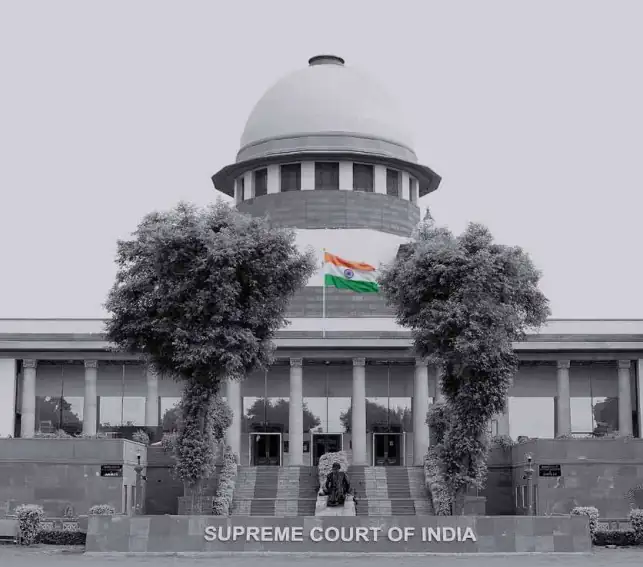
SUPREME COURT OF INDIA
[2025] 9 S.C.R. 640: 2025 INSC 1102
Geeta @ Reeta Mishra v. Ajay Kumar Mishra
(Civil Appeal No(s). 11787-11792 of 2025)
Hindu Marriage Act, 1955 – s.13(1)(ia)
12 September 2025
[Vikram Nath and Sandeep Mehta, JJ.]
Judgment
Vikram Nath, J.
1.Leave granted.
2.The present appeals arise from the judgment and order dated 18th December 2023 passed by the High Court of Delhi in MAT.APP.(F.C.) No.20 of 2020, whereby the High Court affirmed the decree of divorce granted by the Family Court vide order dated 20th September 2019.
3.The relevant facts, in brief, are as follows:
3.1.The parties were married on 6th May 1996 and have two children from the marriage: a daughter born in 1997 and a son born in 1999.
3.2.In March 2009, the respondent-husband filed a divorce petition being HMA No.135/2009 under Section 13(1)(ia) of the Hindu Marriage Act, 1955, on the ground of cruelty. The husband alleged various instances of mental cruelty by the wife, whereas the wife contended that she herself had been subjected to mental and physical cruelty.
3.3.The appellant-wife thereafter filed a complaint under Section 12 of the Protection of Women from Domestic Violence Act, 2005 against the respondent-husband and his family members.
3.4.In the DV Act proceedings, the Mahila Court directed the husband to pay maintenance of Rs.6,300/- per month, later enhanced to Rs.7,500/- per month.
3.5.In 2013, the respondent-husband moved an application in the DV Act proceedings seeking DNA testing of both children, claiming they were not his. Eventually, the main complaint under the DV Act was dismissed. On appeal, the appellate Court, by order dated 31st July 2019, held the respondent-husband guilty of domestic violence and directed him to pay Rs.2,00,000/- to the appellant-wife. This was enhanced to Rs.7,00,000/- by the High Court on 9th November 2022 in a revision filed by the appellant-wife. The Special Leave Petition filed by the respondent-husband challenging the said order was dismissed by this Court on 27th March 2023.
3.6.Meanwhile, the Family Court, vide order dated 20th September 2019 in HMA No.299 of 2019, granted divorce on the ground of cruelty. The appellant-wife challenged this before the High Court of Delhi in MAT.APP.(F.C.) No.20 of 2020.
3.7.The High Court, by the impugned judgment, affirmed the decree of divorce. It observed that the parties had been in constant acrimony since the inception of their marriage, leading the wife to make repeated complaints to the police. The High Court held that lodging false complaints amounted to cruelty. It also noted that the parties have lived separately since around 2009, with no attempt at reconciliation.
3.8.Aggrieved, the appellant-wife has preferred these appeals.
4.We have heard learned counsel for the appellant and the respondent appearing in person.
5.Before this Court, the appellant-wife has confined her claim to seeking an amount of Rs.10,00,000/- (Rupees Ten Lakhs only) towards the marriage expenses of their daughter.
6.The appellant-wife submits that the respondent-husband earns from running an aquarium shop, rental income from his properties, and contributions from his father. The respondent denies these claims and states that he has no earnings whatsoever.
7.It is evident that the marital relationship between the parties has ceased to exist in substance. Even an attempt at mediation before us proved unsuccessful. Since the appeals are pressed only to the limited extent of payment of a certain amount, and in view of the long separation and irretrievable breakdown of the marriage, we find no reason to interfere with the decree of divorce granted by the Family Court and affirmed by the High Court.
8.As regards the issue of contribution for the daughter’s marriage, the parties have taken conflicting stands on the respondent’s income. Nevertheless, on our consideration of the record and submissions, we are satisfied that the respondent is capable of making provision for his daughter’s marriage.
9.It is clear that the litigation between the parties has been prolonged and acrimonious. Yet, the appellant-wife has been reasonable in limiting her claim before us. She has raised and supported both children largely on her own. It is a father’s duty to provide for his children, and meeting the marriage expenses of his daughter is a modest obligation. We are of the considered view that the respondent can and should contribute Rs.10,00,000/- (Rupees Ten Lakhs only) for this purpose as meeting the reasonable expenses of his daughter’s marriage is a natural extension of his duty as a parent, irrespective of differences with the spouse.
10.Accordingly, the respondent-husband is directed to pay an amount of Rs.10,00,000/- (Rupees Ten Lakhs only) to the appellant-wife towards the marriage expenses of their daughter on or before 15th October 2025. In case of default, the Registry shall revive these appeals for further consideration and appropriate orders.
11.The appellant-wife shall provide her bank account details to the respondent-husband to facilitate payment.
12.The decree of divorce granted by the Trial Court and affirmed by the High Court stands affirmed subject to the direction contained in paragraph 10 above.
13.In view of the above directions, the appeals stand disposed of.
14.Pending applications, if any, also stand disposed of.
Result of the case: Appeals disposed of.