Human Rights and the United States
Governing the American Government
Trump’s 2026 United Nations Speech: America, Iran, Gaza, Ukraine and Global Security
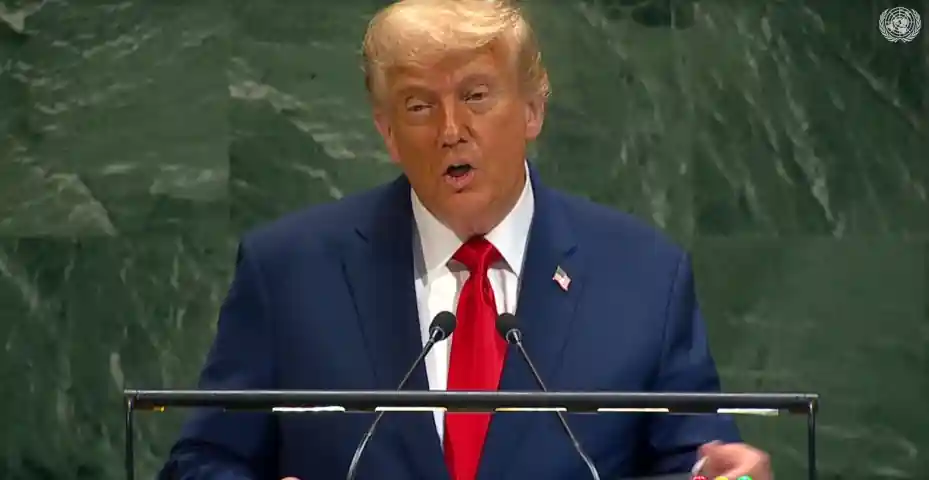
Donald J. Trump, President of the United States of America, delivered the United States national address at the General Debate of the 81st Session of the United Nations General Assembly in New York City on 22 September 2026. The address was delivered before the representatives of the 193 Member States of the United Nations during the opening day of the high-level General Debate.
The speech opened with the 250th anniversary of American independence, linking the year 2026 with the founding era of the United States in 1776. Trump described the contemporary United States in terms of economic strength, military power, technological leadership, energy production, employment, investment and national sovereignty. He stated that more than one million private-sector jobs had been created since his return to office, referred to historically low poverty levels and increased household incomes, and identified deregulation, taxation and investment as principal components of his domestic programme. He also referred to record U.S. stock-market performance and claimed commitments of approximately $21 trillion in new investment.
I have a big decision to make – will a deal be made with Iran that lets them rebuild and create a far greater country than it ever was before …. or do I annihilate the Islamic Republic and do it quickly, never giving them a chance to kill and destroy people and countries again….
A major domestic subject was the United States–Mexico border. Trump stated that his administration had transformed border security and claimed that, during the preceding sixteen months, no illegal immigrants had been admitted to the United States. The speech connected immigration enforcement with the reduction of violent crime and cited Memphis, Tennessee; New Orleans, Louisiana; and Washington, D.C. as examples of cities where crime had declined. He stated that the murder rate had reached its lowest level in 125 years and described Washington, D.C., as having experienced an 87 per cent reduction in crime since January 2025.
The address placed military power at the centre of American foreign policy. Trump stated that the United States had invested more in its armed forces during the preceding twelve months than ever before and projected $1.5 trillion in military expenditure during his term. He also discussed the expansion of American munitions production, referring to 18 major ammunition and weapons-production plants under construction and to the enlargement of national stockpiles.
In Greenland, the United States will “immediately begin the process of developing a large military presence” in appropriate locations, including the construction of “two very major military bases”.
The most extensive foreign-policy section concerned the Islamic Republic of Iran. Trump identified the prevention of an Iranian nuclear weapon as a principal American security objective. He referred to negotiations undertaken after January 2025 and subsequently to Operation Midnight Hammer, which he stated had destroyed Iran’s nuclear programme. He later described Operation Epic Fury, claiming the destruction of Iranian naval, air, radar, air-defence, missile and drone capabilities. The speech further addressed the Strait of Hormuz, commercial shipping, Iranian missile development, terrorism and international energy supplies. (See also: Non-Proliferation of Nuclear Weapons)
Trump called upon other governments to support the economic isolation of Iran until Iran ended attacks on commercial shipping, abandoned its nuclear ambitions and ceased support for terrorist organisations. He referred to American naval operations protecting the movement of oil through the Strait of Hormuz and presented the future of Iran as dependent upon either a negotiated settlement or continued American pressure.
The Gaza conflict formed another principal section of the address. Trump stated that the war had ended following diplomatic initiatives undertaken around the time of the previous General Assembly meeting. He referred to the return of all remaining hostages, both living and dead, and to a 20-point Gaza peace plan endorsed by the United Nations Security Council. He also announced the establishment of a Board of Peace, with participation by nearly 30 countries, and referred to financial, military, police and training assistance from states including Indonesia, Morocco, Albania, Kosovo, Kazakhstan, Egypt and Jordan for the reconstruction and stabilization of Gaza.
The President subsequently listed several international conflicts in which he stated that the United States had participated in negotiations or settlements. These included Cambodia–Thailand, Kosovo–Serbia, Democratic Republic of the Congo–Rwanda, Pakistan–India, Armenia–Azerbaijan and Gaza. The speech attributed the settlements to direct relations with national leaders, diplomatic engagement, trade policy and the use or threat of tariffs. The continuing Russia–Ukraine war was also discussed, with Trump stating that the United States was working with the governments of Russia and Ukraine towards an agreement.
The address then turned to Venezuela and the Western Hemisphere. Trump stated that United States forces had conducted a military operation in Caracas, captured Nicolás Maduro, and subsequently contributed to the release of Venezuelan political prisoners. He referred to a claimed $65 billion oil agreement involving Venezuela and described American policy as a renewed assertion of U.S. strategic power throughout the Western Hemisphere. The speech identified drug cartels, illegal migration and hostile foreign influence as principal regional security concerns.
The President described Mexican drug cartels as foreign terrorist organizations and compared their activities with those of ISIS. He referred to American military strikes against cartel drug boats and to the destruction of cartel trafficking networks. Cuba was described as a communist state under increasing American pressure, while negotiations involving Secretary of State Marco Rubio were mentioned. Trump stated that the United States would not permit foreign adversaries to establish strategic positions close to American territory.
Greenland and the Arctic constituted another significant subject. Trump announced an agreement involving the United States, Denmark and Greenland, stating that it would provide the United States with permanent responsibility for security and enable the establishment of two major U.S. military bases. The stated strategic purpose was to strengthen the defence of North America and Europe and increase the American presence in the Arctic and North Atlantic. The speech connected this policy with the wider strengthening of NATO and referred to a proposed increase in allied defence expenditure from 2 per cent to 5 per cent.
Trump also addressed the United Nations system. He stated that the United States had reduced the UN budget by 15 per cent in 2026 and eliminated more than 4,000 positions. He opposed what he described as global taxation and criticized the International Criminal Court, arguing that it lacked jurisdiction over the United States. He further emphasized the principle of national sovereignty and rejected the development of supranational mechanisms that, in his view, could restrict American governmental authority.
A substantial technological section concerned artificial intelligence, which Trump proposed referring to as “superintelligence.” He described the technology as potentially more consequential than the Industrial Revolution or the Internet, argued that the United States was leading China and other states in the field, and opposed policies that would substantially restrict technological development. At the same time, he stated that the United States would monitor the technology through governmental and law-enforcement institutions.
The address concluded by returning to the American Revolution of 1776. Trump recalled George Washington’s reading of the Declaration of Independence to American troops in New York City, at a time when a British invasion force had assembled in New York Harbor. The historical episode was presented as a symbol of the relationship between liberty, national sovereignty, military strength and the defence of political principles. Addressing the representatives assembled in New York in September 2026, Trump concluded with an appeal for nations to pursue peace, prosperity, security and national strength, followed by the traditional closing invocation: “God bless the nations of the world, and God bless America.”
Read More
Text of Donald Trump UN Speech 2026
United States of America
His Excellency
Donald Trump
President
22 September 2026
Thank you very much, Mr. President.
Mr. Secretary-General, First Lady of the United States, distinguished delegates, ambassadors, and fellow leaders.
It’s my great honor to welcome the world to America as we celebrate 250 years of glorious freedom and independence.
Two and a half centuries after the cause of liberty found its home on this continent, I can report to you with pride that America is back And our country is stronger today than ever before.
Our economy is the envy of the world.
Our military is the most powerful on earth.
Our technology is second to none and we are leading in virtually everything.
Our energy is fueling the planet.
America is rising.
Our nation is growing.
Our power is expanding.
Our country is doing better than ever before, and our future is very, very bright.
Since I took office, we have created more than 1 million new private sector jobs, and more Americans are working today by far than ever before.
Last week, it was announced that the poverty rate has reached its lowest level in American history.
We lifted 1.5 million Americans out of poverty last year alone.
Another record: the African American and Hispanic American poverty rates are at all-time lows.
Real household incomes for Americans have soared to the highest level in history, 87,000 on average, surpassing the prior record that I set in my first term.
From day one, my administration has worked to remove every single unnecessary regulation and obstacle to doing business in America.
We passed the largest tax cuts in American history, and as a result, more money is being invested in the United States right now than has ever been invested in any nation, anywhere in the world.
U.S. stock markets have set all time records.
And that’s just in the last 12 months.
We’ve secured commitments for $21 trillion in new investments from all over the planet, compared to less than $1 trillion in four years in the previous administration.
Two years ago, our country was dead, and now we have the hottest country anywhere in the world.
Before I took office, we had the worst and most dangerous border on earth.
And now we have the most secure border in American history.
Nobody comes in unless they’re invited.
Unless they have permission.
In the past 16 months, zero illegal aliens have been admitted to the United States.
And that’s done by some very sophisticated people.
It’s not done by the Trump administration.
Zero.
As a result, last year we achieved the largest drop in violent crime ever recorded.
The murder rate has plummeted to its lowest level in 125 years.
Since the year 1900, I sent our crime busters into Memphis, Tennessee, and New Orleans, Louisiana, and crime in each place went down over 80% and will go down still further.
More importantly, when I arrived on January 20th of last year in Washington, D.C., it was riddled with crime.
And now crime is down 87% and we’re going for 100.
Tourism is, if you take a look and I guess a lot of you have been there.
Tourism is thriving.
Restaurants are bustling, and people are proud of our nation’s capital.
They’re proud like never before.
We’ve invested more money in the United States military in the past 12 months than ever before And this term, it will be $1.5 trillion.
We inherited a dark Age of America from the previous administration, and we turned it into the golden age of America.
The entire world is being lifted by the wealth, strength, spirit, and momentum of a newly energized and a very powerful United States of America.
And just as we moved quickly to address problems we inherited at home, we have acted with decisiveness and speed to reshape the world stage and solve problems that have plagued us for far too long.
Every leader in this room and your great leaders, many great leaders.
I know all of you very well, but they know that given only a short time to make this world better, safer, and more prosperous for our children, for the people on earth, we have to take advantage of it.
As president of the most extraordinary nation in history, I have no interest in leaving dangers to grow for another day.
I do not believe in letting problems fester.
They only become harder to solve.
So while others have talked, I have acted, while others have spoken of peace.
I have made peace while others have ignored threats.
I have confronted them while others have talked of courage.
America has shown it, while others have promised strength.
I have used it to make America the most powerful country in the world.
Working with many nations in this room, we are solving decades of intractable challenges, and we are settling years of unfinished business.
And we’re doing it well.
There is no better example of a danger that was allowed to gather strength at the world’s peril than the number one sponsor of terror, the Islamic Republic of Iran.
For 51 years, the fanatical Iranian regime has ruled by bloodshed and mass murder, spreading death and carnage and chaos across the entire Middle East and beyond.
They were the bully of the Middle East, but they are the bully no more.
From the first day I entered the political arena, I’ve been unwavering.
I will never allow Iran to have a nuclear weapon.
Upon taking office last year, I immediately opened negotiations with Iran and offered them full economic cooperation in exchange for ending their nuclear program and support for terror.
But they refused.
They absolutely refused.
That was a big mistake Then in Operation Midnight Hammer, the U.S. military obliterated their nuclear program beneath mountains of rubble.
And again, I urged Iran to make a deal.
And again they refused.
The regime continued building a vast missile and drone stockpile that threatened the security of every American service member in the region and everyone else in the region They also made a missile that was capable of hitting Europe, and they were very proud of it.
I hope the Europeans realize that Iran’s goal was to complete their mad dash to a nuclear bomb from behind this conventional ballistic missile shield.
If they had succeeded, that wicked regime would have been free to spread terror and death forever, knowing that any attempt to stop them would face an arsenal of nuclear annihilation.
In America, we just marked the 25th anniversary of the worst terror attack in history, September 11th, which killed 3000 people just a few miles from here.
It was an unbelievably terrible time.
In two weeks, we will mark the third anniversary of the October 7th attack in Israel, where terrorists funded by Iran tortured, mutilated and killed 1200 very innocent civilians, including dozens of Americans and many babies, babies, little tiny, beautiful babies.
Iran’s supreme leader celebrated that massacre and called it a service to humanity. The same regime slaughtered over 72,000 of its citizens this year.
Recently, 10,000 were killed for protesting.
Just imagine such a vile regime wherever empowered to carry out large-scale terror attacks from behind a nuclear shield.
This was the reality we had to confront, a reality that far too many preferred to ignore.
They all ignored it.
Many presidents and many others just wanted to ignore it.
They were unwilling to do anything about it, but they knew the problem.
After giving Iran every chance for a deal, I took action to ensure that neither the United States nor any nation would ever have to face such a nightmare, such a catastrophic problem.
As a result of Operation Epic Fury, all 159 ships of their navy are now lying at the bottom of the sea.
Likewise, their air force is gone.
Their radar is gone, their anti-aircraft equipment is gone.
Their missiles and drone manufacturing capacity is almost gone.
Their economy is gone.
The only thing that isn’t gone is inflation, which is destroying their country and is now well over 300%.
Yet even after we agreed to a cease fire for nuclear discussions, Iran promptly violated it with brazen acts of terrorism against civilian ships from other countries.
I want to thank the U.N. Security Council for voting overwhelmingly to pass a resolution condemning Iran’s despicable terrorist attacks on commercial shipping.
Thank you very much.
That resolution, I’m pleased to say, received more co-sponsors from U.N. member nations than any Security Council resolution in history.
That’s something.
Now, we must be equally united in maintaining pressure.
The United States Navy has recently escorted more than 1 billion barrels of oil out of the Strait of Hormuz, and more oil is flowing than at any point since the start of the war.
We’re taking 22, 25, 30, 32 and 37 ships out, respectively, every single day, every single night.
But I have a big decision to make.
Will a deal be made with Iran that lets them rebuild and create a far greater country than it ever was before?
Maybe one of the greatest in the Middle East, or even the world.
Or do I annihilate the Islamic Republic and do it quickly, never giving them a chance to kill and destroy people and countries again?
Do I drive them into hell with no chance of survival and no hope of future greatness or generations?
But I believe we’ll make a deal right after the election, because it doesn’t make sense for them not to.
They’re waiting to see how I do in the midterm election.
What they don’t realize is that I’m not running.
I did that already and won in a landslide.
We won in a giant landslide, and I’ll be here for two and a half years.
The Republican Party is running and I’ll be helping them, but I am not running.
I gave absolutely no credence and will not give credence to the election.
When it comes to Iran, it doesn’t even enter my mind.
The only thing that does is that Iran will never have a nuclear weapon.
The cowards and traitors.
Thank you.
Thank you.
The cowards and traitors would love to say the United States is low on munitions, but that’s not true.
We have more munitions than we could ever possibly even think of using, and we’re building them at levels that we have never done before.
We are adding to our stockpiles faster than we have ever been able to do before.
Top of the line stuff.
In addition, in the very near future, massive munition plants will be opening.
There are 18 of them being built by the greatest defense companies in the world right now 18 under construction.
Some of them very quickly will be completed.
They’re almost there.
And that rapid construction will be leading to very rapid deployment of missiles of every type and ammunition of every type, and will be able to supply our allies at a much faster rate than we’re doing right now.
I call on all nations to join us in enforcing the complete economic isolation of Iran.
Until they stop their attacks on commercial shipping, relinquish their nuclear ambitions, and cease their support of terror.
The terrorist regime is behaving badly, not because they are strong and confident, but because they are weak and desperate.
If we stand united, we will soon see a world free of the last 51 year menace of Iranian terror.
And oil prices will come plummeting down even lower than they were at the start of the conflict.
And they were very low in the United States.
They were really low.
With courage and resolve.
Anything is possible.
Big changes can happen and happen fast.
One year ago, when I addressed the great leaders in this hall, the war in Gaza was still raging brutally.
The hostages were still deep in Hamas tunnels and there was no end in sight.
It was never going to be resolved.
But here on the sidelines of the General Assembly, we took the first steps.
That changed everything.
A few weeks later, we ended the war in Gaza, saving untold thousands of lives.
We also brought home all remaining hostages, both living and dead.
Every single one of them.
Thank you.
Thank you.
Everyone thought it was a miracle that we were able to do so.
And people celebrated in the streets.
I want to express my gratitude to the United Nations Security Council for their unanimous endorsement of our 20 point Gaza peace plan, and for officially approving the Board of Peace.
Going to be a very significant group of people.
Nearly 30 countries have joined the board, which I am honored to chair, and we’re thankful to many of those member nations for contributing billions and billions of dollars to relief.
And it goes right to the rebuilding and relief of Morocco, Bahrain.
These are the countries that gave Qatar, Kuwait, Kazakhstan, Saudi Arabia, Turkey, Uzbekistan, and many more.
That money goes right to the source, right where they need it, and they desperately need it.
And those countries are very have been very generous, and others also are stepping up at numbers that nobody would even believe because they want to see people live.
They want to see the humanitarian thing happen properly.
They’ve been fantastic.
I also want to thank those who have committed troops police and training to help stabilize Gaza, including Indonesia, Morocco, Albania, Kosovo, Kazakhstan, Egypt, Jordan and more.
Since I took office, it has been my great honor to settle eight wars and in so doing, become friendly with the leaders of many of those countries.
It was a great honor to do it.
Numerous of these wars have gone on for many years and even decades.
The reason I was able to make these settlements was the use of my relationships.
Very special relationships to this day, very, very special trade, the use of tariffs and the threat of tariffs and various other reasons depending on the country.
Among them, terms of settlement: Cambodia and Thailand, Kosovo and Serbia, the Democratic Republic of the Congo and Rwanda, Pakistan and India, Armenia and Azerbaijan.
And of course, the war in Gaza, which, as I stated previously, includes the return of all hostages, both living and dead.
Almost every one of these countries wrote me a letter of thank you.
The Prime Minister of Pakistan, a terrific man, said that Donald Trump was responsible for saving 30 million lives, and probably many more than that.
The president of Azerbaijan said President Trump had six months, did a miracle.
It was an absolute miracle that nobody thought could be done.
The prime Minister of Armenia said this breakthrough would simply not have been possible without President Trump’s personal engagement and his resolute commitment to peace.
A president of Cambodia stated President Trump’s extraordinary statesmanship, marked by his commitment to resolving conflicts and preventing catastrophic wars through visionary, innovative diplomacy was most recently demonstrated in his decisive role in brokering an immediate and unconditional cease fire and peace.
This timely intervention which averted a potentially devastating conflict, was vital in preventing a great loss of lives and paved the way towards the restoration of peace.
The president of Rwanda said when President Trump saw the opportunity to contribute to peace, he immediately took it.
This conflict has lasted for 32 years.
Millions and millions of people have died.
We got it settled.
We’ve seen countless mediations and efforts, but none has succeeded in resolving the underlying issues.
President Donald Trump issued a new and effective statement that really has brought great peace and space through really a breakthrough that we thought was impossible.
We’re working very closely with the leaders of Russia and Ukraine, and we will get that one done.
It’s going to happen, I think, more quickly than people understand.
They’ve they’ve had it 25000 young people, mostly soldiers a month, are dying 25000 a month.
And I look at those battlefield pictures and I, I really don’t want to see them anymore.
It’s so horrible to see 25,000 a month.
Both sides.
In addition, the United States and Iran will definitely get it done.
We will get it done one way or the other.
It’s going to be done.
It’s going to be done fast.
A lot has happened since we last gathered here one year ago in January.
At my direction, the United States military conducted a massive military operation penetrating deep into the Venezuelan capital.
Caracas descended on a heavily defended and fortified military base, one that was supposed to be flawless against attack, and arrested the outlaw dictator, real criminal Nicolas Maduro.
Since that day, hundreds of Venezuelan political prisoners have been freed.
They’ve let them out of jails, and we’re working closely with the leaders of Venezuela to forge a much better future for the Venezuelan people.
Last month, we signed the largest oil deal in history, covering 65 billion barrels of oil, which will benefit both Venezuela and the United States enormously and help drive down the cost of energy all over the world.
And that is starting to perk right now.
It’s coming out.
The biggest oil companies in the world are going in, and the numbers are absolutely incredible.
When you add the United States and Venezuela together, we have more than 60% of the oil in the world.
So it’s perhaps the biggest deal.
It was a war, but it’s perhaps the biggest deal ever made.
To the victor belong the spoils.
You’ve all heard that our actions in Venezuela are proof that the United States will no longer permit threats to America to gain a foothold anywhere in the Western Hemisphere.
And if necessary, we will use our unmatched military might to secure the vital national interests of the United States.
As you know, Venezuela had the finest equipment in the world from other countries.
And guess what It didn’t work.
Didn’t even come close to working.
For decades, other administrations allowed much of this region to be dominated by vicious gangs and bloodthirsty drug cartels, destabilized by uncontrolled migration and infiltrated by hostile foreign adversaries, foreign sick, demented adversaries.
But not anymore.
We are reasserting American power, including American military power, where necessary in our region and around the world, to create a safer future for all of us.
It’s happening, and it’s happening quickly.
Upon taking office, I designated the drug cartels as foreign terrorist organizations and unleashed the United States Armed Forces to eliminate them.
The cartels are the ISIS of the Western Hemisphere, not good people, their enemies at war with civilization using murder, rape, torture, and extortion as instruments of terror.
Like ISIS.
They should be killed, exiled, or detained as enemy combatants without the possibility of release, which is what we’re doing.
To that end, the United States has carried out dozens of strikes on cartel drug boats, destroying 97% of the drugs coming into the ocean and sea.
You’ve seen it.
They disappear very quickly, and we’re down 90%.
They’re down 97%.
Nobody thought that was possible.
It was a big source of delivery.
And three months ago, we terminated the leader of the Venezuelan gang, Tren de Aragua Mexico is the epicenter of the cartel violence.
Unfortunately, it’s unacceptable for the United States to share a 2000 mile border with a territory controlled by cartels, so Mexico must reclaim control of its soil from the enemies of humanity.
My administration is also seeking a fundamental change in the situation in Cuba where the communist regime is under great pressure, the biggest pressure they’ve ever been under.
It’s an absolutely failed state.
It’s failing like never before, and it will fall.
Marco Rubio is handling a negotiation.
He’s deep into negotiations with Cuba.
Let’s see what happens.
We’ll not allow a haven for foreign adversaries to threaten America on our own doorstep.
It’s right at our doorstep.
The Cuban regime has also spent decades coordinating with the left wing radicals and communist networks here in the United States.
As our State Department has detailed, they’ve cultivated ties to subversive and radical groups such as the Communist Party USA, Antifa, and the Democratic Socialists of America.
Communism will never be coming to America, but freedom will be coming to Cuba, and safety and security will be coming to Mexico.
I’m very proud to tell you we have a very good relationship with the Mexican government.
We’ve made great strides, very great strides with Mexico.
They don’t want the cartels either.
And when that day comes, this entire region will be a better, safer and more beautiful place in which to live and thrive.
As I announced just days ago, the United States has also reached an unprecedented agreement regarding the northern frontier of North America, the large and strategically vital piece of land known as Greenland.
This agreement, made with the Kingdom of Denmark, an incredible, beautiful country, and the Greenland people itself gives the United States permanent control over security and all other needs.
On that territory, we will have the complete ability to do what is necessary to defend the American continent, and also Europe and other places.
No U.S. adversary will ever be permitted to establish a military presence in Greenland anymore, or make sensitive investments there.
Without our express written approval, we will immediately begin the process of developing a large military presence in the appropriate locations.
We will be building two very major military bases.
This agreement will be signed later today, and I look forward to working with the wonderful people of Denmark and Greenland.
It’s been a great experience, amazing experience, and we’ve really formed a bond in doing it.
By expanding America’s footprint in the Arctic and North Atlantic.
This deal also protects Europe in addition to America and greatly protects them.
It also very much enhances NATO with who has a great leader in.
Mark, I know you’re in the audience and you are indeed a great leader, Mark Rutte, which is now growing stronger than ever before.
NATO is doing things that nobody thought they would be able to do, including raising their number to 5% from 2% number.
That’s a protection that’s going to be much greater protection for them.
We continue to seek an end.
The disastrous war between Russia and Ukraine, which is killing, as I said, thousands and thousands of people every month Last week, in honor of Senator Lindsey Graham, I signed a powerful new law passed by Congress providing me with enormous new tariff authorities And if necessary, I will have to use them.
It’s time to stop the killing.
I also want to recognize the extraordinary work of our great First Lady, who has secured the safe return of many displaced Ukrainian and Russian children back home to their families.
So many.
Thank you very much, First Lady.
Thank you.
Very much.
Where is our First lady?
Where is she?
She’s around here someplace.
Can you imagine?
I can’t see the First lady.
Thank you very much, first lady.
Great job.
She worked so hard on it this year.
She also became the only first lady in history to preside over a meeting of the U.N. Security Council.
And she did it very well.
And today, she’s hosting a gathering of fostering the Future Together, which has nearly 60 members to help improve the lives of young people all over the world.
So, Melania, thank you very much.
Great job.
Great job you’re doing.
LED by Ambassador Michael Waltz here at the United Nations, we have also worked with many countries in this room to implement the most sweeping U.N. reforms in history.
We cut the U.N. budget for the first time ever, slashing it by 15% in 2026 and eliminating more than 4000 positions from the U.N. bureaucracy.
The United Nations has great, great potential.
I’ve said that for many years, but it must stop imposing the far left agenda of globalist bureaucrats who nobody ever elected.
Last year, my administration was forced to intervene to stop an obscure U.N. body, the International Maritime Organization, from secretly establishing a first ever global carbon tax, very expensive tax to raise international shipping costs by 10 to 20%.
And maybe more than that, there is no global government.
And while I’m president, there will be no global taxes.
The United States is equally opposed to the out of control.
Thank you.
Thank you very much.
The United States is equally opposed to the out of control institution known as the International Criminal Court.
We will never allow U.S. service members or anyone else to be investigated or given show trials by an anti-American tribunal with no jurisdiction over us or an evil group of people.
I call on all nations that are members of the ICC to officially resign from this rogue institution immediately.
It is equally unacceptable that with all the genuine atrocities in the world the UN’s top human rights officials spend their time criticizing the United States for protecting our children from transgender utilization and transgender insanity, and enforcing our immigration laws.
What they do is unbelievable what they do.
It’s transgender mutilation of our children, the craven hypocrites of Human Rights Council have little to say about the persecution of Christians.
Christians.
I mean, Christians are being persecuted all over the world.
It’s not even believable.
I never thought I’d say it, but it’s been happening for a long time.
So this is persecution of Christians or the crimes of the world’s most repressive regimes, yet they want America to open up our borders to gangs and criminals from world’s most dangerous places.
They want the worst people to come in from the worst places on earth, and we don’t do it anymore.
We did do it, but we don’t do that anymore.
It is deeply ironic that the United Nations has an entire institution, the U.
Nesco group of people and countries devoted to protecting cultural heritage.
Yet with their ceaseless promotion of mass migration, these globalists are actively destroying the greatest cultures and most extraordinary heritage in all of history.
There is no human right to illegal immigration, but there is a right to remain a sovereign nation, and we want to remain a sovereign nation.
And so should you.
The United States also totally rejects any attempt to construct a globalist scheme to control for the artificial intelligence being spoken of so much now here and after officially called superintelligence, changing the name, and that the use of the word artificial makes intelligence fake, it makes it sound fake.
And it is not fake.
It’s actually amazing But we have to be careful.
In fact, it is exactly the opposite of what it purports.
From this point forward, all of United States documents and hopefully the world will be changed to use the much more accurate term super as opposed to artificial.
So it’s super intelligence.
In other words, welcome to the new world of superintelligence dash SISI.
Let’s see if that goes.
It sounds much better.
It is much better, and it’s much more accurate.
Let’s see if I have any power.
Maybe I do and maybe I don’t.
We’re going to find out pretty soon.
Superintelligence.
Every major new technology brings challenges, and superintelligence is no exception.
Yet the very same people who said we’ll all be dead in 12 years because of global warming, a name since reborn to climate change because the planet was cooling, not warming, and nobody was dead.
These are the same people that are now saying that AI is going to kill us all, that robots are going to attack us, and that everything is going to be a total disaster.
Same group of people.
This is the group that came up with the Russia, Russia, Russia hoax, the Ukraine, Ukraine, Ukraine hoax, climate change, open borders, whoever wins AI, you have to remember this.
And now I say, whoever wins s I, whoever wins, superintelligence wins.
That’s the group that wins.
And we’re leading now over China by a lot and everyone else.
And we’re going to keep it that way.
We’re going to keep it very, very straight and very strong.
I’m not going to stifle growth of something that will be bigger than the industrial revolution, many say bigger than the Industrial Revolution or the internet itself.
And we will be very careful.
And that’s why we have a Department of Justice that we’ve already used it having to do with this very subject and used it very powerfully.
Everything worked out very well and very quickly.
And other law enforcement bodies that will reign things in if we have to do that.
But we will only encourage superintelligence.
We’re going to encourage it, not rein it in We’re going to watch it closely through the Department of Justice.
The United States leads the world in superintelligence and will continue to do so safely and responsibly.
Americans have never been a nation that retreats from a frontier or shrinks from a challenge, no matter how great or how daunting that challenge may be.
Freedom was not a gift that Americans won easily after 250 years, and it is not one that we will ever, ever, ever surrender.
It was right here in New York City that George Washington ordered the Declaration of Independence read to his troops in 1776 as they listen to those immortal words for the first time, the patriots could see across the waters of New York Harbor to a British invasion fleet more than 100 ships strong, which had just arrived to crush the cause of liberty.
Thousands of soldiers getting off those ships.
Nobody stood a chance.
But we won.
And we won decisively.
Those first Americans knew that it is not enough merely to believe in great principles.
We must also have the will and the courage and the strength to defend them As we gather in this same city two and a half centuries later, to discuss the great events of our time.
That is the challenge for every nation in this room.
If we go forward, strong and united against the enemies of all humanity, if we reject the voices who would have us give in to fear and doubt, if we refuse to shrink from our duties to our people, then together, through bold action, we will make this world far safer and a far better place.
We will leave our nations far stronger.
We will grow our economies far bigger.
And we will not just speak of peace, prosperity, and justice.
Here at the United Nations.
We will stand for them all over the world.
Together, we will build a future for our people that is brighter, more hopeful, and more magnificent than ever before.
Thank you.
God bless the nations of the world and God bless America.
Thank you very much, everybody.
Thank you.
On behalf of the Assembly, I wish to thank the president of the United States.
Node: Donald J. Trump’s 81st UN General Assembly Address — 22 September 2026
Core Cluster: American Power and Sovereignty
United States of America
Links the address to the larger concept of American national power, including economic capacity, military strength, technological leadership, energy production, territorial security and diplomatic influence.
American Independence — 1776
Connects the 2026 250th anniversary with the Revolutionary foundation of the United States and the speech’s closing reference to George Washington, New York Harbor and the Declaration of Independence.
National Sovereignty
Connects American sovereignty with border control, military capability, opposition to supranational taxation, the United Nations, the International Criminal Court and the principle of independent national decision-making.
American Exceptionalism
Connects the speech’s historical presentation of the United States with the idea of America as a distinctive political and civilizational power whose historical mission is associated with liberty, strength and national independence.
Core Cluster: International Security
Iran
Central foreign-policy node connecting nuclear weapons, terrorism, missiles, drones, military operations, economic sanctions, commercial shipping and the Strait of Hormuz.
Iranian Nuclear Programme
Connects Iran → Nuclear Weapons → Non-Proliferation → U.S. Military Policy → Middle Eastern Security.
Operation Midnight Hammer
Connects Iran → Nuclear Infrastructure → U.S. Air Power → Strategic Deterrence → Nuclear Non-Proliferation.
Operation Epic Fury
Connects Iran → Naval Power → Air Power → Missile Systems → Drone Production → Military Deterrence.
Strait of Hormuz
Connects Iran → Oil → Maritime Security → Global Energy Markets → U.S. Navy → International Commerce.
Economic Isolation
Connects Iran → Sanctions → International Cooperation → Commercial Shipping → Energy Security.
Core Cluster: Middle East
Gaza War
Connects Contemporary World History → Israel → Hamas → Hostages → Gaza → Ceasefire → Reconstruction → International Stabilization.
Gaza Peace Plan
Connects Gaza → United Nations Security Council → Board of Peace → Reconstruction → Arab and Muslim States → International Security.
Hostage Crisis
Connects Hamas → Gaza War → Negotiation → Diplomatic Settlement → Humanitarian Policy.
Board of Peace
Connects Gaza → International Administration → Reconstruction → Financial Contributions → Security Forces.
Core Cluster: War Settlement and Diplomacy
Presidential Diplomacy
Connects United States Presidency → Personal Relationships → Negotiation → Trade → Tariffs → Conflict Settlement.
Conflict Settlement
Links the speech’s listed cases:
Cambodia–Thailand → Kosovo–Serbia → Democratic Republic of the Congo–Rwanda → Pakistan–India → Armenia–Azerbaijan → Gaza
This cluster connects directly to Diplomacy, Ceasefire, Mediation, International Security and Peace Negotiation.
Russia–Ukraine War
Connects Russia → Ukraine → United States → Diplomacy → Military Conflict → Peace Negotiation → European Security.
Core Cluster: Western Hemisphere
Venezuela
Connects United States → Caracas → Nicolás Maduro → Military Intervention → Political Prisoners → Oil → Energy Security.
Venezuela Oil Agreement
Connects Venezuela → Petroleum Reserves → United States Energy Policy → Global Oil Supply → Energy Prices.
Mexico
Connects United States–Mexico Border → Drug Cartels → Immigration → Homeland Security → North American Security.
Drug Cartels
Connects Mexico → United States → Foreign Terrorist Organizations → Military Operations → Maritime Interdiction → Drug Trafficking.
Cuba
Connects Cuba → Communist Government → United States Foreign Policy → Caribbean Security → Negotiation → Regional Strategic Competition.
Core Cluster: Arctic and North Atlantic
Greenland
Connects United States → Denmark → Greenland → Arctic Security → North Atlantic → Military Bases → NATO → European Defence.
Arctic Geopolitics
Links Greenland → Arctic Territory → Strategic Geography → Military Infrastructure → North Atlantic Security → Great-Power Competition.
NATO
Connects United States → Europe → Collective Defence → Defence Spending → Arctic Security → Russia–Ukraine War.
Core Cluster: United Nations System
United Nations
The institutional node connecting UN General Assembly → Security Council → International Maritime Organization → Human Rights Council → UNESCO → International Criminal Court.
UN General Assembly
Connects the address to the 81st Session of the United Nations General Assembly, New York City, 22 September 2026, and to the diplomatic practice of national leaders presenting their governments’ positions before the international community.
UN Security Council
Connects Iran → Gaza → International Peace and Security → Resolutions → Multilateral Diplomacy.
International Criminal Court
Connects International Law → Sovereignty → Jurisdiction → United States Foreign Policy → International Institutions.
United Nations Reform
Connects UN Budget → Bureaucracy → Institutional Reform → Sovereignty → Multilateral Governance.
Core Cluster: Technology and Civilizational Power
Superintelligence
Connects Artificial Intelligence → Superintelligence → Technology → Economic Power → Military Power → National Competition → United States–China Competition.
Artificial Intelligence
Links Technology → Computing → Economic Transformation → Military Applications → Regulation → National Security.
United States–China Technology Competition
Connects Superintelligence → Strategic Technology → Economic Competition → National Security → Global Leadership.
Industrial Revolution
Connects historically to Superintelligence → Internet → Technological Transformation → Productivity → Civilizational Change.
Core Cluster: Economic Power
American Economy
Connects Employment → Investment → Taxation → Deregulation → Stock Markets → Household Income → National Power.
Energy Power
Connects United States → Venezuela → Iran → Strait of Hormuz → Oil → Global Energy Security.
Tariffs
Connects Trade Policy → Economic Diplomacy → Conflict Settlement → National Industry → Foreign Relations.
Core Cluster: Military Civilization
United States Armed Forces
Connects Military Expenditure → Munitions Production → Naval Power → Air Power → Missile Defence → Strategic Deterrence.
Military-Industrial Capacity
Connects Defence Companies → Ammunition Plants → Weapons Production → Stockpiles → War Readiness → National Security.
Maritime Power
Connects U.S. Navy → Strait of Hormuz → Commercial Shipping → Oil → Global Trade → Naval Deterrence.
Core Cluster: Historical Memory
American Revolution
Connects 1776 → Declaration of Independence → George Washington → New York → British Invasion → Liberty → National Sovereignty.
250th Anniversary of American Independence
Connects 1776 → 2026 → American Historical Memory → National Identity → Presidential Address → United Nations.
New York City
Connects American Revolution → George Washington → New York Harbor → United Nations Headquarters → 1776 → 2026.
Sarvarthapedia Knowledge-Web Structure
Primary Node
Donald Trump — 81st UNGA Address — 22 September 2026
First-Level Nodes
American Sovereignty ↔ American Power ↔ Military Power ↔ Economic Power ↔ Diplomacy ↔ International Security ↔ United Nations ↔ Technology ↔ Energy ↔ Historical Memory
Second-Level Connections
American Sovereignty → Border Security → Mexico → Drug Cartels → Western Hemisphere
American Power → Military Power → Iran → Gaza → Venezuela → Greenland
Economic Power → Investment → Taxation → Tariffs → Energy → Global Markets
Diplomacy → Iran → Gaza → Russia–Ukraine → Cambodia–Thailand → Kosovo–Serbia → Armenia–Azerbaijan
United Nations → General Assembly → Security Council → UN Reform → International Law
Technology → Superintelligence → Artificial Intelligence → United States–China Competition → National Security
Historical Memory → 1776 → George Washington → Declaration of Independence → 2026 → American Sovereignty
Cross-Reference Chain
1776 American Revolution → Liberty → Sovereignty → National Power → Military Capability → International Security → United States Foreign Policy → UNGA 2026
Strategic Geography Chain
United States → Mexico → Caribbean → Venezuela → Greenland → Arctic → North Atlantic → Europe → NATO
War and Peace Chain
Iran → Nuclear Programme → Military Deterrence → Strait of Hormuz → Energy Security
Gaza → Hostages → Ceasefire → Peace Plan → Reconstruction → International Stabilization
Russia–Ukraine → European Security → Diplomacy → Tariffs → Peace Negotiation
Civilizational Power Chain
Population → Territory → Economy → Energy → Technology → Military → Intelligence → Diplomacy → Sovereignty → Civilizational Power
Sarvarthapedia “See Also” Knowledge Web
See Also: American State Power
United States of America
↔ American Presidency
↔ American Sovereignty
↔ American Exceptionalism
↔ United States Armed Forces
↔ American Economy
↔ American Energy Policy
See Also: International Security
Iran
↔ Nuclear Non-Proliferation
↔ Strait of Hormuz
↔ Middle Eastern Security
↔ Gaza War
↔ Israel–Hamas Conflict
↔ International Terrorism
See Also: International Diplomacy
Presidential Diplomacy
↔ Peace Negotiation
↔ Ceasefire
↔ Conflict Settlement
↔ Tariff Diplomacy
↔ United Nations Diplomacy
See Also: International Institutions
United Nations General Assembly
↔ UN Security Council
↔ UN Reform
↔ International Criminal Court
↔ International Maritime Organization
↔ UNESCO
↔ International Law
See Also: Strategic Geography
Greenland
↔ Arctic Geopolitics
↔ North Atlantic
↔ NATO
↔ European Security
↔ United States Strategic Geography
See Also: Technology
Superintelligence
↔ Artificial Intelligence
↔ Technological Sovereignty
↔ United States–China Competition
↔ Military Technology
↔ Economic Transformation
See Also: Historical Continuity
American Revolution, 1776
↔ Declaration of Independence
↔ George Washington
↔ New York Harbor
↔ American Independence
↔ 250th Anniversary, 2026
↔ United States National Identity
Ultimate Conceptual Node
United States of America as a Sovereign Power System
Territory → Population → Sovereignty → Economy → Energy → Technology → Military → Intelligence → Diplomacy → International Institutions → Strategic Geography → Historical Memory
The 22 September 2026 UNGA Address can be cross-referenced with separate articles on American history, presidential power, military civilization, international law, geopolitical strategy, energy security, technological competition, diplomacy and the United Nations system.
GraphRAG Architecture for Sarvarthapedia
1. Core Architecture
The Sarvarthapedia GraphRAG is never designed merely as a document-search system. It should function as a knowledge-graph-driven encyclopaedic reasoning architecture, where every article, concept, person, place, event, institution, doctrine, date, and cross-reference becomes a connected node.
SARVARTHAPEDIA│├── Documents│ ├── Articles│ ├── Books│ ├── Speeches│ ├── Historical Records│ ├── Legal Texts│ ├── Sanskrit Texts│ └── External Sources│├── Extraction Layer│ ├── Entities│ ├── Concepts│ ├── Events│ ├── Dates│ ├── Places│ ├── Institutions│ ├── Claims│ └── Relationships│├── Knowledge Graph│ ├── Entity Nodes│ ├── Concept Nodes│ ├── Event Nodes│ ├── Temporal Nodes│ ├── Geographic Nodes│ └── Source Nodes│├── Vector Layer│ ├── Document Embeddings│ ├── Chunk Embeddings│ ├── Entity Embeddings│ └── Concept Embeddings│├── Retrieval Layer│ ├── Vector Search│ ├── Graph Traversal│ ├── Community Retrieval│ ├── Temporal Retrieval│ └── Hybrid Retrieval│└── Generation Layer ├── Context Assembly ├── Evidence Ranking ├── Relationship Reasoning ├── Answer Generation └── Citation / Provenance
2. Fundamental Node Model
Every significant Sarvarthapedia object should become a node.
Node│├── id├── canonical_name├── node_type├── aliases├── description├── date_start├── date_end├── geographic_scope├── civilization├── domain├── source_documents├── confidence└── embedding
The node_type should distinguish between fundamentally different kinds of knowledge:
PERSONPLACEEVENTINSTITUTIONTEXTBOOKLAWCONCEPTDOCTRINEIDEAWARTREATYSPEECHTECHNOLOGYOFFICEDYNASTYCIVILIZATIONRELIGIONLANGUAGETERMCLAIMSOURCE
3. Relationship Layer
The real strength of GraphRAG lies not in the nodes but in the edges.
PERSON ── held_office ──> OFFICEPERSON ── participated_in ──> EVENTEVENT ── occurred_at ──> PLACEEVENT ── occurred_on ──> DATEPERSON ── associated_with ──> INSTITUTIONTEXT ── discusses ──> CONCEPTCONCEPT ── related_to ──> CONCEPTCONCEPT ── developed_into ──> CONCEPTLAW ── modified ──> LAWWAR ── involved ──> STATESTATE ── member_of ──> ORGANIZATIONSPEECH ── contains_claim ──> CLAIMCLAIM ── supported_by ──> SOURCEARTICLE ── see_also ──> ARTICLE
4. The Sarvarthapedia “See Also” Edge
The existing See Also knowledge web should become a first-class GraphRAG relationship rather than ordinary hyperlinks.
Donald Trump │ ├── president_of ──> United States │ ├── delivered ──> UNGA Address 2026 │ └── associated_with ──> American Sovereignty │ ├── related_to ──> National Security │ ├── related_to ──> Border Security │ ├── related_to ──> Military Power │ └── related_to ──> Foreign Policy
Thus:
See Also = Knowledge Graph Edge
This is important because a reader’s movement through Sarvarthapedia becomes a form of graph traversal.
5. Document Ingestion
SOURCE DOCUMENT ↓Document Parser ↓Structural Segmentation ↓Paragraph / Section / Sentence ↓Entity Extraction ↓Concept Extraction ↓Relationship Extraction ↓Temporal Extraction ↓Geographic Extraction ↓Claim Extraction ↓Knowledge Graph
For example, the uploaded UNGA speech contains:
Donald Trump → delivered → UNGA Address
UNGA Address → date → 22 September 2026
UNGA Address → place → New York City
UNGA Address → institution → United Nations
UNGA Address → discusses → Iran
UNGA Address → discusses → Gaza
UNGA Address → discusses → Venezuela
UNGA Address → discusses → Greenland
Each relationship retains its source location so that GraphRAG can return evidence rather than merely a generated statement.
6. Provenance Architecture
Every extracted fact should maintain provenance.
CLAIM│├── source_document├── source_page├── source_paragraph├── source_sentence├── extraction_method├── extraction_date└── confidence
For the present speech:
Claim:"Trump addressed the 81st UN General Assembly." ↓Source:UNGA Speech Transcript ↓Date:22 September 2026 ↓Location:New York City ↓Evidence:Source lines / document location
The GraphRAG system should therefore be able to answer:
“Why does Sarvarthapedia say this?”
and return the underlying evidence.
7. Dual Retrieval Architecture
Sarvarthapedia should use Hybrid GraphRAG, combining semantic retrieval and graph retrieval.
                    USER QUERY
                        │
             ┌──────────┴──────────┐
             ↓                     ↓
       VECTOR RETRIEVAL       GRAPH RETRIEVAL
             │                     │
       Similar passages       Related nodes
             │                     │
             └──────────┬──────────┘
                        ↓
                 CONTEXT MERGER
                        ↓
                 EVIDENCE RANKING
                        ↓
                 GRAPH REASONING
                        ↓
                   LLM RESPONSE
Vector search answers:
“Which passages resemble this question?”
Graph search answers:
“What entities and relationships are connected to this question?”
Together they answer:
“What does Sarvarthapedia know about this subject, and how is that knowledge connected?”
8. Community Layer
Large graphs should be divided into knowledge communities.
COMMUNITY│├── American Political History├── Indian Civilizational History├── Vedic Knowledge├── Military Civilization├── Intelligence Civilization├── International Law├── Global Capital Markets├── Astronautical Engineering├── Physics├── Indian Economy└── Global Geopolitics
Each community contains thousands or millions of interconnected nodes.
The system can therefore perform:
Local Retrieval → Community Retrieval → Global Retrieval
9. Hierarchical GraphRAG
For Sarvarthapedia’s scale, a hierarchical architecture is preferable.
LEVEL 0Global Knowledge Universe ↓LEVEL 1Civilizational Domains ↓LEVEL 2Knowledge Clusters ↓LEVEL 3Concept Families ↓LEVEL 4Individual Nodes ↓LEVEL 5Documents / Passages / Evidence
Example:
Global History ↓American History ↓United States Foreign Policy ↓Trump Administration ↓UNGA 2026 Address ↓Iran Policy ↓Operation Midnight Hammer ↓Source Passage
10. Temporal Graph
Because Sarvarthapedia is heavily historical, time should be an explicit graph dimension.
1776 ↓American Revolution ↓1787U.S. Constitution ↓1945United Nations ↓2001September 11 ↓2025Trump Administration ↓202681st UNGA
The graph therefore supports queries such as:
“How did the concept of American sovereignty develop from 1776 to 2026?”
The system traverses:
1776 → Revolution → Constitution → Civil War → World Wars → Cold War → 9/11 → Post-9/11 Security → 2026
11. Conceptual Graph
Sarvarthapedia should distinguish entities from concepts.
Donald Trump ↓ Speech ↓American Sovereignty ↓National Security ↓Military Power ↓Strategic Geography ↓Civilizational Power
This allows the system to move beyond:
“Who?”
towards:
“What concept does this person, event or text instantiate?”
That is particularly important for the user’s planned conceptual encyclopedia.
12. Query Architecture
A query such as:
“What are the major concepts in Trump’s 2026 UNGA speech?”
should execute approximately:
QUERY ↓Entity Detection ↓Donald Trump81st UNGA22 September 2026 ↓Graph Expansion ↓IranGazaUkraineVenezuelaGreenlandNATOUNSuperintelligenceSovereignty ↓Community Detection ↓SecurityDiplomacyTechnologyEnergyGeopolitics ↓Vector Evidence Retrieval ↓Source Verification ↓Answer Generation
13. Multi-Hop Reasoning
The system should support chains such as:
Trump ↓UNGA 2026 ↓Iran ↓Strait of Hormuz ↓Oil ↓Global Energy Security ↓Global Economy
Or:
Greenland ↓Arctic ↓North Atlantic ↓NATO ↓Europe ↓Russia–Ukraine War ↓European Security
This creates the knowledge-web effect that ordinary search cannot provide.
14. Graph Storage
A practical architecture can use:
Object Storage +Document Database +Vector Database +Graph Database
Conceptually:
                SARVARTHAPEDIA DATA
                       │
        ┌──────────────┼──────────────┐
        ↓              ↓              ↓
   Documents       Vectors          Graph
        │              │              │
   Full Text       Embeddings       Nodes
   Metadata        Similarity       Edges
   Provenance      Retrieval        Communities
        │              │              │
        └──────────────┼──────────────┘
                       ↓
                   GraphRAG
                       ↓
                    LLM
15. Answer Generation Layer
The LLM should never receive merely a pile of retrieved paragraphs.
It should receive a structured context:
QUESTIONENTITIESRELATIONSHIPSTIMELINECONCEPTSCOMMUNITIESSOURCE PASSAGESPROVENANCECONFIDENCE
Then:
Graph Context +Semantic Context +Temporal Context +Source Evidence ↓ LLM ↓Encyclopaedic Answer
16. Knowledge Integrity
Every node should have a distinction between:
FACT → CLAIM → INTERPRETATION → INFERENCE
For example:
FACTTrump delivered the address. ↓CLAIMThe speech states that a particular operation destroyedIranian nuclear infrastructure. ↓INTERPRETATIONThe speech presents military power as an instrumentof nuclear deterrence. ↓INFERENCEMilitary capability is positioned within the speech asan element of national sovereignty.
This separation prevents the GraphRAG system from converting a speaker’s assertion into an independently established fact.
17. Sarvarthapedia GraphRAG Master Model
                         SARVARTHAPEDIA
                               │
                 ┌─────────────┴─────────────┐
                 ↓                           ↓
          KNOWLEDGE CORPUS              KNOWLEDGE GRAPH
                 │                           │
        Documents / Sources          Nodes + Relationships
                 │                           │
                 └─────────────┬─────────────┘
                               ↓
                         HYBRID RETRIEVAL
                               │
             ┌─────────────────┼─────────────────┐
             ↓                 ↓                 ↓
         Vector             Graph            Temporal
        Retrieval          Traversal        Retrieval
             │                 │                 │
             └─────────────────┼─────────────────┘
                               ↓
                       COMMUNITY RETRIEVAL
                               ↓
                        EVIDENCE ASSEMBLY
                               ↓
                       PROVENANCE CHECK
                               ↓
                       CONCEPTUAL REASONING
                               ↓
                           GRAPH RAG
                               ↓
                    SARVARTHAPEDIA ANSWER
                               │
                 ┌─────────────┴─────────────┐
                 ↓                           ↓
             ARTICLE                     SEE ALSO
                 │                           │
                 └─────────────┬─────────────┘
                               ↓
                     KNOWLEDGE-WEB EXPANSION
18. Ultimate Sarvarthapedia Principle
Article → Node → Relationship → Cluster → Community → Civilization → Knowledge Universe
The decisive architectural idea is that a Sarvarthapedia article should not terminate at the article itself. Every article becomes a node in a larger graph; every important statement becomes connected to evidence; every concept connects to related concepts; every historical event connects to time and geography; and every See Also link becomes a meaningful semantic relationship.
Thus the final system becomes:
Knowledge Graph + Vector RAG + Temporal Graph + Concept Graph + Provenance + Community Detection + Multi-Hop Reasoning = Sarvarthapedia GraphRAG.