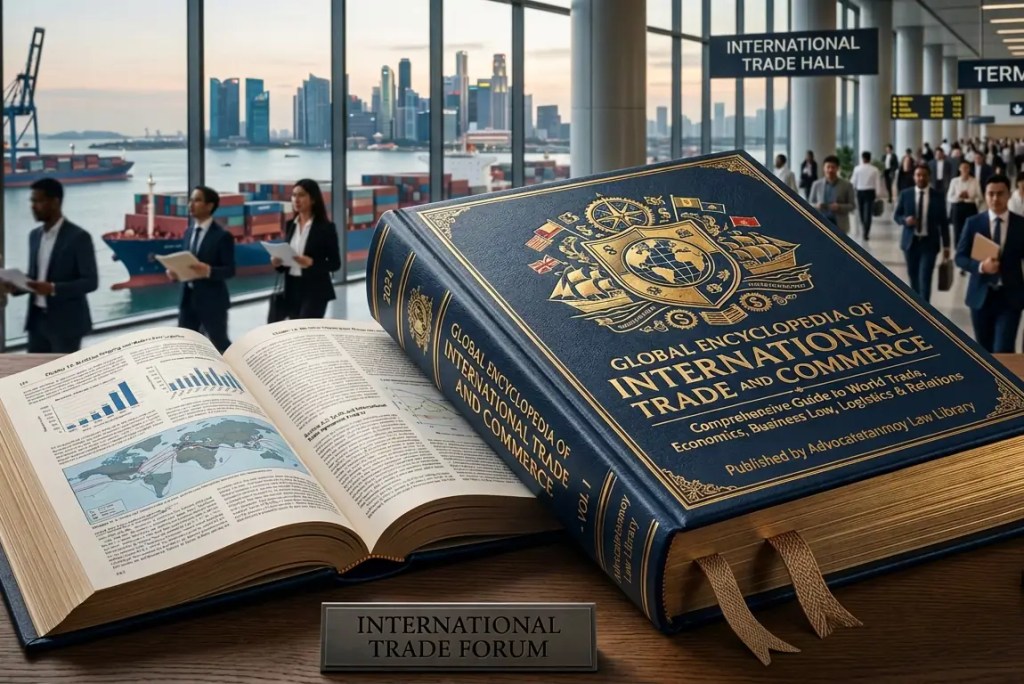
Global Encyclopedia of International Trade and Commerce (GEITAC)
Sarvarthapedia Civilizational Knowledge System · Volume 2 of 15
Volume 2 — Historical Evolution of World Trade: From Prehistoric Exchange to the Global Commercial System
Volume thesis: International trade is not merely a modern economic activity. It is the accumulated result of thousands of years of human mobility, resource exchange, technological innovation, commercial institutions, political power, and inter-civilizational contact. Volume 2 traces how exchange networks transformed into regional commercial systems, intercontinental trading networks, colonial trade regimes, industrial capitalism, and the foundations of contemporary global commerce.
Synopsis of Volume 2 of GEITAC
Part I — Prehistoric Exchange and the Origins of Long-Distance Trade
Chapters 1–10 · Before cities, states and written commercial records
- Human Mobility and the Earliest Networks of Material Exchange
- Archaeological Evidence for Prehistoric Trade and Exchange
- Obsidian, Flint and the Long-Distance Movement of Stone
- Shells, Beads and Ornaments as Objects of Exchange
- The Exchange of Animal Products, Hides, Bone and Ivory
- Prehistoric Salt Procurement and Exchange Networks
- Seasonal Gatherings, Reciprocal Exchange and Regional Interaction
- Maritime Mobility and Early Coastal Exchange Networks
- The Neolithic Revolution and the Expansion of Exchange
- From Prehistoric Exchange to the Foundations of Commercial Life
Part II — Early Agricultural Civilizations and the Formation of Regional Markets
Chapters 11–20 · Approximately 10,000–3000 BCE, with regional variation
- Agricultural Surplus and the Growth of Exchange
- Storage, Redistribution and the Management of Surplus
- Early Settlements, Craft Specialization and Regional Markets
- The Exchange of Grain, Livestock and Agricultural Products
- Pottery, Textiles and the Emergence of Specialized Production
- Copper, Stone and Other Raw Materials in Early Exchange Networks
- Rivers, Irrigation Systems and the Geography of Early Commerce
- Village Networks and the Integration of Agricultural Communities
- Early Trade Routes Between Ecological and Resource Zones
- The Transition from Local Exchange to Interregional Commerce
Part III — Mesopotamia and the Commercial Foundations of the Ancient Near East
Chapters 21–30 · Approximately 3500–500 BCE
- The Emergence of Urban Commerce in Mesopotamia
- Temples, Palaces and the Organization of Economic Exchange
- Cuneiform Tablets, Commercial Records and Accounting
- Grain, Livestock and Agricultural Trade in Mesopotamia
- Silver, Weights and Measures in Ancient Commercial Transactions
- Merchants, Partnerships and Long-Distance Trading Ventures
- Assyrian Merchant Networks and the Trade of Anatolia
- Mesopotamia, the Persian Gulf and Maritime Exchange
- Babylonian Commercial Law, Debt and Contractual Obligations
- Mesopotamia as a Centre of Interregional Commercial Integration
Part IV — Ancient Egypt, the Levant and the Commercial Networks of Africa and Western Asia
Chapters 31–40 · From early Egyptian state formation to the first millennium BCE
- The Nile Valley and the Organization of Egyptian Commerce
- Royal Expeditions, State Procurement and the Acquisition of Foreign Goods
- Gold, Copper, Timber and Precious Materials in Egyptian Trade
- Egypt and the Commercial Networks of Nubia
- The Red Sea, Punt and Maritime Exchange in the Ancient World
- Phoenician Seafaring and the Expansion of Mediterranean Commerce
- Tyre, Sidon and the Commercial Networks of the Levant
- Phoenician Colonies, Trading Posts and Overseas Connections
- Caravans, Ports and the Exchange of Goods Across Western Asia
- The Levant as a Commercial Bridge Between Africa, Asia and Europe
Part V — The Indus Civilization and the Commercial World of Ancient South Asia
Chapters 41–50 · Approximately 3300–1300 BCE, with later developments where relevant
- The Economic Geography of the Indus Civilization
- Harappa, Mohenjo-daro and the Urban Organization of Production
- Standardized Weights, Measures and Commercial Administration in the Indus World
- Indus Seals, Signs and the Interpretation of Commercial Evidence
- Craft Production, Bead Manufacturing and Specialized Industries
- Lothal, Coastal Settlements and the Question of Maritime Trade
- The Indus–Mesopotamia Commercial Connection
- Copper, Carnelian, Shell and Other Materials in Indus Exchange Networks
- Agricultural Production, Urban Provisioning and Regional Exchange
- The Indus Commercial System: Archaeological Evidence and Unresolved Questions
Part VI — Ancient China and the Commercial Networks of East Asia
Chapters 51–60 · From early Neolithic networks to the first imperial era
- Early Chinese Communities and Regional Exchange Networks
- Agricultural Surplus, Bronze Production and Commercial Specialization
- Jade, Silk and Prestige Goods in Ancient Chinese Exchange
- Shang and Zhou Political Economies and the Movement of Goods
- Bronze, Salt and Other Resources in Early Chinese Trade
- Rivers, Canals and the Geography of Chinese Commerce
- Markets, Coinage and the Development of Monetary Exchange in China
- Merchant Activity and Commercial Regulation in Ancient China
- Qin and Han State Formation and the Expansion of Commercial Networks
- The Foundations of East Asian Commercial Integration
Part VII — Ancient South Asian Trade After the Indus Civilization
Chapters 61–70 · Second millennium BCE to the early centuries CE, with period-specific distinctions
- Post-Indus Economic Transformation and the Reorganization of Exchange
- The Gangetic Plains and the Growth of Urban Commercial Centres
- Agriculture, Iron Technology and the Expansion of Market Networks
- Mahajanapadas, Urbanization and the Commercial Geography of Early Historic India
- Punch-Marked Coins and the Expansion of Monetary Exchange
- Shrenis, Guilds and the Organization of Crafts and Commerce
- Merchant Communities, Caravan Routes and Overland Trade in South Asia
- Ports, Coastal Settlements and the Development of Indian Maritime Commerce
- Trade, Taxation and Statecraft in the Mauryan Economy
- Early South Asian Commercial Networks and Their Regional Connections
Part VIII — The Classical Mediterranean and the Commercial Systems of Greece and Rome
Chapters 71–80 · Approximately 800 BCE–600 CE, with earlier foundations
- The Aegean World and the Growth of Greek Maritime Commerce
- Greek Colonization, Trading Posts and Mediterranean Market Integration
- Coinage, Banking and Credit in the Ancient Greek Economy
- Grain Supply, Shipping and the Commercial Life of Greek Cities
- Hellenistic Kingdoms and the Expansion of Interregional Exchange
- Roman Roads, Ports and the Infrastructure of Imperial Commerce
- Grain, Wine, Olive Oil and the Structure of Roman Commodity Trade
- Roman Merchant Networks, Contracts and Commercial Institutions
- The Red Sea, Egypt and Roman Trade With the Indian Ocean
- The Classical Mediterranean as an Integrated Commercial Region
Part IX — The Silk Roads and the Integration of Eurasian Commerce
Chapters 81–90 · Especially the first millennium BCE through the medieval period
- The Historical Geography of the Silk Roads
- Central Asia as a Zone of Commercial Intermediation
- Han China and the Development of Trans-Eurasian Connections
- Caravan Cities, Oases and the Infrastructure of Overland Trade
- Silk, Horses, Precious Metals and the Exchange of High-Value Goods
- Sogdian Merchants and the Commercial Networks of Inner Asia
- Empires, Steppe Societies and the Security of Eurasian Routes
- Religions, Languages and Knowledge Along the Silk Roads
- Disease, Migration and the Unintended Consequences of Connectivity
- The Silk Roads as a Network of Interconnected Regional Economies
Part X — The Indian Ocean Commercial System
Chapters 91–100 · Ancient foundations through the medieval period
- The Geography of the Indian Ocean Trading World
- Monsoon Winds, Navigation and the Seasonal Organization of Maritime Trade
- Arabian, Persian and Indian Merchant Networks
- The East African Coast and the Commercial Networks of the Western Indian Ocean
- India, Sri Lanka and the Maritime Exchange of the Bay of Bengal
- Southeast Asian Ports and the Development of Maritime Trading Polities
- Chinese Maritime Commerce and Connections Across the Indian Ocean
- Spices, Textiles, Ceramics and the Commodity Structure of Oceanic Trade
- Port Cities, Merchant Diasporas and Commercial Institutions
- The Indian Ocean as a Connected Afro-Eurasian Commercial System
Part XI — Trade and Commerce in Medieval Europe
Chapters 101–110 · Approximately 500–1500 CE
- Commercial Transformation in Post-Roman Western Europe
- Byzantine Constantinople and the Continuity of Mediterranean Commerce
- Mediterranean Maritime Republics and the Expansion of Merchant Trade
- Venice, Genoa and the Organization of Long-Distance Commerce
- Northern European Trading Networks and the Commercial Growth of Towns
- The Hanseatic League and the Institutionalization of Baltic Trade
- Medieval Fairs, Wholesale Markets and Regional Market Integration
- Guilds, Merchant Law and the Organization of Urban Commerce
- Credit, Bills of Exchange and the Development of European Merchant Finance
- The Reorganization of European Commerce at the End of the Medieval Period
Part XII — Islamic Commercial Networks and Afro-Eurasian Exchange
Chapters 111–120 · Seventh century onward, with emphasis on medieval networks
- The Expansion of Islamic Polities and the Geography of Commerce
- Arabic as a Language of Trade, Scholarship and Commercial Communication
- Merchants, Partnerships and Commercial Practices in Islamic Societies
- Markets, Bazaars and Urban Commercial Organization
- Credit, Remittance and Payment Instruments in Islamic Commercial History
- The Red Sea, Persian Gulf and the Movement of Maritime Goods
- Trans-Saharan Trade and the Commercial Networks of West Africa
- Gold, Salt and the Economic Foundations of Sahelian Trading States
- East African Port Cities and the Indian Ocean Commercial World
- Islamic Commercial Networks as Connectors of Africa, Asia and Europe
Part XIII — The Mongol Era, Eurasian Integration and Late Medieval Commercial Transformation
Chapters 121–130 · Twelfth–fifteenth centuries, with earlier and later context
- The Mongol Empires and the Reconfiguration of Eurasian Trade
- Imperial Security, Travel and Commercial Mobility Across Eurasia
- Caravanserais, Postal Systems and the Infrastructure of Long-Distance Exchange
- Merchant Diasporas and the Transfer of Commercial Knowledge
- Trade Between China, Central Asia, Persia and the Mediterranean
- Marco Polo, Travel Literature and the Historical Interpretation of Eurasian Commerce
- Maritime Expansion and the Changing Balance Between Land and Sea Routes
- Plague, Demographic Change and the Disruption of Commercial Networks
- Political Fragmentation, Route Diversification and Commercial Adaptation
- Late Medieval Commerce and the Conditions for Early Modern Expansion
Part XIV — The Age of Oceanic Expansion and the Formation of a World Trading System
Chapters 131–140 · Approximately fifteenth–eighteenth centuries
- The Causes and Contexts of European Oceanic Expansion
- Portuguese Maritime Expansion and the Indian Ocean Trading World
- Spanish Voyages, American Colonization and Transoceanic Commercial Connections
- The Atlantic Trading System and the Integration of Four Continents
- The Columbian Exchange and the Transformation of Global Commodity Flows
- Silver, Gold and the Monetary Connections Between the Americas, Europe and Asia
- The Dutch East India Company and the Organization of Chartered Commerce
- The English East India Company and the Transformation of Commercial Power
- Plantation Economies, Enslaved Labour and the Coercive Foundations of Atlantic Commerce
- Mercantilism, Naval Power and the Competition to Control World Trade
Part XV — From Early Modern Commerce to Industrial and Global Trade
Chapters 141–150 · Eighteenth century to the eve of the contemporary global system
- The Commercial Revolution and the Expansion of European Capital
- The Rise of Commercial Banking, Insurance and Organized Financial Markets
- The Industrial Revolution and the Transformation of Trade
- Steamships, Railways and the Compression of Commercial Distance
- The Nineteenth-Century Expansion of International Commodity Markets
- Cotton, Textiles and the Reorganization of Global Production
- Colonial Trade Regimes and the Restructuring of Asian and African Economies
- The Gold Standard, International Payments and the Integration of World Markets
- The First World War, Interwar Disruption and the Crisis of Global Commerce
- From Historical Trading Networks to the Foundations of the Contemporary International Trading System
Architecture of Volume 2
This volume’s 15-part structure supports a civilizational history.
| Historical layer | Parts | Central question |
|---|---|---|
| Origins of exchange | I–II | How did exchange expand beyond immediate local needs? |
| Ancient commercial civilizations | III–VIII | How did cities, states, monetary systems and merchant institutions organize trade? |
| Interregional integration | IX–X | How did Eurasian and Indian Ocean networks connect distant societies? |
| Medieval commercial institutions | XI–XIII | How did merchant networks, financial practices and political systems sustain long-distance commerce? |
| Oceanic and colonial transformation | XIV | How did transoceanic expansion reshape the geography and power structures of trade? |
| Industrial and global integration | XV | How did industrialization and modern finance transform the scale and organization of world commerce? |
Important cross-volume connections
- Volume 1 — Foundations of Trade and Commerce: Concepts of exchange, value, markets, money, institutions and commercial networks.
- Volume 3 — Classical and Modern Theories of International Trade: Comparative advantage, factor endowments, trade models and critiques of established theories.
- Volume 4 — Global Production, Supply Chains and Commercial Organization: Production networks, firms, logistics and value chains.
- Volume 5 — Maritime Trade, Transport and Logistics: Shipping, ports, inland corridors and freight systems.
- Volume 6 — International Trade Finance and Commercial Banking: Credit, payment instruments, insurance and trade finance.
- Volume 8 — International Commercial Law and Dispute Resolution: Contracts, property, merchant law, commercial courts and arbitration.
- Volume 12 — Trade, Geopolitics and Economic Statecraft: Commercial empires, colonial systems, strategic dependence and economic power.
- Volume 15 — Future of International Trade and Commerce: Digital commerce, adaptive systems, resilience and the future architecture of global exchange.