

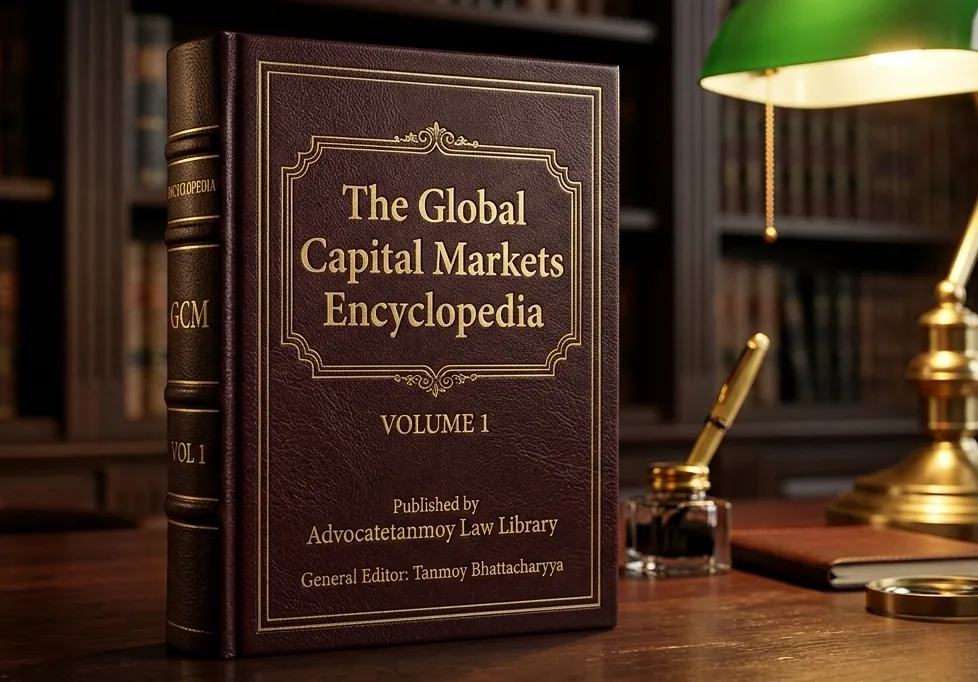
The Global Capital Markets Encyclopedia (GCME)
Indian Mutual Fund Houses: Establishment, Ownership and Assets Under Management
Sarvarthapedia: Conceptual Knowledge Network of the Indian Mutual Fund Industry
1. Central Knowledge Node: Indian Mutual Fund Industry
The Indian Mutual Fund Industry represents an institutional mechanism through which household savings, corporate capital, institutional investments and individual wealth are channelled into financial markets. It connects the savings economy with the securities market, the banking system, corporate finance, government borrowing and the broader architecture of capital formation. (See India)
A mutual fund is not merely an investment product. It is an organised financial institution that collects capital from investors, pools their contributions, allocates funds across financial instruments and manages investment risks through a regulated institutional structure.
The Indian mutual fund system therefore has to be understood through several interconnected dimensions:
- Financial intermediation and mobilisation of savings.
- Asset management and professional investment administration.
- Ownership, sponsorship and institutional control.
- Capital markets and securities investment.
- Regulatory supervision and investor protection.
- Distribution networks and financial technology.
- Household wealth creation and institutional capital accumulation.
- Public-sector, private-sector and international financial participation.
Central Node: Indian Mutual Fund Industry
Primary Knowledge Connections:
Indian Mutual Fund Industry ↔ Financial System
Indian Mutual Fund Industry ↔ Capital Markets
Indian Mutual Fund Industry ↔ Household Savings
Indian Mutual Fund Industry ↔ Asset Management
Indian Mutual Fund Industry ↔ Institutional Ownership
Indian Mutual Fund Industry ↔ Securities Regulation
Indian Mutual Fund Industry ↔ Financial Intermediation
Indian Mutual Fund Industry ↔ Wealth Creation
2. Historical Evolution of Mutual Funds in India
The historical development of Indian mutual funds represents the transition from a predominantly state-sponsored investment structure to a diversified asset-management industry involving public-sector banks, insurance institutions, private financial groups, international investors, independent investment managers and digital financial platforms.
2.1 Unit Trust of India and the Institutional Beginning
Unit Trust of India (UTI) occupies the foundational position in the history of Indian mutual funds.
The establishment of UTI on 1 February 1964 created the institutional basis for collecting household savings and directing them towards financial investments.
Core Node: Unit Trust of India, 1964
See also:
- Unit Trust of India Act, 1963
- Institutional Mobilisation of Household Savings
- Public-Sector Financial Institutions
- Indian Financial System
- Development of the Indian Capital Market
- Retail Investment Culture
- National Financial Intermediation
2.2 Entry of Private-Sector Mutual Funds
The development of private-sector mutual funds during the 1990s transformed the structure of the industry.
The emergence of institutions such as Taurus Mutual Fund, SBI Mutual Fund, Tata Mutual Fund, Sundaram Mutual Fund and Nippon India Mutual Fund contributed to the diversification of investment-management institutions.
Core Node: Private-Sector Mutual Fund Development
See also:
- Financial Sector Liberalisation
- Private Financial Institutions
- Asset Management Companies
- Institutional Competition
- Corporate Sponsorship
- Investment Product Diversification
- Indian Economic Reforms
2.3 Globalisation of Asset Management
International financial institutions entered the Indian mutual fund industry through ownership, sponsorship, joint ventures and investment-management relationships.
Examples include:
- Nippon Life Insurance and Nippon India Mutual Fund.
- Prudential Financial and PGIM India Mutual Fund.
- Dai-ichi Life and Union Mutual Fund.
- BNP Paribas and Baroda BNP Paribas Mutual Fund.
- Mirae Asset and Mirae Asset Mutual Fund.
- Franklin Templeton and Franklin Templeton Mutual Fund.
- HSBC and HSBC Mutual Fund.
Core Node: Internationalisation of Indian Asset Management
See also:
- Foreign Institutional Investment
- International Financial Conglomerates
- Cross-Border Capital
- Global Investment Management
- Foreign Ownership in Indian Finance
- International Portfolio Diversification
2.4 Emergence of Specialist and Technology-Driven Fund Houses
The expansion of the industry has enabled specialist investment managers, brokerage organisations, wealth-management companies and financial-technology platforms to establish mutual fund operations.
Examples include:
- PPFAS Mutual Fund
- quant Mutual Fund
- WhiteOak Capital Mutual Fund
- Samco Mutual Fund
- Navi Mutual Fund
- Zerodha CASE Mutual Fund
- The Wealth Company Mutual Fund
- Capitalmind Mutual Fund
Core Node: New Institutional Models of Asset Management
See also:
- Quantitative Investment Management
- Value Investing
- Digital Financial Services
- Financial Technology
- Passive Investment
- Investment Research
- Platform-Based Financial Distribution
3. Institutional Architecture of Mutual Funds
A mutual fund operates through a legally and institutionally differentiated structure. The sponsor, trust, trustees, asset-management company and investors perform distinct functions.
3.1 Sponsor
The sponsor establishes the mutual fund and provides its institutional foundation, subject to the applicable regulatory requirements.
Examples of sponsorship structures:
- State Bank of India — SBI Mutual Fund.
- Tata Sons and Tata Investment Corporation — Tata Mutual Fund.
- Motilal Oswal Financial Services — Motilal Oswal Mutual Fund.
- PPFAS Limited — PPFAS Mutual Fund.
- Nippon Life Insurance — Nippon India Mutual Fund.
- Union Bank of India and Dai-ichi Life — Union Mutual Fund.
Core Node: Mutual Fund Sponsorship
See also:
- Corporate Ownership
- Financial Conglomerates
- Banking Institutions
- Insurance Companies
- Institutional Capital
- Joint Ventures
- Financial Holding Companies
3.2 Mutual Fund Trust
The mutual fund trust is the legal structure through which the pooled investment arrangements are constituted.
It provides the institutional framework for holding the assets of the scheme for the benefit of unit holders.
Core Node: Mutual Fund Trust Structure
See also:
- Indian Trust Law
- Trust Property
- Fiduciary Administration
- Unit Holder Rights
- Beneficial Ownership
- Trustee Governance
3.3 Trustees
Trustees supervise the functioning of the mutual fund and safeguard the interests of unit holders within their statutory and fiduciary responsibilities.
Their institutional role is distinct from that of the asset-management company.
Core Node: Trustee Governance
See also:
- Fiduciary Responsibility
- Investor Protection
- Corporate Governance
- Regulatory Compliance
- Scheme Administration
- Unit Holder Interests
3.4 Asset Management Company
The asset-management company performs the operational investment-management functions of the mutual fund.
Its responsibilities include investment research, portfolio construction, securities transactions, risk management, compliance and scheme administration.
Core Node: Asset Management Company
See also:
- Investment Management
- Portfolio Administration
- Securities Research
- Fund Managers
- Asset Allocation
- Investment Risk
- Financial Reporting
3.5 Investors and Unit Holders
Investors provide the capital that is pooled and invested by the mutual fund.
Their interests are represented through units, whose value is determined through the net asset value mechanism.
Core Node: Unit Holder
See also:
- Household Savings
- Retail Investors
- Institutional Investors
- Net Asset Value
- Investor Rights
- Redemption
- Capital Appreciation
- Income Distribution
4. Regulatory and Supervisory Architecture
The Indian mutual fund industry operates within a regulatory framework designed to govern the constitution, management, disclosure, distribution and operation of mutual fund schemes.
4.1 Securities and Exchange Board of India
SEBI is the principal statutory regulator of the Indian mutual fund industry.
It supervises mutual fund registration, scheme disclosures, investment restrictions, governance, compliance, investor protection and market conduct.
Core Node: SEBI and Mutual Fund Regulation
See also:
- Securities and Exchange Board of India Act, 1992
- SEBI (Mutual Funds) Regulations, 1996
- Investment Restrictions
- Scheme Information Documents
- Compliance Framework
- Investor Grievance Redressal
- Market Surveillance
4.2 Association of Mutual Funds in India
AMFI is the industry association representing mutual fund institutions in India.
It plays an important role in industry representation, investor awareness, distributor registration-related administration, industry statistics and the publication of mutual fund data.
Core Node: Association of Mutual Funds in India
See also:
- Mutual Fund Industry Statistics
- Average Assets Under Management
- Mutual Fund Distributors
- Investor Education
- Industry Standards
- Mutual Fund Classification
4.3 Regulatory Interconnections
SEBI ↔ Mutual Fund Trusts
Regulation of the legal and operational framework.
SEBI ↔ Asset Management Companies
Supervision of investment management and compliance.
SEBI ↔ Trustees
Oversight of fiduciary responsibilities and investor interests.
AMFI ↔ Asset Management Companies
Industry coordination, statistics and operational standards.
AMFI ↔ Mutual Fund Distributors
Distribution-related industry administration and professional standards.
SEBI ↔ Investors
Investor protection, disclosures and grievance redressal.
5. Institutional Ownership and Sponsorship Clusters
The 58 mutual fund institutions covered in this directory can be classified according to their institutional sponsorship and ownership relationships.
5.1 Public-Sector Banking and Insurance Cluster
This cluster represents the participation of public-sector financial institutions in asset management.
Principal Nodes:
- SBI Mutual Fund
- UTI Mutual Fund
- LIC Mutual Fund
- Bank of India Mutual Fund
- Canara Robeco Mutual Fund
- Union Mutual Fund
Related Institutional Concepts:
- Public-Sector Banking
- State-Owned Financial Institutions
- Insurance Capital
- Government-Linked Financial Institutions
- Institutional Savings
- Financial Inclusion
- National Capital Formation
Knowledge Connection:
Public-Sector Banking → Financial Intermediation → Mutual Fund Sponsorship → Professional Asset Management → Capital Market Investment
5.2 Indian Private Financial Conglomerate Cluster
This cluster consists of fund houses associated with Indian private-sector financial-services groups.
Principal Nodes:
- 360 ONE Mutual Fund
- Aditya Birla Sun Life Mutual Fund
- Axis Mutual Fund
- Bajaj Finserv Mutual Fund
- Bandhan Mutual Fund
- DSP Mutual Fund
- Edelweiss Mutual Fund
- HDFC Mutual Fund
- ICICI Prudential Mutual Fund
- JM Financial Mutual Fund
- Kotak Mahindra Mutual Fund
- Motilal Oswal Mutual Fund
- Shriram Mutual Fund
- Sundaram Mutual Fund
- Tata Mutual Fund
- Nuvama Mutual Fund
Related Institutional Concepts:
- Financial Conglomerates
- Corporate Group Structures
- Financial Holding Companies
- Banking and Non-Banking Finance
- Wealth Management
- Investment Banking
- Corporate Capital Allocation
Knowledge Connection:
Financial Conglomerate → Sponsorship → Asset Management Company → Mutual Fund Schemes → Capital Allocation
5.3 International Financial Institution Cluster
This cluster represents the participation of international insurance, investment-management and banking organisations in India.
Principal Nodes:
- Baroda BNP Paribas Mutual Fund
- Franklin Templeton Mutual Fund
- HSBC Mutual Fund
- Invesco Mutual Fund
- Mirae Asset Mutual Fund
- Nippon India Mutual Fund
- PGIM India Mutual Fund
- Union Mutual Fund
- Mahindra Manulife Mutual Fund
Related Institutional Concepts:
- Foreign Financial Institutions
- Cross-Border Investment
- International Asset Management
- Global Financial Conglomerates
- Foreign Ownership
- International Investment Strategies
- Global Portfolio Diversification
Knowledge Connection:
International Financial Capital → Indian Institutional Entry → Mutual Fund Sponsorship → Domestic Asset Management → Indian Securities Market
5.4 Independent Investment Management Cluster
This cluster consists of institutions whose identity is closely associated with specialist investment managers, research organisations and independent financial-services companies.
Principal Nodes:
- Abakkus Mutual Fund
- ASK Mutual Fund
- Capitalmind Mutual Fund
- Carnelian Mutual Fund
- Helios Mutual Fund
- Marcellus Mutual Fund
- Old Bridge Mutual Fund
- PPFAS Mutual Fund
- Quantum Mutual Fund
- WhiteOak Capital Mutual Fund
- Unifi Mutual Fund
- quant Mutual Fund
Related Institutional Concepts:
- Independent Asset Managers
- Fundamental Research
- Value Investing
- Portfolio Management
- Investment Philosophy
- Quantitative Research
- Capital Allocation
- Active Management
Knowledge Connection:
Investment Research → Investment Philosophy → Portfolio Construction → Fund Performance → Investor Capital
5.5 Digital and Financial Technology Cluster
This cluster represents the development of asset-management institutions connected with digital investment platforms, online distribution and technology-enabled financial services.
Principal Nodes:
- Groww Mutual Fund
- Navi Mutual Fund
- Angel One Mutual Fund
- Zerodha CASE Mutual Fund
- Jio BlackRock Mutual Fund
- Samco Mutual Fund
- NJ Mutual Fund
Related Institutional Concepts:
- Financial Technology
- Digital Brokerage
- Online Investment Platforms
- Automated Investment Services
- Passive Investment
- Digital Financial Distribution
- Retail Investor Participation
- Technology-Enabled Asset Management
Knowledge Connection:
Digital Platform → Financial Accessibility → Retail Investment → Mutual Fund Participation → Capital Market Expansion
6. Assets Under Management: The Institutional Scale of the Industry
Assets Under Management (AUM) constitute one of the principal indicators of the scale of a mutual fund institution.
AUM represents the value of assets managed by an institution on behalf of its investors. It is not equivalent to the institution’s own net worth, revenue, profit or shareholders’ equity.
The scale of AUM influences the institutional position of a fund house, its operational requirements, investment capacity and significance within the financial system.
6.1 Average Assets Under Management
Average AUM measures the average value of assets managed over a specified reporting period.
Core Node: Average Assets Under Management
See also:
- Quarterly AUM
- Monthly Average AUM
- Net Asset Value
- Investor Contributions
- Portfolio Valuation
- Redemption
- Fund Flows
- Market Appreciation
6.2 AUM and Institutional Scale
AUM provides a basis for comparing the size of different mutual fund institutions.
Principal institutional comparison nodes:
- SBI Mutual Fund
- ICICI Prudential Mutual Fund
- HDFC Mutual Fund
- Nippon India Mutual Fund
- UTI Mutual Fund
- Kotak Mahindra Mutual Fund
- Axis Mutual Fund
- Aditya Birla Sun Life Mutual Fund
- PPFAS Mutual Fund
- Tata Mutual Fund
Knowledge Connection:
Investor Contributions + Investment Returns − Redemptions = Change in Managed Assets, subject to other valuation and reporting adjustments.
6.3 AUM and Fund Flows
AUM changes do not necessarily indicate that investors have contributed or withdrawn the same amount of money.
AUM can increase because of market appreciation even when net investor inflows are modest. Similarly, market depreciation can reduce AUM despite positive net inflows.
See also:
- Net Inflows
- Net Outflows
- Equity Market Appreciation
- Bond Valuation
- Redemption Pressure
- Investor Behaviour
- Market Volatility
6.4 AUM and Financial Power
Large AUM gives a fund house substantial participation in financial markets, but it does not mean that the AMC owns the underlying investment assets as its corporate property.
The assets are held within the scheme structure for the benefit of unit holders.
Core Node: Separation of Managed Assets and Corporate Ownership
See also:
- Beneficial Ownership
- Scheme Assets
- AMC Shareholders
- Unit Holder Rights
- Fiduciary Management
- Corporate Balance Sheet
- Financial Accountability
7. Mutual Fund Investment Categories
The investment portfolio of the Indian mutual fund industry can be classified according to asset class, investment objective, portfolio strategy and risk characteristics.
7.1 Equity Mutual Funds
Equity mutual funds invest primarily in shares of listed companies.
Related Nodes:
- Large-Cap Funds
- Mid-Cap Funds
- Small-Cap Funds
- Flexi-Cap Funds
- Multi-Cap Funds
- Focused Funds
- Sectoral Funds
- Thematic Funds
- ELSS
- Value Funds
- Contra Funds
Associated Fund Houses:
PPFAS, Motilal Oswal, HDFC, SBI, ICICI Prudential, Nippon India, quant, WhiteOak Capital, Mirae Asset and Axis.
Knowledge Connection:
Corporate Equity → Stock Exchange → Equity Portfolio → Mutual Fund Units → Investor Wealth
7.2 Debt Mutual Funds
Debt mutual funds invest in fixed-income securities and money-market instruments.
Related Nodes:
- Government Securities
- Treasury Bills
- Corporate Bonds
- Commercial Paper
- Certificates of Deposit
- Liquid Funds
- Overnight Funds
- Money Market Funds
- Short-Duration Funds
- Gilt Funds
- Credit Risk Funds
Associated Fund Houses:
SBI, HDFC, ICICI Prudential, UTI, Kotak, Nippon India, Axis, DSP and Aditya Birla Sun Life.
Knowledge Connection:
Government Borrowing + Corporate Borrowing → Debt Securities → Mutual Fund Investment → Interest Income and Valuation Changes
7.3 Hybrid Mutual Funds
Hybrid funds combine multiple asset classes, particularly equity and debt.
Related Nodes:
- Aggressive Hybrid Funds
- Conservative Hybrid Funds
- Balanced Advantage Funds
- Dynamic Asset Allocation
- Multi-Asset Allocation
- Equity Savings Funds
- Asset Rebalancing
Knowledge Connection:
Equity Allocation + Debt Allocation → Portfolio Diversification → Risk Management
7.4 Index Funds and Exchange-Traded Funds
Passive investment products seek to track a specified market index or investment benchmark.
Related Nodes:
- Nifty 50
- Sensex
- Nifty Next 50
- Sectoral Indices
- Index Replication
- Tracking Error
- Exchange-Traded Funds
- Passive Investment Management
Associated Fund Houses:
Navi, SBI, UTI, HDFC, ICICI Prudential, Nippon India, Kotak and Zerodha CASE.
Knowledge Connection:
Market Index → Portfolio Replication → Passive Fund → Investor Participation
7.5 International Mutual Funds
International funds provide exposure to securities and markets outside India, subject to applicable investment regulations.
Related Nodes:
- International Diversification
- Foreign Equities
- Global Technology Stocks
- Emerging Markets
- Developed Markets
- Currency Risk
- International Asset Allocation
- Overseas Investment Restrictions
Knowledge Connection:
Indian Savings → International Investment Vehicle → Foreign Securities → Global Portfolio Exposure
8. Investment Philosophies and Portfolio Management Systems
Mutual fund institutions are not identical merely because they operate under the same regulatory framework. Their investment philosophies, research systems, portfolio construction methods and risk-management practices can differ substantially.
8.1 Value Investing
Value investing attempts to identify securities whose market prices are below an assessment of their underlying economic value.
Principal Nodes:
- PPFAS Mutual Fund
- Quantum Mutual Fund
- Old Bridge Mutual Fund
- WhiteOak Capital Mutual Fund
- Marcellus Mutual Fund
See also:
- Intrinsic Value
- Margin of Safety
- Business Fundamentals
- Capital Allocation
- Earnings Quality
- Competitive Advantage
- Long-Term Investing
Knowledge Connection:
Business Analysis → Intrinsic Valuation → Investment Selection → Long-Term Capital Appreciation
8.2 Quantitative and Systematic Investing
Quantitative investment management uses mathematical models, statistical analysis, market data and systematic decision-making processes.
Principal Nodes:
- quant Mutual Fund
- Capitalmind Mutual Fund
- Samco Mutual Fund
- Navi Mutual Fund
See also:
- Quantitative Finance
- Algorithmic Investment Strategies
- Statistical Models
- Factor Investing
- Momentum
- Risk Modelling
- Portfolio Optimisation
- Market Signals
Knowledge Connection:
Financial Data → Quantitative Model → Investment Signal → Portfolio Decision → Risk-Adjusted Return
8.3 Growth Investing
Growth investing focuses on businesses expected to increase revenue, earnings, market share or economic value over time.
See also:
- Earnings Growth
- Revenue Expansion
- Business Scalability
- Innovation
- Capital Expenditure
- Market Share
- Corporate Strategy
8.4 Passive Investing
Passive investing seeks to reproduce the performance of a benchmark rather than consistently outperform it through active securities selection.
See also:
- Index Funds
- ETFs
- Benchmark Indices
- Tracking Error
- Expense Ratio
- Portfolio Replication
- Market Efficiency
8.5 Dynamic Asset Allocation
Dynamic asset allocation changes the distribution of investments across asset classes in response to market valuations, economic conditions and investment models.
See also:
- Balanced Advantage Funds
- Market Valuation
- Equity-Debt Allocation
- Volatility Management
- Investment Cycles
- Portfolio Rebalancing
9. Distribution Architecture and Investor Access
The mutual fund industry depends upon an extensive distribution system that connects asset-management institutions with investors.
9.1 Banking Distribution
Banks provide distribution access through their branches, relationship managers and digital banking channels.
See also:
- Bank-Sponsored Mutual Funds
- Financial Inclusion
- Retail Banking
- Bancassurance
- Wealth Management
- Investment Advisory
9.2 Mutual Fund Distributors
Distributors facilitate the purchase, redemption and servicing of mutual fund investments.
See also:
- AMFI Registration
- ARN
- EUIN
- Distributor Commission
- Regular Plans
- Investor Suitability
- Distribution Compliance
9.3 Direct Investment Platforms
Direct investment channels allow investors to purchase mutual fund units without using a conventional distributor.
Related Nodes:
- Direct Plans
- Online Mutual Fund Platforms
- AMC Websites
- Digital KYC
- Investor Onboarding
- Digital Payment Systems
9.4 Financial Technology and Platform-Based Distribution
Digital investment platforms have transformed the accessibility of mutual fund products.
Principal Nodes:
- Groww
- Zerodha
- Navi
- Angel One
- Jio BlackRock
- Samco
See also:
- Digital Brokerage
- Online Financial Services
- Investment Applications
- Automated KYC
- Digital Payments
- Financial Technology Regulation
- Retail Investor Expansion
Knowledge Connection:
Technology → Reduced Distribution Friction → Greater Investor Access → Expanded Market Participation
10. Mutual Funds and the Indian Macroeconomic System
Mutual funds are connected with the broader economic system through savings mobilisation, corporate financing, government borrowing and capital-market investment.
10.1 Household Savings and Financialisation
Mutual funds provide a channel through which household savings can move from traditional savings instruments towards market-linked financial assets.
See also:
- Household Savings
- Financialisation of Savings
- Bank Deposits
- Fixed Deposits
- Gold Investment
- Real Estate Investment
- Financial Literacy
- Retail Capital Formation
Knowledge Connection:
Household Income → Savings → Mutual Fund Investment → Securities Market → Capital Formation
10.2 Corporate Capital Formation
Equity mutual funds invest in listed companies, thereby participating in the ownership and valuation of corporate enterprises.
Debt funds may invest in corporate bonds and other debt instruments, providing a channel for corporate borrowing.
See also:
- Corporate Finance
- Equity Capital
- Corporate Bonds
- Initial Public Offerings
- Secondary Markets
- Capital Expenditure
- Business Expansion
10.3 Government Borrowing and Public Debt
Debt mutual funds invest in government securities and other instruments used to finance public expenditure and manage government borrowing.
See also:
- Government Securities
- Treasury Bills
- Public Debt
- Fiscal Deficit
- Government Borrowing
- Sovereign Yield Curve
- Monetary Policy
10.4 Monetary Policy Transmission
Interest-rate changes influence debt-security valuations, bond yields, borrowing costs and the attractiveness of different investment products.
See also:
- Reserve Bank of India
- Repo Rate
- Monetary Policy
- Bond Yields
- Interest-Rate Risk
- Duration Risk
- Liquidity Management
Knowledge Connection:
RBI Monetary Policy → Interest Rates → Bond Valuations → Debt Fund NAV → Investor Returns
10.5 Capital Market Development
Mutual funds contribute to the development of the Indian securities market through their investment participation and institutional demand for financial assets.
See also:
- National Stock Exchange
- Bombay Stock Exchange
- Securities Market
- Institutional Investors
- Market Liquidity
- Corporate Valuation
- Equity Market Capitalisation
11. Risk Architecture of Mutual Funds
Investment risk is central to mutual fund management. Different schemes are exposed to different combinations of market, credit, liquidity, valuation and operational risks.
11.1 Market Risk
Market risk arises from fluctuations in the prices of securities held by a scheme.
See also:
- Equity Market Volatility
- Stock Price Fluctuations
- Interest-Rate Movements
- Currency Movements
- Economic Cycles
- Market Corrections
11.2 Credit Risk
Credit risk concerns the possibility that an issuer may fail to meet its financial obligations.
See also:
- Corporate Bonds
- Credit Ratings
- Default Risk
- Credit Spreads
- Debt Fund Risk
- Issuer Concentration
11.3 Liquidity Risk
Liquidity risk arises when securities cannot be sold quickly at a reasonable price.
See also:
- Redemption Pressure
- Market Liquidity
- Liquid Funds
- Fixed-Income Markets
- Portfolio Liquidity
- Asset-Liability Management
11.4 Concentration Risk
Concentration risk arises when a scheme’s portfolio has substantial exposure to a limited number of securities, companies, sectors or market segments.
See also:
- Portfolio Diversification
- Sectoral Exposure
- Single-Stock Exposure
- Portfolio Construction
- Investment Limits
- Risk Management
11.5 Operational and Governance Risk
Operational risk includes failures in systems, processes, compliance, administration and investment controls.
See also:
- Internal Controls
- Cybersecurity
- Fund Administration
- Custodial Services
- Regulatory Compliance
- Corporate Governance
- Investor Protection
12. Comparative Institutional Study of the 58 Mutual Fund Houses
The directory of 58 institutions can become the foundation for a comparative institutional database.
12.1 Historical Comparison
Compare fund houses according to their establishment and institutional development.
Nodes:
- UTI Mutual Fund
- SBI Mutual Fund
- Taurus Mutual Fund
- Shriram Mutual Fund
- Tata Mutual Fund
- Nippon India Mutual Fund
- HDFC Mutual Fund
- ICICI Prudential Mutual Fund
- PPFAS Mutual Fund
- Navi Mutual Fund
- Zerodha CASE Mutual Fund
See also:
- Institutional Longevity
- Financial Sector Liberalisation
- Corporate Transformation
- Ownership Changes
- New Market Entrants
12.2 Ownership Comparison
Classify institutions according to their sponsorship and controlling interests.
Nodes:
- Public-Sector Sponsored Funds
- Indian Private-Sector Sponsored Funds
- Internationally Sponsored Funds
- Joint-Venture Funds
- Independent Investment Managers
- Technology-Linked Fund Houses
See also:
- Ownership Structure
- Corporate Control
- Sponsor Eligibility
- Shareholding Pattern
- Foreign Investment
- Financial Conglomerates
12.3 AUM Comparison
Compare the institutional scale of fund houses using consistently defined AUM measurements.
Nodes:
- Largest Mutual Funds
- Mid-Sized Mutual Funds
- Emerging Mutual Funds
- Specialist Asset Managers
- Small Asset-Management Institutions
See also:
- Average AUM
- Monthly AUM
- Quarterly AUM
- Market Share
- Net Inflows
- Investor Accounts
- Scheme-Wise AUM
12.4 Investment Philosophy Comparison
Compare fund houses according to their research and investment-management approaches.
Nodes:
- Value Investing
- Growth Investing
- Quantitative Investing
- Passive Investing
- Fundamental Research
- Dynamic Asset Allocation
- Thematic Investment
See also:
- Fund Manager
- Investment Committee
- Portfolio Strategy
- Investment Risk
- Benchmark Performance
- Investment Horizon
13. Core Conceptual Clusters
Cluster A: Financial Institution and Ownership
- Indian Mutual Fund Industry
- Mutual Fund Sponsor
- Mutual Fund Trust
- Trustee Company
- Asset Management Company
- Corporate Shareholding
- Financial Conglomerate
- Institutional Ownership
- Fiduciary Responsibility
- Unit Holder Rights
Knowledge Chain:
Financial Institution → Sponsor → Mutual Fund Trust → Trustee → Asset Management Company → Investment Scheme → Unit Holder
Cluster B: Capital and Investment
- Household Savings
- Institutional Savings
- Pooled Investment
- Securities
- Equity
- Debt
- Government Bonds
- Corporate Bonds
- Portfolio Construction
- Net Asset Value
- Capital Appreciation
- Income Generation
Knowledge Chain:
Savings → Capital Pooling → Investment Allocation → Securities Ownership → Portfolio Valuation → Investor Returns
Cluster C: Regulatory and Governance
- SEBI
- AMFI
- Mutual Fund Regulations
- Trustee Supervision
- AMC Compliance
- Scheme Disclosure
- Investor Protection
- Fiduciary Administration
- Risk Management
- Grievance Redressal
Knowledge Chain:
Legislation → Regulation → Registration → Supervision → Disclosure → Compliance → Investor Protection
Cluster D: Investment Research and Strategy
- Fundamental Analysis
- Quantitative Analysis
- Value Investing
- Growth Investing
- Passive Investing
- Asset Allocation
- Portfolio Diversification
- Market Timing
- Risk-Adjusted Return
- Investment Horizon
Knowledge Chain:
Research → Valuation → Investment Decision → Portfolio Construction → Risk Management → Performance Evaluation
Cluster E: Financial Technology and Distribution
- Digital Brokerage
- Investment Platforms
- Online KYC
- Direct Plans
- Mutual Fund Distribution
- Financial Technology
- Investor Applications
- Automated Investment Services
- Digital Financial Inclusion
Knowledge Chain:
Digital Infrastructure → Investor Onboarding → Financial Accessibility → Investment Participation → Financialisation
Cluster F: Macroeconomics and Capital Markets
- Household Savings
- Banking System
- Monetary Policy
- Government Borrowing
- Corporate Finance
- Securities Markets
- Stock Exchanges
- Bond Markets
- Capital Formation
- Economic Growth
Knowledge Chain:
Macroeconomic Policy → Financial Markets → Institutional Investment → Capital Allocation → Economic Activity
14. Sarvarthapedia Cross-Reference: See Also Knowledge Web
14.1 Primary Knowledge Nodes
- Indian Financial System
- Indian Mutual Fund Industry
- History of Mutual Funds in India
- Unit Trust of India
- Securities and Exchange Board of India
- Association of Mutual Funds in India
- Asset Management Company
- Mutual Fund Sponsorship
- Mutual Fund Trust
- Mutual Fund Trustee
- Assets Under Management
- Net Asset Value
- Portfolio Management
- Investor Protection
- Capital Markets
14.2 Institutional and Corporate Nodes
- State Bank of India
- Life Insurance Corporation of India
- Tata Group
- Aditya Birla Group
- HDFC Group
- ICICI Group
- Nippon Life Insurance
- Prudential Financial
- Dai-ichi Life
- Motilal Oswal Financial Services
- PPFAS
- Quantum Advisors
- WhiteOak Capital
- Zerodha
- Groww
- Nuvama
- Pantomath
14.3 Financial Instrument Nodes
- Equity Shares
- Government Securities
- Corporate Bonds
- Treasury Bills
- Commercial Paper
- Certificates of Deposit
- Exchange-Traded Funds
- Index Funds
- Money Market Instruments
- Gold-Related Investment Products
- International Securities
14.4 Economic and Civilizational Nodes
- Money
- Cash
- Banking
- Credit
- Financial Intermediation
- Capital
- Wealth
- Savings
- Investment
- Corporate Ownership
- Financial Power
- Economic Governance
- Capital Accumulation
- Financialisation of Society
15. Interdisciplinary Knowledge Connections
15.1 Mutual Funds and the Sociology of Wealth
Mutual funds connect individual savings with institutional capital. They transform the economic behaviour of households by providing access to securities markets through pooled investment structures.
Connection:
Household Income → Savings Behaviour → Financial Literacy → Mutual Fund Participation → Financial Asset Ownership → Wealth Accumulation
See also:
- Sociology of Wealth
- Household Economics
- Middle-Class Savings
- Financial Literacy
- Inequality of Wealth
- Ownership of Financial Assets
15.2 Mutual Funds and Corporate Power
Large asset-management institutions participate in the ownership of listed companies through their investment schemes. Their investment decisions can influence capital allocation, market valuations and corporate governance discussions.
However, scheme assets belong to the respective schemes for the benefit of unit holders; they are not simply the proprietary assets of the AMC or sponsor.
Connection:
Investor Capital → Mutual Fund Scheme → Equity Investment → Corporate Shareholding → Voting and Governance Rights
See also:
- Corporate Ownership
- Institutional Shareholding
- Shareholder Voting
- Corporate Governance
- Concentration of Economic Power
- Financial Capitalism
15.3 Mutual Funds and the State
The state influences the mutual fund industry through securities regulation, taxation, monetary policy and the development of financial-market infrastructure.
At the same time, mutual funds participate in the financing of government and corporate economic activity through investments in securities.
Connection:
State Regulation → Financial Institutions → Investment Allocation → Government and Corporate Securities → Economic Financing
See also:
- Indian State
- Fiscal Policy
- Monetary Policy
- Public Debt
- Securities Regulation
- Financial Governance
15.4 Mutual Funds and Artificial Intelligence
The increasing use of technology in asset management introduces new possibilities for securities research, financial data processing, portfolio analysis, compliance monitoring and investor services.
Connection:
Financial Data → Machine Learning → Quantitative Analysis → Investment Decision Support → Portfolio Monitoring
See also:
- Artificial Intelligence in Finance
- Algorithmic Trading
- Quantitative Finance
- Financial Data Science
- Robo-Advisory
- Digital Wealth Management
- Cybersecurity in Financial Institutions
16. Ultimate Sarvarthapedia Conceptual Chain
The Indian mutual fund industry can be positioned within a much larger knowledge architecture concerning the organisation of money, capital, institutions and economic power.
Money → Savings → Capital → Financial Intermediation
Money becomes savings when a portion of income is retained rather than consumed. Savings become investible capital when they are transferred into financial institutions and investment instruments.
Capital → Institutions → Ownership → Investment Management
Capital is organised through institutions. Sponsors establish mutual funds, trustees supervise their administration and asset-management companies manage investment portfolios.
Investment Management → Securities → Corporate Finance → Economic Production
Mutual funds allocate capital across equity and debt securities. These investments connect financial markets with corporate ownership, business financing, infrastructure, government borrowing and economic activity.
Regulation → Governance → Accountability → Investor Protection
The institutional power of asset managers is constrained by statutory regulation, fiduciary obligations, disclosure requirements and investor-protection mechanisms.
Technology → Accessibility → Participation → Financialisation
Digital platforms reduce barriers to investment distribution and connect a larger population with formal financial markets.
Financialisation → Capital Accumulation → Wealth Distribution → Social Transformation
The expansion of mutual funds changes how savings are held, how financial assets are distributed and how households participate in the ownership of economic enterprises.
Ultimate Knowledge Node:
Indian Mutual Fund Industry as an Institutional Architecture of Savings Mobilisation, Capital Allocation, Corporate Ownership and Financial Governance.
This node connects the study of mutual funds to Sarvarthapedia’s larger conceptual domains of MONEY, CASH, BANKING, CREDIT, CAPITAL, WEALTH, CORPORATE POWER, FINANCIAL GOVERNANCE and THE INDIAN ECONOMIC SYSTEM.
More Stories
Money: GCME Definition
Cash: GCME Definition
Consumer Protection Act 2019 (Part-2): Conceptual Network