Expanding military, defence industry, and strategic partnerships between India and Thailand shaping Indo-Pacific security and stability
India and Thailand, as close maritime neighbours with civilizational ties and complementary geo-strategic interests, have steadily expanded their defence cooperation into one of the most vital pillars of their multifaceted partnership. Situated at a critical juncture between South Asia and Southeast Asia, Thailand shares maritime boundaries with India in the Andaman Sea, making defence and security coordination central to safeguarding regional stability and the Indo-Pacific order.
The defence relationship gained momentum under India’s “Look East” policy, later transformed into the “Act East” policy, which sought to enhance strategic and operational linkages with ASEAN partners. Thailand has reciprocated through its “Look West” policy announced in 1996. Political directives from the highest levels have consistently emphasised advancing defence ties, particularly at the operational level. The Joint Working Group on Security Cooperation, launched in May 2003, listed military cooperation as one of its seven core areas of engagement.
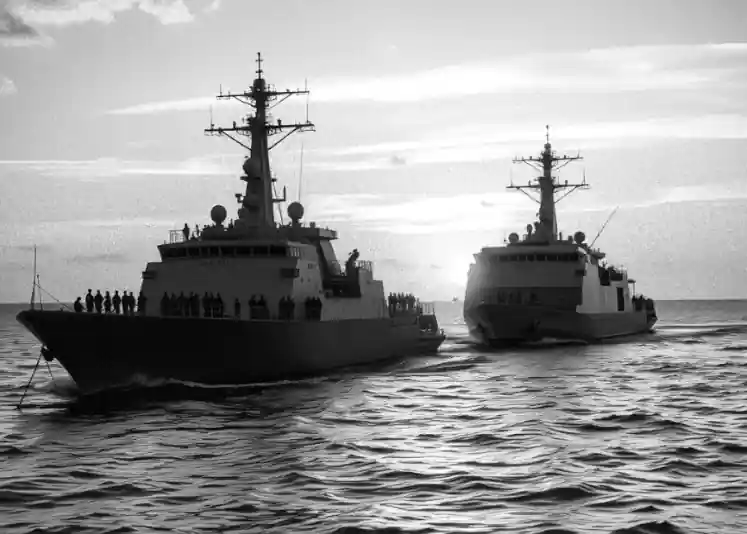
The relationship was formally institutionalised with the signing of the MoU on Defence Cooperation on 25 January 2012. This framework provides the necessary impetus for bilateral initiatives, which include joint military exercises, coordinated maritime patrols near the international boundary to counter terrorism, piracy and smuggling, reciprocal training of officers at defence institutions, service-level staff talks, and exchanges of visits at multiple levels. After the easing of COVID-19 restrictions in 2022, subject matter expert exchanges, port calls by Indian Navy ships, and other engagements have resumed vigorously.
High-level exchanges remain a defining feature of this partnership. From Thailand, Air Chief Marshal Padet Wongpinkaew, Chairman of the Royal Thai Air Force Advisory Group, visited Bangalore with his delegation in February 2017 for Aero India. Admiral Luechai Ruddit, Commander-in-Chief of the Royal Thai Navy, visited India in December 2018, calling on India’s Raksha Mantri and Chief of Naval Staff, and visiting the Western Naval Command in Mumbai, including INS Kolkata and INS Sindhuvijay. In October 2022, a Thai Maritime Enforcement Command Centre delegation attended the Asian Coast Guard Agency Meeting in India.
From India, Admiral Sunil Lanba, Chief of the Naval Staff, paid an official visit to Thailand in April 2019, meeting Admiral Luechai Ruddit and other senior commanders. Air Chief Marshal B.S. Dhanoa, as Chairman COSC and CAS, participated in the Chiefs of Defence Conference in Bangkok in August 2019. Prime Minister Narendra Modi visited Bangkok in November 2019 for the 35th ASEAN Summit and related events, followed shortly by Defence Minister Rajnath Singh, who led the Indian delegation to the ADMM-Plus in November 2019. In 2022, Indian delegations returned to Thailand for defence exhibitions, further boosting institutional engagement.
Defence industry cooperation has equally advanced. Indian companies regularly participate in Thailand’s Defence and Security Exhibitions, as Thailand does in India’s Aero India and DefExpo. In the 2022 Bangkok exhibition, ten Indian companies showcased their equipment, several of which have already supplied reliable defence systems to the Royal Thai Armed Forces.
The broader bilateral architecture is anchored in a rich framework of agreements spanning decades. Beginning with the Air Services Agreement of 1956 and cultural agreements of the 1970s, the relationship has expanded to cover seabed boundary delimitation, double taxation avoidance, peaceful uses of atomic energy, investment protection, space cooperation, free trade, tourism, extradition, coordinated naval patrols, counter-narcotics, education, broadcasting, health, digital technologies, artisanal crafts, and port-to-port linkages. The MoU on Defence Cooperation of 2012, the Technical Agreement on White Shipping Information Exchange of 2018, and the more recent MoUs of April 2025 on digital technologies, maritime heritage, small industries, handicrafts, and creative economy, all culminated in the landmark Joint Declaration on the Establishment of the Thailand–India Strategic Partnership on 3 April 2025.
The depth of trust and the forward-looking nature of defence ties are further illustrated by India’s participation in multilateral frameworks. Chief of Integrated Defence Staff, Air Marshal Ashutosh Dixit, will represent India at the annual Chiefs of Defence Conference in Bangkok from 26 to 28 August 2025, co-hosted by the United States Indo-Pacific Command and the Royal Thai Armed Forces. This premier forum will gather defence chiefs from across the Indo-Pacific to deliberate on maritime security, counter-terrorism, cyber resilience, humanitarian assistance, disaster relief, and measures to reinforce stability in the region.
Thus, through sustained political guidance, an expanding institutional framework, frequent high-level exchanges, and an ever-widening network of agreements, India and Thailand have transformed their defence cooperation into a cornerstone of their strategic partnership. This collaboration not only strengthens bilateral security but also contributes significantly to peace, stability and prosperity in the Indo-Pacific region.
August 25, 2025