Constitutional 130th Amendment 2025
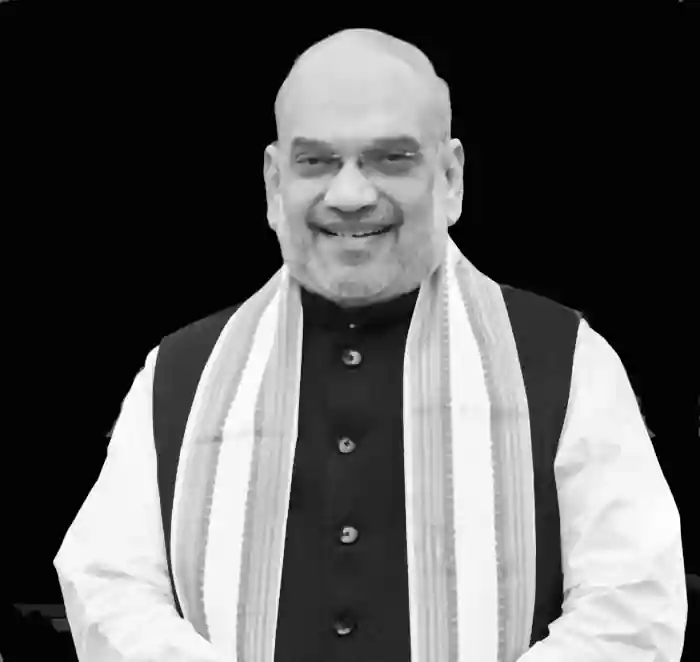
Union Home Minister and Minister of Cooperation Amit Shah, in an interview with a news agency, spoke on several important issues, including the Constitution (130th Amendment) Bill, 2025. He said that Prime Minister Narendra Modi firmly believes that no Minister, Chief Minister, or Prime Minister can run a government from jail. The Bill proposes that if a Prime Minister, Chief Minister, Minister of the Government of India, or Minister of a State Government is arrested under a serious charge and does not receive bail within thirty days, they will be removed from their post. If this does not happen voluntarily, removal will occur automatically by law. Shah stressed that the opposition should not oppose the introduction of a bill or constitutional amendment in Parliament by a duly elected government.
He clarified that the proposed constitutional amendment will be referred to a Joint Parliamentary Committee of both Houses. Since the Bill requires a two-thirds majority for passage, all parties will be able to express their views when it comes to a vote. According to Shah, preventing a bill or constitutional amendment from even being presented in Parliament is undemocratic. Both Houses, he said, exist for debate and discussion, not for noise and disruption. The opposition’s refusal to allow the Bill to be tabled is not democratic behavior, and they will ultimately have to explain such conduct to the people of India.
Shah emphasized that this Bill is not directed against the opposition and also applies to Chief Ministers from ruling parties. He said the opposition is misleading the public by suggesting that FIRs are not filed against those in government. Under the Bill, if bail is granted within thirty days, no action will be taken. If the case is false, courts will intervene and grant bail. Since both the High Court and the Supreme Court have the authority to grant bail, if bail is not given, the individual must resign. He asked whether it was right for a Chief Minister, Prime Minister, or Minister to govern from jail and questioned whether this practice could ever be good for democracy. If bail is granted after thirty days, the individual can take oath again.
He further explained that the provision of imprisonment for elected representatives is not new but has existed for decades. The 130th Amendment defines serious crime as one carrying a punishment of more than five years, in which case the person must resign. It is not right, he argued, for leaders accused of corruption or crimes punishable with more than five years’ imprisonment to run governments from jail. The Representation of the People Act already provides that if an elected representative is sentenced to two years or more, he or she loses membership of Parliament. That law has existed since independence to uphold moral standards, and many memberships have been terminated and later restored upon acquittal.
Shah recalled that since independence many leaders, ministers, and chief ministers have resigned and gone to jail. However, he said a new trend has emerged where leaders refuse to resign even after being jailed. He referred to examples of ministers in Tamil Nadu and the Chief Minister and ministers in Delhi, who did not resign despite being in jail. He asked whether senior officials such as Secretaries or DGPs should be expected to seek instructions from leaders in prison, insisting that this was a matter of serious concern and required discussion.
He also pointed out that Prime Minister Modi has included his own office within the ambit of this constitutional amendment. In contrast, he recalled that a former Prime Minister from the main opposition party introduced the 39th Constitutional Amendment that exempted herself, the President, and the Vice President from lawsuits. Modi, however, has introduced an amendment that requires even the Prime Minister to resign if jailed. Shah said there will be no delay in courts under this law, since courts will have to intervene immediately and understand the seriousness of the issue.
He reiterated that Prime Minister Modi is clear that no Minister, Chief Minister, or Prime Minister can govern from jail. When the Constitution was drafted, its makers could never have imagined that a Chief Minister would remain in office while in prison. The law is intended to uphold moral values and strengthen democracy. Sensitive as they are, courts will decide bail cases within the required time when the question of holding office is at stake.
Shah dismissed the opposition’s allegations of political vendetta. He reminded them that during their own tenure in power, the CBI had investigated at least a dozen cases on court orders, and many individuals faced prosecution. He said if the opposition chooses to boycott the Bill even after the decision to refer it to a JPC, the government has no other choice. The Bill is important, he said, and members of all parties should give their considered opinions before the JPC. The government has given the opposition opportunities to express their views, but instead, they are refusing to participate, and the public is observing their behavior. Shah added that anyone steeped in corruption will inevitably face arrest, imprisonment, and resignation.
He reminded the opposition not to lecture him on morality. When he was accused and summoned by the CBI, he resigned the very next day. His case continued for years, and eventually the court ruled that he was completely innocent. The judgment stated clearly that it was a matter of political vendetta and that he had no involvement. He was acquitted not on technical grounds but because the case was dismissed outright. Even though he received bail on the ninety-sixth day, he did not take oath as Home Minister or hold any constitutional post until all charges were dismissed.
He concluded by saying that morality is not tied to electoral victory or defeat but remains constant, like the sun and the moon. He affirmed that all government allies support this law. Parliamentary functioning, he stressed, is not the sole decision of the ruling party, and if the opposition refuses to create a healthy environment for debate, the public will take note. He expressed confidence that the Bill will be passed, as many members of the opposition, guided by moral values, will support it.
25 AUG 2025