Summary: Pope Paul VI issued an Apostolic Letter in 1965 that addressed the need for reforms in the Roman Curia, particularly in the Sacred Congregation of the Holy Office. This Congregation, responsible for safeguarding doctrine on faith and morals, was renamed the Congregation for the Doctrine of the Faith. The letter outlines the duties and responsibilities of the newly structured congregation, including examining new teachings, dealing with delicts against the faith, and protecting the dignity of the Sacrament of Penance. The reform aimed to promote sound doctrine and efficacy of the Church’s apostolic works. The Apostolic Letter was issued in Rome on December 7, 1965, during Pope Paul VI’s third year of pontificate.
Pope Paul VI
Date: 7 December 1965
Integrae Servandae of Pope Paul VI (1965)
Congregation for the Doctrine of the Faith name adopted
APOSTOLIC LETTER
GIVEN MOTU PROPRIO
Roman Pontiffs, in union with the college of Bishops, have over the course of centuries and amidst human vicissitudes guarded the deposit of revealed Religion, entrusted to them by God to be preserved integrally, so that up to this day they have transmitted it intact, not without the intervention of Divine help, for through them the Holy Spirit acts, who is as the soul of the Mystical Body of Christ.
However, the Church, which is of divine institution and deals with divine matters, is made up of men and lives among people: thus, in order to fulfill her duties, she employs different instruments according to the various times and human cultures, having to treat numerous and important matters, because the Roman Pontiffs themselves and the Bishops, concerned innumerable matters, would not be able to provide for them alone. It is therefore from the very nature of things that administrative organs have come into being, i.e. the Curia: to them was entrusted the task of facilitating the government of the Church by supervising the observance of laws promulgated, by promoting initiatives in order to realize the Church’s proper finality, and by resolving any controversies that might arise.
It is no wonder then, if, with time’s changing conditions, modifications are introduced in such organisms: and in reality more than once in the past Roman Pontiffs, Our Predecessors, have taken pains to introduce reforms into the structure of the Roman Curia; in this respect those especially worth mentioning are the Constitutions Immensa Aeterni Dei of Sixtus V and Sapienti Consilio of Pius X, the provisions of which have been almost entirely incorporated into the Code of Canon Law.
However, after these Constitutions, even after the promulgation of the said Code, situations and times have changed greatly, just as We ourselves pronounced during a Discourse to the Cardinals and staff of the Roman Curia on 21 September 1963 (cf. AAS 55 (1963), p. 793ss.).
These things having been considered and the advice of Our Venerable Brother Cardinals and of Bishops having been sought, We have decreed that a certain reform of the Roman Curia be realized. And there is no doubt that the reform should begin with the Sacred Congregation of the Holy Office, for the reason that to this Congregation the most important matters of the Roman Curia are entrusted, as in truth are the doctrine concerning faith and morals and the causes most strictly related to such doctrine.
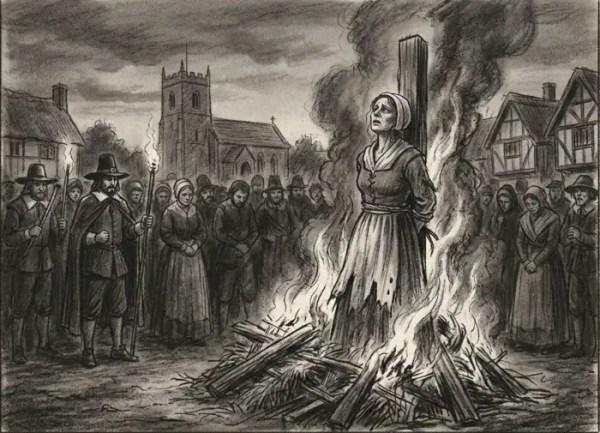
On 21 July 1542 Our Beloved Predecessor Paul III, with the Apostolic Constitution Licet ab initio founded the Supreme Sacred Congregation of the Universal Roman Inquisition to which he entrusted as its proper end the duty of persecuting heresy and consequently of suppressing crimes against the faith, of prohibiting dangerous books and of appointing Inquisitors for the whole Church.
Very often its power was extended to other matters, either because of their difficult nature or because of their singular importance.
In 1908, as the name Universal Roman Inquisition was not best suited to the conditions of the time, Saint Pius X with the Constitution Sapienti Consilio changed it to the “Congregation of the Holy Office”.
But, because there is no fear in love (1 Jn 4:18), the defense of the faith is now better served by promoting doctrine, in such a way that, while errors stand corrected and those who err are gently called back to the truth, heralds of the Gospel may find new strength. Moreover, the advance of human culture, whose the importance the religious field must not overlook, is that the faithful follow the directives of the Church with greater adhesion and love, if, insofar as in matters of faith and morals it is possible to make clear to them the reasons for definitions and laws.
So, that from now on this Sacred Congregation may more perfectly fulfill its role in promoting the sound doctrine and efficacy of the Church in the most important works of apostolate, in virtue of Our Supreme Apostolic Authority we have established the following norms to alter its name and its regulation:
1-That which was hitherto called the Sacred Congregation of the Holy Office will become the Congregation for the Doctrine of the Faith, whose duty it is to safeguard doctrine on faith and morals in the whole Catholic world.
2-It is presided over by the Supreme Pontiff and directed by the Cardinal Secretary with the help of an Assessor, of a Substitute and of the Promotor of Justice.
3-All questions which regard the doctrine on faith and morals or which touch upon the faith are within the competence of the Congregation.
4-It examines new teachings and new opinions in whatever way they are spread, it promotes studies in this area, and encourages the Congresses of scholars; it condemns those teachings found to be contrary to the principles of the faith, after, however, having heard the view of the Bishops of those regions, if they are specifically connected with the issues.
5-It carefully examines books that have been reported and, if necessary, condemns them, after, however, having heard the author, to whom is given the faculty to defend himself, also in writing, and not without having notified the Ordinary, as was already established in the Constitution Sollicita ac Provida by Our Predecessor of happy memory Benedict XIV.
6-Likewise it is its duty to deal legally or in fact with questions regarding the privilege of faith.
7-It is also its duty to judge delicts crimes against the faith, according to the norms of ordinary procedure.
8-It provides for the protection of the dignity of the Sacrament of Penance, by proceeding according to the amended and approved norms that will be communicated to the Ordinaries, giving the sinner the faculty to defend himself or to choose a defender from among those authorized by the Congregation.
9-It maintains appropriate relations with the Pontifical Commission for Biblical Studies.
10-The Congregation employs a group of Consultors whom the Supreme Pontiff appoints from men around the world who are distinguished for their doctrine, prudence and expertise. If the matter to be dealt with so requires, the Consultors can be added to the experts, chosen particularly from University professors.
11-The Congregation proceeds in two ways: either administrative or judicial, according to the diverse nature of the matters to be dealt with.
12-The internal regulation of the Congregation will be made public through a particular Instruction.
What has been decreed by us in this Letter Motu Proprio data, we command be observed and ratified notwithstanding anything to the contrary.
Given in Rome, at St Peter’s, 7 December 1965, the third year of Our Pontificate.
PAULUS PP. VI