Suicide bombing near Islamabad court leaves 12 dead, 36 injured amid regional unrest.
A deadly suicide bombing struck outside the district and sessions court complex in Islamabad’s G-11 area on November 11, 2025, killing at least 12 people and injuring 36 others, according to official reports. The explosion occurred around 12:39 p.m., when a bomber detonated explosives near a police vehicle after failing to enter the court premises. The blast, which took place less than 24 hours after a major explosion near Delhi’s Red Fort, has intensified tensions in the region amid allegations of cross-border involvement.
Interior Minister Mohsin Naqvi confirmed that the attacker had lingered outside the court for several minutes before triggering the explosives. He said that investigations were underway and vowed that those behind the attack would be identified and held accountable. CCTV footage reportedly showed the suspect surveying the area before striking. Emergency services rushed the wounded to the Pakistan Institute of Medical Sciences (PIMS), where 36 victims were treated; 18 were later discharged while several remained in critical condition.
The attack occurred as Islamabad hosted several high-profile international events, including the Inter-Parliamentary Speakers’ Conference and the Margalla Dialogue, and while a cricket match between Pakistan and Sri Lanka was being played in nearby Rawalpindi. Security was immediately tightened across the capital and surrounding areas, with checkpoints established around judicial complexes, government buildings, and major venues.
Prime Minister Shehbaz Sharif condemned the bombing, calling it part of a “nefarious conspiracy” allegedly linked to Indian support for extremist factions operating from Afghanistan. He vowed that Pakistan would continue its fight against terrorism “until the last terrorist is eliminated.” President Asif Ali Zardari, Defence Minister Khawaja Asif, and other political leaders expressed condolences to the victims’ families, calling the incident a “wake-up call” for national security agencies.
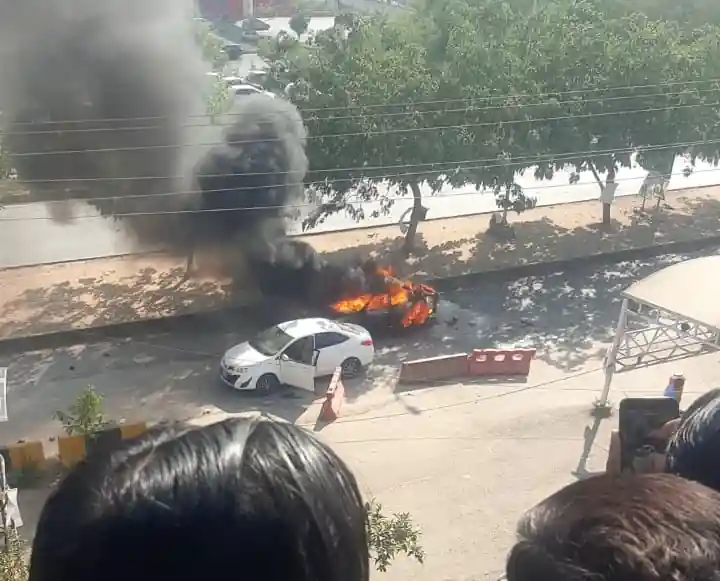
Eyewitnesses described scenes of chaos following the explosion, with vehicles ablaze and people fleeing in panic. Lawyers present at the scene reported seeing multiple bodies near the gate and extensive damage to parked cars. Members of the legal community strongly denounced the attack, holding press conferences and passing resolutions demanding swift justice and enhanced security for courts and professionals.
International reactions were swift, with the United States, European Union, United Kingdom, and China condemning the blast and expressing solidarity with Pakistan. The British High Commission urged its nationals to follow updated travel advisories. The U.S. Embassy and EU missions reiterated their commitment to supporting Pakistan’s counterterrorism efforts.
Authorities in Rawalpindi placed the city on high alert and increased security at the cricket stadium and along major roads. Provincial governments across Sindh, Punjab, and Khyber Pakhtunkhwa also directed law enforcement agencies to intensify surveillance at entry and exit points.
The Islamabad blast, coming just a day after the deadly explosion in Delhi, underscores a renewed wave of militant violence in South Asia and has raised fears of escalating cross-border hostilities. Investigators continue to probe possible links between the two incidents, as Pakistan’s leadership vows to pursue those responsible “with complete evidence and without restraint.”
Read More
- India and Pakistan Military History: Rivalry, Power, and Legacy
- Trump’s crypto empire in Pakistan raises conflict of interest alarms
- Pak Army Chief Warns India: No Space for War in Nuclear Zone