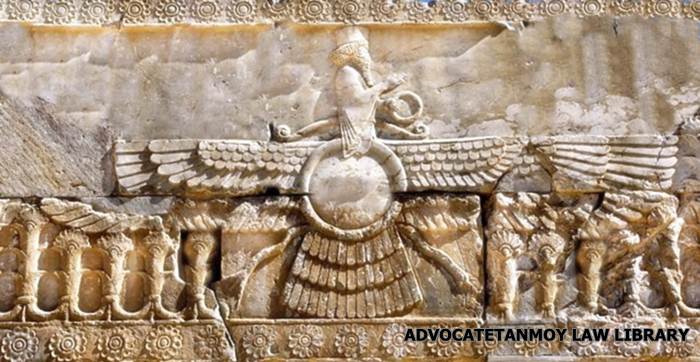
Mesopotamians used to worship multiple deities as their god and goddesses. Some of them are very similar with the Vedic civilisation. Even it can be said that when the Mesopotamian- Sumerian people departed from their motherland Aryavarta , they carried with them Vedic god and godesses (Devata). They had a sense of Supreme Deity in the line of Brahman also a chief deity like Vedic Indra. Gradually with the passing of time their god and goddesses evolved as per local ethos and political regimes.
- Adad
- An/Anu
- Anu
- Anšar and Kišar
- Anunna
- Anunnaki/Anunnaku
- Asalluhi
- Asarluhi
- Ašimbabbar
- Aššur
- Aya
- Baba
- Bau: see Baba
- Belet-ili
- Belet-ṣeri
- Dagan
- Damu
- Dilimbabbar
- Dumuzi
- Ea
- Ellil
- Enki/Ea (Nudimmud)
- Enlil/Ellil (Nunamnir)
- Ereškigal
- Erra
- Geštinanna
- Girra
- Gula
- Haya
- Igigi/Igigu
- Inana/Ištar
- Iškur/Adad
- Ištar
- Ištaran
- Lugalerra
- Lugalgirra
- Lugalirra and Meslamtaea
- Marduk
- Meslamtaea
- Mother Goddess
- Mulliltu
- Mullissu
- Mylitta
- Nabu
- Nanaya
- Namma/Nammu
- Nanna/Suen/Sin (Dilimbabbar)
- Nergal
- Nidaba
- Ninazu
- Ningirsu
- Ningišzida
- Ninhursanga
- Ninisinna
- Ninkarrak
- Ninlil
- Ninmah
- Ninsi’anna
- Ninsumun
- Ninsun
- Ninšubur
- Nintud
- Nintur- Mother Goddess
- Ninurta
- Nisaba
- Nudimmud
- Numušda
- Nunamnir
- Nuska/Nusku
- Nusku
- Pabilsag
- Papsukkal
- Sin
- Suen
- Šala
- Šamaš
- Šerida
- Tašmetu
- Tiamat
- Uttu
- Utu/Šamaš
- Zababa
Reference :
- Abusch, T. 2002. Mesopotamian Witchcraft: Toward a History and Understanding of Babylonian Witchcraft Beliefs and Literature. Leiden: Brill/Styx.
- Abusch, T. 1986 “Ištar’s proposal and Gilgamesh’s refusal: an interpretation of the Gilgamesh Epic Tablet 6, lines 1-79.” History of Religions 26: 143-187.
- Avalos, H. 1995. Illness and Health Care in the Ancient Near East: The Role of the Temple in Mesopotamia, Greece and Israel. Atlanta: Scholars Press.
- Beaulieu, P.-A. 1989. The Reign of Nabonidus, King of Babylon, 556-539 B.C. New Haven; London: Yale University Press.
- Biggs, R. D. 1974. Inscriptions from Tell Abu Ṣalabikh. Oriental Institute Publications, 99. Chicago: University of Chicago Press.
- Charpin, D. 2010. Writing, Law, and Kingship in Old Babylonian Mesopotamia. Chicago: University of Chicago Press.
- Cunningham, G. 1997. Deliver Me From Evil: Mesopotamian Incantations 2500-1500 BC. Rome.
- Dalley, S. 2000. Myths from Mesopotamia : Creation, the Flood, Gilgamesh, and Others. Oxford; New York: Oxford University Press.
- Frayne, D. 1997. The Ur III Period (2112-2004 BC). The Royal Inscriptions of Mesopotamia. Early Periods, 3/2. Toronto: University of Toronto Press.
- George, A.R. 1992. Babylonian Topographical Texts. Orientalia Lovaniensia Analecta, 40. Louvain: Peeters.
- Jacobsen, T. 1976. The Treasures of Darkness: A History of Mesopotamian Religion. New Haven: Yale University Press.
- Langdon, S.H. 1927. Babylonian Penitential Psalms to which are Added Fragments of the Epic of Creation from Kish in the Weld Collection of the Ashmolean Museum. Oxford Editions of Cuneiform Texts, 6. Oxford: Clarendon Press.