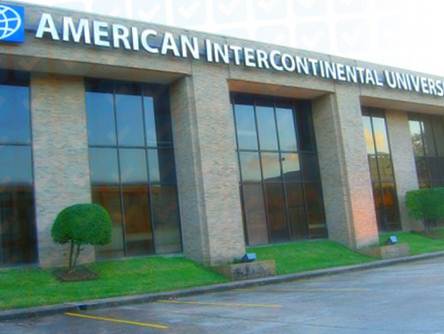
Criminal Justice Courses
Degree Requirements
General Education
Credits
| ENGL106 | English Composition I | 4.5 |
| ENGL107 | English Composition II | 4.5 |
| MATH125 | General College Mathematics | 4.5 |
| UNIV103 | Academic and Professional Success | 4.5 |
| UNIV106 | Technology and Information Literacy | 4.5 |
| UNIV109 | Interpersonal Communication | 4.5 |
| General Education Elective (1 Course) | 4.5 | |
| Humanities (2 Courses) | 9 | |
| Natural Sciences (2 Courses) | 9 | |
| Social and Behavioral Sciences (2 courses) | 9 | |
| Total Credit Hours: | 58.5 |
Core
Credits
| CRJS102 | Criminal Justice Today | 4.5 |
| CRJS105 | Theories of Crime Causation | 4.5 |
| CRJS205 | Introduction to Criminal Law | 4.5 |
| CRJS210 | Introduction to Law Enforcement | 4.5 |
| CRJS215 | Introduction to American Court System | 4.5 |
| CRJS220 | Foundations of Corrections | 4.5 |
| CRJS310 | Crime Victim Studies | 4.5 |
| CRJS315 | Juvenile Justice & Delinquency Theory | 4.5 |
| CRJS330 | Constitutional Issues in Criminal Procedures | 4.5 |
| CRJS355 | Evidence | 4.5 |
| CRJS405 | Research Methods & Statistics for Criminal Justice | 4.5 |
| CRJS499 | Senior Capstone in Criminal Justice | 4.5 |
| Total Credit Hours: | 54 |
General Electives
CreditsSelect 10 undergraduate Elective courses
| Total Credit Hours: | 45 |
General Criminal Justice Track
CreditsIn lieu of a Specialization, select 5 Criminal Justice Electives from any of the Specializations below
| Total Credit Hours: | 22.5 |
Specialization Options
Corrections and Case Management
Credits
| CRJS435 | Prison Law | 4.5 |
| CRJS445 | Offender Rehabilitation | 4.5 |
| CRJS450 | Advanced Topics in Corrections | 4.5 |
| CRJS454 | Case Management & Treatment Planning | 4.5 |
| CRJS456 | Psychopharmacology for Criminal Justice Professionals | 4.5 |
Forensic Science
Credits
| CRJS365 | Criminalistics | 4.5 |
| CRJS406 | Criminalistics II | 4.5 |
| CRJS471 | Medicolegal Death Investigation | 4.5 |
| CRJS478 | Forensic Biology | 4.5 |
| CRJS455 | Criminal Investigation | 4.5 |
Homeland Security and Crisis Management
Credits
| CRJS225 | Foundations of Crisis Management | 4.5 |
| CRJS370 | Terrorism and Homeland Security | 4.5 |
| CRJS380 | Critical Infrastructures | 4.5 |
| CRJS416 | Homeland Security & Crisis Management Planning | 4.5 |
| CRJS426 | Communication and Crisis Planning | 4.5 |
Law Enforcement
Credits
| CRJS320 | Community Oriented Policing | 4.5 |
| CRJS360 | Advanced Law Enforcement | 4.5 |
| CRJS365 | Criminalistics | 4.5 |
| CRJS370 | Terrorism and Homeland Security | 4.5 |
| CRJS455 | Criminal Investigation | 4.5 |
Total Credit Hours: 22.5
Total Credit Hours : 180
Criminal Justice Classes Overview
Status-2021
Security and Loss Prevention
This course examines the theories and principles of security and loss prevention through a systematic review of key issues and concepts associated with the reduction and prevention of personal and corporate loss. This course will review the historical development of loss prevention, exposures to losses, risk assessment techniques and strategies to minimize loss and improve security.
Comparative Criminal Justice System
This course is designed to give students a rationale for understanding and appreciating the different ways justice is conceived and administered internationally. This course serves as a basis for comparing various justice systems as they relate to the American justice system. Students will explore how various countries organize their law enforcement, judicial systems and corrections agencies, and compare them with the American criminal justice system.
Crime and Substance Abuse
This course examines drug abuse and its relationship to crime. Topics include the statistical relationship between drugs and crime, drug laws and courts, drug prevention programs and public policy concerning the use and abuse of substances.
Administration of Criminal Justice
This course focuses on the challenges administrators face in law enforcement, courts and corrections. Students will examine the various organizational frameworks in the criminal justice system and the concepts, organizational principles and models associated with these criminal justice agencies.
Criminalistics
Criminalistics is part I of a two part series. This course is a survey course of forensic science. The course content will focus on defining “forensic science”; recognizing practices of legitimate, junk and fraudulent science; examining the properties of physical evidence; discussing the scope, potential and limitations of a variety of forensic sciences; examining analytical techniques applied by forensic scientists; evaluating the criteria for admissibility of scientific evidence; and discussing the ethical responsibilities of forensic scientists.
Terrorism and Homeland Security
This course presents an overview of the key security issues facing the United States in both the areas of Homeland Security and Terrorism. It introduces students to the changing dynamics of homeland security at both the national and state levels. Students will explore the various dynamics of providing security in different settings. Additionally, the history and future of terrorism will be examined.
Offender Rehabilitation
This course focuses on the various factors utilized to develop personalized sentencing and treatment plans for individual offenders. It examines the personality of the offender who may be diagnosed as a psychopath, sociopath, drug addict or mentally ill person. Students will study how to develop treatment plans that will assist in the rehabilitation of the offender.
Criminal Investigation
This course explores the elements of investigation including crime scenes, witnesses and evidence and includes such topics as investigative techniques, evidence documentation, interrogation and arrest. The course addresses the particulars of investigating major crimes.
SOURCE: American InterContinental University (Produced for Educational Purpose only)