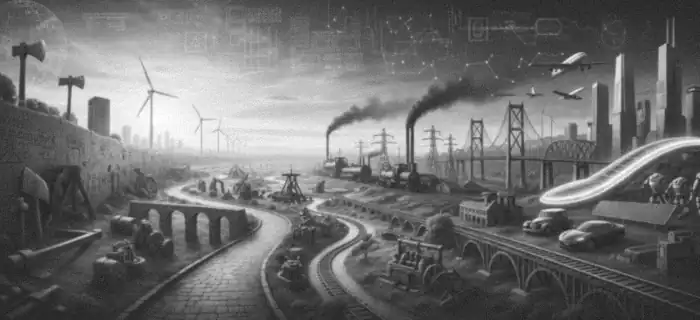
Engineering: History, Disciplines, and Future Trends
Engineering is the disciplined application of scientific principles, mathematical methods, and empirical knowledge to design, build, and maintain structures, machines, systems, and processes that serve human needs. Its origins trace back to the earliest human civilizations, where practical problem-solving evolved into systematic innovation. The history of engineering is inseparable from the development of societies, economies, and technological progress across millennia.
The earliest evidence of engineering practice appears in Mesopotamia around 4000 BCE, where the Sumerians developed irrigation systems to control the flow of the Tigris and Euphrates Rivers. These early engineers used rudimentary tools but demonstrated advanced understanding of hydraulics and civil planning. Similarly, in Ancient Egypt, monumental constructions such as the pyramids, particularly the Great Pyramid of Giza (c. 2560 BCE), are attributed to the ingenuity of engineers working under rulers like Imhotep, often regarded as one of the first known engineers. These projects required precise geometry, labor organization, and material science knowledge.
In the Sindhu-Saraswati Civilization (c. 2600–1900 BCE), cities such as Mohenjo-daro and Harappa showcased advanced urban engineering, including grid-based layouts, drainage systems, and standardized construction materials. These developments demonstrate early integration of architecture and civil engineering principles.
Engineering knowledge expanded significantly during Ancient Greece (c. 600–146 BCE), where thinkers like Archimedes contributed to mechanics, fluid dynamics, and machine design. His work on buoyancy and inventions such as the Archimedean screw exemplify early mechanical engineering. Greek engineers also constructed theaters, aqueducts, and war machines, combining aesthetics with functionality.
The Roman Empire (c. 27 BCE–476 CE) marked a peak in civil engineering. Roman engineers built extensive road networks, bridges, and aqueducts, such as the Pont du Gard. Their innovations in concrete allowed for durable structures like the Colosseum. Roman engineering emphasized infrastructure, military logistics, and urban development, laying foundations for modern engineering systems.
During the Middle Ages (c. 500–1500 CE), engineering advancements continued in both Europe and the Islamic world. In the Islamic Golden Age, scholars such as Al-Jazari (1136–1206) designed intricate automata, water clocks, and mechanical devices described in his 1206 work, The Book of Knowledge of Ingenious Mechanical Devices. His contributions significantly influenced mechanical engineering and robotics. Meanwhile, in Europe, the construction of Gothic cathedrals, including Notre-Dame de Paris (begun 1163), demonstrated advancements in structural engineering, including the use of flying buttresses and ribbed vaults.
The Renaissance (14th–17th centuries) saw a revival of scientific inquiry and engineering innovation. Figures like Leonardo da Vinci (1452–1519) conceptualized machines such as flying devices, armored vehicles, and hydraulic systems. His notebooks reveal deep understanding of mechanics, anatomy, and fluid dynamics, although many designs were not built during his lifetime. Engineering during this period increasingly relied on scientific experimentation and mathematical modeling.
The Scientific Revolution (16th–18th centuries) laid the theoretical foundations of modern engineering. Isaac Newton (1643–1727) formulated the laws of motion and universal gravitation, essential for mechanical engineering and aerospace engineering. Institutions like the Royal Society (founded 1660) promoted scientific research, bridging the gap between science and engineering practice.
Industrial Revolution
The Industrial Revolution (c. 1760–1840), beginning in Great Britain, marked a transformative period in engineering history. Innovations such as the steam engine, improved by James Watt in 1769, revolutionized manufacturing, transportation, and energy production. Engineering became a formal profession, with the establishment of institutions like the Institution of Civil Engineers in 1818. This period also saw the rise of engineering corporations and large-scale industrial enterprises.
During the 19th century, engineering disciplines diversified. Civil engineering projects included railways, bridges, and canals. The construction of the Brooklyn Bridge (completed 1883) by John A. Roebling and his son Washington Roebling demonstrated advances in suspension bridge design. Simultaneously, electrical engineering emerged with pioneers like Thomas Edison and Nikola Tesla, who developed electrical power systems, lighting, and motors.
Engineering education also became formalized during this period. Institutions such as Massachusetts Institute of Technology (founded 1861) and University of Cambridge played significant roles in advancing engineering knowledge and training professionals. Engineering corporations like General Electric (founded 1892) and Siemens (founded 1847) became global leaders in innovation.
The 20th century witnessed rapid expansion in engineering fields, driven by technological advancements and global events such as the World War I and World War II. These conflicts accelerated developments in mechanical, aerospace, and chemical engineering. The invention of the airplane by Orville Wright and Wilbur Wright in 1903 marked the beginning of modern aerospace engineering.
Post-war engineering focused on infrastructure, electronics, and computing. The development of the transistor in 1947 at Bell Labs revolutionized electrical engineering and led to the rise of computer engineering. Companies like IBM and Intel became central to the digital revolution.
Space Age Engineering
The Space Age, initiated by the Sputnik 1 launch by the Soviet Union, and later the Apollo 11 Moon Landing, demonstrated the capabilities of aerospace engineering. Organizations such as NASA and ISRO have continued to push the boundaries of space exploration.
Engineering disciplines continued to expand into chemical engineering, biomedical engineering, environmental engineering, and software engineering. The rise of computing led to the development of programming languages and software systems, with contributions from figures like Alan Turing. Universities such as Stanford University and Indian Institute of Technology Kharagpur became centers of innovation and research.
In the late 20th and early 21st centuries, engineering has increasingly focused on sustainability, renewable energy, and global challenges. Engineering corporations like Tesla, Inc., SpaceX, and Samsung Electronics are leading advancements in electric vehicles, space technology, and consumer electronics.
Modern engineering integrates artificial intelligence, nanotechnology, and biotechnology. Engineers now work on complex systems such as smart cities, autonomous vehicles, and advanced medical devices. Institutions like World Engineering Day (celebrated annually on March 4) highlight the importance of engineering in achieving sustainable development goals.
Engineering and Technology in India
Indian engineering traces its conceptual origins to the Sulbasutras (c. 1800–1500 BCE), foundational Sanskrit texts that articulated advanced principles of geometry, including early formulations equivalent to the Pythagorean theorem, precise measurement systems, and ritual altar construction, demonstrating the earliest fusion of mathematics with applied design. Over centuries, these ideas evolved through architectural treatises like the Shilpa Shastras and Vastu Shastra, which codified principles of structural balance, aesthetics, and spatial orientation. This progression culminated in the monumental temple engineering of the early medieval period, exemplified by the Brihadeeswara Temple (1010 CE) built under Rajaraja Chola I and the Konark Sun Temple, where mastery in stone construction, load distribution, and symbolic design reached extraordinary heights. In the modern era, Indian engineering has expanded into advanced domains through institutions such as Indian Institute of Technology Kharagpur and organizations like ISRO, which have driven innovations in space technology, infrastructure, and digital systems, reflecting a continuous evolution from ancient geometric knowledge to contemporary scientific and technological achievement.
Engineering, from Ancient Construction up to 2026
Volume 1: History of Engineering
1. Ancient Engineering (Before 500 CE)
- Stone Age tools – Hand axes, flint knapping, lever, wedge
- Neolithic engineering – Mud brick, stone circles (Göbekli Tepe, c. 9500 BCE), irrigation canals (Mesopotamia, Egypt)
- Ancient Egyptian engineering – Pyramids (Great Pyramid of Giza, c. 2560 BCE), obelisks, ramps, copper tools, papyrus boats
- Mesopotamian engineering – Ziggurats, arch, vault, hanging gardens (legendary), aqueducts, city walls (Babylon)
- Sindhu-Saraswati Valley engineering – Grid‑planned cities (Mohenjo‑Daro, Harappa), advanced drainage, covered sewers, great bath, dockyard (Lothal)
- Chinese engineering – Great Wall (7th century BCE – 16th century CE), Grand Canal (5th century BCE – 13th century CE), suspension bridges, cast iron (4th century BCE)
- Greek engineering – Parthenon (447–432 BCE), theater acoustics, cranes, water screw (Archimedes), lighthouse (Pharos of Alexandria)
- Roman engineering – Concrete (opus caementicium), aqueducts (Aqua Appia 312 BCE, Pont du Gard), roads (Via Appia, 50,000 miles), arches, domes (Pantheon, 126 CE), Colosseum (70–80 CE), baths, sewers (Cloaca Maxima)
2. Medieval & Renaissance Engineering (500 – 1600 CE)
- Byzantine engineering – Hagia Sophia (537 CE, pendentive dome), cisterns (Basilica Cistern)
- Islamic Golden Age – Windmills (Persia, 9th century), water clocks, flying machines (Abbas ibn Firnas), crank‑connecting rod, dam construction
- Gothic engineering – Flying buttresses, rib vaults, pointed arches (Notre‑Dame, Chartres), stained glass, spires
- Medieval military engineering – Castles (concentric, moats, drawbridges, portcullis), trebuchet, battering ram, siege towers
- Renaissance engineering – Brunelleschi’s dome (Florence Cathedral, 1436, no centering), Leonardo da Vinci’s designs (flying machines, tanks, bridges, canals), blast furnaces (15th century)
- Mining & metallurgy – Agricola’s De Re Metallica (1556), smelting, stamp mills, water‑powered bellows
3. Industrial Revolution (1700 – 1900)
- Steam engine – Newcomen (1712, atmospheric engine), Watt (1765–1776, separate condenser, rotary motion), Trevithick (high‑pressure)
- Iron & steel – Cast iron (Coalbrookdale, Abraham Darby, 1709), Bessemer process (1856, mass steel production), open‑hearth furnace, Siemens‑Martin
- Machine tools – Maudslay’s screw‑cutting lathe (1797), planer, milling machine, shaper, interchangeable parts (Whitney, Colt, 1800s)
- Textile machinery – Spinning jenny (Hargreaves, 1764), water frame (Arkwright, 1769), spinning mule (Crompton, 1779), power loom (Cartwright, 1785), cotton gin (Whitney, 1793)
- Transportation – Steam locomotive (Trevithick, 1804, Stephenson’s Rocket 1829), steamship (Fulton, Clermont 1807), railroads (Stockton‑Darlington 1825)
- Civil engineering – Canals (Bridgewater Canal 1761, Erie Canal 1825), suspension bridges (Telford’s Menai 1826, Brunel’s Clifton 1864), tunnels (Thames Tunnel, Brunel 1843), skyscrapers (Home Insurance Building, Chicago 1885, 10 stories)
- Electrical engineering – Battery (Volta 1800), electromagnet (Sturgeon 1825), electric motor (Faraday 1821, Jacobi 1834), telegraph (Morse 1837), telephone (Bell 1876), light bulb (Edison 1879, Swan), AC induction motor (Tesla 1887), transformer (Stanley 1886)
- Sanitary engineering – Sewer systems (London, Bazalgette 1859–1875), water treatment (slow sand filters, chlorination early 1900s)
4. 20th Century Engineering (1900 – 2000)
- Aerospace engineering – Wright brothers (1903, powered flight), jet engine (Whittle 1930, von Ohain 1939), rockets (Goddard 1926, V‑2, Saturn V), commercial aviation (Boeing 707 1958, Concorde 1976)
- Automotive engineering – Assembly line (Ford 1913), internal combustion engine (Otto 1876, Diesel 1893), safety features (seatbelt Volvo 1959, airbag), electric vehicles (GM EV1 1996, Tesla 2008)
- Electronics & computing – Vacuum tube (Fleming 1904, De Forest triode 1906), transistor (Bardeen, Brattain, Shockley 1947), integrated circuit (Kilby, Noyce 1958–1959), microprocessor (Intel 4004 1971), personal computer (Altair 1975, Apple II 1977, IBM PC 1981)
- Nuclear engineering – Chain reaction (Fermi, Chicago Pile‑1 1942), nuclear power (Obninsk 1954, Shippingport 1957), nuclear submarines (USS Nautilus 1955), nuclear weapons (Manhattan Project, Trinity 1945)
- Chemical & materials engineering – Plastics (Bakelite 1907, nylon 1935, polyethylene 1933), synthetic rubber, semiconductors (silicon, germanium), composites (fiberglass)
- Civil mega‑projects – Panama Canal (1914), Hoover Dam (1936), Golden Gate Bridge (1937), Channel Tunnel (1994), Burj Khalifa (2010, completed 2010 but 20th‑century design)
- Biomedical engineering – Artificial heart (Jarvik‑7 1982), pacemaker (1958), MRI (1977), CT scanner (1972), cochlear implant (1978)
5. 21st Century Engineering to 2026
- Digital transformation – Smart manufacturing (Industry 4.0), digital twins, additive manufacturing (3D printing), IoT (Internet of Things)
- Renewable energy engineering – Solar PV (efficiency >26% 2026), wind turbines (15 MW offshore), lithium‑ion batteries (Tesla Gigafactory), green hydrogen (electrolysis)
- Space engineering – Reusable rockets (SpaceX Falcon 9 2015, Starship 2024), James Webb Space Telescope (2021), Artemis program (Moon 2024‑2026), Mars rovers (Perseverance 2021, sample return 2028‑2030s)
- AI & robotics engineering – Self‑driving cars (Waymo, Tesla, Cruise), humanoid robots (Atlas, Optimus), warehouse robotics (Kiva/Amazon Robotics), surgical robots (da Vinci)
- Bioengineering – CRISPR gene therapy (2020s), tissue engineering (3D‑printed organs), lab‑grown meat (2023‑2026), neural interfaces (Neuralink)
- Quantum engineering – Quantum computers (Google Sycamore 2019, IBM 433 qubit 2022, 1000+ qubit 2026), quantum sensors, quantum communication (QKD)
- Nanoengineering – Carbon nanotubes, graphene (2004‑2026), nanomedicine (targeted drug delivery), nanolithography (sub‑3 nm chips)
- Environmental engineering – Carbon capture (direct air capture – Climeworks, 2020s), desalination (reverse osmosis, low energy), plastic waste recycling (chemical recycling), circular economy
Volume 2: Core Engineering Disciplines
6. Civil Engineering
- Structural engineering – Loads (dead, live, wind, seismic, snow), materials (concrete, steel, timber, masonry, composites), structural analysis (finite element method FEA), design codes (ACI, AISC, Eurocode)
- Geotechnical engineering – Soil mechanics (shear strength, consolidation, permeability), foundation design (shallow: spread footings, mat; deep: piles, caissons), retaining walls, slope stability, tunneling
- Transportation engineering – Roads (pavement design, asphalt/concrete), highways (interchanges, traffic flow theory, level of service), railways (track, signaling), airports (runways, terminals), ports & harbors
- Water resources engineering – Hydraulics (open channel flow, pipe flow, pumps), hydrology (rainfall‑runoff, flood frequency, hydrographs), dams (embankment, concrete gravity, arch), levees, canals, irrigation
- Environmental engineering – Water treatment (coagulation, sedimentation, filtration, disinfection), wastewater treatment (primary, secondary – activated sludge, tertiary), air pollution control (scrubbers, electrostatic precipitators), solid waste management (landfills, recycling, incineration), hazardous waste remediation
- Construction engineering & management – Project planning (CPM, PERT), scheduling (Gantt charts), cost estimation, bidding, contract management (FIDIC), safety (OSHA), BIM (Building Information Modeling)
7. Mechanical Engineering
- Thermodynamics – Laws (0‑3), cycles (Carnot, Rankine, Otto, Diesel, Brayton, refrigeration), heat engines, efficiency, entropy
- Fluid mechanics – Statics, dynamics (Bernoulli’s equation, Navier‑Stokes), laminar/turbulent flow, boundary layers, pipe flow, pumps, turbines
- Heat transfer – Conduction (Fourier’s law), convection (forced, natural), radiation (Stefan‑Boltzmann), heat exchangers (shell‑and‑tube, plate fin)
- Solid mechanics – Stress (tensile, compressive, shear), strain, elasticity (Hooke’s law), failure theories (von Mises, Tresca), fatigue, fracture mechanics
- Dynamics & vibrations – Kinematics (position, velocity, acceleration), kinetics (Newton’s laws, energy, momentum), vibration (free, forced, damping, resonance, modal analysis)
- Mechanical design – Machine elements (gears, bearings, shafts, springs, fasteners, belts, chains), design for manufacturing (DFM), design for assembly (DFA), tolerances (GD&T)
- Manufacturing processes – Casting (sand, die, investment), forming (rolling, forging, extrusion, stamping), machining (turning, milling, drilling, grinding), joining (welding, brazing, soldering, adhesive), additive manufacturing (3D printing – FDM, SLA, SLS, metal powder bed fusion)
- Robotics & mechatronics – Robot kinematics (forward, inverse), actuators (motors, hydraulics, pneumatics), sensors (encoders, IMU, force), control (PID), end effectors, autonomous navigation
8. Electrical Engineering
- Circuits – Ohm’s law, Kirchhoff’s laws, series/parallel, resistive, capacitive, inductive, AC/DC, phasors, impedance, power (real, reactive, apparent), power factor
- Electronics – Diodes, transistors (BJT, MOSFET), amplifiers (op‑amp), oscillators, filters (low‑pass, high‑pass, band‑pass), rectifiers, regulators, power electronics (converters, inverters)
- Digital logic – Logic gates (AND, OR, NOT, NAND, NOR, XOR), flip‑flops, registers, counters, combinational/sequential logic, finite state machines
- Electromagnetics – Maxwell’s equations, electromagnetic waves, transmission lines (coaxial, microstrip), antennas (dipole, patch, parabolic), waveguides, RF/microwave engineering
- Power systems – Generation (thermal, hydro, nuclear, solar, wind), transmission (AC, HVDC, overhead lines, underground cables), distribution (transformers, substations, switchgear), protection (circuit breakers, relays, fuses), grid stability, smart grid
- Control systems – Open‑loop vs. closed‑loop, transfer functions, block diagrams, stability (Routh‑Hurwitz, Nyquist, Bode), PID controllers, state‑space, optimal control (LQR)
- Signal processing – Analog (filters, modulators), digital (sampling, aliasing, FFT, convolution, digital filters FIR/IIR), image/audio processing, compression (JPEG, MP3)
- Embedded systems – Microcontrollers (Arduino, ESP32, STM32), microprocessors (ARM, RISC‑V), real‑time operating systems (RTOS), sensors, actuators, communication protocols (I²C, SPI, UART, CAN, Modbus)
9. Chemical Engineering
- Mass & energy balances – Conservation laws, steady‑state, transient, recycle, bypass, purge
- Thermodynamics – Phase equilibria (VLE, LLE), equations of state (ideal gas, van der Waals, Peng‑Robinson), activity models (NRTL, UNIQUAC)
- Heat transfer (industrial) – Heat exchangers (shell‑and‑tube, plate, finned), furnaces, boilers, condensers, evaporators
- Mass transfer – Diffusion (Fick’s law), convection, absorption, distillation (McCabe‑Thiele, packed columns), extraction (liquid‑liquid, supercritical), adsorption, drying, membrane separation (reverse osmosis, ultrafiltration)
- Reaction engineering – Kinetics (rate laws, Arrhenius), ideal reactors (batch, CSTR, PFR), catalyst (heterogeneous, packed bed), reactor design, yield, selectivity
- Process control – Sensors (temperature, pressure, flow, level), controllers (PID), valves, DCS (distributed control system), SCADA
- Process design & safety – PFD (process flow diagram), P&ID (piping & instrumentation diagram), plant layout, HAZOP (hazard and operability study), risk assessment, inherently safer design
- Unit operations – Crushing, grinding, screening, mixing, filtration, centrifugation, crystallization, drying, sedimentation
10. Computer Engineering & Software Engineering
- Computer architecture – CPU (control unit, ALU, registers), memory hierarchy (cache, RAM, disk), pipelining, superscalar, SIMD, multicore, GPU, TPU
- Digital design – Combinational/sequential logic, Verilog/VHDL, FPGA (field‑programmable gate array), ASIC (application‑specific integrated circuit)
- Operating systems – Process management (scheduling, synchronization), memory management (paging, segmentation, virtual memory), file systems, I/O, security
- Networking – OSI model, TCP/IP, Ethernet, Wi‑Fi, routing (RIP, OSPF, BGP), switching, DNS, HTTP/HTTPS, sockets
- Software engineering – SDLC (waterfall, agile, DevOps), requirements, design (UML), implementation, testing (unit, integration, system, acceptance), CI/CD, version control (Git), code review
- Programming languages – Assembly, C, C++, Java, Python, JavaScript, Rust, Go, SQL, functional languages (Haskell, OCaml)
- Databases – Relational (SQL, ACID), NoSQL (key‑value, document, graph, column), indexing, query optimization, transaction management
- Cybersecurity – Cryptography (symmetric: AES, asymmetric: RSA/ECC), hash functions, secure protocols (TLS), authentication (MFA, biometrics), firewalls, IDS/IPS, penetration testing
11. Biomedical Engineering
- Biomechanics – Orthopedic biomechanics (bone, joint, implant), cardiovascular biomechanics (blood flow, arterial mechanics), gait analysis, prosthetics (lower/upper limb), orthotics
- Biomaterials – Metals (titanium, stainless steel, Co‑Cr), ceramics (alumina, zirconia, hydroxyapatite), polymers (PMMA, UHMWPE, PEEK, PLGA), biodegradable materials, tissue scaffolds
- Medical imaging – X‑ray (radiography, fluoroscopy), CT (computed tomography), MRI (magnetic resonance imaging), ultrasound (B‑mode, Doppler), nuclear medicine (PET, SPECT), image processing (segmentation, registration, reconstruction)
- Bioinstrumentation – Sensors (ECG electrodes, pressure transducers, thermistors, pulse oximetry, glucose sensors), amplifiers, filters, data acquisition, medical devices (ventilators, infusion pumps, defibrillators)
- Physiological modeling – Cardiovascular model (circulation, heart), respiratory model (lung mechanics), neural model (action potential, Hodgkin‑Huxley)
- Tissue engineering – Scaffolds (porous, hydrogel), cell seeding, bioreactors, growth factors, 3D bioprinting (2020s‑2026), organoids, artificial skin, cartilage, bone, blood vessels
- Rehabilitation engineering – Wheelchairs (powered, smart), exoskeletons (Ekso, ReWalk), brain‑computer interfaces (BCI, Neuralink), functional electrical stimulation (FES)
- Clinical engineering – Medical device management, regulatory affairs (FDA 510(k), PMA, CE mark), quality systems (ISO 13485), risk management (ISO 14971), hospital safety
12. Aerospace Engineering
- Aerodynamics – Subsonic, transonic, supersonic, hypersonic flow; lift, drag (induced, parasite), moment; airfoils (NACA), wings (aspect ratio, sweep, taper), boundary layer, shock waves (Prandtl‑Meyer)
- Propulsion – Jet engines (turbojet, turbofan, turboprop, ramjet, scramjet), rockets (solid, liquid, hybrid), thrust, specific impulse (Isp), combustion chamber, nozzle (convergent‑divergent)
- Structures – Airframe (fuselage, wing, empennage), materials (aluminum alloys, titanium, composites – carbon fiber, honeycomb), fatigue, damage tolerance, aeroelasticity (flutter)
- Flight mechanics & control – Aircraft performance (takeoff, climb, cruise, descent, landing), stability (static, dynamic), control surfaces (ailerons, elevator, rudder), autopilot, fly‑by‑wire
- Spacecraft engineering – Launch vehicles (rocket stages, fairing), satellites (bus, payload, power – solar panels, batteries, RTG), thermal control, attitude control (reaction wheels, thrusters), orbit mechanics (Kepler, Hohmann transfer, geostationary orbit)
- Orbital mechanics – Orbital elements, perturbations, ground tracks, launch windows, rendezvous, docking
- Avionics – Navigation (GPS, INS, VOR, ILS), communication (radio, satellite), flight computers (ARINC 429, MIL‑STD‑1553), cockpit displays (glass cockpit, HUD, EFIS)
- Unmanned aerial vehicles (UAVs) – Drones (quadcopter, fixed‑wing), autonomy (waypoint, obstacle avoidance, swarm), sense‑and‑avoid, regulations (FAA Part 107)
13. Materials Engineering
- Metals & alloys – Steel (carbon, stainless, tool), cast iron, aluminum alloys (2024, 6061, 7075), titanium (Ti‑6Al‑4V), nickel superalloys (Inconel), copper alloys (brass, bronze), magnesium alloys
- Polymers – Thermoplastics (PE, PP, PVC, PS, PET, nylon, PC, PEEK), thermosets (epoxy, polyester, phenolic, polyurethane), elastomers (natural rubber, silicone, neoprene)
- Ceramics & glasses – Alumina (Al₂O₃), zirconia (ZrO₂), silicon carbide (SiC), silicon nitride (Si₃N₄), porcelain, glass (soda‑lime, borosilicate, fused silica), glass‑ceramics
- Composites – Fiber‑reinforced (carbon fiber, glass fiber, aramid/Kevlar), matrix (polymer, metal, ceramic), laminates, sandwich structures (honeycomb)
- Semiconductors – Silicon, germanium, gallium arsenide (GaAs), gallium nitride (GaN), silicon carbide (SiC), doping (n‑type, p‑type)
- Biomaterials – See biomedical engineering
- Nanomaterials – Nanoparticles (Au, Ag, Fe₃O₄, quantum dots), nanotubes (carbon, BN), nanowires, graphene (2004‑2026), MXenes, fullerenes (C₆₀)
- Additive manufacturing materials – Filaments (PLA, ABS, PETG, nylon, TPU), resins (photopolymer), metal powders (Ti, Al, stainless steel, Inconel), ceramic slurries
- Material characterization – Mechanical testing (tensile, hardness, impact, fatigue), microscopy (SEM, TEM, AFM), spectroscopy (EDS, XPS, Raman), thermal analysis (DSC, TGA), X‑ray diffraction (XRD)
14. Environmental Engineering
- Water & wastewater treatment – Coagulation/flocculation, sedimentation (clarifier), filtration (sand, membrane), disinfection (chlorine, UV, ozone), biological treatment (activated sludge, trickling filter, MBR), nutrient removal (N, P), sludge treatment (digestion, dewatering)
- Air pollution control – Particulate matter (cyclones, baghouses, ESPs), gaseous pollutants (scrubbers, adsorption (activated carbon), catalytic converters, biofilters), SO₂, NOₓ, VOCs, mercury
- Solid & hazardous waste – Landfills (liner, leachate collection, gas recovery), recycling (material recovery facility – MRF), composting, incineration (waste‑to‑energy), hazardous waste treatment (stabilization, neutralization, incineration), superfund remediation (soil vapor extraction, pump‑and‑treat, bioremediation)
- Environmental impact assessment (EIA) – Screening, scoping, impact prediction, mitigation, environmental impact statement (EIS), public participation
- Sustainable design – Life cycle assessment (LCA), carbon footprint, water footprint, circular economy, green building (LEED, BREEAM), net‑zero energy buildings (NZEB)
15. Nuclear Engineering
- Nuclear physics – Atomic nucleus, isotopes, radioactivity (α, β, γ), fission (U‑235, Pu‑239), fusion (D‑T, D‑D), neutron interactions, cross‑section, neutron moderation
- Nuclear reactors – Thermal reactors (PWR, BWR, CANDU), fast reactors (FBR), Gen IV (molten salt, high‑temperature gas‑cooled, sodium‑cooled), small modular reactors (SMRs, 2020s)
- Reactor physics – Neutron life cycle, criticality (k effective), delayed neutrons, reactivity control (control rods, boron, burnable poisons), fission product poisoning (Xe‑135, Sm‑149)
- Reactor engineering – Fuel (UO₂, MOX), cladding (zirconium alloy), coolant (water, liquid sodium, helium), moderator (water, graphite, heavy water), pressure vessel, steam generator, containment
- Radiation protection – Shielding (lead, concrete, water), ALARA (as low as reasonably achievable), dose limits (occupational, public), dosimetry (film badge, TLD, OSL), biological effects (acute radiation syndrome, cancer risk)
- Nuclear fuel cycle – Mining, milling, conversion, enrichment (centrifuge, gaseous diffusion), fuel fabrication, reactor, spent fuel storage (cooling pools, dry cask), reprocessing (PUREX), waste disposal (geologic repository – Yucca Mountain, Onkalo, Finland)
- Fusion engineering – Magnetic confinement (tokamak – ITER, SPARC, DEMO), inertial confinement (NIF), plasma physics (magnetic fields, heating, confinement time, Q value), tritium breeding, materials (tungsten, lithium, beryllium)
16. Petroleum (Oil & Gas) Engineering
- Reservoir engineering – Porosity, permeability, saturation, reservoir drive mechanisms (solution gas, water drive, gas cap, gravity drainage), enhanced oil recovery (EOR – waterflood, gas injection, thermal, chemical)
- Drilling engineering – Rotary drilling, drill bits (roller cone, PDC), drilling fluid (mud – water‑based, oil‑based, synthetic), wellbore stability, casing, cementing, directional drilling (horizontal, multilateral), measurement‑while‑drilling (MWD), logging‑while‑drilling (LWD)
- Production engineering – Well completion (perforation, gravel pack, sand control), artificial lift (rod pump, ESP, gas lift, plunger lift), surface facilities (separators, dehydrators, heaters, storage tanks)
- Petroleum geology – Source rock, reservoir rock (sandstone, carbonate), seal (cap rock), trap (structural – anticline, fault; stratigraphic – pinch‑out, unconformity), migration, basin modeling
- Unconventional resources – Shale gas, tight oil (hydraulic fracturing – fracking, horizontal drilling), coalbed methane (CBM), oil sands (bitumen extraction), gas hydrates
Volume 3: Specialized & Emerging Fields (up to 2026)
17. Robotics Engineering
- Robot anatomy – Manipulator (arm, joints – revolute, prismatic), end effector (gripper, tool), base, actuators (electric motors, hydraulics, pneumatics), sensors (vision, force, proximity)
- Kinematics & dynamics – Forward kinematics (Denavit‑Hartenberg parameters), inverse kinematics (solutions, Jacobian), velocity kinematics, dynamics (Euler‑Lagrange, Newton‑Euler)
- Control – Trajectory planning (joint space, Cartesian space), PID control, computed‑torque control, adaptive control, force control, impedance control
- Robot programming – Teach pendant, offline programming (simulation), ROS (Robot Operating System), moveit
- Mobile robotics – Locomotion (wheeled, tracked, legged, flying, swimming), localization (odometry, GPS, SLAM – simultaneous localization and mapping), path planning (A*, Dijkstra, RRT, DWA), obstacle avoidance (bug algorithms, potential fields)
- Human‑robot interaction (HRI) – Collaborative robots (cobots, safety standards ISO/TS 15066), teleoperation (master‑slave, haptic feedback), social robotics (humanoid, expressive, conversational)
- Swarm robotics – Decentralized control, emergent behavior, communication (local), aggregation, formation control, collective transport
18. Photonics & Optical Engineering
- Geometrical optics – Reflection, refraction (Snell’s law), lenses (thin lens equation, thick lenses), mirrors, prisms, aberrations (spherical, chromatic, coma, astigmatism)
- Physical optics – Interference (Young’s double slit, thin films), diffraction (single slit, circular aperture, grating), polarization (linear, circular, elliptical, polarizers, waveplates)
- Lasers – Stimulated emission, population inversion, optical cavity (resonator), gain medium (gas – HeNe, CO₂; solid‑state – Nd:YAG, Ti:sapphire; semiconductor – laser diode; fiber laser), Q‑switching, mode‑locking (pulsed, femtosecond)
- Optical fibers – Total internal reflection, single‑mode vs. multi‑mode, attenuation, dispersion (chromatic, polarization mode), fiber amplifiers (EDFA), fiber optic communication (wavelength division multiplexing WDM)
- Optical instruments – Microscopes (compound, confocal, super‑resolution), telescopes (refractor, reflector, catadioptric), cameras (lens, aperture, shutter, sensor CCD/CMOS), spectrometers
- Nonlinear optics – Second harmonic generation (SHG), sum/difference frequency generation, optical parametric amplification (OPA), Kerr effect, self‑phase modulation, solitons
19. Ocean & Marine Engineering
- Naval architecture – Hull form (displacement, planing, catamaran, trimaran), hydrostatics (buoyancy, stability, metacentric height), resistance & propulsion (propeller, waterjet), seakeeping (motions: heave, pitch, roll), maneuvering
- Marine structures – Ships (cargo, tanker, container, cruise, Ro‑Ro), submarines, offshore platforms (fixed, compliant, floating – semi‑submersible, spar, FPSO), underwater vehicles (ROV, AUV)
- Offshore engineering – Oil & gas platforms (jacket, tension leg platform, spar), wind turbines (fixed bottom, floating), wave energy converters, tidal turbines
- Coastal & port engineering – Breakwaters, jetties, seawalls, revetments, dredging, harbors, navigation channels, sediment transport, beach nourishment
- Underwater acoustics – Sonar (active, passive), transducers, arrays, beamforming, propagation (sound speed profile, ray tracing, multipath), reverberation
20. Mining Engineering
- Exploration – Geophysics (seismic, magnetic, gravity, electrical), geochemistry (soil, rock, stream sediment), remote sensing (satellite, airborne), drilling (core, reverse circulation), resource estimation (kriging)
- Surface mining – Open pit (bench, haul road, waste dump), strip mining (overburden removal, dragline), quarrying (dimension stone), placer mining (gold, diamonds)
- Underground mining – Access shafts, adits, declines; mining methods (room‑and‑pillar, longwall, block caving, cut‑and‑fill, sublevel stoping), ground support (rock bolts, shotcrete, steel sets), ventilation, hoisting, drainage
- Mineral processing – Crushing (jaw, gyratory, cone), grinding (ball mill, SAG mill), classification (screens, cyclones), separation (gravity – jig, shaking table; magnetic; electrostatic; flotation), dewatering (thickening, filtration, drying), tailings management
- Mine safety – Roof falls, gas explosions (methane, coal dust), ventilation, fire suppression, refuge chambers, rescue teams, MSHA regulations
21. Engineering Management & Systems Engineering
- Project management – Scope, time (scheduling – CPM, PERT, Gantt), cost (estimation, earned value management EVM), quality (six sigma, ISO 9001), risk (identification, mitigation), procurement, stakeholder management
- Systems engineering – V‑model, requirements engineering, system architecture, trade‑off studies, integration, verification & validation (V&V), lifecycle management, MBSE (model‑based systems engineering – SysML)
- Engineering economics – Time value of money (present worth, future worth, annual worth), rate of return (IRR, MARR), payback period, benefit‑cost ratio, depreciation, replacement analysis
- Reliability engineering – Failure rate (bathtub curve), MTBF, MTTR, reliability block diagrams, fault tree analysis (FTA), failure mode and effects analysis (FMEA/FMECA), Weibull analysis
- Quality engineering – Statistical process control (SPC, control charts), process capability (Cp, Cpk), Six Sigma (DMAIC, DMADV), lean manufacturing (value stream mapping, kanban, 5S, kaizen), total quality management (TQM)
Volume 4: Tools, Software & Standards (up to 2026)
22. Computer‑Aided Engineering (CAE)
- CAD (Computer‑Aided Design) – 2D drafting (AutoCAD), 3D modeling (solid, surface, mesh – SolidWorks, CATIA, NX, Creo, Fusion 360), parametric modeling, assembly, drawing generation
- CAE simulation – Finite element analysis (FEA – Abaqus, ANSYS, COMSOL, Nastran), computational fluid dynamics (CFD – Fluent, OpenFOAM, Star‑CCM+), multibody dynamics (ADAMS, RecurDyn), electromagnetic simulation (HFSS, CST)
- CAM (Computer‑Aided Manufacturing) – CNC programming (G‑code), toolpath generation, post‑processing, additive manufacturing slicers (Cura, PrusaSlicer)
- PLM (Product Lifecycle Management) – Data management, version control, workflow, BOM (bill of materials), change management (Teamcenter, Windchill, Arena)
- BIM (Building Information Modeling) – 3D model with data (geometry, materials, cost, schedule), clash detection, 4D (time), 5D (cost) (Revit, ArchiCAD, Navisworks, BIM 360)
23. Engineering Standards & Codes
- ISO (International Organization for Standardization) – ISO 9001 (quality), ISO 14001 (environment), ISO 27001 (security), ISO 13485 (medical devices), ISO 14971 (risk)
- ASTM (American Society for Testing and Materials) – Materials testing standards (steel, concrete, polymers, etc.)
- ASME (American Society of Mechanical Engineers) – Boiler and pressure vessel code (BPVC), piping, elevators
- IEEE (Institute of Electrical and Electronics Engineers) – Electrical, electronics, computing standards (IEEE 802.11 Wi‑Fi, IEEE 754 floating point)
- IEC (International Electrotechnical Commission) – Electrical, electronic, and related technologies
- ANSI (American National Standards Institute) – US standards coordination
- NFPA (National Fire Protection Association) – Fire codes (NFPA 70 – National Electrical Code NEC)
- Eurocodes (EN) – European structural design standards (EN 1990‑1999)
- AISC (American Institute of Steel Construction) – Steel design
- ACI (American Concrete Institute) – Concrete design
- AWS (American Welding Society) – Welding procedures, certification
Volume 5: People, Institutions & Prizes
24. Key Engineers & Inventors (Biographical Entries – Selection)
- Archimedes, Vitruvius, Hero of Alexandria, Leonardo da Vinci, Galileo, Newton, Watt, Brunel (Isambard Kingdom) , Stephenson (George & Robert) , Bessemer, Edison, Tesla, Westinghouse, Ford, Wright brothers, Whittle, Goddard, von Braun, Bardeen, Brattain, Shockley (transistor), Kilby, Noyce, Gates, Jobs, Musk, Bezos, Rutan, Goodenough (battery), Doudna (biotech, not engineer but applied)
25. Major Engineering Organizations
- National Academy of Engineering (NAE) – USA
- Royal Academy of Engineering – UK
- Chinese Academy of Engineering
- IEEE (Institute of Electrical and Electronics Engineers) – Largest technical professional organization
- ASME (American Society of Mechanical Engineers)
- ASCE (American Society of Civil Engineers)
- AIChE (American Institute of Chemical Engineers)
- SAE International (Society of Automotive Engineers)
- ACM (Association for Computing Machinery)
26. Major Engineering Prizes
- Queen Elizabeth Prize for Engineering (UK, £1M, “Nobel for engineering”)
- Charles Stark Draper Prize (NAE, $500k)
- IEEE Medal of Honor
- ASME Medal
- Russo Prize (formerly Bernard M. Gordon Prize) – innovation in engineering education
27. Landmark Engineering Projects (List)
- Pyramids, Roman aqueducts & roads, Great Wall of China, Transcontinental Railroad (US) , Panama Canal, Suez Canal, Hoover Dam, Golden Gate Bridge, Channel Tunnel, Burj Khalifa, International Space Station (ISS) , Large Hadron Collider (LHC) , Three Gorges Dam, Palm Islands (Dubai) , Hong Kong–Zhuhai–Macau Bridge
Volume 6: Appendices & Reference
Appendix A: Glossary of 500+ Engineering Terms
- Acceleration to Yield strength (including: airfoil, Bode plot, Carnot cycle, Damping ratio, Eigenvalue, Friction factor, Gear ratio, Heat flux, Isentropic, Joule, Kinematic viscosity, Laminar flow, Mach number, Natural frequency, Ohm, Poisson’s ratio, Q factor, Reynolds number, Shear stress, Torque, Ultimate tensile strength, Von Mises stress, Weld, X‑ray diffraction, Young’s modulus, Zener diode)
Appendix B: Engineering Units & Conversions (SI, Imperial, derived units, constants)
Appendix C: Engineering Mathematics Review (Calculus, Linear Algebra, Differential Equations, Probability, Statistics, Numerical Methods)
Appendix D: Engineering Design Process (Stages: problem definition, concept generation, feasibility, embodiment, detail design, prototyping, testing, production)
Appendix E: Engineering Ethics (Codes: NSPE, IEEE, ASCE, ASME; case studies: Challenger disaster, Ford Pinto, Deepwater Horizon, Volkswagen emissions scandal)
Appendix F: Engineering Licensure & Certification (PE – Professional Engineer, FE – Fundamentals of Engineering, chartered engineer (UK, Australia), EUR ING)
Appendix G: Timeline of Engineering (30,000 BCE – 2026)
Appendix H: Engineering Software & Tools (2026 – commercial & open‑source)
Appendix I: Major Engineering Journals (Nature Engineering, IEEE Transactions, ASME Journals, ASCE Journals, AIChE Journal, Journal of Biomechanical Engineering)
Appendix J: Engineering Education (ABET accreditation, B.Eng./B.S.E., M.Eng./M.S., Ph.D., capstone design project, co‑op/internship)
Appendix K: Careers in Engineering (Disciplines, salaries, job outlook 2026, required skills)
Appendix L: Engineering Disasters & Lessons (Tacoma Narrows Bridge (1940), Titanic (1912), Chernobyl (1986), Challenger (1986), Columbia (2003), Deepwater Horizon (2010), Surfside condo collapse (2021))
Sarvarthapedia Conceptual Network: Engineering
Engineering is the central node connecting science, technology, society, and innovation systems, forming a multidisciplinary framework that evolves through time, geography, and institutional development.
Foundations of Knowledge
Science
Engineering is rooted in scientific discovery, particularly in physics, chemistry, and mathematics. The laws of motion developed by Isaac Newton directly inform mechanical systems, while thermodynamics underpins energy engineering.
Mathematics
Mathematics provides the analytical language of engineering. Concepts such as calculus, algebra, and statistics are essential for modeling systems, optimizing performance, and predicting outcomes.
Scientific Method
Engineering applies the scientific method in practical contexts, emphasizing experimentation, validation, and iteration. This creates a feedback loop between theory and application.
Cluster: Historical Evolution
Ancient Engineering
Early engineering in Mesopotamia and Ancient Egypt established irrigation, construction, and urban systems. Figures like Imhotep represent the earliest known engineers.
Classical Engineering
Greek and Roman engineering expanded into mechanics, architecture, and infrastructure, with contributions from Archimedes and large-scale works like the Colosseum.
Medieval and Islamic Engineering
Innovations in mechanics and hydraulics flourished through scholars like Al-Jazari, linking engineering to early automation and machine design.
Industrial Revolution
Originating in Great Britain, this period transformed engineering into a profession. James Watt and the steam engine catalyzed industrial systems and mechanization.
Modern and Digital Engineering
The 20th and 21st centuries introduced computing, electronics, and aerospace systems, with organizations like NASA driving innovation.
Cluster: Core Engineering Disciplines
Civil Engineering
Focuses on infrastructure such as bridges, roads, and buildings. Projects like the Brooklyn Bridge demonstrate structural innovation.
Mechanical Engineering
Centers on machines, motion, and energy systems. It is directly linked to thermodynamics and classical mechanics.
Electrical Engineering
Emerges from the study of electricity and magnetism, with pioneers like Nikola Tesla contributing to power systems.
Chemical Engineering
Applies chemistry to industrial processes, including manufacturing, energy production, and material synthesis.
Computer and Software Engineering
Evolved from computing theory and practice, influenced by Alan Turing, forming the backbone of digital systems.
Institutions and Knowledge Systems
Universities and Education
Institutions like Massachusetts Institute of Technology and Indian Institute of Technology Kharagpur formalize engineering education and research.
Professional Organizations
Bodies such as the Institution of Civil Engineers standardize practices and promote professional ethics.
Research and Development Centers
Facilities like Bell Labs contribute to breakthroughs such as the transistor, linking engineering with innovation ecosystems.
Cluster: Engineering Corporations and Industry
Industrial Corporations
Companies such as General Electric and Siemens represent large-scale industrial engineering applications.
Technology Corporations
Modern firms like IBM and Intel drive computing and electronics engineering.
Emerging Engineering Enterprises
Organizations such as SpaceX and Tesla, Inc. connect engineering with sustainability and space exploration.
Cluster: Engineering and Society
Infrastructure and Urban Development
Engineering shapes cities, transportation systems, and public utilities, linking directly to economic growth and societal organization.
Warfare and Defense
Engineering has historically advanced through conflicts such as the World War II, leading to innovations in materials, aviation, and computing.
Sustainability and Environment
Modern engineering addresses climate change, renewable energy, and environmental protection through sustainable design principles.
Cluster: Technological Systems
Energy Systems
Includes fossil fuels, nuclear energy, and renewable sources such as solar and wind, all dependent on engineering design and optimization.
Transportation Systems
From early roads to aerospace engineering, including milestones like the Apollo 11 Moon Landing.
Information Systems
Encompasses computing, telecommunications, and digital networks, forming the infrastructure of the modern world.
Cluster: Future Directions
Artificial Intelligence and Automation
Engineering increasingly integrates AI systems, robotics, and autonomous technologies, transforming industries and labor systems.
Nanotechnology and Biotechnology
These emerging fields combine engineering with biology and materials science, enabling innovations in medicine and manufacturing.
Global Engineering Challenges
Engineering addresses issues such as climate change, resource scarcity, and sustainable development, highlighted by initiatives like World Engineering Day.
Cross-References and Interconnections
Engineering and Science
Engineering depends on scientific discoveries, while engineering tools enable further scientific research.
Engineering and Economy
Industrialization and technological advancement drive economic growth, linking engineering with global markets and trade.
Engineering and Education
Knowledge transmission through universities ensures continuity and advancement of engineering disciplines.
Engineering and Innovation
Continuous innovation emerges from the interaction between research institutions, corporations, and societal needs.
This conceptual network forms a web of interconnected knowledge, where each cluster links back to Engineering as the core concept while also interacting dynamically with other clusters, creating a structured, encyclopedic “See also” system for Sarvarthapedia.
End Matter
- Subject Index – A‑Z with page references (e.g., “Finite element analysis, 450–455”, “PID control, 380–385”, “Thermodynamics, 200–220”)
- About the Editor – Professional engineer (Ph.D., P.E., 25+ years across mechanical and aerospace)
- Contributors – Civil, electrical, chemical, biomedical, and software engineers
- Acknowledgments – Engineering societies, ABET, industry partners, peer reviewers
- Disclaimer – For educational purposes only; engineering practice requires professional licensure and jurisdiction‑specific codes.