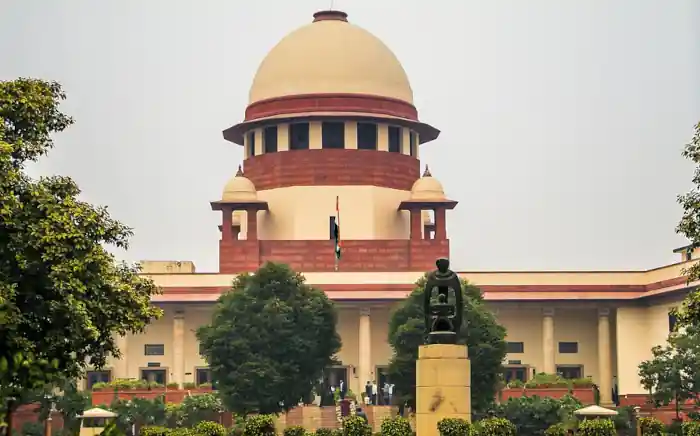
A five Judges Constitutional Bench has delivered an unanimous Judgment
Bench : The bench, also comprising Justices S A Bobde, D Y Chandrachud, Ashok Bhushan and S Abdul Nazeer
Detailed Judgment Shall be followed :
Ram Lala Virajman
- Ramlala Virajman shall get the entire disputed land [2.77 acre]
- Central Government shall construct a trust to manage the disputed land and to construct a temple,
- Ramlala Virajman is the owner of the disputed Land
- ASI Report partly accepted
Sunni Central Waqf Board
- Muslims failed to established Title
- Sunni Waqf Board and Muslims shall get alternative place to construct a Mosque
- Under the Disputed mosque was a non-muslim Hindu type structure
- The Disputed structure was not a Mosque in proper sense
- Separate 5 acre land was allotted to Muslims
- The Centre shall for the time being hold the land and then handed over it to the Trust. The central shall frame a scheme within three month. The trust shall arrange alternative separate 5 acre land.
Nirmohi Akhara
- Nirmohi akhara virtually lost the case
- The case Decreed in favour of Deity Ram Lala Virajman
- The place is the Birth Place of Lord Rama
SUITS
- First four suits has been dismissed and only suit no 5 has been decreed in favour Deity of Lord Ram.
- Article 142 of the Constitution has been used to do complete Justice
- Shia Central Board of Waqf U P`s Special Leave Petition has been dismissed by saying : There is an inordinate delay of 24964 days in the Special Leave Petition filed by the Shia Central Board of Waqf Uttar Pradesh against the final judgment dated 30 March 1946 of the Civil Judge, Faizabad. The delay has not been adequately explained. The Special Leave Petition is accordingly dismissed.
Reliefs and directions
805. We accordingly order and direct as follows:
1 (i) Suit 3 instituted by Nirmohi Akhara is held to be barred by limitation and shall accordingly stand dismissed;
(ii) Suit 4 instituted by the Sunni Central Waqf Board and other plaintiffs is held to be within limitation. The judgment of the High Court holding Suit 4 to be barred by limitation is reversed; and
(iii) Suit 5 is held to be within limitation.
2 Suit 5 is held to be maintainable at the behest of the first plaintiff who is represented by the third plaintiff. There shall be a decree in terms of prayer clauses (A) and (B) of the suit, subject to the following directions:
(i) The Central Government shall, within a period of three months from the date of this judgment, formulate a scheme pursuant to the powers vested in it under Sections 6 and 7 of the Acquisition of Certain Area at Ayodhya Act 1993. The scheme shall envisage the setting up of a trust with a Board of Trustees or any other appropriate body under Section 6. The scheme to be framed by the Central Government shall make necessary provisions in regard to the functioning of the trust or body including on matters relating
to the management of the trust, the powers of the trustees including the construction of a temple and all necessary, incidental and supplemental matters;
(ii) Possession of the inner and outer courtyards shall be handed over to the Board of Trustees of the Trust or to the body so constituted. The Central Government will be at liberty to make suitable provisions in respect of the rest of the acquired land by handing it over to the Trust or body for management and development in terms of the scheme framed in accordance with the above directions; and
(iii) Possession of the disputed property shall continue to vest in the statutory receiver under the Central Government, untill in exercise of its jurisdiction under Section 6 of the Ayodhya Act of 1993, a notification is issued vesting the property in the trust or other body.
3 (i) Simultaneously, with the handing over of the disputed property to the Trust or body under clause 2 above, a suitable plot of land admeasuring 5 acres shall be handed over to the Sunni Central Waqf Board, the plaintiff in Suit 4.
(ii) The land shall be allotted either by:
(a) The Central Government out of the land acquired under the Ayodhya Act 1993; or
(b) The State Government at a suitable prominent place in Ayodhya;
The Central Government and the State Government shall act in consultation with each other to effectuate the above allotment in the period stipulated.
(iii) The Sunni Central Waqf Board would be at liberty, on the allotment of the land to take all necessary steps for the construction of a mosque on the land so allotted together with other associated facilities;
(iv) Suit 4 shall stand decreed to this extent in terms of the above directions; and
(v) The directions for the allotment of land to the Sunni Central Waqf Board in Suit 4 are issued in pursuance of the powers vested in this Court under Article 142 of the Constitution.
4 In exercise of the powers vested in this Court under Article 142 of the Constitution, we direct that in the scheme to be framed by the Central Government, appropriate representation may be given in the Trust or body, to the Nirmohi Akhara in such manner as the Central Government deems fit.
5 The right of the plaintiff in Suit 1 to worship at the disputed property is affirmed subject to any restrictions imposed by the relevant authorities with respect to the maintenance of peace and order and the performance of orderly worship.
806. All the appeals shall stand disposed of in the above terms. Parties are left to bear their own costs.
Read the full text of the Judgment
M Siddiq (D) Thr Lrs Versus Mahant Suresh Das & Ors
Read also
Ayodhya Judgment by Allahabad High Court