The position under the Special Marriage Act is that secession to the property of any person professing the Hindu, Buddhist, Sikh or Jain religion who marries under this Act, and the property of the issue of such marriage is to be regulated by the provisions of the Succession Act.
(1952) AIR(Allahabad) 214 : (1950) 20 AllWR 580
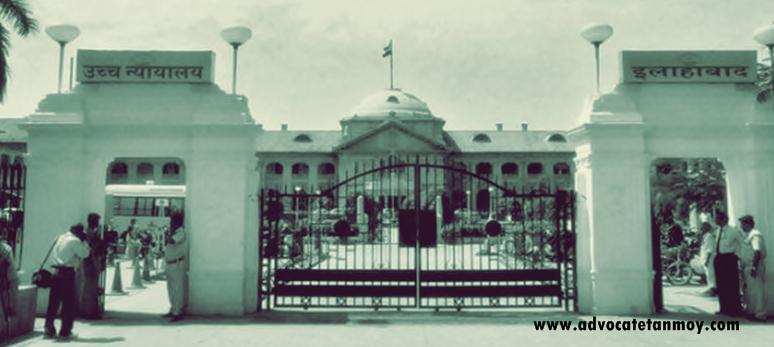
ALLAHABAD HIGH COURT
SINGLE BENCH
( Before : Agarwala, J )
MT. GANGA DEVI Vs. BIJAI SINGH
Second Appeal No. 1765 of 1945
Decided on : 01-05-1950
Special Marriage Act, 1954 – Section 22, Section 24
Succession Act, 1925 – Section 33
Counsel for Appearing Parties
Jai Kishen Deo and H.C. Mukerjee, for the Appellant; Shabd Saran, for the Respondent
JUDGMENT
Agarwala, J.—This is a plaintiff’s appeal arising out of a suit for a declaration that certain monies belonging to Dalel Singh, the husband of the plaintiff-appellant, who died leaving the plaintiff-appellant and the defendant-respondent, a son by a previous wife, belonged to the plaintiff-appellant. The plaintiff was married to Dalel Singh deoeased under the Special Marriage Act in the year 1938. When Dalel Singh married the plaintiff he had a son Bijai Singh, defendant-respondent by a previous Hindu wife whom he had married under the Hindu form of marriage. On Dalel Singh’s death, the plaintiff appellant claimed that she was the sole heir of the property left by Dalel Singh under the provisions of the Succession Act. This claim was made on the ground that the Succession Act does not recognise a Hindu marriage and a son by the previous Hindu wife was not entitled to inherit under the provisions of that Act.
2. The Special Marriage Act under which the plaintiff was married provides :
Section 22.–“The marriage under this Act of any member of an undivided family who professes the Hindu, Buddhist, Sikh or Jaina religion shall be deemed to effect his severance from such family.”
Section 23.–“A person professing the Hindu, Buddhist, Sikh or Jaina religion who marriages under this Act shall have the same rights and be subject to the same disabilities in regard to any right of succession to any property as a person to whom the Castes Disabilities Removal Act, 1850 applies:
“Provided that nothing in this section shall confer on any person any right to any religious office or service, or to the managemant of any religious or charitable trust.”
Section 24.–“Succession to the property of any person professing the Hindu, Buddhist, Sikh or Jain religion, who marries under this Act, and to the property of the issue of such marriage, shall be regulated by the provisions of the Indian Succession Act, 1865.” The provisions of the Succession Act which governs the present case are embodied in Section 33 of that Act, which runs as follows :
“Where the intestate has left a widow : (a) if he has also left any lineal descendants, one-third of his property shall balong to his widow, & the remaining two-thirds shall go to his lineal descendants according to the rules hereinafter contained.”
3. The trial Court held that the defendant was a lineal descendant within the meaning of Section 33, Succession Act. The plaintiff was, therefore, granted a decree to the extent of one-third on!y. This decree was confirmed by the lower appellate Court.
4. In this second appeal the contention is that Bijoy Singh having been born of a Hindu wife where polygomy is allowed is not a lineal descendant within the meaning of Section 33. Eelianoe has been placed upon a ruling of the Upper Burma Chief Court, reported in Sophia Blin v. Maria David AIR 1919 UB 3 wherein it was held that a person married under the Burmese Marriage Law which permitted polygomy was not a lineal descendant within the meaning of Section 33, Succession Act.
5. The position under the Special Marriage Act is that secession to the property of any person professing the Hindu, Buddhist, Sikh or Jain religion who marries under this Act, and the property of the issue of such marriage is to be regulated by the provisions of the Succession Act. It is, therefore, obvious that the Hindu, Buddhist, Sikh or Jaina marriages are recognised by the Indian Law as valid marriages even for the purposes of the Succession Act. The learned Judge of the Burma Court was led to hold, as he did, because he considered that under the English Law a polygamist marriage is not aonsidered to be a valid marriage. The Special Marriage Act, however, clearly indicates that Hindu, Buddhist, Sikh or Jaina Marriages are to be recognissd as valid for purposes of succession under the Succession Act.
6. Again, reliance was placed upon the words “severance from such family” in Section 22 of the Special Marriage Act, & it was urged that since Dalel Singh married under the Special Marriage Act he severed his connections from his family and therefore, from his son and therefore the latter could not inherit. Severance spoken of in Section 22 has reference to the undivided nature of the family & the section simply means that a person who marries under the Special Marriage Act will be deemed to have separated from the joint Hindu family and will no longer be a member of an undivided family. It has no reference to succession.
7. The view taken by the Court below was perfectly correct.
8. There is no force in this appeal and I dismiss it with costs.