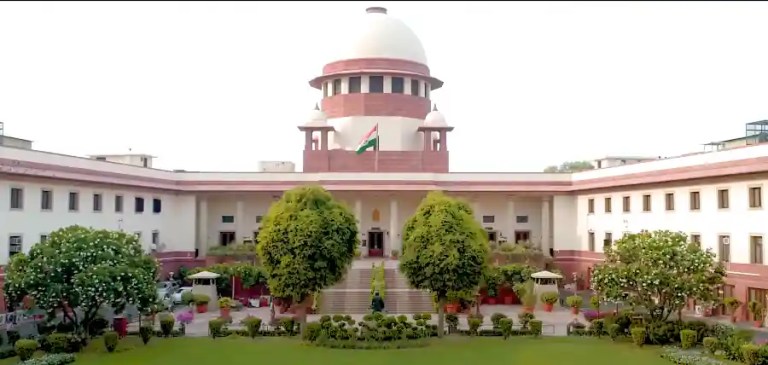
Supreme Court of India
SUPREME COURT OF INDIA
Sudhamayee Pattnaik and Ors. Vs. Bibhu Prasad Sahoo and Ors.
[Civil Appeal No. 6370 of 2022]
DATE: SEPTEMBER 16, 2022
ACTS: Order 1 Rule 10 CPC
JUDGMENT
M.R. Shah, J.
1. Feeling aggrieved and dissatisfied with the impugned judgment and order dated 28.03.2022 passed by the High Court of Orissa at Cuttack in CMP No. 258/2019, by which the High Court has dismissed the said writ petition preferred by the appellants herein – original plaintiffs and has confirmed the order passed by the trial Court allowing application under Order 1 Rule 10 CPC preferred by original defendant Nos. 1 to 4 and thereby directing to implead the subsequent purchasers as defendants in the suit instituted by the original plaintiffs, the original plaintiffs have preferred the present appeal.
2. The facts leading to the present appeal in a nutshell are as under: That the appellants – original plaintiffs instituted Civil Suit No. 298/2011 against the original defendants for declaration, permanent injunction and recovery of possession. In the said suit, original defendants appeared and filed their joint written statement along with counter-claim for declaration of their right, title and interest over the suit property and for permanent injunction.
After the evidence from the side of the plaintiffs was closed, original defendant Nos. 1 to 4 filed an application under Order 1 Rule 10 CPC and prayed for impleadment of subsequent purchasers as party defendants alleging inter alia that during the pendency of the suit, the plaintiffs have illegally and unlawfully alienated some parcels of the disputed land in favour of one Manasi Sahoo wife of Sanjaya Kumar Sahoo, Bharat Chandra Sahoo, Dhaneswar Sahoo and Kedarnath Sahoo. Therefore, it was prayed to implead the subsequent purchasers as party defendants for proper adjudication of the suit and to avoid multiplicity of proceedings.
2.1 The said application was opposed by the plaintiffs – appellants herein on the ground that defendant Nos. 1 to 4 have no locus standi to file such an application. It was also the case on behalf of the original plaintiffs that the plaintiffs are the dominus litis and nobody can be permitted to join/implead as defendants against the wish of the plaintiffs.
2.2 By order dated 20.02.2019, learned Civil Judge (Sr. Division), Khorda allowed the said application and directed to implead the subsequent purchasers as defendants by observing that the subsequent purchasers are the lis pendens purchasers and the lis pendens purchasers may be added as proper parties to prevent multiplicity of litigation.
2.3 Feeling aggrieved and dissatisfied with the order passed by the trial Court allowing application under Order 1 Rule 10 CPC, which was filed at the instance of original defendant Nos. 1 to 4, the plaintiffs preferred writ petition before the High Court. By the impugned judgment and order, the High Court has dismissed the said writ petition. Hence, this appeal.
3. Learned counsel appearing on behalf of the appellants – original plaintiffs has vehemently submitted that in the facts and circumstances of the case, both, the trial Court as well as the High Court have committed a grave error in allowing the application under Order 1 Rule 10 CPC, which was at the instance of the defendants.
3.1 It is then submitted that the plaintiffs are the dominus litis and nobody can be permitted to be impleaded as defendants against the wish of the plaintiffs.
3.2 It is further submitted that the decision of this Court in the case of Rahul S. Shah v. Jinendra Kumar Gandhi, reported in (2021) 6 SCC 418, which has been relied upon and followed by the High Court, shall not be applicable to the facts of the case on hand.
4. On the other hand, it is the case on behalf of defendant Nos. 1 to 4 that as the part of the suit property was transferred illegally in favour of the subsequent purchasers during the pendency of the suit, to avoid any multiplicity of proceedings and to pass an effective decree, the trial Court rightly allowed the application under Order 1 Rule 10 CPC and directed to implead the subsequent purchasers as defendants. It is therefore submitted that the High Court has not committed any error in dismissing the writ petition.
5. We have heard learned counsel for the respective parties at length. At the outset, it is required to be noted that the defendants in the suit filed application under Order 1 Rule 10 CPC and prayed to implead the subsequent purchasers as party defendants. The suit is for declaration, permanent injunction and recovery of possession. As per the settled position of law, the plaintiffs are the domius litis. Unless the court suo motu directs to join any other person not party to the suit for effective decree and/or for proper adjudication as per Order 1 Rule 10 CPC, nobody can be permitted to be impleaded as defendants against the wish of the plaintiffs. Not impleading any other person as defendants against the wish of the plaintiffs shall be at the risk of the plaintiffs. Therefore, subsequent purchasers could not have been impleaded as party defendants in the application submitted by the original defendants, that too against the wish of the plaintiffs.
6. Now so far as the reliance placed upon the decision of this Court in the case of Rahul S. Shah (supra) by the High Court is concerned, on facts, the said decision shall not be applicable to the facts of the case on hand. The said decision was not a case of an application under Order 1 Rule 10 CPC to implead the persons not party to the suit as defendants and that too at the instance of the defendants.
7. However, at the same time, considering the fact that defendants have also filed counter-claim for declaration of their right, title and interest over the suit property and permanent injunction and in case the counter-claim is allowed, as the plaintiffs are opposing to implead the subsequent purchasers as party defendants, thereafter it will not be open for the plaintiffs to contend that no decree in the counter-claim be passed in absence of the subsequent purchasers. Therefore, non-impleading the subsequent purchasers as defendants on the objection raised by the plaintiffs shall be at the risk of the plaintiffs.
8. In view of the above and for the reasons stated above and with the aforesaid observations, the present appeal is allowed. The impugned judgment and order passed by the High Court and that of the trial Court allowing application under Order 1 Rule 10 CPC are hereby quashed and set aside, however, with the observations as above.
The instant appeal is allowed in the aforesaid terms. In the facts and circumstances of the case, there shall be no order as to costs.
J. [M.R. SHAH]
J. [KRISHNA MURARI]
NEW DELHI;
SEPTEMBER 16, 2022.