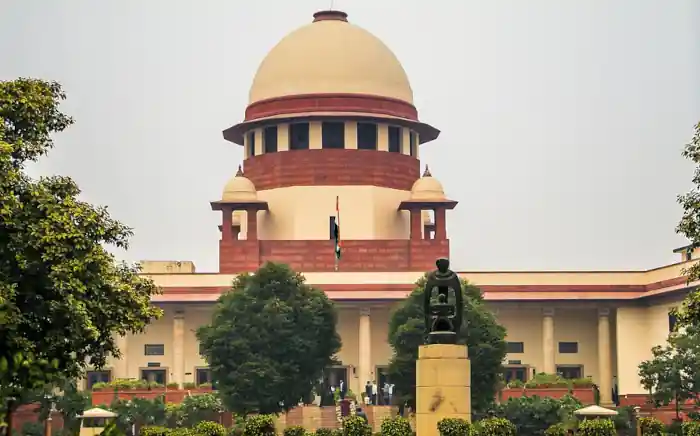
Union of India v. Rohith Nathan, 2026 INSC 230
Citation: 2026 INSC 230
Court: Supreme Court of India
Bench: Pamidighantam Sri Narasimha and R. Mahadevan, JJ.
Date of Judgment: March 11, 2026
Facts:
This common judgment disposes of a batch of appeals filed by the Union of India against separate judgments of the Madras, Delhi, and Kerala High Courts. The cases involved candidates who had qualified in the Civil Services Examination (CSE) for various years (2012-2017) under the OBC category. Their candidature for OBC reservation was rejected by the Department of Personnel and Training (DoPT) on the ground that they fell within the “creamy layer.” This determination was based on the salary income of their parents, who were employed in Public Sector Undertakings (PSUs), banks, or private enterprises. The DoPT applied the “Income/Wealth Test” under Category VI of the Schedule to the Office Memorandum (O.M.) dated 08.09.1993, read with a clarificatory letter dated 14.10.2004. The Central Administrative Tribunal (CAT) and the respective High Courts ruled in favor of the candidates, holding that salary income should be excluded from the income test for creamy layer determination and that treating PSU employees differently from Government employees was discriminatory. Aggrieved, the Union of India appealed to the Supreme Court.
Issues:
- Whether the clarificatory letter dated 14.10.2004 could override or supersede the Office Memorandum dated 08.09.1993, which lays down the criteria for identifying the creamy layer among OBCs.
- Whether treating employees of Public/Private Sector Undertakings differently from Government employees, when both occupy posts of the same grade or class, for the purpose of creamy layer exclusion, amounts to hostile discrimination, violating Articles 14, 15, and 16.
Held:
The Supreme Court dismissed all the appeals filed by the Union of India, upholding the judgments of the High Courts. The Court held that:
- The 2004 Letter cannot override the 1993 OM, which is the foundational document for creamy layer exclusion.
- Salary income cannot be the sole or primary criterion for determining creamy layer status. The exclusion must be based primarily on the status of the post (Group A/B vs. Group C/D) held by the parents, as envisaged in the 1993 OM.
- Treating the children of Group C and D employees in PSUs/private sector differently from similarly placed children of Government employees, by counting their parents’ salary income, constitutes hostile discrimination and is constitutionally impermissible.
Analysis
The Supreme Court’s judgment is a comprehensive restatement of the constitutional doctrine regarding the exclusion of the “creamy layer” from the Other Backward Classes (OBCs). It clarifies the interplay between the foundational 1993 Office Memorandum and the subsequent 2004 clarificatory letter, firmly establishing the primacy of status over income in the exclusion mechanism.
Key Analytical Points from the Judgment:
- Constitutional Genesis of the Creamy Layer Doctrine: The Court traced the evolution of the creamy layer concept from early cases like M.R. Balaji and K.C. Vasanth Kumar to its constitutional crystallization in Indra Sawhney. It emphasized that the exclusion of the “socially advanced” is not a policy choice but a constitutional imperative to ensure that the benefits of reservation reach the truly backward and to prevent its monopolization by a few. [Para 21-21.10]
- The Primacy of the 1993 OM: The Court held that the 1993 OM, issued pursuant to the Indra Sawhney directions after deliberation by an Expert Committee, is the authoritative and binding framework. Its core principle is that exclusion is primarily status-based (Categories I to III, focusing on the nature of the post held by parents, e.g., Group A/B officers), not purely income-based. The Income/Wealth Test (Category VI) was intended as a residual filter, not the primary mechanism. [Para 21.14, 22, 31]
- The Limited Role of the 2004 Letter: The Court held that a clarificatory letter cannot override or substantively alter the parent policy document (1993 OM). Paragraph 9 of the 2004 Letter, which seems to make salary income determinative for PSU employees, was found to be an interpretative expansion that, if applied in isolation, would distort the original framework. The 2004 Letter must be read harmoniously with the 1993 OM, not as a substitute for it. The Court even noted the Parliamentary Committee’s observation that the 2004 Letter created more confusion than clarity. [Para 24, 25, 28, 30]
- Hostile Discrimination Against PSU/Private Employees: The Court found that applying a pure income test (including salary) to children of Group C and D employees in PSUs/private sector, while excluding the salary of similarly placed Group C and D Government employees from such a test, created an unjustifiable classification. This violated Article 14 as it treated equals (employees of the same grade/class) unequally without a rational nexus to the object of identifying the creamy layer. The object is to identify social advancement, which is better gauged by the status of the post than by fluctuating salary alone. [Para 32-37, 40]
- Substantive Equality and Article 16(4): The Court reiterated that Article 16(4) is not an exception to Article 16(1) but a facet of it, embodying the principle of substantive equality. Denying reservation to genuinely backward OBC candidates based on a misinterpretation of the rules would defeat the very purpose of this constitutional guarantee. [Para 37-39]
- Remedy of Supernumerary Posts: Taking note of the assurance given by the DoPT to the Parliamentary Committee, the Court directed the creation of supernumerary posts to accommodate the affected candidates who have been litigating for years, ensuring that a legal victory does not become meaningless due to the passage of time. [Para 43]
Law Points
- Constitutional Imperative of Creamy Layer Exclusion: The exclusion of the “creamy layer” from the OBCs is not merely a policy but a constitutional imperative derived from the principle of equality under Articles 14, 15, and 16, as established in Indra Sawhney v. Union of India (1992) . It ensures that the benefits of reservation reach the truly backward and prevents its monopolization by the socially advanced within the class. [Para 21.9, 33]
- 1993 OM is the Foundational Document: The Office Memorandum dated 08.09.1993 is the binding and authoritative framework for identifying the creamy layer. It is hierarchically superior to any subsequent clarificatory letter and cannot be overridden by it. [Para 24, 30]
- Status-Based Exclusion over Income-Based Exclusion: The primary criterion for creamy layer exclusion is status-based, determined by the nature and class of the post held by the parents (e.g., Group A/B officers). The Income/Wealth Test (Category VI) is a residual or secondary filter to be applied only in cases where status-equivalence has not been determined. Salary income alone cannot be the sole determinant. [Para 22, 26, 31]
- Interpretation of Category VI (Income/Wealth Test): Under Category VI of the 1993 OM, read with the 2004 Letter, income from salaries and income from agricultural land are not to be clubbed together with income from other sources. The exclusion applies only if the income from other sources exceeds the prescribed limit for three consecutive years. [Para 21.15, 25, 26]
- No Hostile Discrimination between Government and PSU Employees: Treating the children of employees of Public Sector Undertakings (PSUs), banks, and private enterprises differently from the children of similarly placed Government employees (i.e., those in equivalent Group C or D posts) by counting their parents’ salary income for creamy layer determination constitutes hostile discrimination and violates Article 14 of the Constitution. Equals must be treated equally. [Para 34, 40]
- Clarificatory Letter Cannot Alter Parent Policy: An executive letter of clarification cannot introduce substantive conditions that do not exist in the parent policy document. If it alters rights or liabilities, it ceases to be clarificatory and is legally untenable. [Para 24]
- Article 16(4) as a Facet of Equality: Article 16(4) is not an exception to Article 16(1) but rather an emphatic statement of a principle implicit in it, allowing for reasonable classification to achieve substantive equality, as held in State of Kerala v. N.M. Thomas (1976) and affirmed in Indra Sawhney. [Para 39]
- Creation of Supernumerary Posts as a Remedy: Where eligible candidates have been wrongfully denied the benefit of reservation due to prolonged litigation and incorrect application of rules, this Court may, in exercise of its power to do complete justice, direct the creation of supernumerary posts to accommodate them, especially when the government has previously assured such a course of action. [Para 43]