Harish Rana Case Analysis on Passive Euthanasia and Withdrawal of Medical Treatment
Right to Die with Dignity in India
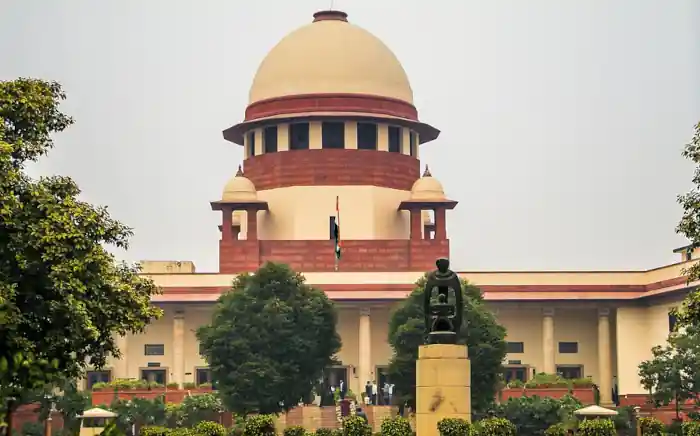
Supreme Court of India: 11th March, 2026
Facts: Harish Rana v. Union of India (2026 INSC 222)
This case, decided by a two-judge bench of the Supreme Court of India (Justices J.B. Pardiwala and K.V. Viswanathan), represents a seminal moment in the jurisprudence surrounding the “right to die with dignity.” It is the first substantive application of the guidelines laid down by the Constitution Bench in Common Cause v. Union of India (2018) and provides a comprehensive interpretation and streamlining of the procedure for withdrawing life-sustaining medical treatment, specifically including Clinically Assisted Nutrition and Hydration (CANH).
Part I: The Facts and the Journey to the Supreme Court
The Patient and the Tragedy: The applicant, Harish Rana, was a 20-year-old B.Tech student in 2013 when he suffered a catastrophic fall, resulting in a severe traumatic brain injury (diffuse axonal injury). This left him in a Permanent Vegetative State (PVS) with quadriplegia and a 100% permanent disability. For over 13 years, he has been entirely bedridden, unable to see, hear, speak, eat, or respond to his environment. His survival depends entirely on medical interventions, including:
- A tracheostomy tube for airway management.
- A urinary catheter.
- Clinically Assisted Nutrition and Hydration (CANH) delivered via a surgically placed Percutaneous Endoscopic Gastrostomy (PEG) tube.
The Failed High Court Petition: Harish’s parents, his devoted primary caregivers, first approached the Delhi High Court seeking to initiate the process for withdrawing his life-sustaining treatment under the Common Cause guidelines. The High Court dismissed the petition, erroneously holding that since Harish was not on a mechanical ventilator and could breathe on his own, he was not being kept alive by “external aid,” and therefore, the guidelines did not apply.
The Path to the Supreme Court: Aggrieved, the parents appealed to the Supreme Court. The Court initially disposed of the matter by ensuring the Union Government provided enhanced home-care support. However, when Harish’s condition deteriorated further, requiring another hospitalization and tracheostomy, his parents exercised the liberty granted by the Court and filed the present Miscellaneous Application. Their core prayers were:
- To constitute the medical boards as per the Common Cause guidelines.
- For a declaration that CANH (administered via a PEG tube) constitutes “medical treatment,” making it eligible for withdrawal.
The Supreme Court’s Intervention: Recognizing the gravity of the situation, the Supreme Court activated the Common Cause framework:
- It directed the constitution of a Primary Medical Board, which visited Harish at home and reported that his chances of recovery were “negligible.”
- It then directed AIIMS, New Delhi, to constitute a Secondary Medical Board. This board, after a thorough examination, confirmed that Harish was in an “irreversible permanent vegetative state” for the past 13 years and that continued CANH, while required for survival, would “not aid in improving his medical condition or repairing his underlying brain damage.”
- The Court also facilitated interactions with the family. The parents, now elderly, expressed their agonizing decision with profound clarity: they have done everything humanly possible for 13 years, their son has no quality of life or awareness, and continuing treatment only prolongs his suffering and indignity. Their decision was a selfless act of love, taken in what they genuinely believed to be his best interests.
Part II: Case Analysis and Legal Reasoning
The Court’s analysis is exhaustive, revisiting the constitutional foundations laid down in Common Cause (2018) and then applying them to the complex questions raised by Harish’s case.
1. Revisiting the Core Principles of Common Cause (2018)
The judgment reaffirms the constitutional basis for permitting the withdrawal of medical treatment (passive euthanasia) under Article 21.
- The “Right to Die with Dignity”: The Court anchors this right in the interpretation of “life” under Article 21, which means a life of dignity. This right to dignity extends to the very end of life, encompassing a dignified process of dying.
- For Competent Patients: The right to refuse medical treatment is absolute and unencumbered, flowing from the rights to privacy, autonomy, and self-determination.
- For Incompetent Patients (like Harish): The justification shifts. It is rooted in the standalone basis of dignity and bodily integrity. Subjecting a patient to futile, invasive treatment that offers no hope of recovery becomes an affront to their dignity. The Court emphasizes that “both continuation and withdrawal of treatment are based on a ‘choice’.” To continue treatment blindly is as much a choice as to stop it. The decision must be guided by what preserves the patient’s dignity.
- The Duty of the Doctor: The doctor’s duty of care is not an absolute mandate to preserve life at all costs. When treatment becomes futile, the duty transforms into one of providing comfort and palliative care. Withdrawing futile treatment, following the correct procedure, is not an “illegal omission” but a fulfillment of the doctor’s duty.
2. Issue 1: Is CANH “Medical Treatment”?
This was the first major hurdle. The Court, drawing on medical literature and international jurisprudence (especially Airedale NHS Trust v. Bland from the UK and In re Conroy from the US), held unequivocally that CANH is a form of medical treatment.
- Medical Complexity: CANH involves surgical insertion of tubes (like PEG), precise prescription of formulas, management of feeding pumps, and constant monitoring for serious complications like infections, peritonitis, and aspiration. It is a “technologically mediated medical intervention.”
- Not Basic Care: It is fundamentally different from oral feeding. The Court quotes Lord Keith in Bland, stating that one must look at the “whole regime of medical treatment,” not just the fact that nourishment is being provided.
- Home Setting is Irrelevant: The fact that CANH can be administered at home by a trained family member does not change its character. It remains a procedure prescribed, supervised, and periodically reviewed by medical professionals. To hold otherwise would deprive doctors of the agency to assess its therapeutic value.
3. Issue 2 & 3: The “Best Interest of the Patient” Principle
The Court conducted a masterful comparative analysis of the “best interest” principle across the USA, UK, Ireland, Italy, Australia, and New Zealand. It then synthesized these principles into a clear framework for India, as derived from Common Cause (2018).
The Correct Question: The Court, following Lord Goff in Bland, reframes the inquiry. The question is not “is it in the patient’s best interest to die?” but rather, “is it in the patient’s best interests that his life be prolonged by the continuance of this form of medical treatment?”
A Holistic, Two-Pronged Test: The “best interest” determination requires a holistic assessment of both medical and non-medical considerations.
- Medical Considerations:
- Futility: Has the treatment become futile, conferring no therapeutic benefit?
- Irreversibility: Is the condition (e.g., PVS) irreversible with no hope of recovery or cure?
- Prolongation: Has the treatment been prolonged, moving beyond temporary intervention to mere life-sustenance?
- Indignity: Does the continuation of treatment cause the patient pain, suffering, and a loss of dignity?
- Non-Medical Considerations (The “Substituted Judgment” Component):
- This requires the decision-makers (family and doctors) to be patient-centric, not parent-centric.
- They must ascertain, as far as possible, what the patient would have wanted. This is based on the patient’s past and present wishes, feelings, beliefs, and values.
- The family must act as a conduit for the patient’s presumed will, not impose their own personal wishes.
The “Balance Sheet” Approach: Once all relevant medical and non-medical factors are identified, they must be weighed. The Court endorses the “balance sheet” approach from English law (Re A (Male Sterilisation)), where the benefits of continued treatment are weighed against its burdens.
Applying the Principle to Harish Rana:
- Medical Factors: Both medical boards unanimously confirmed futility, irreversibility (13+ years in PVS), and the complete absence of therapeutic benefit from CANH.
- Non-Medical Factors: The parents and siblings, after over a decade of devoted care, articulated with conviction that the vibrant, active young man Harish was before the accident would never have wanted to live in such a state. Their decision was a faithful reconstruction of his presumed wishes.
- Conclusion: The balance sheet tilted heavily in favor of withdrawal. The Court held that it was not in Harish’s best interests to continue life-prolonging CANH.
Part III: Key Law Points and The Ratio Decidendi
- Constitutional Recognition Reaffirmed: The “right to die with dignity” as a facet of the “right to live with dignity” under Article 21 is reaffirmed. This includes the right to refuse life-sustaining medical treatment.
- CANH as Medical Treatment: Clinically Assisted Nutrition and Hydration (CANH) administered via medical devices like PEG tubes is unequivocally declared to be “medical treatment.” It is subject to the same legal and ethical principles as any other life-sustaining intervention (like a ventilator). Its withdrawal is a form of permissible passive euthanasia.
- The “Best Interest” Test Defined: The governing principle for incompetent patients is the “best interest of the patient.” This is a holistic test requiring a “balance sheet” approach that weighs:
- Medical factors (futility, irreversibility, invasiveness, lack of therapeutic purpose).
- Non-medical factors (the patient’s known or presumed wishes, feelings, beliefs, and values, as communicated by close family acting as substitutes).
- The Procedure is Paramount: The multi-tiered procedure established in Common Cause (2018) and modified in 2023 is the binding law of the land until Parliament enacts legislation. This process, involving a treating physician, a Primary Medical Board, a Secondary Medical Board (with a member nominated by the CMO), and consultation with the family, is designed to safeguard the patient’s best interests and protect doctors from liability.
- Judicial Intervention is Limited: The judgment clarifies that courts are not meant to be the primary decision-makers. If the Primary and Secondary Medical Boards concur on withdrawing treatment, the process can be implemented after a 30-day reconsideration period, allowing any aggrieved person to approach the High Court. Court intervention is only required in cases of disagreement between the boards or a failure to initiate the process.
- The Mandate for Palliative and End-of-Life (EOL) Care: Withdrawing treatment is not abandoning the patient. The Court mandates that it must be accompanied by a structured, humane Palliative and EOL Care Plan to manage pain and symptoms and preserve the patient’s dignity. The Court strongly disapproves of the practice of “Discharge Against Medical Advice” as a substitute for a proper palliative care plan.
- Need for Comprehensive Legislation: The Court strongly urges the Union Government to enact a comprehensive law on end-of-life care, noting that judicial guidelines are an interim measure and not a substitute for a robust statutory framework.
Part IV: The Final Order and Guidelines
The Supreme Court allowed the application and issued the following key directions:
- Withdrawal of Treatment: It permitted the withdrawal of CANH and all other medical treatment being administered to Harish Rana.
- Waiver of Reconsideration Period: Given the unanimous consensus of the family and both medical boards, the standard 30-day reconsideration period was waived to prevent further prolongation of his suffering.
- Implementation and Palliative Care: AIIMS, New Delhi, was directed to admit Harish to its Palliative Care department and implement a robust, tailored EOL care plan to ensure his withdrawal of treatment is painless and dignified.
- Streamlining the Common Cause Guidelines: To address practical hurdles, the Court issued directions to ensure the smooth functioning of the procedure across the country:
- Role of Chief Medical Officers (CMOs): All CMOs must prepare and maintain a panel of qualified registered medical practitioners for nomination to Secondary Medical Boards. They must make a nomination within 48 hours of a request.
- Home-Care Patients: If a patient is receiving treatment at home, the family can admit them to a hospital to initiate the Common Cause process. Hospitals are duty-bound to facilitate this.
- Role of High Courts: High Courts are to issue directions to all Judicial Magistrates (JMFCs) within their jurisdiction on how to handle intimations from hospitals regarding the withdrawal of treatment.
- Recourse for Families: If a treating physician or hospital fails to initiate the process, the family can now directly approach the High Court under Article 226 to compel them to do so.
- Reporting Compliance: The matter was directed to be listed again after one month to report compliance with the directions regarding Harish, and after several months to report on the broader implementation of the streamlined guidelines by the States and Union Territories.
In conclusion, the Harish Rana judgment is a compassionate, legally rigorous, and practically vital elaboration of the law on end-of-life care in India. It provides much-needed clarity on the status of CANH, the scope of the “best interest” test, and the streamlined procedures that must be followed, ensuring that the constitutional promise of dignity is upheld even in the final moments of life.
Date of Judgment: 11th March, 2026
2026 INSC 222
REPORTABLE
IN THE SUPREME COURT OF INDIA
EXTRA-ORDINARY APPELLATE JURISDICTION
MISCELLANEOUS APPLICATION NO. 2238 OF 2025
IN
SPECIAL LEAVE PETITION (CIVIL) NO. 18225 OF 2024
HARISH RANA …APPLICANT
VERSUS
UNION OF INDIA & ORS. …RESPONDENTS