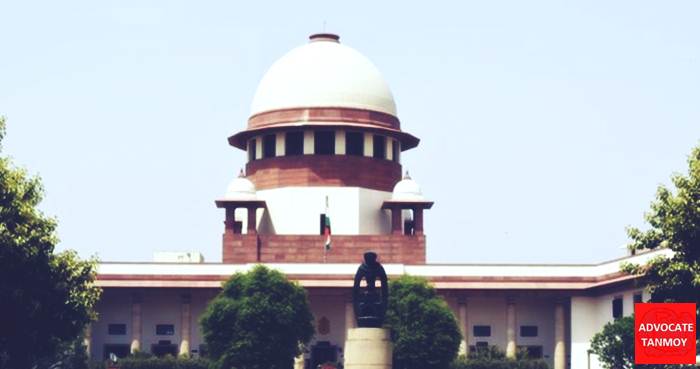
Supreme Court of India
Date: 12th March 2026
1. MANOHAR LAL VS. COMMISSIONER OF POLICE – C.A. No. 13860/2024 – Diary Number 28177 / 2023 – 12-Mar-2026
Whether the disciplinary authority was justified in dispensing with a regular departmental inquiry and dismissing the appellant from service by invoking the exceptional power under Article 311(2)(b) of the Constitution, based on the reasons recorded.
The Supreme Court allowed the appeal, setting aside the orders of the CAT and the High Court, and quashed the dismissal order. The Court held that the reasons recorded by the disciplinary authority for dispensing with the inquiry were insufficient, based on presumption and not on any definite material, and thus amounted to an arbitrary exercise of power. The appellant was ordered to be reinstated with continuity of service and 50% back wages, with liberty to the respondents to initiate a regular departmental inquiry if they so desired.
2. SUDHANSHU KARDAM VS. COMPTROLLER AND AUDITOR GENERAL OF INDIA – C.A. No. 3348/2026 – Diary Number 43728 / 2025 – 12-Mar-2026
Amit Yadav, a person with “mental illness” (55% disability), qualified and was recommended for the post. However, his candidature was rejected by the CAG on the ground that the post of ‘Auditor’ was not identified as suitable for persons with benchmark disabilities (PwBD) suffering from ‘mental illness’.
The suitability of a post for persons with benchmark disabilities is not static. It is governed by notifications issued by the competent authority (Ministry of Social Justice and Empowerment) under the Rights of Persons with Disabilities (RPwD) Act, 2016.
The judgment highlights the need for seamless cooperation between different government agencies (like the SSC and the CAG) to implement court orders and facilitate the appointment of rightful candidates.
3. THE STATE OF MADHYA PRADESH VS. RAJKUMAR YADAV – C.A. No. 3279/2026 – Diary Number 10340 / 2024 – 11-Mar-2026
Rajkumar Yadav, applied for the post of Constable (Driver) in the Madhya Pradesh Police. He disclosed in his application that a criminal case (FIR No. 33/2012) was registered against him for serious offences including kidnapping and rape (Sections 363, 366, 376(2)(f), 120B IPC, etc.). He was subsequently acquitted by the trial court on September 26, 2014, by giving him the benefit of the doubt.
Held: The Supreme Court allowed the State’s appeal, setting aside the judgment of the Division Bench of the High Court and restoring the order of the Learned Single Judge and the decision of the screening committee. The Court held that the Division Bench erred in interfering with the validly exercised discretion of the screening committee. The acquittal based on benefit of doubt does not entitle a candidate to appointment in a disciplined force like the police, especially when involved in grave offences involving moral turpitude.
4. UNION OF INDIA VS. ROHIT NATHAN – C.A. No. 2827-2829/2018 – Diary Number 30325 / 2017 – 11-Mar-2026
The cases involved candidates who had qualified in the Civil Services Examination (CSE) for various years (2012-2017) under the OBC category. Their candidature for OBC reservation was rejected by the Department of Personnel and Training (DoPT) on the ground that they fell within the “creamy layer.”
Held: Salary income cannot be the sole or primary criterion for determining creamy layer status. The exclusion must be based primarily on the status of the post (Group A/B vs. Group C/D) held by the parents, as envisaged in the 1993 OM.
5. M. THANIGIVELU VS. TAMIL NADU ELECTRICITY BOARD TAMIL NADU ELECTRICITY BOARD – C.A. No. 862/2026 – Diary Number 53318 / 2024 – 11-Mar-2026
Whether the seniority of directly recruited Assistant Engineers should be reckoned from the date of their initial appointment (including the training period) or from the date they commenced their probation after the reduction of the training period.
Held: The Court held that the seniority of the direct recruits must be counted from the date of their initial appointment in 2000 and 2001. Statutory rules and regulations prevail over administrative instructions and executive orders.
6. MUNICIPAL CORPORATION OF GREATER MUMBAI VS. M/S R.V. ANDERSON ASSOCIATES LIMITED – C.A. No. 3277-3278/2026 – Diary Number 46184 / 2025 – 11-Mar-2026
Whether the arbitral award is liable to be set aside on the ground of lack of jurisdiction due to the improper constitution of the arbitral tribunal, specifically, whether the co-arbitrators had the power to appoint the presiding arbitrator after the expiry of the 30-day period stipulated in the arbitration clause.
Held: The Supreme Court dismissed the appeals, upholding the decisions of the Arbitral Tribunal and the High Court. The Court held that the arbitration clause was enabling, not restrictive. The co-arbitrators did not lose their power to appoint the presiding arbitrator after 30 days. Furthermore, even if there was a procedural non-compliance, MCGM’s prolonged participation and acquiescence in the process without objection estopped it from later challenging the tribunal’s composition.
Read Also
- Howrah Law Journal (February 2026) 34 Supreme Court Cases
- Howrah Law Journal (January 2026) 25 Supreme Court Cases
- Registrar Cane Cooperative Societies v. Gurdeep Singh Narval (2026 INSC 216)
- Rachana Gangu v. Union of India (2026 INSC 218)
- Supreme Court Daily Digest (11th March 2026)