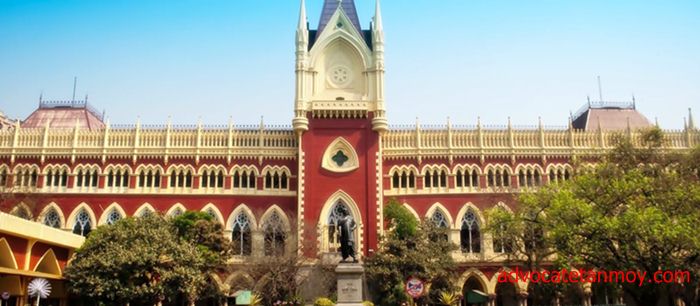
Calcutta High Court Strikes Down Illegal OBC Reservations
Several sections and executive orders related to reservation for Other Backward Classes (OBCs) have been struck down by the Calcutta High Court. The increase of OBC reservations from 7% to 17% by the Government of West Bengal in 2010 has been deemed illegal, and a list of allegedly illegally created backward classes has been provided. The Calcutta High Court has directed the Backward Classes Commission to follow fair and transparent methods for identifying backward classes in the state.
Calcutta High Court
AMAL CHANDRA DAS
-VS-
THE STATE OF WEST BENGAL AND OTHERS
WPO 60 of 2011
Bench: Tapabrata Chakraborty and Rajasekhar Mantha
Date of Judgment: 22 May, 2024
Observations and directions of the Calcutta High Court
After the commencement of the West Bengal Backward Classes (OTHER THAN SCHEDULE CASTES AND SCHEDULE TRIBES) (RESERVATION OF VACANCIES AND POSTS) ACT of 2012 only the State Legislature is empowered to make provisions for reservation in the State services thereunder or under Art. 16(4).
The State executive, therefore, is no longer permitted either under the Act of 1993 or even under Art. 16(4) to make provisions for reservation for OBCs in State services.
c) The second part of section 2(h) of the Act of 2012, which reads as”and includes such classes as the State Government may, by notification in the Official Gazette, specify from time to time;” (emphasis applied) is struck down.
d) Section 16 of the 2012 Act, is struck down since it empowers the State executive to amend any schedule of the Act of 2012 including Schedule I. Consequently, the 37 classes included in the exercise of Section 16 by the State executive, are struck out from Schedule-I of the Act of 2012.
e) Section 5(a) of the Act of 2012, which distributes the percentage of reservation in 10% and 7% to the sub-classified classes is struck down. Consequently, the sub-classified classes listed in the two categories namely OBC-A and OBC-B are struck down from Schedule I of the Act of 2012.
f) The proviso to section 5(a) of the Act of 2012 is read down contextually to read the expression State Government to mean the State of West Bengal in the exercise of its legislative functions, having due regard to the reports of the Commission constituted under the Act of 1993.
g) The executive orders i.e No. 6309-BCW/MR-84/1024th September 2010 and No. 1673-BCW/MR-209/11 dated 11th May, 2012, issued by the Government Of West Bengal Backward Classes Welfare Department, sub-classifying the 143 classes are struck down.
h) The executive orders classifying the 66 classes prior to 2010 are not interfered with since the same have not be challenged.
k) The services of citizens from the 77 classes and 37 classes (added in the exercise of Section 16) struck down above, who are already in the service of the State, or have already availed the benefit of reservation or have succeded in any selection process in the State, shall not be affected by the reason of this judgment.
The Commission must adopt a fair, transparent, and just procedure in the process of identification of Backward Classes in the State. Public advertisement, present-time data, survey of the population as a whole, detailed scientific survey methods, and comparison with the whole population are some proper methods to be followed.
Illegal Government order struck down by the Hon`ble Calcutta High
Illegal Increase in OBC Reservations in West Bengal
By executive order No. 6312-BCW/MR-84/10 dated 24th September 2010,
issued by the
GOVERNMENT OF WEST BENGAL BACKWARD CLASSES WELFARE DEPARTMENT WRITERS’ BUILDINGS, KOLKATA – 700 001,
The percentage of reservations for the Other Backward Classes has been increased from 7% to 17%. The reason for such an increase in the percentage of reservations has been Stated to be the inclusion of a good number of classes as would be evident from the said memo, which is set out hereunder:-
“WHEREAS by this department order No. 1056-BCW/EC/MR-302/97 Calcutta, the 6th November, 1997, the Order No. 347-TW/EC/M- 6/82(1), dated the 13th July, 1994, published in Part I of the Calcutta Gazette, Extraordinary, dated the 13th July, 1994 (hereinafter referred to as the said order), providing for reservation of 5% vacancies in services and posts under the Government of West Bengal, the local and statutory authorities constituted under any State Act, Corporations in which not less than 51% of the paid up share capital is held by the State Government, Universities, Colleges affiliated to the Universities, Primary, Secondary and Higher Secondary Schools, other educational institutions owned or aided by the State Government, and public sector in favour of the Backward Classes of Citizens, as specified in the list in this department Notification No. 346-TW/EC, dated the 13th July, 1994, was subsequently amended to increase the reservation of vacancies in services and posts to 7% in the manner appearing in the said notification;
AND WHEREAS, by this department’s Notification No. 6309- BCW/MR- 84/10, dated the 24th September, 2010, the Governor has been pleased to categorise the Other Backward Classes notified for the purpose of the West Bengal Commission for Backward Classes Act, 1993 (West Ben. Act 1 of 1993) into two groups, namely, Category-A and Category-B and has brought 56 classes under Category- A and 52 Classes under Category-B;
AND WHEREAS, consequent upon addition of a good number of classes in the lists of Other Backward Classes, the Governor has been pleased to decide that the percentage of such reservation would be increased by another 10%, thereby increasing the percentage of such reservation of vacancies in services and posts to 17% and also that separate quota of reservation shall be provided for the Category-A and the Category-B of the other backward classes;
Now.
THEREFORE, in pursuance of the provision of clause (c) of section 2 of the West Bengal Commission for Backward Classes Act, 1993 (West Bengal Act 1 of 1993), the Govenor is pleased hereby to make the following amendment in the said notification:-
Amendment In the said Order, for clause (a), the following clause shall be substituted, “(a) 10% and 7% of the vacancies in services and posts under the Goverment of West Bengal, the local and statutory authoritics constituted under any State Act, Corporations in which not less than 51% of the paid up share capital is held by the State Government, Universities, Colleges affiliated to the Universities, primary, secondary and higher secondary schools, other educational institutions which are owned or aided by the State Government and public sector to be filled up by direct recruitment shall be reserved for the backward classes of citizens belonging to Category-A and Category-B respectively;”.
By order of the Governor,
SK. NURUL HAQUE
Principal Secretary to the Government of West Bengal”
List of Illegally Created Backward Classs
98% of Muslims are included through illegal means
Schedule I
[See section 2(h)]
| SI. | More Backward (Category A) | SI. | Backward (Category B) |
| 1. | Abdal | 1. | Baishya Kapali |
| 2. | Baidya Muslim | 2. | Bansi-Barman |
| 3. | Basni/Bosni | 3. | Barujibi, Barui |
| 4. | Beldar Muslim | 4. | Betkar (Bentkar) |
| 5. | Bepari/Byapari Muslim | 5. | Bhar |
| 6. | Bhatia Muslim | 6. | Bharbhuja |
| 7. | Bhatiyara | 7. | Bhujel |
| 8. | Chowduli | 8. | Bungchheng |
| 9. | Chutor Mistri | 9. | Chasatti (Chasa) |
| 10. | Dafadar | 10. | Chitrakar |
| 11. | Dhukre | 11. | Christians converted from Scheduled Castes |
| 12. | Dhunia | 12. | Devanga |
| 13. | Fakir/Bain | 13. | Dewan |
| 14. | Gayen | 14. | Dhimal |
| 15. | Ghosi | 15. | Gangot |
| 16. | Hajjam | 16. | Goala-Gope (Pallav Gope, Ballav Gope, Yadav Gope,Gope, Ahir and Yadav) |
| 17. | Hawari | 17. | Hel/Halia/Chasi-Kaibartta |
| 18. | Jamadar | 18. | Kahar |
| 19. | Jolah (Ansari-Momin) | 19. | Kansari |
| 20. | Kalander | 20. | Kapali |
| 21. | Kan | 21. | Karani |
| 22. | Kasai | 22. | Karmakar |
| 23. | ‘Cholla Muslim | 23. | Keori/Koiri |
| 24. | Laskar | 24. | Khen |
| 25. | Mahaldar | 25. | Kumbhakar, Kumar |
| 26. | Majhi/Patni Muslim | 26. | Kurmi |
| 27. | Mal Muslim | 27. | Malakar |
| 28. | Mallick | 28. | Mangar |
| 29. | Midde | 29. | Moira-Modak |
| 30. | Molla | 30. | Nagar |
| 31. | Muchi/Chamar Muslim | 31. | Napit |
| 32. | Muslim BarujibifBarui | 32. | Nembang |
| 33. | Muslim Biswas | 33. | Newar |
| 34. | Muslim Haldar | 34. | Rai (including Chamling) |
| 35. | Muslim Mali | 35. | Raju |
| 36. | Muslim Mondal | 36. | Sampang |
| 37. | Muslim Pyada | 37. | Sarak |
| 38. | Muslim Sanpui/Sapui | 38. | Satchasi |
| 39. | Nashya-Sekh | 39. | Shankakar |
| 40. | Nehariya | 40. | Sunuwar |
| 41. | Nikari | 41. | Sutradhar |
| 42. | Patidar | 42. | Swarnakar |
| 43. | Penchi | 43. | Tamboli/Tamali |
| 44. | Rajmistri | 44. | Tanti, Tantubaya |
| 45. | Rayeen/lCunjira | 45. | Tell, Kolu |
| 46. | Sardar | 46. | Thami |
| 47. | Shershabadia | 47. | Turha |
| 48. | Siuli (Muslim) | 48. | Yogi-Nath |
| 49. | Tutia | 49. | Dadi/Ostagargdrishi |
| 50. | Dhanuk | 50. | Dhali (Muslim) |
| 51. | Jogi | 51. | Pahadia-Muslim |
| 52. | Khandait | 52. | Tat-Pakha Bert |
| 53. | Kosta/Kostha | 53. | Adaldar (Muslim) |
| 54. | Lakhera/Laahera | 54. | Akunji/Akan/Akhan (Muslim) |
| 55. | Roniwar | 55. | Bag (Muslim) |
| 56. | Sukli | 56. | Chaprashi (Muslim) |
| 57. | Bhangi (Muslim) | 57. | Chmihar |
| 58. | Dhatri/Dai/Dhaity (Muslim) | 58. | Daptari (Muslim) |
| 59. | Gharami (Muslim) | 59. | Dewan (Muslim) |
| 60. | Ghorkhan | 60. | Dhabak (Muslim) |
| 61. | Goldar/Golder (Muslim) | 61. | Gazi (Muslim) |
| 62. | Halsana (Muslim) | 62. | Khan (Muslim) |
| 63. | Kayal (Muslim) | 63. | Kolu Muslim (Shah, Sahaji, Sadhukhan, Mondal) |
| 64. | Naiya (Muslim) | 64. | Majhi |
| 65. | Shikari/Sikari (Muslim) | 65. | Malita/Malitha/Malitya (Muslim) |
| 66. | Mistri (Muslim) | ||
| 67. | Paik (Muslim) | ||
| 68. | Pailan (Muslim) | ||
| 69. | Purkait (Muslim) | ||
| 70. | Sana (Muslim) | ||
| 71. | Sareng (Muslim) | ||
| 72. | Sardar (Muslim) | ||
| 73. | Sarkar (Muslim) | ||
| 74. | Shah (Fakir/Shali/Sha/Sahaji) | ||
| 75. | Tarafdar (Muslim) | ||
| 76. | Gavara | ||
| 77. | Mouli (Muslim) | ||
| 78. | Sepai (Muslim) |