Skip to content

ADVOCATETANMOY LAW LIBRARY

Research & Library Database

Primary Menu
  • News
  • Opinion
  • Countries198
    • National Constitutions: History, Purpose, and Key Aspects
  • Judgment
  • Book
  • Legal Brief
    • Legal Eagal
  • LearnToday
  • HLJ
    • Supreme Court Case Notes
    • Daily Digest
  • Sarvarthapedia
    • Sarvarthapedia (Core Areas)
    • Systemic-and-systematic
    • Volume One
06/04/2026
  • INDIA

Ambedkar-Gandhi Poona Pact (1932)

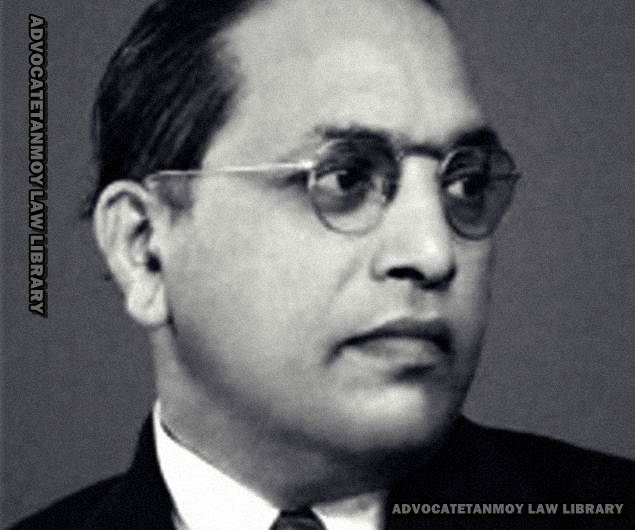
The Poona Pact of 1932 introduced reserved seats for the Depressed Classes in provincial and central legislatures, based on the population. It outlined a system of joint electorates and reserved seats, with a provision for primary elections after the first ten years, unless terminated by mutual agreement. Additionally, it ensured no discrimination based on caste in local body elections and public service appointments, with a focus on educational facilities for the Depressed Classes. This pact was a significant step in addressing the representation and rights of the Depressed Classes. Notably, it is essential to recognize that Ambedkar never used the term 'Dalit'.
advtanmoy 16/10/2021 3 minutes read

ยฉ Advocatetanmoy Law Library

  • Share on WhatsApp (Opens in new window) WhatsApp
  • Share on X (Opens in new window) X
  • Share on Facebook (Opens in new window) Facebook
  • Share on Telegram (Opens in new window) Telegram
BR Ambedkar

Home ยป Law Library Updates ยป Sarvarthapedia ยป National ยป INDIA ยป Ambedkar-Gandhi Poona Pact (1932)

Ambedkar-Gandhi Poona Pact 1932 and Depressed Classes Representation

Ambedkar-Gandhi Poona Pact 1932

Text

1- There shall be seats reserved for the Depressed Classes out of general electorate seats in the provincial legislatures as follows: –

Read Next

  • 4th Lok Sabha Elections 1967 Statistical Report Analysis
  • The Rise and Political Career of Mamata Banerjee: From Street Fighter Didi to Daddy of Bengal Politics
  • President Droupadi Murmu`s Address to the Indian Nation (25th Jan 2026)

Madras 30; Bombay with Sind 25; Punjab 8; Bihar and Orissa 18; Central Provinces 20; Assam 7; Bengal 30; United Provinces 20. Total 148. These figures are based on the Prime Minister’s (British) decision.

2. Election to these seats shall be by joint electorates subject, however, to the following procedure โ€“

All members of the Depressed Classes registered in the general electoral roll of a constituency will form an electoral college which will elect a panel of tour candidates belonging to the Depressed Classes for each of such reserved seats by the method of the single vote and four persons getting the highest number of votes in such primary elections shall be the candidates for election by the general electorate.

3. The representation of the Depressed Classes in the Central Legislature shall likewise be on the principle of joint electorates and reserved seats by the method of primary election in the manner provided for in clause above for their representation in the provincial legislatures.

Read Next

  • 4th Lok Sabha Elections 1967 Statistical Report Analysis
  • The Rise and Political Career of Mamata Banerjee: From Street Fighter Didi to Daddy of Bengal Politics
  • President Droupadi Murmu`s Address to the Indian Nation (25th Jan 2026)

CENTRAL LEGISLATURE

Read Next

  • 4th Lok Sabha Elections 1967 Statistical Report Analysis
  • The Rise and Political Career of Mamata Banerjee: From Street Fighter Didi to Daddy of Bengal Politics
  • President Droupadi Murmu`s Address to the Indian Nation (25th Jan 2026)

4. In the Central Legislature 18 percent of the seats allotted to the general electorate for British India in the said legislature shall he reserved for the Depressed Classes.

5. The system of primary election to a panel of candidates for election to the Central and Provincial Legislatures as i herein-before mentioned shall come to an end after the first ten years, unless terminated sooner by mutual agreement under the provision of clause 6 below.

6. The system of representation of Depressed Classes by reserved seats in the Provincial and Central Legislatures as provided for in clauses (1) and (4) shall continue until determined otherwise by mutual agreement between the communities concerned in this settlement.

7. The Franchise for the Central and Provincial Legislatures of the Depressed Classes shall be as indicated, in the Lothian Committee Report.

8. There shall be no disabilities attached to any one on the ground of his being a member of the Depressed Classes in regard to any election to local bodies or appointment to the public services. Every endeavour shall be made to secure a fair representation of the Depressed Classes in these respects, subject to such educational qualifications as may be laid down for appointment to the Public Services.

(Adult franchise but reservation has been provided for Depressed Classes on a population basis, till 1960),

9. In every province out of the educational grant an adequate sum shall be earmarked for providing educational facilities to the members of Depressed Classes.

Note: Ambedkar never used the term ‘Dalit’

Read also:

An essay on Buddha and Karl Marx – BR Ambedkar -1954

Barrister Bhimrao Ramji Ambedkar and the court cases he argued

Tags: 1932CE Ambedkar BR Depressed Classes

Post navigation

Previous: Commonwealth of India Bill (National Convention, India) 1925
Next: US Presidential Determination on Refugee Admissions for Fiscal Year 2022
Communism
Sarvarthapedia

Manifesto of the Communist Party 1848: History, Context, and Core Concepts

Arrest
Sarvarthapedia

Latin Maxims in Criminal Law: Meaning, Usage, and Courtroom Application

Abolition of Slave Trade Act 1807: Facts, Enforcement, and Historical Context

British Slavery and the Church of England: History, Theology, and the Codrington Estates

United States of America: History, Government, Economy, and Global Power

Biblical Basis for Slavery: Old and New Testament Laws, Narratives, and Interpretations

Rule of Law vs Rule by Law and Rule for Law: History, Meaning, and Global Evolution

IPS Cadre Strength 2025: State-wise Authorised Strength

Uric Acid: From 18th Century Discovery to Modern Medical Science

Christian Approaches to Interfaith Dialogue: Orthodox, Catholic, Protestant, and Pentecostal Views

Origin of Central Banking in India: From Hastings to RBI and the History of Preparatory Years (1773โ€“1934)

Howrah District Environment Plan: Waste Management, Water Quality & Wetland Conservation

Bharatiya Nyaya Sanhita 2023: Sections (1-358), Punishments, and Legal Framework

Bengali Food Culture: History, Traditions, and Class Influences

  • Sarvarthapedia

  • Delhi Law Digest

  • Howrah Law Journal

  • Amit Aryaย vs Kamlesh Kumari:ย Doctrine of merger
  • David Vs. Kuruppampady: SLP against rejecting review by HC (2020)
  • Nazim & Ors. v. State of Uttarakhand (2025 INSC 1184)
  • Geeta v. Ajay: Expense for daughter`s marriage allowed in favour of the wife
  • Ram v. Sukhram: Tribal women’s right in ancestral property [2025] 8 SCR 272
  • Naresh vs Aarti: Cheque Bouncing Complaint Filed by POA (02/01/2025)
  • Bharatiya Nagarik Suraksha Sanhita 2023 (BNSS)
  • Bharatiya Sakshya Adhiniyam 2023 (BSA): Indian Rules for Evidence
  • Bharatiya Nyaya Sanhita (BNS) 2023
  • The Code of Civil Procedure (CPC)
  • Supreme Court Daily Digest
  • U.S. Supreme Court Orders
  • U.k. Supreme Court Orders
United Kingdom, UK

Abolition of Slave Trade Act 1807: Facts, Enforcement, and Historical Context

British Slavery and the Church of England: History, Theology, and the Codrington Estates

British Slavery and the Church of England: History, Theology, and the Codrington Estates

USA, America

United States of America: History, Government, Economy, and Global Power

Biblical Basis for Slavery, english slave trade

Biblical Basis for Slavery: Old and New Testament Laws, Narratives, and Interpretations

2026 ยฉ Advocatetanmoy Law Library

  • About
  • Global Index
  • Judicial Examinations
  • Indian Statutes
  • Glossary
  • Legal Eagle
  • Subject Guide
  • Journal
  • SCCN
  • Constitutions
  • Legal Brief (SC)
  • MCQs (Indian Laws)
  • Sarvarthapedia (Articles)
  • Contact Us
  • Privacy Policy
  • FAQs
  • Library Updates