UK to Stay Out of Conflict as Starmer Focuses on Energy Security and Economy
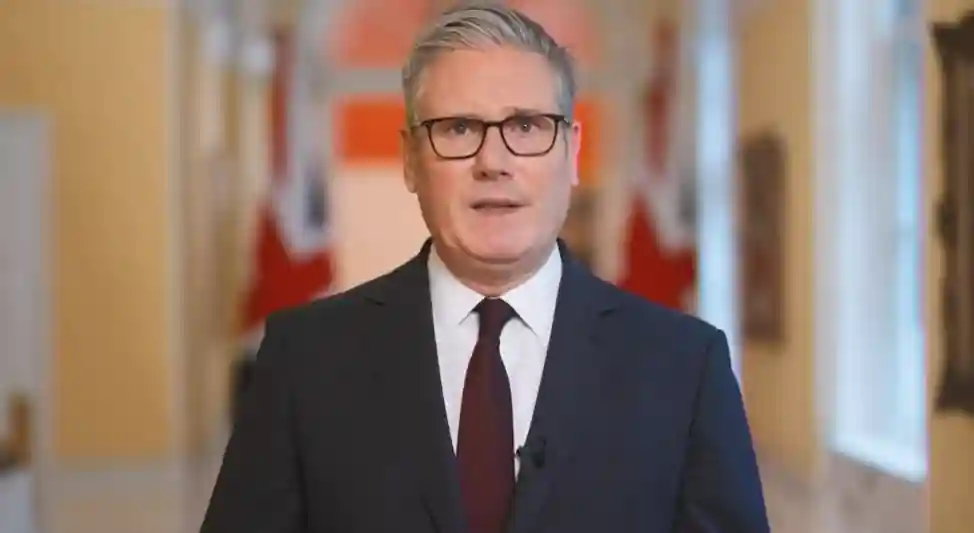
At a press conference in Downing Street on 1 April 2026, British PM Keir Starmer reassured the public as the conflict in the Middle East entered its second month, warning that while the UK would not be drawn into the war, its effects would still be felt across the country. He stressed that protecting energy supplies and maintaining global shipping routes, especially through the Strait of Hormuz, remained a key national priority, and outlined ongoing diplomatic efforts with G7 nations and a coalition of 35 countries to restore maritime security in the region.
Starmer announced that the Foreign Secretary would host an important international meeting later in the week to coordinate diplomatic and political actions aimed at ensuring the safe passage of ships and the return of vital trade flows. He admitted the situation would not be easy, noting that business leaders had raised serious concerns about security risks, and emphasised the need for both military planning and international cooperation once the conflict ends.
Turning to the situation at home, the Prime Minister aimed to ease public fears, making it clear that the UK will not be pulled into the conflict, while acknowledging concerns over rising fuel prices and energy bills. Reflecting on economic struggles in the 1970s, he described the current crisis as a chance to build a stronger and fairer economy. He highlighted the government’s five-point plan, which includes cutting energy bills, extending fuel duty reductions, supporting households using heating oil, and investing in clean, domestic energy to reduce reliance on unstable global markets.
He also pointed to several upcoming measures, including increases in the national living wage and state pension, a freeze on prescription costs, and the removal of the two-child benefit limit, which he said would lift many children out of poverty. These policies, along with stronger workers’ rights, were presented as part of a long-term effort to improve economic security.
Looking ahead, Starmer signalled a move towards closer ties with European partners, arguing that stronger cooperation with the European Union is essential in today’s uncertain global environment. He confirmed that a new UK-EU summit will take place soon, aiming for deeper economic and security partnerships.
In conclusion, the Prime Minister said that all decisions would continue to be guided by the national interest, promising calm and steady leadership as the country faces ongoing global challenges.
Original Text of The Statement
Good morning,
The conflict in the Middle East has now entered a second month.
And while we are working at pace for de-escalation and peace, it is now clear that the impact of this war will affect the future of our country.
So today, I want to reassure the British people that no matter how fierce this storm…
…we are well-placed to weather it and that we have a long-term plan to emerge from it a stronger and more secure nation.
First – let me say once again: this is not our war.
We will not be drawn into the conflict.
That is not in our national interest.
And the most effective way we can support the cost of living in Britain is to push for de-escalation in the Middle East and a re-opening of the Strait of Hormuz which is such a vital route for energy.
To that end, we are exploring each and every diplomatic avenue that is available to us.
The Foreign Secretary and the Chancellor have met their counterparts in the G7…
The Defence Secretary has been in the Middle East speaking to our partners…
And the UK has now brought together 35 nations around our statement of intent to push, as one, for maritime security across the Gulf.
And today I can announce that later this week the Foreign Secretary will host a meeting that brings those nations together for the first time where we will assess all viable diplomatic and political measures we can take…
To restore freedom of navigation, guarantee the safety of trapped ships and seafarers and to resume the movement of vital commodities.
Following this meeting, we will also convene our military planners…
To look at how we can marshal our capabilities…
And make the Strait accessible and safe after the fighting has stopped.
Because – I do have to level with people on this, this will not be easy.
I spoke with relevant business leaders in shipping, finance, insurance, and energy supply in Downing Street on Monday.
And they were clear with me, the primary challenge they face is not one of insurance, but one of safety and security of passage.
So, the fact is we need all of this together:
A united front of military strength and diplomatic activity…
Partnership with industry, so they too can mobilise once the fighting has stopped…
And above all – clear and calm leadership.
That is what this country is ready to provide.
Because my guide from the start of this conflict has always been the British national interest.
And freedom of navigation in the Middle East is in the British national interest.
Let me turn now to the impact at home, because I know that this is causing huge concern.
People turn on their TV, they look at their screens, they see explosions, infrastructure blown up, aggressive rhetoric – they worry that the UK will be dragged into this.
We won’t.
But I also know that people have a deep sense this will affect their family and their household.
They can see it at the petrol pumps, and they worry about their energy bills.
It is the job of Government to meet these moments, not just with immediate action but also with clarity about our direction.
That’s what I remember about the 1970s, when my family could not pay every bill.
We struggled through the energy shocks and price rises of that decade.
But we always believed in the end that Britain would secure a better future for us.
And I think that’s what’s been lacking in the crises of recent years.
And I am not prepared to ask the British people, once again to go through a crisis, come out of it and say “business as usual” – back to the status quo.
So – on our economy, on our energy and on our defence – this time will be different.
We will make Britain a fairer and more secure country because that hope is what is needed as the country comes together and because how we emerge from this crisis will define us for a generation.
So – as I set out a few weeks ago.
We have a five-point plan for the immediate crisis.
We’re cutting energy bills by over £100 per household today.
We’ve extended the cut in fuel duty until September, and we are monitoring that situation daily.
We’re supporting people exposed to heating oil rises – setting aside £53 million for that.
We’re taking back control of our energy security, by investing in clean British energy.
Because that is the only way we get your bills off the rollercoaster that is controlled by Putin and the Iranian regime.
And frankly, I am sick and tired of your energy bills fluctuating up and down because we are on the International Market…
…when if we took control of our energy and had home grown renewables, we could stabilise your bills.
And finally as I say, we continue to push for de-escalation in the Middle East.
But look, there is also a bigger argument here.
Because every one of these measures is part of a long-term plan to make our country more secure and more resilient to shocks like this.
I mean, just look at what is happening today.
Today your energy bills will be cut, because of our action at the budget and whatever happens in Iran, that price is now fixed until July.
Today, if you need a prescription, instead of rising as they used to, the price will be frozen for a year.
Today, if you are working on the national living wage, your wages will go up.
Next week, on Monday, the state pension will go up.
Next week the two-child limit will be scrapped, lifting 450,000 children out of poverty – the vast majority from working households.
And next week, the biggest strengthening of workers’ rights in a generation will become law – a huge boost to the economic security of working people.
Now, some people may say, this isn’t new, this was already planned.
To which I say – yes. That is my point.
Everything I’ve done in politics, certainly since the Ukraine War in 2022 is a response to this new and dangerous world.
We campaigned for a windfall tax on oil and gas companies which we extended.
We focused on the cost of living, and we acted at the Budget.
And we have always emphasised the need for clean British energy and we invested because we knew that making our country secure in this world was the ultimate test we would face and our ultimate responsibility to the British people.
Now, it is not going to be easy, clearly.
And in the coming weeks, as you would expect we will continue to assess the economic effects.
We will continue to stand up for the British national interest, and we will continue to do what we must to guide our country calmly through this storm.
However, it is increasingly clear that as the world continues down this volatile path, our long-term national interest requires closer partnership with our allies in Europe and with the European Union.
Now, we have made progress on this front, on agriculture, electricity, emissions trading and more.
But as the Chancellor has rightly pointed out, Brexit did deep damage to our economy.
And the opportunities to strengthen our security and cut the cost of living, they are simply too big to ignore.
So, in the coming weeks we will announce a new summit with our EU partners.
And I can tell you, at that summit, the UK will not just ratify existing commitments made at last year’s summit.
We want to be more ambitious. Closer economic cooperation. Closer security cooperation.
A partnership that recognises our shared values, our shared interests, and our shared future.
A partnership for the dangerous world that we must navigate together.
A world where this Government will be guided, at all times, by the interests of the British people.
Thank you, I will now take questions.
Published
1 April 2026
Core Concept: Global Conflict and National Response
This cluster centers on how international conflicts influence national policy, economic stability, and strategic decision-making. It connects diplomacy, security, and domestic governance into a unified framework.
See also
- Middle East Conflict
- National Interest
- Energy Security
- Economic Resilience
- International Diplomacy
Cluster: Middle East Conflict
Focuses on the geopolitical tensions, military developments, and global implications of instability in the region.
Connected Concepts
- Strait of Hormuz
- Maritime Security
- Global Energy Supply
- Military Strategy
- Diplomatic Negotiations
See also
- Global Conflict and National Response
- International Trade Routes
- Defence Policy
Cluster: Energy Security
Examines the stability, affordability, and independence of a nation’s energy supply.
Connected Concepts
- Oil and Gas Markets
- Renewable Energy
- Energy Prices
- Domestic Energy Production
- Supply Chain Disruptions
See also
- Cost of Living Crisis
- Economic Resilience
- Clean Energy Transition
Cluster: Economic Resilience
Refers to a nation’s ability to withstand and recover from economic shocks.
Connected Concepts
- Inflation
- Government Spending
- Household Income
- Labour Market
- Social Welfare Policies
See also
- Energy Security
- Cost of Living Crisis
- Fiscal Policy
International Diplomacy
Covers negotiation and cooperation between nations to manage conflict and maintain stability.
Connected Concepts
- G7 Cooperation
- Multilateral Agreements
- Peace Negotiations
- Strategic Alliances
- Foreign Policy
See also
- Middle East Conflict
- Maritime Security
- European Union Relations
Cluster: Maritime Security
Focuses on the protection of shipping routes and safe navigation in international waters.
Connected Concepts
- Freedom of Navigation
- Naval Operations
- Trade Protection
- Shipping Industry
- Risk Management
See also
- Strait of Hormuz
- International Trade Routes
- Defence Strategy
Cluster: Cost of Living Crisis
Explores rising household expenses and their social and political impacts.
Connected Concepts
- Energy Bills
- Fuel Prices
- Food Costs
- Wage Growth
- Government Support Measures
See also
- Economic Resilience
- Energy Security
- Social Policy
Cluster: Defence and Security Policy
Addresses national strategies for protection against external threats.
Connected Concepts
- Military Planning
- National Security
- Strategic Deterrence
- Intelligence Coordination
- Defence Alliances
See also
- Middle East Conflict
- Maritime Security
- International Diplomacy
European Union Relations
Examines cooperation and policy alignment between the UK and European nations.
Connected Concepts
- Trade Agreements
- Security Cooperation
- Regulatory Alignment
- Brexit Impact
- Economic Integration
See also
- International Diplomacy
- Economic Resilience
- Trade Policy
Cluster: Clean Energy Transition
Focuses on shifting from fossil fuels to sustainable energy sources.
Connected Concepts
- Renewable Energy Investment
- Carbon Emissions
- Energy Independence
- Climate Policy
- Green Technology
See also
- Energy Security
- Economic Resilience
- Environmental Policy