RECALLING H.M. SEERVAI: MAN OF CHARACTER, COURAGE AND CONVICTION
T.R. Andhyarujina
The court’s order would be disregarded as a nullity if the Court exceeded its jurisdiction.
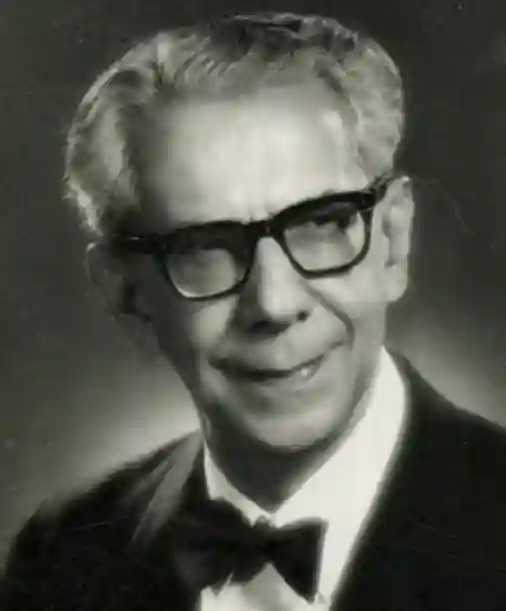
On 5th December 2007, H.M. Seervai, India’s most outstanding lawyer, jurist and scholar in constitutional law would have completed 101 years. He died on 26th January 1996 at the age of 89. With his death an era in the legal world of India ended.
For more than 50 years, Seervai was not only the country’s foremost constitutional lawyer, but also an erudite scholar and the author of a monumental work on the Constitutional Law of India which even today is referred to as an authority in the Courts in India. He held the post of Advocate-General of Maharashtra for 17 years with great distinction. Above all, he achieved a unique stature and influence in public life by his inflexible integrity, indomitable courage and conviction.
In many respects, Seervai, the man, was greater than Seervai, the lawyer, but the two characters were inextricably mixed, making him the most respected person in law and giving him that indefinable eminence over several lawyers of his day who were reputed to be clever and more astute than he was.
For 17 years as Advocate-General of Maharashtra—from 1957 to 1974—Seervai maintained the high stature of his office and his own position because he was not a political appointee and did not consider himself one. This was in marked contrast to the appointments of law officers of other states who were political appointees and who came and went out with the government of the day. Governments came and went but Seervai was not called upon to resign with a new government. His detachment from politicians and politics was his greatest strength. He defended a Government case in Court with total dedication, refusing any other brief until the case was completed. But he declined to defend policies of the Government which he felt were against his convictions.
He refused to appear for the Government when it banned the teaching of English in Anglo-Indian schools and he did not think it right to defend the putting up of a “martyrs’ memorial” in Bombay in the cause of the linguistic State of Maharashtra.
At a time when other seniors at the Bar made handsome incomes at the Bar, Seervai’s annual income would have put a junior to shame. He was quite indifferent to financial rewards in the profession and had contempt for lawyers who prided themselves in having a lucrative practice. The word lucrative, he reminded them, meant greed for gain. When he was told it would not be wrong to take high fees if clients were willing to pay them, Seervai retorted, “If a man was willing to be robbed would you be a thief?”
His knowledge of literature, prose and poetry was considerable and he would frequently recall his favourite lines from Wordsworth, Keats, Milton, Thucydides and even P.G. Wodehouse. His credo came from the words of Sir Walter Scott, “Without courage, there can be no truth and without truth no other virtue”. He had an invincible faith in rationality and the ultimate triumph of right and justice. As a young junior working with him I thought he was naive and unworldly, but over a period of years I have come to believe that he was not wrong.
The rare courage of his conviction was manifest from his early days as a junior at the Bar. Even as a junior he did not hesitate to expose a judge who he thought was partial in his treatment of lawyers in his Court. In his book, he was outspoken in his criticism of some of the judgments of the Supreme Court, boldly stating that they were “amazing” or “productive of great public mischief and ought to be overruled”. In his book on “Partition of India—Legend and Reality”, Seervai demolished popular notions of the role of national leaders in the partition of India. At times, Seervai’s perception of men, matters and law was wrong, highly personal and out of proportion but such was the sincerity and commitment with which he advanced his views that they acquired a legitimacy of their own.
His most brilliant performance was in the Parliamentary Privileges case in the Supreme Court in 1964. He was specially selected to plead the case of the U.P. Vidhan Sabha in a contest between the Legislature and the Judiciary because it was believed that only a man of his courage would be able to tell the judges that they did not have the powers over the privileges of the Legislatures. This he did without hesitation. I remember how, in an electrifying moment full of tension in court, he told Justice Subba Rao that the Court’s order would be disregarded as a nullity if the Court exceeded its jurisdiction.
In 1972, Government of India chose Seervai as the leading counsel in precedence over the Attorney-General for India to defend Parliament’s power to amend the Constitution in Keshavananda Bharati’s case before the largest bench of 13 judges of the Supreme Court ever constituted. Seervai argued with great vehemence for 22 days that Parliament had the power to amend the Constitution without any limit. Six judges accepted his view, seven did not. The majority held that Parliament could amend the Constitution but not alter the Basic Structure of the Constitution. However, the misuse of the amending power during the Emergency in 1975 by the ruling party made Seervai change his view of the law expounded by him in Court and he later stated that there had to be limitations on the Parliament’s power to control the Constitution. Seervai had the intellectual courage to change his view.
Recognition of his eminence came in many ways. He was offered judgeship of the Supreme Court twice. Each time he declined it. He was conferred the Padma Vibhushan in 1972. In 1981, the British Academy elected Seervai its Corresponding Fellow, a distinction reserved for scholars of the highest academic distinction. The International Bar Association awarded Seervai an award of Living Legend of Law. Lord Denning, the doyen of all judges said, “He was a great personality and one of the most learned I have met.” However, the most fining recognition of his eminence was the Government of India’s offer to appoint him the Attorney-General for India in 1971. Declining the office with thanks, he wrote in his own hand to the Law Minister that the best contribution that he could make to the law was not to appear in Court but to “embody in successive editions of his book the correct judicial interpretation of the Constitution”.
One cannot think of any lawyer in the world declining such a high office for the sake of writing a scholarly thesis. But that was Seervai the man. We shall not see the likes of him again.
5th December 2007