Skip to content

ADVOCATETANMOY LAW LIBRARY

Research & Library Database

Primary Menu
  • News
  • Opinion
  • Countries198
    • National Constitutions: History, Purpose, and Key Aspects
  • Judgment
  • Book
  • Legal Brief
    • Legal Eagal
  • LearnToday
  • HLJ
    • Supreme Court Case Notes
    • Daily Digest
  • Sarvarthapedia
    • Sarvarthapedia (Core Areas)
    • Systemic-and-systematic
    • Volume One
10/04/2026
  • Law

Indian Civil Service (Bengal Loans Prohibition) Regulation 1823

Whereas by the existing Regulations all covenanted civil servants employed in the judicial and revenue departments of the service, are prohibited from lending money, directly or indirectly, to any proprietor or farmer of land, dependent taluqdar, under-farmer or raiyat or their sureties; and whereas it is equally necessary to prohibit the public officers from borrowing money from persons subject to their official authority and influence; the following rules have been enacted by the Governor-General in-Council, and are to be in force from the date of their promulgation throughout the Provinces immediately subject to this Presidency.
advtanmoy 02/04/2021 4 minutes read

© Advocatetanmoy Law Library

  • Share on WhatsApp (Opens in new window) WhatsApp
  • Share on X (Opens in new window) X
  • Share on Facebook (Opens in new window) Facebook
  • Share on Telegram (Opens in new window) Telegram
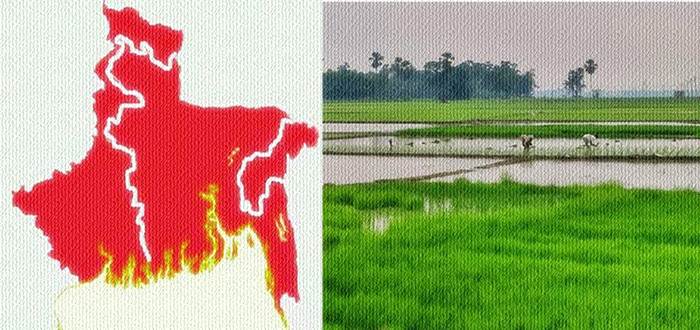
Bangla undivided

Home » Law Library Updates » Sarvarthapedia » Law » Indian Civil Service (Bengal Loans Prohibition) Regulation 1823

The Indian Civil Service (Bengal Loans Prohibition) Regulation 1823

(Bengal Regulation No. 7 of 1823)

Passed by the Governor General in Council on the 30th October, 1823

Short title given by Act V of 1897.

Read Next

  •  Judicial office is essentially a public trust: Supreme Court
  • Law and Governance: History, Principles, and Institutions
  • Analysis of Section 8(1)(j), Right to Information Act, 2005

A Regulation for prohibiting Loans by Covenanted Civil Servants from Persons subject to their Official Authority and Influence.

1. Preamble – Whereas by the existing Regulations all covenanted civil servants employed in the judicial and revenue departments of the service, are prohibited from lending money, directly or indirectly, to any proprietor or farmer of land, dependent taluqdar, under-farmer or raiyat or their sureties; and whereas it is equally necessary to prohibit the public officers from borrowing money from persons subject to their official authority and influence; the following rules have been enacted by the Governor-General in-Council, and are to be in force from the date of their promulgation throughout the Provinces immediately subject to this Presidency.

2. First : Civil servant prohibited from borrowing money from officers under their authority, etc. – All covenanted civil servants in whatever department of the service they may be employed, are henceforward prohibited under pain of dismissal from office from borrowing money from, or in any way incurring debt to any officer under their authority or under the authority of any of their subordinate functionaries or, from or to the known surety, agent, relation, connection or dependent of any such officer, or from or to any person of whom such  may be known to be or to have beer, the servant, agent, surety or dependent.

Second : and from other persons officially accountable to them. – In like manner, and under the like penalty, all officers of Government, being covenanted civil servants are hereto forward prohibited from borrowing money from, or in any way incurring debt to, any manager, guardian, executor, amin, sazawal, gumashta, farmer, mutawalli or other person who may in any way be officially accountable to them, or from and to the know surety, agent, relation, connection and dependent of such person.

Read Next

  •  Judicial office is essentially a public trust: Supreme Court
  • Law and Governance: History, Principles, and Institutions
  • Analysis of Section 8(1)(j), Right to Information Act, 2005

Third : [Rules applied to commercial officers.] – Repealed by Act XVI of 1874.

3. Certain officers prohibited from incurring debt to zamindars and others residing or having property, within their district. – All Commissioners, District and Sessions Judges, Deputy Commissioners and Assistant Commissioners, being members of the Indian Civil Service] are prohibited under pain of dismissal from office, from borrowing money from or in any way incurring debt to, any zamindar, taluqdar, raiyat or other person possessing real property, or residing in, or having a commercial establishment within, the city, district, or division to which their authority may extend.

4. Penalty for lending money to civil servants – All persons are prohibited from lending money, or otherwise becoming in any way creditor to any officer of Government, being a covenanted civil servant, in contravention of the above rules:

Read Next

  •  Judicial office is essentially a public trust: Supreme Court
  • Law and Governance: History, Principles, and Institutions
  • Analysis of Section 8(1)(j), Right to Information Act, 2005

and any person lending money, or in any way becoming creditor, to any such public officer in breach of this prohibition shall forfeit to [Government] a sum equal to the amount for which he shall have so illegally become creditor.

5. [Report by officers in debt.] – Repealed by Act XVI of 1874.

6. Penalty for officers receiving new appointments if indebted to individuals contrary to above rules omitting to report –  If any covenanted servant, who may be hereafter appointed to any office, shall at the time of such appointment be indebted to any person with whom it would be illegal for him to contract to loan while holding such office, it shall be incumbent on such servant, before entering on the duties of the office, to make known the circumstances to the [State Government] and, failing to do so, he shall be subject to the same penalty as if the debt had been contracted subsequently to his being appointed to the said office.

7. [Penalty on Natives knowingly taking office in contravention of above rules.] – Repealed by Act I of 1903.

8. Suits for recovery of penalties – Suits for the recovery of penalties incurred under this Regulation shall and may be instituted under the special instructions of the [State Government] and shall be conducted by the Superintendent and Remembrancer of Legal Affairs, or by such other officer as the [State Government] may nominate for that purpose: such suits shall be instituted in the court of the division within which the transaction may have taken place, or the lender may reside, or may possess real or personal property.

An appeal shall lie from judgment passed in such cases, in like manner as from other judgments passed in original suits,  and the judgments shall be enforced under the provisions  for me execution of other decrees of the civil courts.


Tags: 1823CE Civil Service Governor-General Loan

Post navigation

Previous: Inspection of Records in criminal cases in UP
Next: शाण्डिल्य भक्ति सूत्र-Sandilya Bhakti Sutra-OSHO Explained
Communism
Sarvarthapedia

Manifesto of the Communist Party 1848: History, Context, and Core Concepts

Arrest
Sarvarthapedia

Latin Maxims in Criminal Law: Meaning, Usage, and Courtroom Application

Abolition of Slave Trade Act 1807: Facts, Enforcement, and Historical Context

British Slavery and the Church of England: History, Theology, and the Codrington Estates

United States of America: History, Government, Economy, and Global Power

Biblical Basis for Slavery: Old and New Testament Laws, Narratives, and Interpretations

Rule of Law vs Rule by Law and Rule for Law: History, Meaning, and Global Evolution

IPS Cadre Strength 2025: State-wise Authorised Strength

Uric Acid: From 18th Century Discovery to Modern Medical Science

Christian Approaches to Interfaith Dialogue: Orthodox, Catholic, Protestant, and Pentecostal Views

Origin of Central Banking in India: From Hastings to RBI and the History of Preparatory Years (1773–1934)

Howrah District Environment Plan: Waste Management, Water Quality & Wetland Conservation

Bharatiya Nyaya Sanhita 2023: Sections (1-358), Punishments, and Legal Framework

Bengali Food Culture: History, Traditions, and Class Influences

  • Sarvarthapedia

  • Delhi Law Digest

  • Howrah Law Journal

  • Amit Arya vs Kamlesh Kumari: Doctrine of merger
  • David Vs. Kuruppampady: SLP against rejecting review by HC (2020)
  • Nazim & Ors. v. State of Uttarakhand (2025 INSC 1184)
  • Geeta v. Ajay: Expense for daughter`s marriage allowed in favour of the wife
  • Ram v. Sukhram: Tribal women’s right in ancestral property [2025] 8 SCR 272
  • Naresh vs Aarti: Cheque Bouncing Complaint Filed by POA (02/01/2025)
  • Bharatiya Nagarik Suraksha Sanhita 2023 (BNSS)
  • Bharatiya Sakshya Adhiniyam 2023 (BSA): Indian Rules for Evidence
  • Bharatiya Nyaya Sanhita (BNS) 2023
  • The Code of Civil Procedure (CPC)
  • Supreme Court Daily Digest
  • U.S. Supreme Court Orders
  • U.k. Supreme Court Orders
United Kingdom, UK

Abolition of Slave Trade Act 1807: Facts, Enforcement, and Historical Context

British Slavery and the Church of England: History, Theology, and the Codrington Estates

British Slavery and the Church of England: History, Theology, and the Codrington Estates

USA, America

United States of America: History, Government, Economy, and Global Power

Biblical Basis for Slavery, english slave trade

Biblical Basis for Slavery: Old and New Testament Laws, Narratives, and Interpretations

2026 © Advocatetanmoy Law Library

  • About
  • Global Index
  • Judicial Examinations
  • Indian Statutes
  • Glossary
  • Legal Eagle
  • Subject Guide
  • Journal
  • SCCN
  • Constitutions
  • Legal Brief (SC)
  • MCQs (Indian Laws)
  • Sarvarthapedia (Articles)
  • Contact Us
  • Privacy Policy
  • FAQs
  • Library Updates